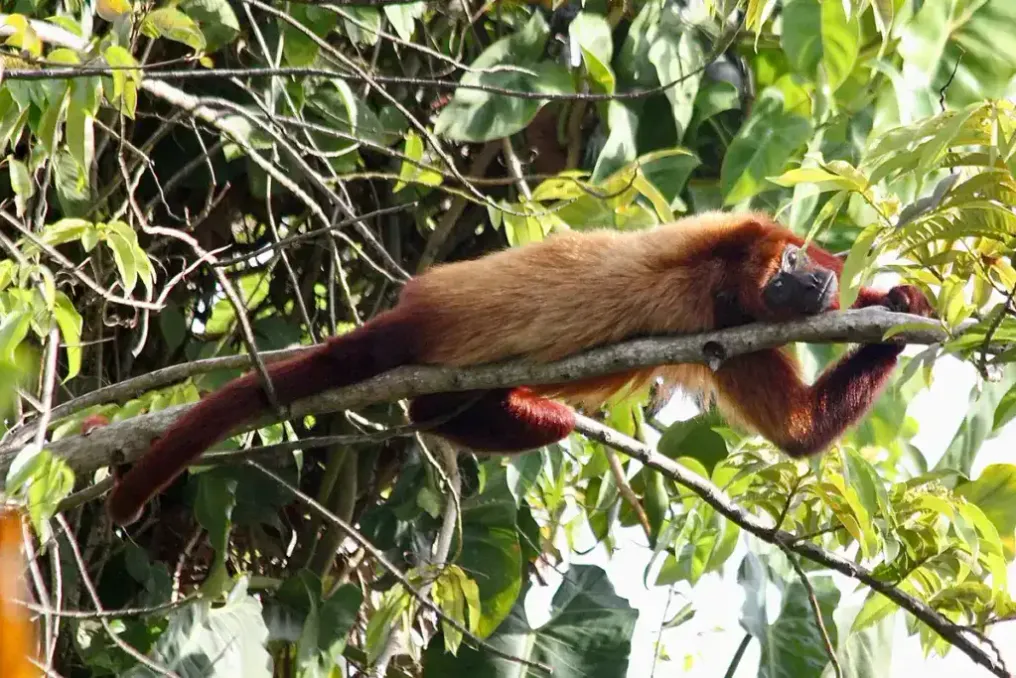
Scientists discover two new species of howler monkeys in the Amazon, the first such finding in 85 years
Read more
Olhar Digital
olhardigital.com.br

Scientists discover two new species of howler monkeys in the Amazon, the first such finding in 85 years

Scientists have identified two new species of howler monkeys in the Amazon, marking the first such discovery in the last 85 years. The study, published in the journal Communications Biology, was based on the first genomic analysis of the genus Alouatta.

The researchers emphasized that this discovery underscores the importance of conserving Brazil's threatened ecosystems. Howler monkeys, which are the loudest terrestrial animals on the planet, belong to primates of Central and South America, known for their loud calls and vocalizations that can be heard up to five kilometers away.

These sounds are used to deter rivals without physical confrontation, mark territory, and communicate. The work was led by Dr. Romina Batista and Professor Jean Bubli, who work at the University of Salford in the UK. The team collected genetic data from 86 animals from the genus's range, including samples from museum collections. Among these samples were fragments of dried skin from two preserved howler monkeys from the Bavarian State Zoological Collection in Munich, Germany.

Romina Batista stated in her announcement: 'Our research shows that the Amazon still holds remarkable biological secrets, even among well-known animals like howler monkeys.'

The genomic analysis confirmed biologists' suspicions about the need to revise the classification of howler monkeys. The researchers distinguished two species; they also found that A. puruensis is not a valid species as it corresponds to A. juara. However, the Trinidad howler monkey (A. insulanus) may represent an independent species rather than just a subspecies, although this hypothesis requires further confirmation through nuclear DNA analysis.

Gene analysis allowed for the reconstruction of part of the evolutionary history of the genus Alouatta. The results indicate that the genus likely originated in Mesoamerica and subsequently spread throughout South America. The first divergences between howler monkeys from the two regions occurred approximately 3.5 million years ago, coinciding with the formation of the Isthmus of Panama land bridge.

The evolution of these primates was also influenced by the region's geography. The formation of large rivers, such as the Amazon, disrupted gene flow between populations, allowing them to evolve independently. The appearance of savannas in parts of the Amazon basin also separated habitats of species such as A. nigerrima and A. sara.

For scientists, a deeper understanding of this genetic diversity can help determine conservation priorities. Deforestation, climate change, and habitat loss threaten Amazonian species even before they are fully studied or discovered by science.

Jean Bubli noted: 'We hope that these findings will help conservation organizations identify the most vulnerable populations and prioritize protection efforts across the entire Amazon basin.'
Similar stories

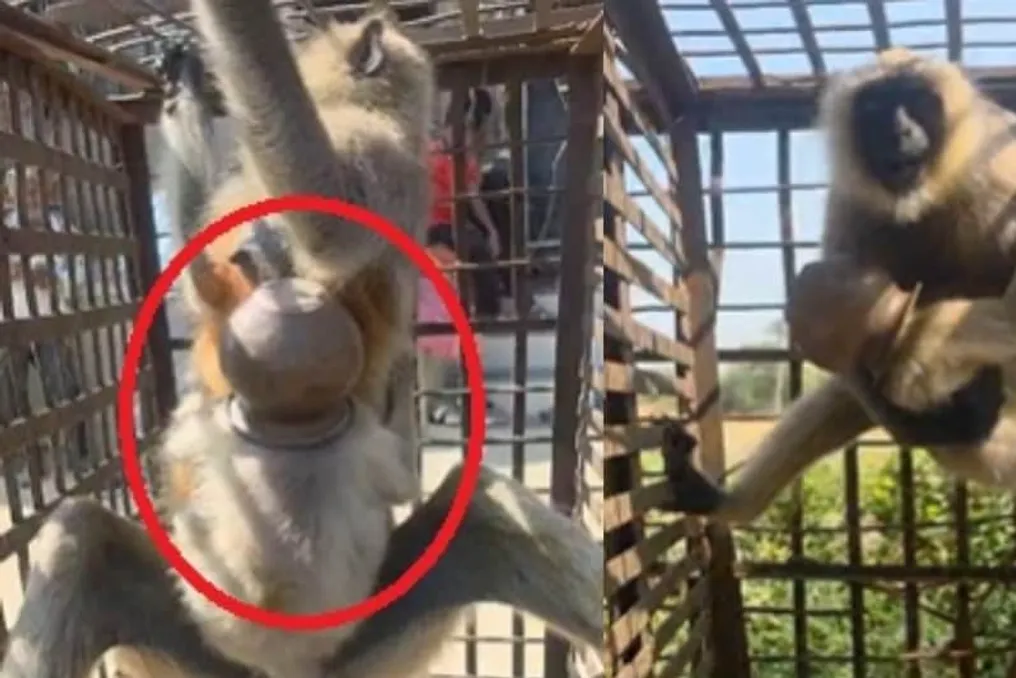
Forest Department Rescues Monkey Baby Trapped in Jalna District of Maharashtra
Read more
www.aajtak.in

Forest Department Rescues Monkey Baby Trapped in Jalna District of Maharashtra

A startling incident has come to light in the Jalna district of Maharashtra involving a monkey baby. The infant, who had reached the village searching for water, found its head trapped in a pot, wandering around the village area in that condition for nearly two days. Ultimately, its life was saved by a joint rescue operation conducted by the Forest Department and the Wildlife Animal Friend team.

This incident occurred in the village of Shelwada, located in the Partur tehsil of Jalna district. According to information, the monkey baby reached human settlements while looking for water, where its head got stuck in a pot. Despite several attempts, it could not free itself and continued to roam around the village in this state.

The child suffered greatly due to having its head stuck in the pot for two days. At that time, some villagers noticed it and immediately informed the Forest Department. Upon receiving the information, forest personnel began preparations for the rescue operation.

After the incident was reported on November 11, Forest Department staff reached the site and assessed the situation. The team also informed their senior officials about this matter. Subsequently, the Wildlife Animal Friend Samadhan Giri was called to safely extract the monkey baby.

On November 12, the Samadhan Giri and Forest Department team jointly started the rescue mission. The team attempted to remove the pot stuck in the monkey baby's head with extreme caution, ensuring that it did not get injured. After considerable effort, the pot was successfully removed, bringing relief to the primate baby who had been distressed for two days. Local villagers also supported the team throughout this entire rescue operation.

After the rescue operation was completed, the Forest Department team returned the monkey baby to its mother. Following this, both the mother and the baby were released into their natural habitat. Thus, timely action saved the life of the innocent primate.

After the safe rescue of the monkey baby, the people of Shelwada village breathed a sigh of relief. Villagers praised the efforts of the Forest Department and Prani Mitra Samadhan Giri. This incident involving the voiceless creature reaching the settlement in search of water has drawn public attention.

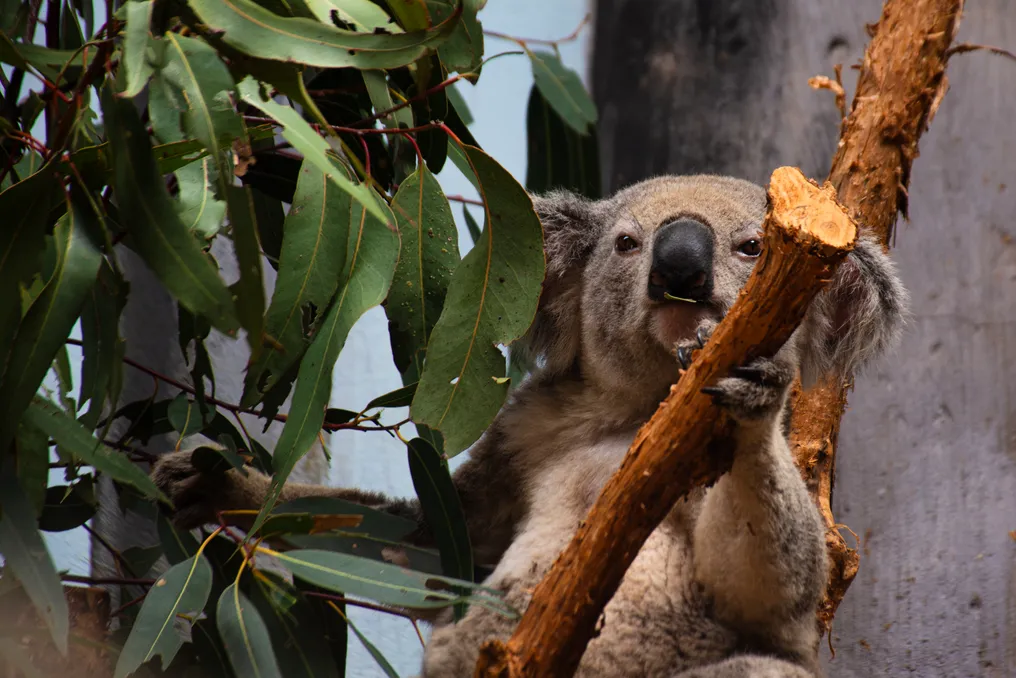
Two Australian koalas, Andi and Kingsley, are transferred to the São Paulo Aquarium
Read more
viagemeturismo.abril.com.br

Two Australian koalas, Andi and Kingsley, are transferred to the São Paulo Aquarium

The São Paulo Aquarium, located in the Ipiranga neighborhood, has welcomed two new residents, adding a touch of charm to its collection. They are Andi, a female, and Kingsley, a male, both three-year-old koalas, who were brought from a zoo in Australia to reside in the capital city of São Paulo. Visitors have had the opportunity to meet the pair since Thursday, the 29th, observing them spending a large part of their time sleeping.

The arrival of these animals required several modifications to the aquarium. Before receiving the koalas, the facility underwent rigorous evaluations to meet the requirements set by the Australian government. These assessments covered everything from enclosure preparation to the training of teams responsible for handling and veterinary care.

The space was properly equipped with structures that replicate the trees where the species spends most of its life. The branches feature multiple ramifications, allowing the animals to find comfortable places to rest. Sleeping is a central activity for koalas, potentially lasting up to 18 hours daily.

The koalas' diet is strictly controlled, consisting solely of eucalyptus leaves, and they can consume over half a kilogram daily. At the aquarium, these leaves are changed twice a day, while the team monitors both the amount ingested and the animals' adaptation to the different varieties offered.

In addition to nutrition, Andi and Kingsley receive constant monitoring from veterinarians and behavior specialists, including regular health check-ups. Care includes preventive measures and vigilance against diseases affecting the species, such as those related to the Chlamydia bacterium and Koala Retrovirus.

Koalas, native to Australia, are classified as vulnerable to extinction by the International Union for Conservation of Nature (IUCN). In certain areas of the country, such as Queensland and New South Wales, the situation is even more critical, with populations categorized as 'Endangered,' indicating a high risk of disappearance in the wild.

The main threats to the species involve habitat destruction, the advance of urbanization, the incidence of diseases, and the impacts of climate change. Because they depend on eucalyptus trees for shelter and food, koalas are particularly sensitive to vegetation degradation. This problem was intensified by the bushfires that ravaged Australia between 2019 and 2020, coupled with prolonged droughts and heatwaves that compromise animal survival.

The arrival of Andi and Kingsley at the aquarium integrates the São Paulo Aquarium's Koala Conservation Program. This initiative encompasses eight areas of work, focusing on the reproduction, health, and well-being of the animals, in addition to including genetic studies and collaboration with other international institutions.

The program also aims to raise public awareness about the challenges faced by the species. It is hoped that visiting will help attendees understand the effects of urban expansion and climate change on biodiversity, reinforcing the need to protect natural ecosystems.

Visitors can already observe Andi and Kingsley in an enclosure specifically adapted for the species, accessible from the public viewing area. Access to the interior of the enclosure is restricted only to the professionals responsible for animal care.

Promotional tickets cost R$ 150 for adults and R$ 120 for children aged 2 to 12 years, with reduced fares available for seniors, teachers, and people with disabilities. Purchases can be made through the official São Paulo Aquarium website, where scheduling conditions can also be checked. The aquarium operates daily from 9 am to 5 pm, located at Rua Huet Bacelar, 407, approximately 590 meters from the Santos-Imigrantes station on Line 2-Green of the subway.

Popular