Possible reasons for testicular shrinkage: A review of five conditions
Read more
Super Abril
super.abril.com.br

Possible reasons for testicular shrinkage: A review of five conditions

Testicles generally maintain a relatively stable size throughout adulthood, so finding a decrease in size should not automatically be attributed to aging. This change, known as testicular atrophy, can be caused by various factors—from the consequences of hormone use to damage caused by infections, trauma to the area, and problems with local blood circulation.

Sydney Glina, a urologist at the Einstein Hospital in Israel, explains that testicular size is primarily determined by the volume of seminiferous tubules—the structures where sperm are produced. When part of this tissue is damaged, the organ can lose volume and impair its function. Five situations leading to testicular atrophy are then examined.

The Influence of Hormonal Preparations

Taking testosterone, whether for hormone replacement therapy or muscle building, as well as anabolic steroids, can lead to testicular shrinkage. To understand this link, it is necessary to understand how the brain regulates hormone production.

The hypothalamus stimulates the pituitary gland, which releases LH and FSH hormones. LH stimulates testosterone production in the testes, while FSH participates in the process of sperm formation. When a man receives hormones from outside the body via injections or gels, the brain interprets this as having sufficient circulating testosterone levels and reduces the secretion of these stimulators. With reduced LH and FSH, testicular activity decreases, sperm production may decrease or even cease, and the organ size may shrink.

Alexandre Holle, an endocrinologist, director of the Brazilian Association for the Study of Obesity and Metabolic Syndrome (Abeso), and deputy coordinator of the Department of Women's Endocrinology, Andrology, and Transgenderism of the Brazilian Society of Endocrinology and Metabolism (SBEM), notes: 'Although blood testosterone levels may be elevated during the use of these substances, the testicles are functionally inhibited and may decrease in volume.'

Recovery from this condition depends on the dose of substances used, the duration of exposure, the user's age, and previous health status. After stopping hormone intake, hormonal function may recover, but not always quickly or completely. Holle adds: 'Sperm production may take longer to recover than testosterone.'

Varicocele and Infections

Varicocele is an enlargement of veins around the testicles, similar to varicose veins in the legs. This condition tends to raise the local temperature and alter the conditions necessary for sperm production, which can negatively affect fertility. Over time, these changes can damage testicular tissue and cause a reduction in the volume of one or both testicles. However, this does not happen to all men with varicocele. Glina states: 'If varicocele is operated on immediately after diagnosis, sometimes size recovery is possible.'

Infections can also cause irreversible damage. These include orchitis—inflammation of the testicle itself, usually caused by viruses—and epididymitis, which affects the testicle and epididymis—a structure located behind it responsible for sperm transport and maturation. In the latter case, the cause is most often a bacterial infection.

These conditions can cause swelling and pain. After the acute phase, testicular tissue damage can lead to volume loss and impaired sperm production ability. Mumps is one of the most well-known viral infections affecting the testicles and causing orchitis. Other viral infections, such as measles and rubella, can also be associated with inflammation. With significant tissue damage, atrophy can be irreversible.

Testicular Torsion and Hormonal Imbalances

Another serious condition is testicular torsion, in which the spermatic cord twists and disrupts blood supply to the organ. The urologist from Einstein comments: 'Without prompt treatment, lack of blood and oxygen can lead to tissue death, causing a decrease in the number of seminiferous tubules and subsequent atrophy.'

Torsion is more common in children and adolescents but can occur in adults. Pain usually occurs suddenly and may be accompanied by swelling, nausea, or vomiting. This is an urgent medical condition requiring immediate care. The longer the blood flow is disrupted, the higher the risk of testicular loss. According to the Brazilian Society of Urologists, optimal surgical intervention should occur within 6 hours to preserve the organ.

In addition to external hormone intake, diseases affecting testicular function, the hypothalamus, or the pituitary gland can disrupt testicular activity and, depending on the cause and duration of development, reduce their volume. In primary hypogonadism, the problem lies within the testicles themselves, which do not respond properly to hormonal stimuli for testosterone and sperm production. In secondary hypogonadism, the failure occurs in the hypothalamus or pituitary gland—areas of the brain responsible for controlling hormone production.

Testosterone deficiency can cause decreased libido, reduced spontaneous or morning erections, loss of muscle mass, increase in body fat, and infertility. Fatigue and mood changes may also occur, although they can have many other causes.

Aging can gradually lower testosterone levels, but this does not mean every man will develop hypogonadism. The endocrinologist emphasizes: 'Significant testicular volume reduction should not simply be considered a normal consequence of age.'

It is important to remember that testicles do not have to be exactly the same size; minor differences between sides are common. A warning sign is noticeable shrinkage, sudden growth, a hardened area, or a change in the organ's consistency.

Diagnosis begins with collecting the patient's history and physical examination. Doppler ultrasound helps measure volume, examine testicular structure, and assess blood circulation. If hormonal imbalances or fertility concerns are suspected, the doctor may order tests for total testosterone, LH, FSH, and a semen analysis. Testosterone should be measured in the morning, and if the result is low, the dosage must be confirmed with a repeat test. Additional examinations depend on symptoms and initial results.

Treatment varies depending on the cause. In some cases, partial restoration of testicular volume and function is possible; in others, the damage is permanent. Therefore, it is important to notice any change in testicular size or consistency and consult a doctor. In case of sudden pain, seeking help must be immediate due to the risk of testicular torsion.


Similar stories

Study shows that urination posture in healthy men has little effect on urodynamics
Read more
nplus1.ru

Study shows that urination posture in healthy men has little effect on urodynamics

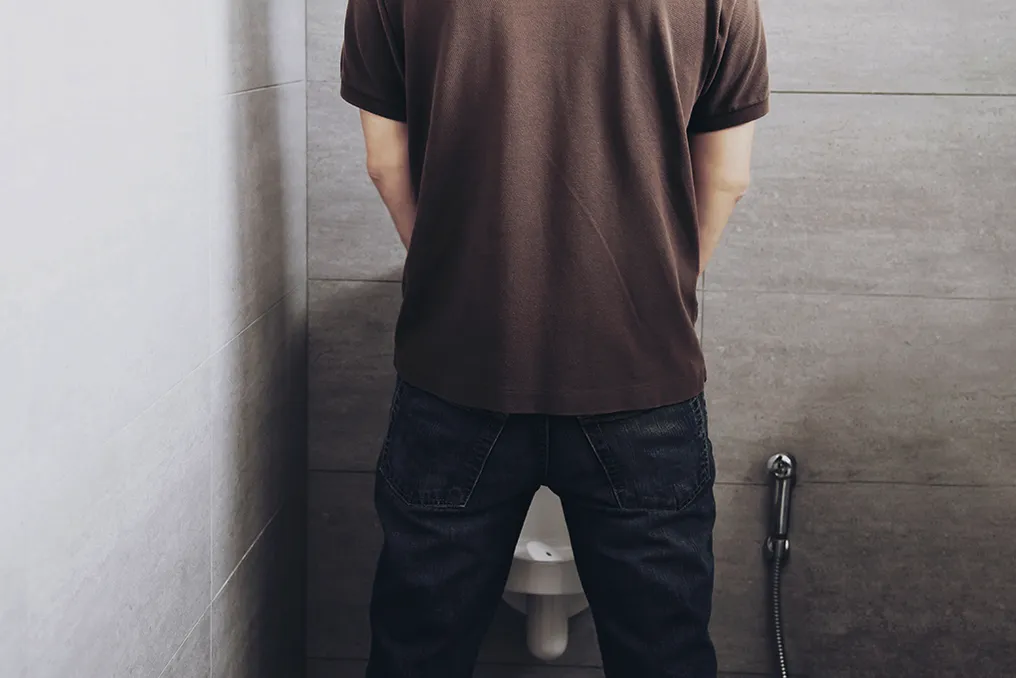
According to the results of a clinical study conducted by Colombian scientists, the posture a man adopts while urinating—whether standing or sitting—does not have a significant impact on the maximum flow rate of urine in healthy men.

However, it was noted that the seated position is associated with a faster achievement of peak flow rate, although the scientific significance of this difference has not yet been established.

These conclusions were drawn after conducting a study on changes in urodynamics during different urination postures in men. The results of this work were published in the journal Neurourology and Urodynamics.

Studies investigate whether women are more sensitive to cold air conditioning than men
Read more
super.abril.com.br

Studies investigate whether women are more sensitive to cold air conditioning than men

Many office workers face the dilemma of air conditioning, where some prefer very low temperatures, while others opt for a light coolness, and this second group frequently includes women. This trend has been the subject of observation in various scientific studies.

A study conducted in 2007 involved 3,094 individuals in Finland and included tests in controlled environments. The findings of this investigation indicated that women showed lower satisfaction with the temperature of the locations compared to men. On average, participants expressed a preference for warmer environments and reported thermal discomfort more frequently, regardless of feeling cold or hot, suggesting a greater criticality regarding ambient temperature.

A subsequent study, conducted in 2023, exposed young, healthy, and slim men and women to temperatures ranging between 17°C and 31°C. The objective was to verify whether women felt colder or if their bodies simply processed the cold differently. Researchers found that the female body began to consume more energy to generate heat when the temperature reached about 22°C, whereas in men this point occurred around 23°C. This suggests that the female body initiated the cold reaction at a marginally lower temperature, although this does not necessarily mean they felt less cold, but rather that they used different methods to maintain body temperature.

Connecting the dots

Both mentioned studies help in understanding the phenomenon, but they address distinct issues: one focuses on body thermal regulation, and the other, on people's perception and management of thermal comfort. There are other research papers that analyze complementary aspects of this debate, such as clothing worn and the influence of body fat percentage.

A scientific review published in 2025 sought to integrate all these elements. By analyzing multiple studies, the authors noted that, generally, women have less muscle mass and a lower resting energy expenditure than men. Since muscles are heat producers, even without physical activity, this may imply a lower availability of heat to warm the body. Consequently, any temperature variation, such as that caused by air conditioning, may affect them before men, who would require a more pronounced change to start feeling cold.

Despite these findings, the results vary considerably across studies; some do not identify a statistically significant difference based on gender. Therefore, it is not possible to attribute a single universal cause to this issue. The main scientific gap lies in quantifying the contribution of each factor to the sensation of cold, especially in daily office scenarios, which keeps the debate open during hot periods.

Study compares urinating while sitting versus standing in young and healthy men
Read more
super.abril.com.br

Study compares urinating while sitting versus standing in young and healthy men

There is no definitive scientific consensus on which posture is ideal for men and other people when urinating. While some research suggests that urinating while sitting may promote relaxation of the pelvic region, other theories suggest that in men up to 50 years old, this position may increase the probability of dripping after urination.

In light of this, a recent investigation, published in October in the scientific journal Neurourology and Urodynamics, conducted a randomized experiment to compare these two positions.

Researchers from a Colombian group evaluated a group composed of 52 healthy volunteers, aged between 18 and 39. Each participant was monitored both while urinating standing and sitting, being randomly divided into two groups: twenty-four started sitting and, after at least 24 hours, urinated standing; the other 28 did the reverse.

In each session, crucial data were collected, including the total volume of urine expelled and the maximum urinary flow rate (Qmax), defined as the highest flow rate during urination (measured in milliliters per second), as well as the time required to reach this maximum flow (tQmax).

These metrics were obtained through an examination called uroflowmetry, where the individual urinates into equipment that records the flow to identify its peak.

Upon examining the findings, scientists did not identify significant disparities in the maximum flow between the different postures, nor did they observe changes in the total volume of urine eliminated. The only distinction noted was that healthy men took a slightly longer period—an average of 3.3 seconds—to reach Qmax when urinating standing. However, this specific data point was influenced by the measurement of a single atypical volunteer.

The study's authors themselves commented that the sitting position was linked to a shorter time to reach maximum flow, but emphasized that this small difference probably lacks clinical relevance and was partially determined by an outlier value. They concluded that larger, pre-registered studies with previously specified equivalence analyses and including symptomatic populations are necessary.

The researchers warn that the sample used was insufficient to confirm the equivalence of the two positions; the study merely failed to detect any difference. Additionally, the research did not assess the amount of residual urine in the bladder after urination.

Therefore, according to the presented results, the posture adopted during urination does not present drastic advantages or disadvantages in young and healthy individuals, leaving the choice to the individual. For those who present urinary symptoms, such as those resulting from prostate enlargement, previous research suggests that sitting may aid in more efficient bladder emptying, although aiming correctly is recommended.

Popular