Uzbekistan signs agreements on biochar production projects with two companies
Read more
UzDaily
uzdaily.uz

Uzbekistan signs agreements on biochar production projects with two companies

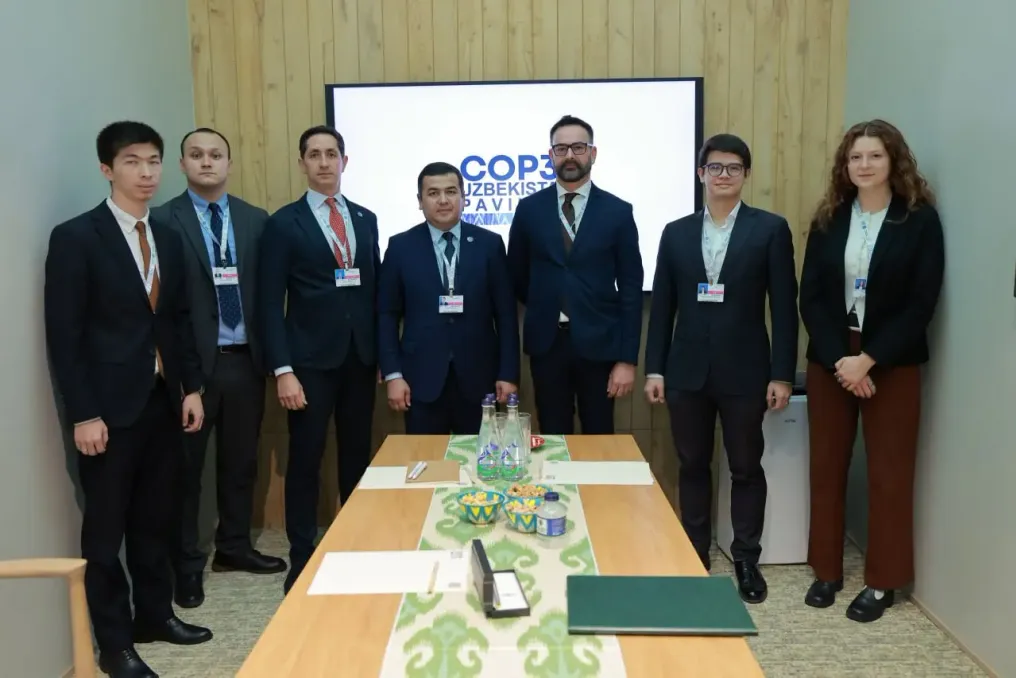
Uzbekistan has reached an agreement on cooperation with the companies Smart Carbon and BIZPANDO in the field of agricultural waste processing, biochar production, and carbon credit project development.

These agreements were signed by the Ministry of Agriculture during the international climate conference COP31.

As part of the planned cooperation with Smart Carbon, the parties plan to produce biochar from cotton stalks. The BIZPANDO agency received an agreement for the processing of various types of plant residues and the development of carbon credit mechanisms.

These projects involve using pyrolysis to process agricultural waste to obtain biochar. This material is intended to improve soil quality and achieve long-term carbon sequestration.

It is expected that these initiatives will help reduce greenhouse gas emissions and transform crop residues left in the fields into secondary raw materials with economic value.

The Ministry of Agriculture noted that such projects can provide farmers with additional sources of income and promote the expansion of circular economy principles in the agricultural sector.

Furthermore, the agreements are aimed at promoting environmentally sustainable production and creating opportunities for Uzbekistan to participate in the global carbon credit market.
Similar stories

Uzbekistan agrees on green economy projects totaling $8.3 million
Read more
uzdaily.uz

Uzbekistan agrees on green economy projects totaling $8.3 million

The Ministry of Economy and Finance reported that Uzbekistan discussed projects related to the green economy and climate finance, totaling $8.3 million and €5.5 million, with international organizations and financial institutions during COP31.

These negotiations took place within the framework of the 31st Conference of the Parties to the UNFCCC, which was held in Antalya, Turkey, from November 9 to 20. The ministry's delegation met with representatives of international organizations and financial institutions.

A project worth $1.4 million was discussed with the United Nations Development Programme (UNDP) and the National Agency for Energy Efficiency. It involves redirecting subsidies that negatively impact the environment, improving the energy efficiency of public buildings, and developing mechanisms for green investment and financing. The parties also reviewed the implementation of integrated budgeting and exchanged a tripartite cooperation document in these areas after the talks.

Projects totaling €5.5 million were discussed with the German Agency for International Cooperation (GIZ). These initiatives include creating master plans for territories, implementing environmentally friendly business methods, and carrying out pilot projects to improve energy and resource efficiency. After the meeting, the parties exchanged cooperation documents.

Another project valued at $1 million was considered jointly with the Global Green Growth Institute (GGGI), the Korea Green New Deal Fund (KGNDTF), and the National Agency for Energy Efficiency. The goal of this project is to assess the potential for energy savings in Uzbekistan's industrial sector and prepare economically viable regional projects to reduce climate impact.

The Ministry also discussed a project titled 'Comfortable and Efficient Cities for Living,' worth $400,000, with the French Development Agency (AFD) and Expertise France. This project focuses on the sustainable development of urban infrastructure, after which the parties exchanged tripartite documents supporting this program.

A separate meeting was held with representatives from Singapore. Cooperation under Article 6.2 of the Paris Agreement, the introduction of international carbon market mechanisms, and the improvement of Uzbekistan's legal and institutional framework in this area were discussed. Furthermore, the parties examined opportunities for participation in international carbon credit trading, experience exchange, and expanding practical interaction.

Uzbekistan presented hazardous waste recycling projects at COP31 conference
Read more
uzdaily.uz

Uzbekistan presented hazardous waste recycling projects at COP31 conference

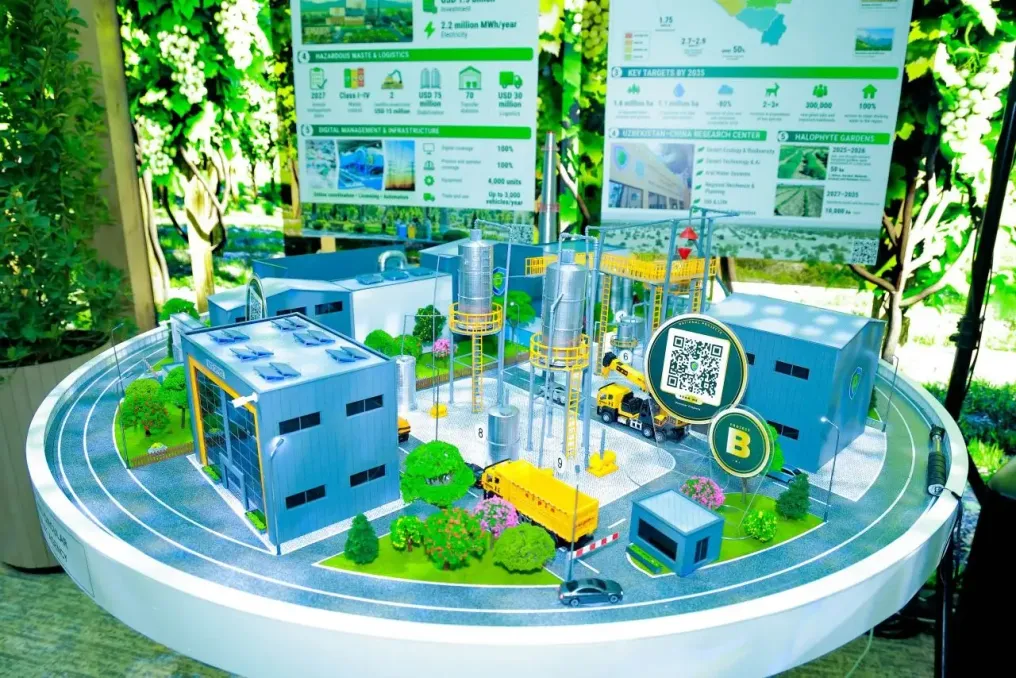
Uzbekistan presented projects concerning the treatment of toxic chemical waste and used industrial catalysts at the COP31 conference. The presentation took place at the country's national pavilion in Antalya.

According to the Waste Management and Circular Economy Development Agency, the national pavilion is open to visitors from November 8 to November 20.

One of the proposed options includes the creation of a specialized facility for the disposal and recycling of toxic chemical waste. This technology involves decomposing hazardous organic compounds at elevated temperatures, followed by multi-stage purification of the resulting gases.

Another solution for handling mixed industrial chemical waste is high-temperature incineration using a rotary drum furnace equipped with an integrated gas cleaning system.

The second project aims to establish an enterprise for recycling spent industrial catalysts. According to the project description, gases exiting the reactor and exhaust gases pass through two scrubbers. After treatment, the air is released into the atmosphere.

The Agency noted that Uzbekistan's national pavilion at COP31 functions as a platform for exchanging views, establishing new partnerships, and discussing practical steps to fulfill climate commitments.

Uzbekistan prepares to introduce national carbon pricing system
Read more
uzdaily.uz

Uzbekistan prepares to introduce national carbon pricing system

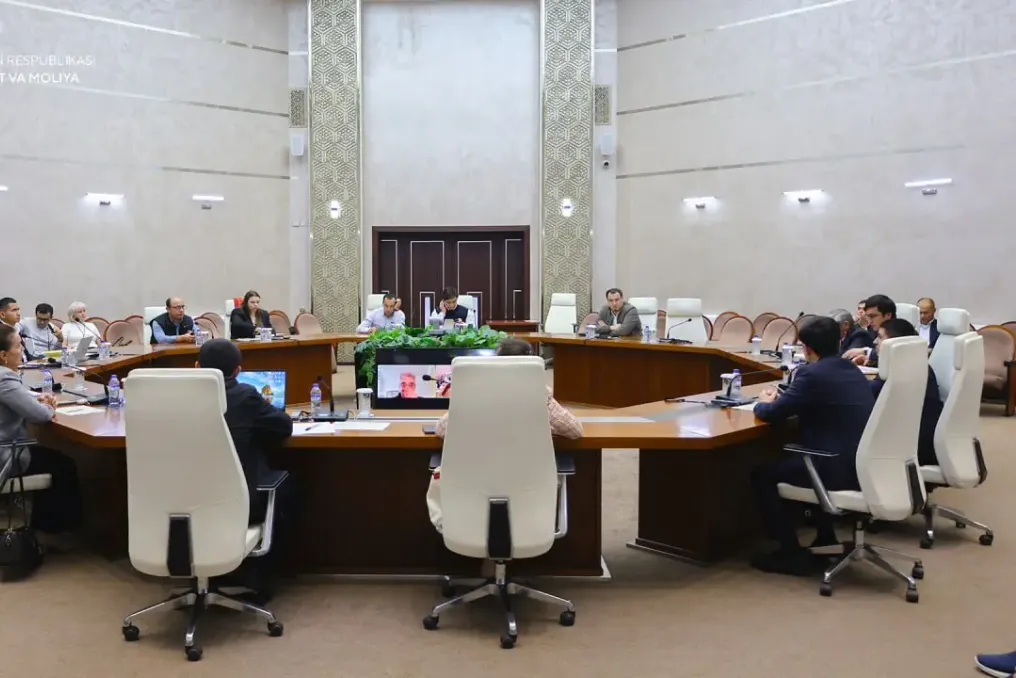
Uzbekistan plans to transition from the current Monitoring, Reporting, and Verification (MRV) emissions system to implementing national carbon pricing mechanisms and industrial decarbonization measures.

Discussions on this topic took place at a seminar on November 3, which included representatives from state ministries, agencies, and industrial enterprises. The event was organized by the Ministry of Economy and Finance of Uzbekistan, the Green Economy Projects Center under the ministry, and the German Agency for International Cooperation (GIZ) as part of the 'Green Industrialization' project. International expert Zsolt Lengyel participated in the seminar.

The main focus of the discussions was on the practical application of Emissions Trading Systems (ETS) and carbon pricing mechanisms for industrial modernization, accelerating the decarbonization process, and assisting Uzbekistan in meeting its Nationally Determined Contributions (NDCs) within its climate commitments.

Participants studied the experience of European Union countries in implementing MRV systems and carbon regulation mechanisms. Using the example of the German agency DEHSt, the seminar presented the principles of emissions trading, database management, emissions monitoring, and independent data verification, as well as the allocation of emission quotas, including auctions.

Differences between emission quotas and carbon credits obtained through individual projects were also discussed, along with measures to prevent double counting. Participants examined how revenues from carbon pricing can be directed towards industrial decarbonization and stimulating green investments.

Another important topic was the European Union's Carbon Border Adjustment Mechanism (CBAM) and its potential impact on the competitiveness of Uzbek producers, especially manufacturers of mineral fertilizers and other export-oriented products. The seminar also addressed issues ensuring that carbon-related payments contribute to the development of the country's domestic economy.

At the conclusion of the discussions, participants emphasized the need to create a reliable historical database of emissions at the enterprise level. Such data will serve as the basis for developing rules for allocating emission quotas and introducing national carbon pricing mechanisms.

Popular