Several summits are scheduled in Asia in the coming days to address issues such as the war in Ukraine, Artificial Intelligence (AI), and global trade, attracting the presence of various leaders, including the presidents of the United States and Russia.
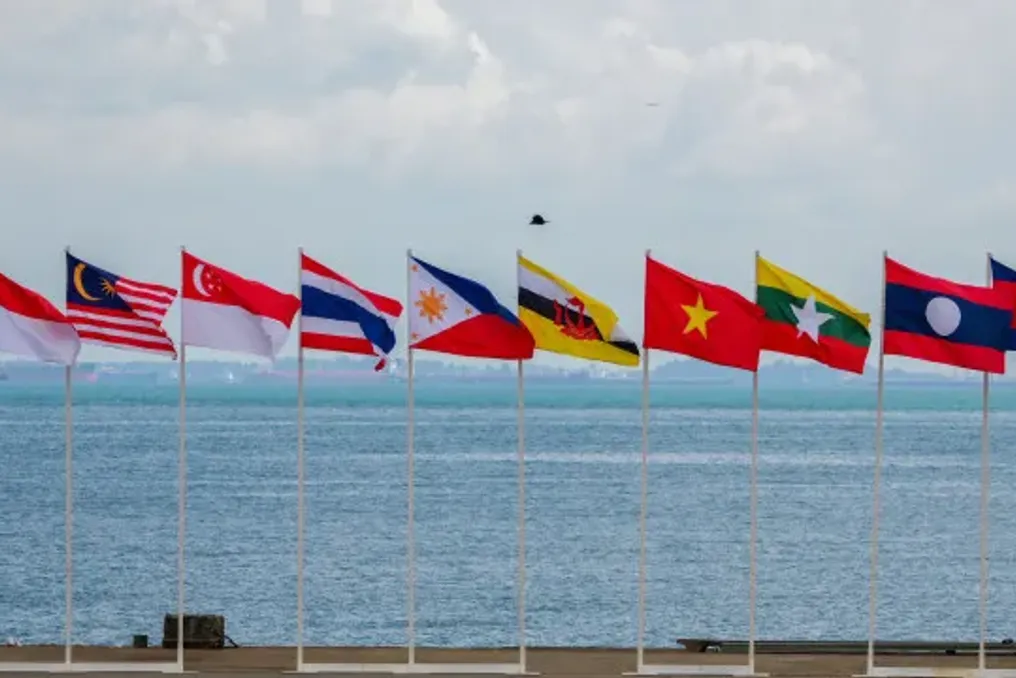
Initially, the 49th summit of the Association of Southeast Asian Nations (ASEAN) will take place in the Philippines, scheduled to begin on Sunday. Subsequently, the annual Asia-Pacific Economic Cooperation (APEC) forum will be held in China on November 18 and 19 in the city of Shenzhen.
Russian President Vladimir Putin is expected to attend APEC. Indian Prime Minister Narendra Modi will participate in the ASEAN summit, while US President Donald Trump and Canadian Prime Minister Mark Carney will be present at both events.
Before traveling to China, the leaders participating in the ASEAN in Manila must conduct a series of meetings focused on Artificial Intelligence, trade, and possibly nuclear disarmament, according to reports from the France-Presse (AFP) agency.
At APEC, the host, Chinese leader Xi Jinping, along with his American and Russian counterparts, is expected to meet to discuss possible solutions to the conflict in Ukraine. This meeting was confirmed by the Russian presidency on Thursday, on the sidelines of the summit in Shenzhen.
Although there were rumors of a tripartite meeting between Putin, Trump, and Xi, this appears to have been definitively confirmed by Moscow. Putin has insisted on discussing issues related to Ukraine, but Trump indicated that the focus would be on denuclearization and the end of the war in Iran.
However, international policy analysts contacted by AFP suggest that this meeting may not yield definitive resolutions to the problems faced by the leaders of major powers. Ryan Hass, from the Brookings Institution, commented that 'the symbolism... will represent a large part of the content.' He anticipated that the leaders would likely limit themselves to 'agreeing on broad principles without committing to concrete actions.' Wang Wen, dean of the Chongyang Institute of Financial Studies at Renmin University, agreed, stating that 'there is a high probability that discussions will end without progress.'
Additionally, a potential meeting between Trump and his North Korean counterpart, Kim Jong Un, seems quite likely, given that Pyongyang has rejected repeated attempts at rapprochement.
At APEC, AI is also expected to take a prominent place, following the September decision by Xi Jinping and Donald Trump to create a 'communication channel' for incidents related to these technologies. Despite technological rivalry between the two countries, calls for cooperation are growing, motivated by concerns over cyberattacks and biological weapons.
In September, Xi declared that Washington and Beijing have a responsibility to 'ensure that AI development always remains under human control.' Stephen Wu, founder of Carthage Capital, assessed that APEC discussions might build upon this agreement between the two leaders regarding the 'communication channel,' arguing that 'both parties need an outcome, and a direct line is the least expensive thing in diplomacy: free to announce, free to ignore.'
The espionage case involving Nvidia president Jensen Huang, who was scheduled to accompany Trump to APEC, may overshadow these conversations. Jensen Huang admitted to having an extramarital relationship with a woman whom US intelligence services suspect works for Beijing.
Prior to this, in Manila, all indications suggest that the Philippine presidency of ASEAN will conclude without being able to sign a code of conduct with Beijing for the South China Sea. The two countries have been disputing this sea for years, which Beijing claims almost entirely, despite an international ruling favorable to it. The region has seen several confrontations this year.
Another crucial point in both Asian meetings will be trade, although experts warn of the difficulty of making progress in regional free trade frameworks due to tensions between China and the United States and the tariff war initiated by Trump. Even with the extension of Washington's tariffs against Beijing until January 10, tensions persist regarding Chinese exports of rare earths, vital for electronic components.