Norwest allocates $4 billion to support India's manufacturing sector
Read more
Business Standard
business-standard.com

Norwest allocates $4 billion to support India's manufacturing sector

Norwest, an American investment firm, is making significant bets on the development of high value-added manufacturing in India. The company announced the closing of its new $4 billion fund—the largest in its history—which will cover India, the US, and Israel.

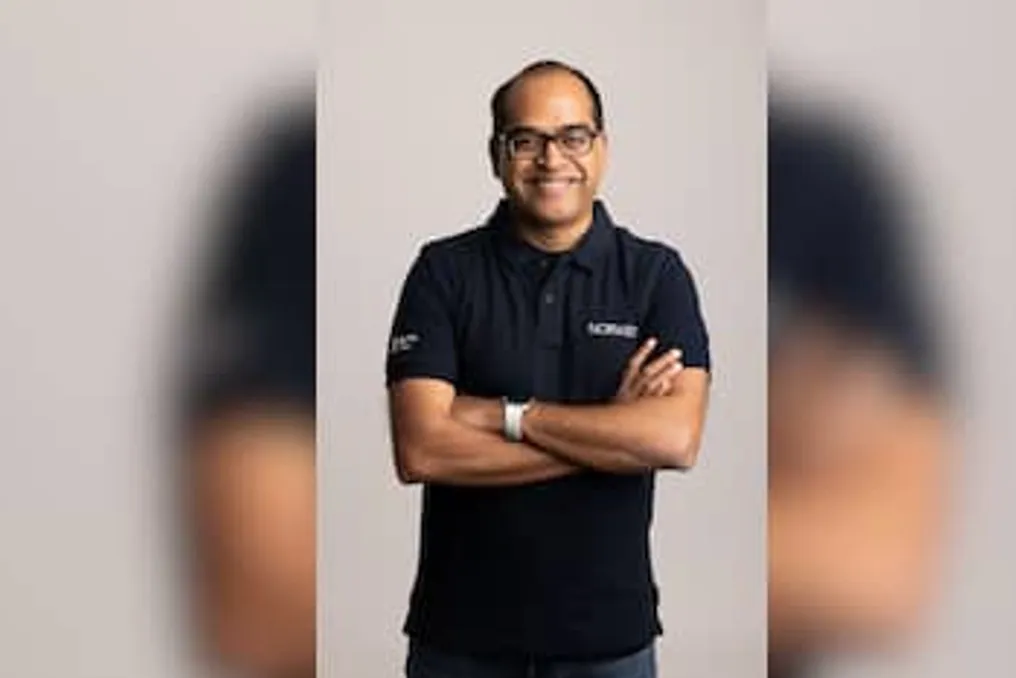
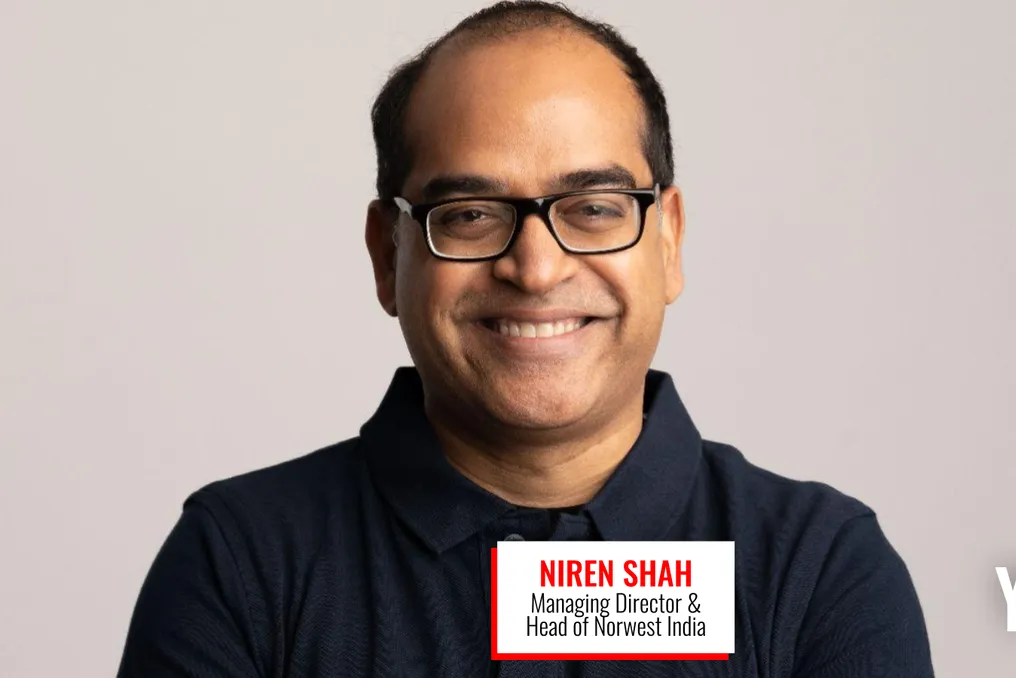
Discussing its investment strategy in India, Niren Shah, Managing Director (MD) and head of Norwest India, noted that within India they provide a significant volume of capital growth, investing from $30 million to $150 million, with an optimal amount around $75 million. He pointed out that one of the promising areas they have identified is high value-added manufacturing and related manufacturing services.

Shah emphasized that historically many came to India for cheap and routine production, but the situation is changing towards creating high-quality products. According to him, Indian products have reached maturity, and the country now produces world-class goods.

Furthermore, he added that supply chains are striving to diversify and not depend solely on China. Currently, Indian companies are signing long-term agreements of five to eight years with global partners who plan to purchase products from India due to its quality.

Government support, such as the reduction of Goods and Services Tax (GST), has also contributed to the development of manufacturing. In areas like precision components or engineering, companies demonstrate high Return on Capital Employed (RoCE) and Earnings Before Interest, Taxes, Depreciation, and Amortization (EBITDA) margins in businesses that have developed over a long period and reached critical mass.

Shah explained that many of these family businesses slowly transitioned from producing one component to another over decades. This helped them master working with several Original Equipment Manufacturers (OEMs), but they are still in the early stages. Now they need to accelerate business development, attract new talent, build new production facilities, and receive assistance in communicating with potential OEMs in the US.

The second major area of Norwest's investment is healthcare. Shah believes that the current number of built hospitals is only 20-30% of the total needs, considering the aging population of India. He also noted that Artificial Intelligence (AI) is not yet impacting this sector because it is handled by people.

More than half of Norwest's investments are directed towards family-run companies involving multiple members, and these companies are already profitable. Such companies request between $40 million and $100 million and require help with going public in four years, which is where Norwest excels.

Norwest begins considering exiting investments five to seven years after injecting growth capital. Regarding AI, Shah stated that while he does not rule out investments in companies working with Large Language Models (LLMs), a suitable opportunity is not yet visible. Nevertheless, the company has invested in firms such as Resolve.ai—an AI-based debt collection platform—and is looking at other companies in this field from a venture capital perspective, which implies smaller check sizes. Thus, Norwest's focus on AI and deep tech will be carried out through venture capital, with investments ranging from $1 million to $25 million.

Similar stories

Norwest closes $4 billion fund to support infrastructure in AI, healthcare, and finance
Read more
yourstory.com

Norwest closes $4 billion fund to support infrastructure in AI, healthcare, and finance

Investment firm Norwest, which specializes in venture capital and equity growth, has announced the closing of the Norwest 18 fund, totaling $4 billion. This fund is the largest in the company's 65-year history. It will invest in the technology, medical, and consumer markets across the US, India, and Israel, covering both early-stage startups and established enterprises.

Founded in 1961, Norwest states that it has invested in over 750 companies and currently collaborates with more than 275 portfolio companies. Among its Indian investments are OfBusiness and Swiggy, and the firm maintains an office in Mumbai. The company emphasizes that its multi-stage approach aims to assist companies at every phase—from initial development to expansion.

The Norwest 18 fund continues the work of Norwest 17, which was launched in April 2024. Since then, the firm has made over 87 investments and worked with more than 30 portfolio companies to achieve liquidity events, where investors can realize the value of their assets. Such events include the stock market listings of Amagi Media Labs and Swiggy, as well as business acquisitions, such as Qualified by Salesforce and Veza by ServiceNow.

The firm believes that its role extends beyond simply providing capital, especially when businesses face more complex growth decisions. Senior Managing Partner Jeff Crowe noted that companies remain private longer, expand into various markets, and are forced to make increasingly complex decisions regarding technology, talent, and development.

He stressed that 'capital is only one part of what they need,' highlighting the importance of long-term support, industry expertise, and networks. Norwest anticipates that artificial intelligence will create opportunities in its established sectors and new areas such as financial infrastructure, physical and voice AI, AI agent cybersecurity, industrial technology, aerospace, and healthcare. Norwest mentions Beltic, Rain, and Stablecore in the payments and digital currency infrastructure space, as well as LlamaIndex and Generalist AI in intelligent systems.

This strategy is unfolding against the backdrop of increasing concentration of tech investments in India. AI startups in the country attracted $1.6 billion in the first nine months of 2026, compared to $677 million the previous year, although the number of funding rounds decreased by 43%. Four large deals accounted for 72% of the total amount, indicating that capital is disproportionately directed towards infrastructure and model developers, while business applications struggle to convert interest into paying customers.

Recent fundraising in India demonstrates activity in adjacent sectors. Even Healthcare from Bengaluru raised $50 million in October from Khosla Ventures and Alpha Wave to expand its healthcare and hospital management operations, while the wellness startup PowerUp Money raised $10 million in November led by Flourish Ventures to develop AI-based wellness management.

Policy is also shaping the market. The IndiaAI mission expanded total computing power to over 45,000 GPUs and selected 20 proposals for locally developed foundational AI models. In July, the Cabinet approved Semicon 2.0 with a budget of 1.275 trillion rupees for semiconductor design and manufacturing.

Norwest is also strengthening support beyond financing by doubling its Advisory Network, adding operational executives, and launching Norwest Operator Collective and Norwest Kinetic. Managing Partner John Cossou stated that Norwest's investment approach is built on maintaining long-term relationships with businesses as their needs evolve. Its multi-stage strategy allows the firm to 'meet companies where they are' and continue supporting them throughout their growth process.

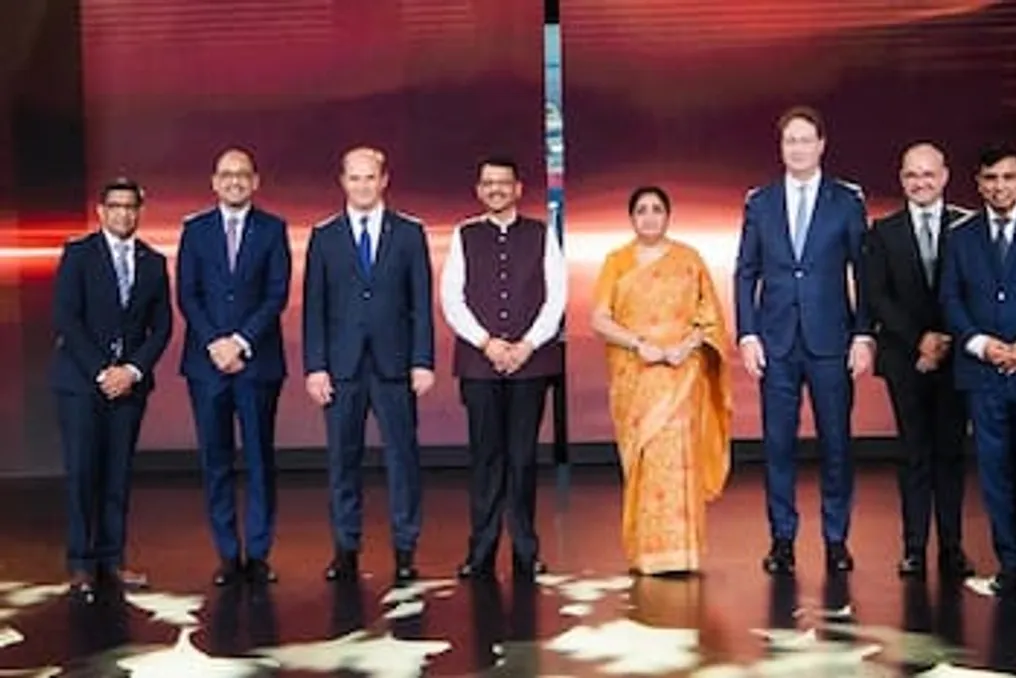
Mercedes-Benz views India as a future export hub, focusing on components and technologies
Read more
business-standard.com

Mercedes-Benz views India as a future export hub, focusing on components and technologies

The German luxury car manufacturer Mercedes-Benz sees potential in India to become a production and export center for global markets. The company's global head, Ola Kellenius, stated that the question is not whether this will happen, but when.

However, the company has not yet made a final decision to manufacture cars in India for subsequent export. In the short term, the main opportunity is expanding global supply of components and technologies from this country.

Market Development Forecasts

Kellenius, Chairman of the Board of Directors of Mercedes-Benz Group AG, noted that the growing luxury car market in India, the development of the supplier ecosystem, and engineering capabilities could eventually provide the country with a more significant manufacturing role. He emphasized: 'I think it is more a matter of time than possibility. But I want to clarify that we have not made such a decision at the moment,' Kellenius said at a media roundtable at the company's plant in Chakan, near Pune, on Wednesday.

These statements came after Maharashtra Minister Devendra Fadnavis invited Mercedes-Benz to use the state not only as a production site for the domestic Indian market but also as a base for developing technologies and producing vehicles for global markets.

Previously, the Chakan plant was used for limited vehicle exports. In 2018, a small batch of locally produced GLC SUVs was sent there to meet US demand as a backup option. Nevertheless, the plant is primarily focused on the Indian market. In the presentation of the company's global strategy in February 2026, priorities for foreign markets, including India, were named as expanding regional supply and service centers, as well as more active use of trade agreements.

Kellenius also noted that India is already an important growth market, as Mercedes-Benz showed its best quarterly result in the country. This optimism is based on Mercedes-Benz's strongest quarterly performance in India. From July to September 2026, the company sold 5,422 vehicles, which is 6 percent more than the previous year and 17 percent compared to the previous quarter. From January to September, sales grew by 8 percent, reaching a record 15,190 units, driven by demand across core, premium, and entry-level luxury segments.

Nevertheless, the luxury car segment remains relatively small compared to the overall passenger car market. About 5 million passenger cars are sold in India annually, but the premium and luxury segments account for just over 1 percent, or approximately 60,000 vehicles. Mercedes-Benz's annual sales, amounting to about 20,000 vehicles, give it a market share of approximately one-third.

Based on India's projected economic growth over the next five to seven years, Kellenius expects a significant increase in demand for luxury vehicles. A larger domestic market, combined with appropriate product positioning and pricing, could ultimately justify the next step in local manufacturing.

Until now, India may play a more significant role in Mercedes-Benz's global supply chain. 'We can, if you like, export from India based on components before asking about the full car,' he stated.

The company is already strengthening technology and supplier partnerships in India, which, according to Kellenius, do not necessarily have to be limited to serving the domestic market. A proposed free trade agreement between India and the European Union could further improve the economy of cross-border production and supply. He described this agreement as good news for India, Europe, and business, noting: 'If friction is less, the probability of an export deal is higher.'

Calls for Development

Fadnavis, who recalled the opening of the same plant expansion in 2015, urged the German automaker to think beyond just assembling cars. He appealed to Mercedes-Benz to consider Maharashtra not only as a place for production in India but also as a platform for developing next-generation battery technologies, automotive artificial intelligence, electronics, and software. The minister stated that the state's ambition is to transition from a center of automotive production to a global center for future mobility.

Santosh Iyer, Managing Director and CEO of Mercedes-Benz India, reported that the company's cumulative investment in the country has reached 320 billion rupees, including 200 billion rupees invested in 2026 in production operations, new product implementation, and digitalization. In his statement, Iyer emphasized: 'The presence of senior officials and the Board of Trustees and the Board of Directors of Mercedes-Benz in India underscores the importance of India as a strategic market for Mercedes-Benz.'

Since commencing operations, Mercedes-Benz has sold over 240,000 vehicles in India, most of which are manufactured locally in Chakan.

India's Rise in the Global Hierarchy

The growing importance of India comes against the backdrop of intense competitive pressure that Mercedes-Benz faces in China, which has historically been one of the largest and most profitable markets for the company. Global sales of the German manufacturer's passenger cars decreased by approximately 8 percent in the third quarter of 2026.

When asked whether the slowdown in China would lead to a revision of the company's global strategy and an increased importance of India, Kellenius replied that China would remain a key pillar despite the difficulties. He stated: 'Despite the cyclical development of the Chinese market and competitive intensity, it remains the largest automotive market. Therefore, it will continue to be a pillar in our strategy.'

However, the growth of India's role is not an 'either/or' choice. 'It is not a choice between two options. It is both,' he added, clarifying that India's position in Mercedes-Benz's global hierarchy will grow over the next five years.

Kellenius characterized India as a growth market, a talent market, a technology market, and a supply base; all these aspects will become more important in the company's global operations.

A significant part of this expansion will be carried out through Mercedes-Benz Research and Development India (MBRDI)—the company's largest R&D center outside Germany. Kellenius recalled that engineering activities in India began three decades ago, and since then, these relationships have evolved into what Mercedes-Benz calls globally integrated R&D, where Indian teams develop competencies in mechanical engineering, electronics, powertrains, software, and artificial intelligence. He cited a meeting with an Indian quantum computing startup collaborating with Mercedes-Benz as evidence of the complex technological capabilities available in the country. He also noted that Indian research operations are increasingly working on par with engineering centers in Germany and elsewhere.

Dr. Jörg Burzer, Technical Director for Development and Procurement at Mercedes-Benz Group AG, stated that Indian engineers contribute to the technologies shaping the company's global future.

EV Share Could Reach 20% by 2027

Kellenius also expects electric vehicles to constitute a significantly larger share of Mercedes-Benz sales in India in 2027, potentially reaching a range of 20 percent, compared to the high single digit expected this year. He said: 'In India this year we might finish with a high single digit of electric vehicles. I think next year it will be a double digit number, probably starting with a two.'

This optimism is linked to the expansion of the second-generation EV portfolio, including the locally produced electric GLC, which rolled off the assembly line in Chakan on Wednesday. Kellenius reported that Mercedes-Benz received about 1,000 pre-orders for the electric model even before customers learned its price, which he viewed as a sign of changing consumer preferences. The company separately announced that the electric GLC received over 550 expressions of interest in the first 36 hours after registration opened. On Wednesday, Mercedes-Benz launched a locally produced electric GLC 400 4MATIC at a price of 78.50 lakh rupees (excluding taxes) at the Chakan plant. This SUV has a claimed range of up to 711 km, and deliveries will begin in mid-November.

Mercedes-Benz intends to offer an electric alternative in every major passenger car segment by the end of the decade. However, Kellenius noted that full electrification in global markets is still far off. 'The internal combustion engine will exist for at least another 10, maybe 15 years,' he added, noting that diesel engines will remain part of the company's portfolio in the foreseeable future.
India ranks third in Hurun Gazelle Index, overtaking the UK
Read more
business-standard.com

India ranks third in Hurun Gazelle Index, overtaking the UK

India has displaced the UK to take third place in the Hurun India Gazelle Index 2026 from ASK Private Wealth. The list includes 51 companies, which is four more than the previous year. The US and China maintained their positions in the first two places, with 302 and 278 Gazelle companies, respectively.

The index, published on Tuesday, classifies private companies founded in 2000 or later that have a valuation between $500 million and $1 billion and are expected to reach 'Unicorn' status (valuation over $1 billion) within three years. Since its creation in 2021, the number of such companies has increased by 59 percent, corresponding to a Compound Annual Growth Rate (CAGR) of 10 percent.

Anas Rahman Junayd, founder and chief researcher at Hurun India, noted that the index aims to draw attention to the founders of these companies and provide family offices with an opportunity to consider these enterprises before they become inaccessible.

Rajesh Saluja, co-founder, CEO, and Managing Director of ASK Private Wealth, emphasized that the interest of family offices in private investments remains high. He reported that about 15–20 percent of family office portfolios are always reserved for alternative investments or private deals, and this interest continues to grow. Saluja also highlighted defense, clean technology, and artificial intelligence (AI) infrastructure as sectors attracting investor attention.

The latest cohort of companies has a total valuation of 3.3 trillion rupees (3.3 lakh crore), with an average valuation of 6400 crore rupees. These companies have collectively attracted funding of 87,780 crore rupees, and revenue shows a Compound Annual Growth Rate (CAGR) of 21 percent between fiscal years 22 and 25. In total, these companies employ 60,228 people and reported a collective revenue of 33,233 crore rupees for fiscal year 25, based on data from 41 companies that disclosed this information, corresponding to an average growth rate of 50 percent.

Popular