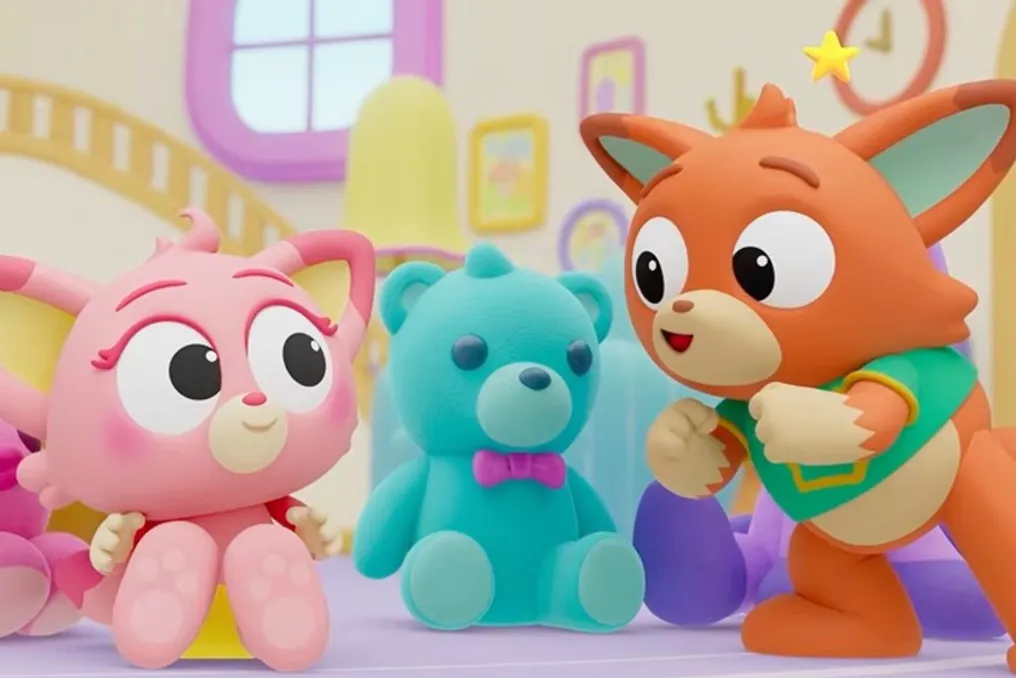
Disney implements artificial intelligence in production, preparing for the launch of the series Ozzy Fox in December
Read more
Ventureburn
ventureburn.com

Disney implements artificial intelligence in production, preparing for the launch of the series Ozzy Fox in December

In recent years, Hollywood has viewed artificial intelligence as a threat to the creative process, with both studios and unions engaging in legal battles while executives concealed their AI experiments. However, Disney now appears to be moving towards an AI-driven evolution.

Disney has embraced AI by announcing plans to release a new animated children's series titled Ozzy Fox in December. The creation of Ozzy Fox occurred just a few months after the company rejected the use of AI in its creative process.

Over the past year, major entertainment companies have found that fighting AI does not prevent children's viewing time from being filled with low-quality, AI-generated content. Now, Disney intends to utilize AI, provided the process is curated by artists to deliver valuable content to children.

Ozzy Fox is the first such project. This series was developed by Animaj studio, which is rapidly growing and joined the Disney Accelerator program in 2025.

The musical show tells the story of a family of foxes who embark on musical adventures. The series was already tested on Disney Jr. and video streaming platforms in July, garnering hundreds of thousands of views within a few days.

This series differs from simple text-to-video generators because it is created from start to finish by human artists. All key character poses are pre-planned manually by animators.

Next comes Animaj's exclusive FlipMove pipeline. According to Disney, FlipMove is based on agentic AI and is used to accelerate labor-intensive intermediate stages. One AI agent analyzes the director's storyboard notes, and a second AI agent selects the appropriate internal model for movement between sketches. After the AI works, artists manually check every frame before the release of Ozzy Fox.

By using these AI tools, Animaj operates within a closed ecosystem, which reduces episode production time. Thanks to its unique process, the studio has attracted venture capital support. Animaj raised $85 million to scale its artist-focused platform. The new funding will help the studio create an even more efficient process and further reduce the time it takes for animated shows to reach viewers.

As expected, there is much debate when automation is combined with children's programming. When early episodes of Ozzy Fox appeared during the summer, the series was accused of being unfinished. The reason cited was overly simple backgrounds and a lack of prop detail, suggesting hasty automation. Opposition arose, but Animaj responded with a public manifesto. They emphasized that the real problem is not artificial intelligence, but careless work.

In studios that do not use smart tools, low-budget video prompts are used instead. Rigorous training of models on closed and proprietary data helps protect intellectual property rights and ensures that writers and animators continue to work. Even leading innovators at Disney stated that the creative team retained their jobs because of how they use AI. Instead of replacing creators with AI tools, Disney uses them merely as means to accelerate the creative process.


Similar stories

Discussion of alleged firing at OpenAI due to excessive reliance on AI tools
Read more
www.aajtak.in

Discussion of alleged firing at OpenAI due to excessive reliance on AI tools

In the modern world, artificial intelligence (AI) has become an integral part of professional life, but questions arise regarding the potential risks of over-reliance on these technologies. An alleged email from OpenAI is circulating widely on social media, claiming that a lead software engineer was fired solely because he depended on AI tools for all his tasks.

The recent alleged termination letter, which went viral on the social network X, attracted the attention of the entire technology industry. According to reports, this post was viewed about two million times and was reposted multiple times.

This alleged email asserts that the AI giant, OpenAI, decided to fire a lead software engineer due to his excessive dependence on AI tools while performing his work. It is important to note that no official confirmation of this viral email has been received from any independent sources.

This sensational message was supposedly sent by the OpenAI Human Resources team. Its opening line is shocking: 'OpenAI is immediately terminating your employment as a lead software engineer.' The letter then raises serious questions about the engineer's working methods. It claims that he held a leadership position with an annual salary of $300,000 (approximately 28,269,510 rupees) or more, yet showed weak development of his own understanding of the company's codebase.

The alleged letter cites three main reasons for the dismissal, which are quite noteworthy. Firstly, it concerned cloud coding: all his code reports were entirely generated using the AI tool 'Claude'. Secondly, he used ChatGPT daily to understand the code written by Claude. And thirdly, 'Gemini' was employed to fix errors and bugs in this code. Thus, the message describes a strange situation where understanding one AI system required the help of another, and a third system was called upon to eliminate deficiencies, indicating almost zero human involvement.

The alleged letter also mentions a serious 'production failure' (technical stoppage) that occurred the day before. It states: 'During yesterday's serious production failure, your only action was to instruct ChatGPT.' The letter includes the engineer's supposed request, in which he wrote: 'Please fix this, they are watching me now.' This depiction of the engineer portrays him as a specialist who completely delegated critical decisions, such as software development and maintenance, to machines and tools, over which he effectively had control.

The letter concludes with instructions that the employee's access to systems will be permanently revoked on the same day at 5:00 PM. This message ends with the signature 'OpenAI Engineering Leadership.'

Despite the widespread circulation of this letter on social media, its authenticity has not been proven by OpenAI or by any employee who has publicly acknowledged such an incident. This post, reportedly published by the account @goldtooth.exe on X, leads experts to consider it more of a hypothetical or satirical statement on social media rather than a credible report of a dismissal.

Even if this specific letter is unconfirmed, the entire incident serves as an example...

Disney and Adobe announce collaboration for artificial intelligence development
Read more
tecnoblog.net

Disney and Adobe announce collaboration for artificial intelligence development

A new alliance focused on artificial intelligence was established between Disney and Adobe this Tuesday, November 10th. This agreement ensures that the software company's generative AI models will be prioritized for The Walt Disney Company, aiming to benefit both the audiovisual and theme park segments.

Disney's interest in generative AI is not new; the company has already participated in a partnership with OpenAI and acquired shares in Character.AI after the startup's bankruptcy. Prior to the collaboration with Adobe, Disney had already announced the use of Firefly AI to create toys in its theme parks.

The partnership will also cover marketing activities, event collaborations, and other services. Adobe emphasized its commitment to responsible AI development, ensuring the protection of Disney creators and their work materials.

According to Adobe, this collaboration will allow for AI development specifically shaped by Disney's properties. This implies targeted training using the company's creations, taking into account styles, character traits, and settings.

The generative AI models will be accessible through the Firefly Foundry service, which was already in use. In June, Adobe itself reported that Disney used this platform to develop new toys for its parks. Additionally, the AI will assist in audiovisual production and content adjustments for ESPN, the Disney group's sports channel.

Besides this recent pact with Adobe, Disney was already engaged in the use of generative AI. In December 2025, the company signed an agreement with OpenAI to make its content available on Sora, a video creation platform based on technology. According to ArsTechnica, this agreement would cost Disney US$ 1 billion (equivalent to R$ 5.5 billion), but it was finalized in March of this year due to Sora's closure.

More recently, Character.AI filed for bankruptcy in the United States, and Disney showed interest in absorbing employees and buying shares in the company. Shortly before closing the deal with Adobe, Bloomberg reported plans by Disney to carry out mass layoffs, aiming to reduce 20% of operational costs.

Thousands Protest AI, Invading Microsoft Data Centers; Water Scarcity Concerns Rise
Read more
www.aajtak.in

Thousands Protest AI, Invading Microsoft Data Centers; Water Scarcity Concerns Rise

Across the world, thousands of people have taken to the streets to protest against artificial intelligence (AI) technologies. While AI enables people to create images, generate videos, answer questions, and simplify work, the growing number of data centers required for its operation is causing serious concern in Europe and America.

Specifically, in Amsterdam (Netherlands), protesters infiltrated the construction site of a Microsoft data center. The main issue is that AI relies not only on chatbots or software but also on large data centers containing thousands of servers used both for training AI models and for responding to user queries.

These servers require constant power supply and cooling systems. The increase in such centers raises concerns regarding electricity consumption, water usage, and environmental impact. Furthermore, due to the chipsets used in AI data centers, gadget prices worldwide, especially smartphones, are becoming increasingly high.

On November 7th, a large rally against data centers took place in Dublin (Ireland), attended by approximately 2000 people, according to Bloomberg. Similar demonstrations occurred in the capital of Finland, Helsinki, where about 1300 protesters gathered, as well as in other smaller Finnish towns.

Protesters in Dublin marched from Parnell Square to the Irish parliament. Their demand was to suspend the construction of new data centers until a proper assessment of their impact on the environment and local residents is conducted. Activists' concerns relate to increased electricity bills, water consumption, and the disregard for local opinions.

These demonstrations were part of a campaign called Stop Dirty Data Centres, involving various groups concerned with ecology and local rights. Campaign participants insist that large technology companies should not be granted permission to build new data centers without sufficient public consultation.

The most notable event in Europe was the protest on November 6th in Amsterdam (Netherlands), when demonstrators trespassed onto the construction site of a new Microsoft data center. Some climbed onto a crane at the site and set off flares, leading to clashes with the police.

According to the Associated Press, Dutch police detained between 150 and 200 people on suspicion of illegal entry onto the construction site. This occurred amid a broader protest movement against data centers in Europe. However, the intrusion into the Amsterdam facility was carried out by a local group.

Microsoft stated that it respects the right of people to peaceful demonstrations but does not support illegal actions or actions that threaten safety. The company also noted that it understands public concerns regarding this project.

Simply put, a data center can be imagined as a massive warehouse of the internet and digital services. When a user saves a photo to the cloud, watches a video, or asks a question to an AI chatbot, data center servers are behind it. With the growing demand for AI, both the number and computational power of these servers increase, especially for training and running large AI models, which requires colossal computing power.

Servers constantly generate heat, so air conditioning systems must be run to cool them, which often use water. This is why local residents are questioning how much electricity and water will remain for homes, businesses, and other industries in the area if many data centers are built there, and whether this load will affect ordinary citizens' electricity bills.

Ireland is an important hub for data center companies in Europe, attracting investments from giants like Microsoft, Amazon, and Google. However, the rapid increase in the number of data centers calls into question the level of electricity consumption. According to the Irish agency, in 2025, data centers used 23 percent of the country's total registered electricity consumption.

Popular