The development of artificial intelligence has become significantly easier and faster with the advent of AI agents. Nevertheless, many companies that have implemented such agents face issues such as hallucinations, context loss, or failures when performing long and complex tasks.
To address this gap and expand its tools for creating enterprise agents, LangChain has raised $300 million. The funding round was coordinated by CapitalG, an Alphabet venture fund.
Previously, LangChain was valued at $1.25 billion, but its worth has now reached $3 billion. CapitalG led the $300 million round, following LangChain's participation in a $125 million round in October 2025. In addition to CapitalG, IVP, Sapphire Ventures, GIC, and DFJ Growth participated in the round. LangChain's total raised funding approaches $460 million.
LangChain's history is unique: it was released on GitHub in 2022, just a few weeks before the appearance of ChatGPT, and has evolved into a popular framework for developers who want to use language models for tasks other than chatting.
Since then, teams from Uber, Klarna, and Replit have worked on the framework. LangChain's popularity is due to its open source code and open source libraries, which was evident to investors.
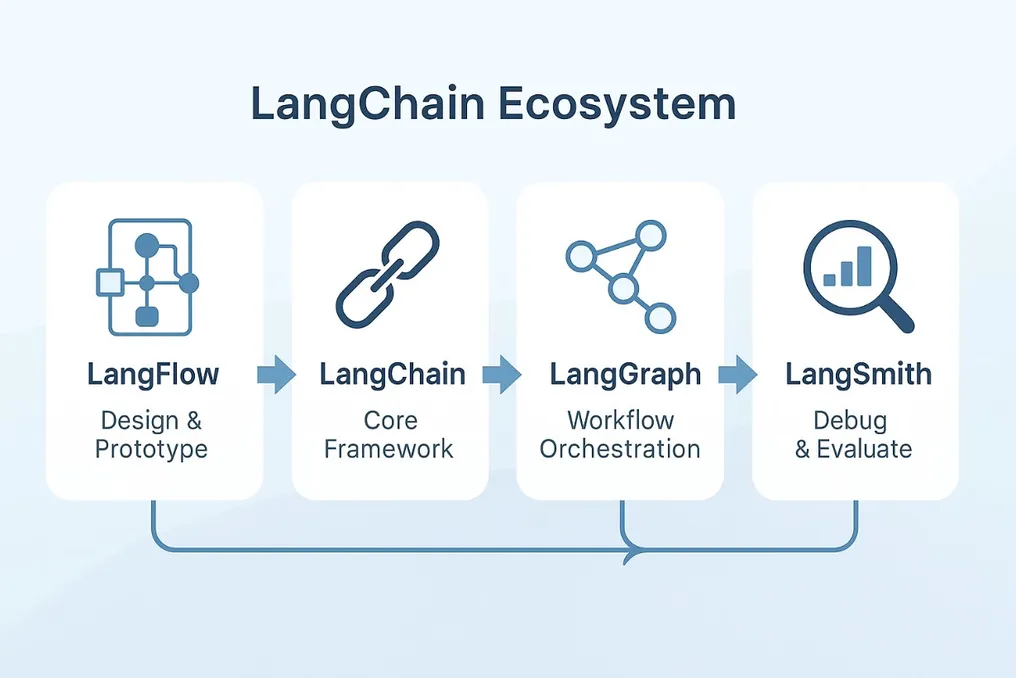
LangChain and LangGraph are open-source frameworks. LangGraph is responsible for managing multi-agent workflows, where several AI assistants sequentially pass tasks to each other. The commercial part is LangSmith, which monitors, evaluates, and debugs agents after they leave the lab and start working with real clients.
According to reports, most of the new capital will be directed towards expanding the company's operations and hiring personnel in corporate sales, engineering, and support. The company reported having about 435 employees currently, but plans to increase its staff to 850 by the end of 2027, nearly double in a 13-month period.
Despite potential failures of AI agents, LangChain is developing a tool capable of tracking every decision made and indicating the reason for an error. This is seen as a kind of insurance for companies spending huge sums on AI, and LangChain hopes that such companies will be willing to pay for this certainty.
The impact of this funding round could change methods of software creation and usage across almost all industries. Developers can expect faster releases and more reliable enterprise capabilities, although this remains a hope, not a guarantee.
In the field of development and engineering leadership, model-agnostic orchestration is rapidly becoming the best architectural bet for the AI era. Business buyers can secure a more reliable provider and reduce the risk of company bankruptcy next year. AI agents have ceased to be a theoretical concept and have become a practical tool for daily business, preparing to transition from the hype category to the necessity category. Over the next two years, users will be able to apply AI agents in various sectors to perform complex tasks without making the numerous errors characteristic of today.