
Avatar Capital Partners raised $300 million for Japan's housing sector fund
Read more
Ventureburn
ventureburn.com

Avatar Capital Partners raised $300 million for Japan's housing sector fund

Avatar Capital Partners (ACP) has successfully closed a $300 million fundraising round to invest in Japan's housing sector. This financing round was executed in partnership with GCM Grosvenor and the Teacher Retirement System of Texas (TRS).

GCM Grosvenor and TRS serve as key and strategic investors in this fund. Their combined commitment of up to $100 million served as an incentive for institutional investors to join the fund. This deal marks an important milestone in ACP's process of institutionalization.

The expansion of the global investor base strengthens ACP's position in the Japanese residential real estate market. The company noted high demand for the fund from institutional investors, exceeding current capacity.

Fund II will continue to follow the existing investment themes established in the current housing fund. These themes include an emphasis on sourcing direct deals for off-market housing investments in Japan. The team believes that stable demographics will support the housing market.

GCM Grosvenor will bring its expertise in creating middle markets and investing through general partner equity in real estate. This collaboration will help strengthen ACP's institutional investment platform and open new opportunities for joint work.

According to GCM Grosvenor Managing Director Peter Braffman, ACP possesses a unique market positioning that sets it apart from competitors. GCM Grosvenor Executive Council Director Danielle Even emphasized the importance of local connections and the company's ability to source properties.

The new fund is the second fund managed by ACP. The first fund was re-subscribed and closed in July 2025 with commitments totaling $105 million. ACP reports that the first fund was invested within 12 months and achieved five successful exits.

The firm's approach to acquiring and disposing of deals is based on deep knowledge of the local market and sound investment judgment. Fund leader Ryuta Ueda noted that the company leverages its experience and extensive networks to find deals that might otherwise not be commercially viable.

The future size of the fund will depend on additional commitments. The partnership will provide ACP with both capital and strategic support at the next stage of growth. GCM Grosvenor manages assets worth approximately $97 billion in alternative assets. GCM Grosvenor's backing provides ACP with a globally established investor network, while TRS offers specialized support focused on Japan.
Similar stories

Startup Dreamteam, founded by former Freshworks executives, raises $53 million to develop AI-based CRM
Read more
yourstory.com

Startup Dreamteam, founded by former Freshworks executives, raises $53 million to develop AI-based CRM

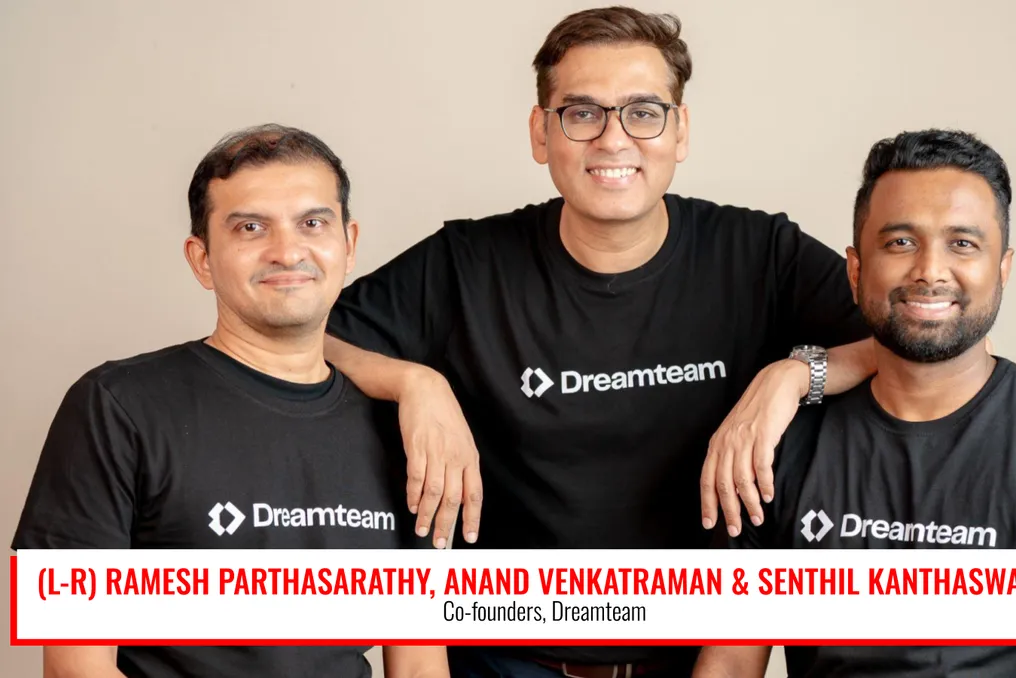
Dreamteam, an artificial intelligence-powered customer relationship management (CRM) startup founded by former Freshworks employees, has secured $53 million in funding. The investment was provided by Together Fund, Accel, and Premji Invest.

Dreamteam was established in 2025 by Anand Venkatraman, Ramesh Partasaratty, and Senthil Kantaswamy. The company's headquarters are located in California, while the main engineering team is based in Chennai. The company is developing a technological platform capable of understanding customer context and enabling specialized AI assistants.

Anand Venkatraman, co-founder and CEO of Dreamteam, noted that traditional CRM systems could not provide a complete picture of customers because the most valuable insights were often outside these systems. He added that artificial intelligence allows for this paradigm shift, enabling Dreamteam to learn from the team's current work, maintain context, and provide sales representatives with qualified AI colleagues to advance deals. This way, sales reps and managers can focus on relationships, judgment, and closing deals while Dreamteam handles everything else.

According to Dreamteam, their technological platform is used by companies across various industries, including healthcare, consulting, manufacturing, online media, and AI.

Girish Matrubutam, founder of Together Fund, the first institutional investor in Dreamteam, stated that CRM is one of the largest software categories ripe for radical change. He emphasized that he worked with the founders of Dreamteam from the beginning, observing how their vision for AI-based CRM was taking shape. According to him, the team's deep expertise in CRM and proven experience scaling enterprise software give them a unique advantage in this reimagining.

Dreamteam plans to expand its level of intelligence beyond sales to cover the entire customer lifecycle, including lead generation, onboarding, customer support, and upselling. Furthermore, the company offers Magic Apps, which allows business users to create custom applications and dashboards using natural language without needing to write code.

Shekhar Kirani, Partner at Accel, noted that in the age of AI, companies that deeply understand their customers have a huge advantage. He pointed out that today, every team member sees a different version of the customer because there is no centralized system storing all the information. Dreamteam is building such a system using AI agents.

Kindo raised $30 million to expand its enterprise AI management platform
Read more
ventureburn.com

Kindo raised $30 million to expand its enterprise AI management platform

Kindo, a company specializing in enterprise artificial intelligence management, has successfully secured a funding round of $30 million. Leading investors in this round included Crosspoint Capital and Forgepoint Capital, with participation from TFX Capital and Circle Rock Capital. Existing investors involved in the deal included Drive Capital, Riot Ventures, RRE Ventures, and Eniac Ventures.

The new round increases Kindo's total funding to $57.6 million. The company, founded in 2022 and based in Venice, California, has not yet disclosed the official name of this round. In 2026, the company demonstrated approximately 800% year-over-year revenue growth.

The capital raised will be used to scale its go-to-market operations, develop an Enterprise AI Control Center, and enhance Deep Hat models and add-ons.

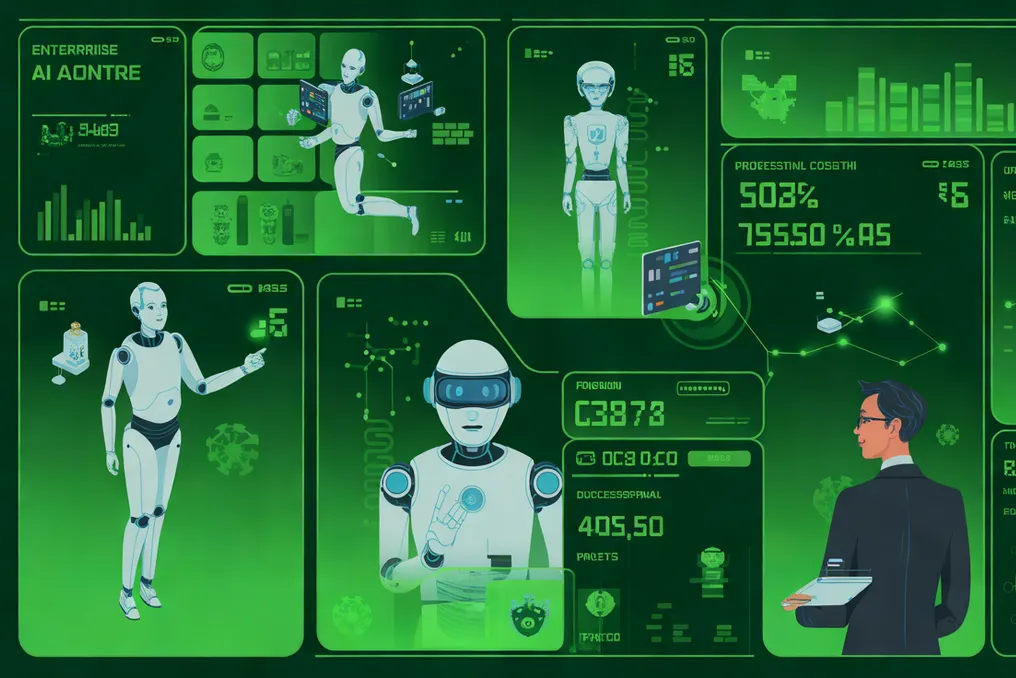
Kindo provides centralized management for searching, administering, and monitoring enterprise AI agents. The company's software detects so-called 'shadow AI' within organizational environments by aggregating agent activity, permissions, costs, and performance into a unified view. This solution addresses a significant challenge faced by enterprise IT teams.

Companies use autonomous agents to perform a wide range of tasks, from security control to supply chain management. However, IT, security, finance, and compliance departments are often unaware of these autonomous agents' usage. Kindo gateways track and validate agent calls to connected data sources, while also monitoring interactions with software and sanctioned AI models.

Kindo's identification system utilizes corporate access rights for employees and agents, which can be supplemented by administrators. Furthermore, Kindo offers a dedicated 'agent container' for critical use cases. Previously, the main drivers for the need for AI agent management were security and compliance. Now, the issue is the operational cost of autonomous intelligent systems.

Kindo's AI Control Center provides financial departments with transparency regarding expenditures. The Deep Hat Sift tool helps eliminate extraneous information from security queues by tracking token usage and logging the successes and failures of each agent, including failed tasks in reports. Organizations can view spending by employee, agent, department, and project, and set budgets, alerts, and budget limits.

The platform allows for the identification of unproductive agents and excessive model usage. Financial teams can analyze each agent's activity and compare its results against input data. Additional cost optimization tools are available through Kindo's Deep Hat products.

Kindo is utilized in manufacturing processes by various enterprises across different industries. Clients include companies from the financial services and professional services sectors, as well as healthcare and aviation. The company has received SOC 2 Type II certification.

One example of successful implementation is Aireon, a global data provider for aviation. Aireon uses Kindo for threat hunting and for first and second-level security operations. According to Aireon's CISO, the platform saves the company over $2 million annually, which was noted in May 2026.

Kindo's steps come amid the broader adoption of autonomous agents in business. Nevertheless, enterprises continue to address issues of visibility and accountability. Access, performance, and costs will remain key aspects as adoption scales, and Kindo now has additional resources to meet these needs.

Popular