GWM Tank launch in Brazil, return of Mercedes-AMG SL to 'Benz' format, and automotive news
Read more
FlatOut
flatout.com.br

GWM Tank launch in Brazil, return of Mercedes-AMG SL to 'Benz' format, and automotive news

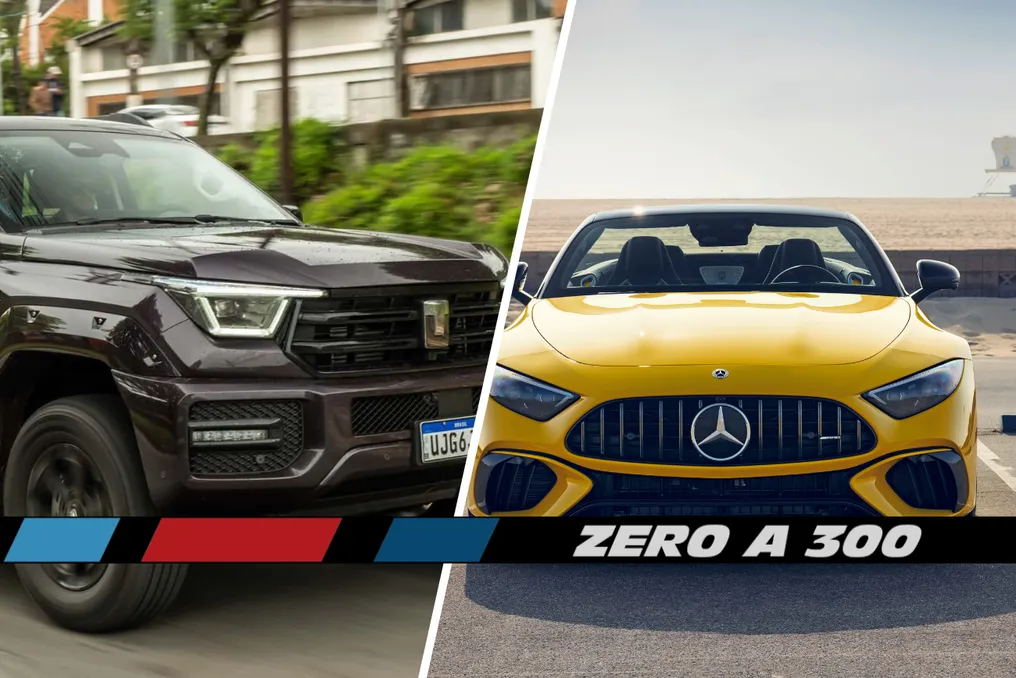
The automotive market has received several new developments, including the launch of the GWM Tank 400 in Brazil, priced at R$ 389,000. This Chinese SUV reinforces the presence of Asian manufacturers in the electric vehicle segment, featuring a robust and aggressive look, a hybrid powertrain, and strong off-road capability, competing with models like BYD, Toyota Hilux SW4, and Denza B5.

GWM Tank 400 arrives in Brazil for R$ 389,000

The GWM Tank 400 operates as a flex plug-in hybrid, equipped with a 2.0 turbo flex engine and an electric motor, totaling 394 hp and 76.4 kgfm of torque, transmitted by a nine-speed automatic transmission. According to GWM data, the vehicle can reach 100 km/h in 6.8 seconds and has a maximum speed electronically limited to 180 km/h. In purely electric mode, the estimated range according to the Inmetro cycle is up to 71 km.

In terms of dimensions, the SUV measures 4.96 meters in length, 1.97 m in width, 1.90 m in height, and has a wheelbase of 2.85 meters, accommodating five passengers and offering 789 liters of trunk space. Four color options are available: Khalifa Black, Platinum Silver, Titanium Grey, and Amethyst Purple.

Its body-on-frame construction emphasizes off-road suitability, aided by the Hi4-T all-wheel-drive system, which includes electronic locking on the three differentials (front, center, and rear) and an electromechanical transfer case, allowing torque distribution between 50% on each axle up to 100% on the rear. The vehicle offers 12 driving modes, such as Normal, Sport, Economy, Snow, Mud Sand, Rock, All-terrain, and Off-road.

The interior features are extensive, including Nappa leather trim, electrically adjustable front seats with heating, ventilation, and massage, triple air conditioning, panoramic sunroof, and heated steering wheel. A notable feature is the 5.4-liter refrigerator in the center console, capable of operating between -6°C and 50°C. Technologically, it boasts a 15.6-inch multimedia center, a 12.3-inch digital dashboard, a head-up display, wireless connectivity (Android Auto and Apple CarPlay), a 12-speaker sound system, two wireless chargers, and a V2L function of up to 6 kW.

The Level 2+ ADAS package offers adaptive cruise control with Stop & Go, autonomous emergency braking with pedestrian and cyclist detection, lane keeping and centering assistance, blind spot monitoring, and rear cross-traffic alert, in addition to autonomous intersection braking, obstacle avoidance assistance, license plate recognition, and automatic parking. The GWM Tank 400 can be ordered through the official website or dealerships for R$ 389,000.

Mercedes will transform the AMG SL back into a Benz

After attempting to convert the SL into an AMG GT convertible, replicating the origin of the SL Class, Mercedes-Benz has changed its strategy. Mercedes-Benz CEO Ola Källenius confirmed in an interview with Autocar that the SL update planned for 2027 aims to make it more characteristic of Mercedes-Benz. This change comes due to buyer criticism that the current SL is excessively sporty, neglecting the model's traditional comfort and refinement.

The company plans to correct this through a focus on comfort, recalibrated suspension, and a distinct look, replacing the AMG Panamericana grille with a standard Mercedes-Benz grille. Although this is a temporary solution, the SL has historically occupied the role of the brand's luxury convertible, alternating between the E and S Class platforms, while the current generation was designed as a high-performance sports car, sharing the platform and mechanics with the AMG GT.

It seems the AMG GT already satisfies the public seeking sporty behavior. Mercedes introduced the Maybach SL in 2024, highlighting a gap in the portfolio where the traditional SL should be. The new Mercedes-Benz SL will be positioned alongside the AMG SL and Maybach SL, creating three distinct versions of the same car. Additionally, the line will receive new engines to comply with Euro 7 standards. The 2.0-liter four-cylinder turbo engine is expected to be replaced by a 3.0-liter inline six-cylinder turbo, producing around 449 hp, and the 4.0-liter biturbo V8s will migrate to an updated M177 engine, using a flat-plane crankshaft, although final specifications have not yet been confirmed.

Toyota Corolla Cross pickup truck appears almost ready

The market is witnessing a new wave of monocoque mid-size pickups, with the arrival of the Renault Niagara and expectations for the BYD Mako and Volkswagen Tukan, challenging the Fiat Toro. Toyota has also entered this segment with the pickup derived from the Corolla Cross, which was photographed driving under camouflage in Salto, São Paulo state.

The images released on the @placaverde Instagram profile only show the rear, but the camouflage is discreet, suggesting a prototype in the final development phase with a definitive body. The taillights are thin and horizontal, indicating that Toyota sought to distance itself from the Hilux silhouette, avoiding the classic separation between the bed and the chassis-frame cabin of pickup trucks, while maintaining its origin in the Corolla SUV.

The interior is expected to retain the characteristics of the Corolla Cross, while the front end should feature distinct bumpers and headlights to differentiate the pickup's style from the SUV's, with few changes to the stamped metal panels. The hood, front fenders, windshield, and doors should be shared between both models. Although the official name has not been revealed, sources reported that Toyota registered the designation
Similar stories

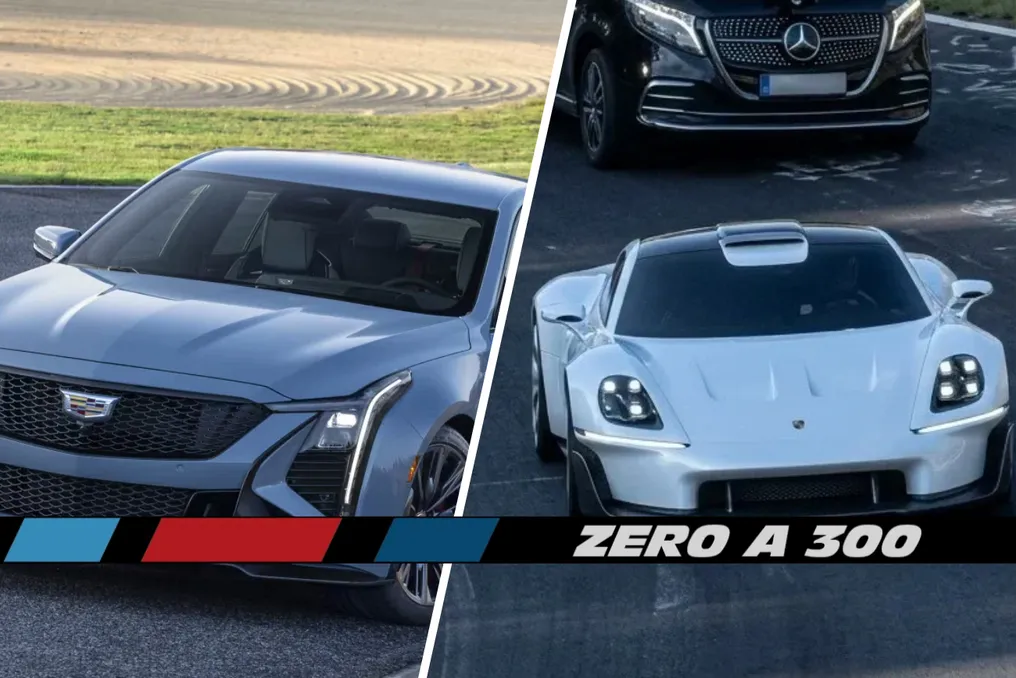
Cadillac Blackwing set to arrive in Brazil in 2027; Porsche tests Mission S at Nürburgring
Read more
flatout.com.br

Cadillac Blackwing set to arrive in Brazil in 2027; Porsche tests Mission S at Nürburgring

Cadillac may introduce the CT5-V Blackwing model to the Brazilian market in 2027. Following the confirmation of plans to bring the Escalade to the country, the brand also plans to make the CT5-V Blackwing available, which is the successor to the CTS-V that previously arrived through independent imports.

This vehicle uses a 6.2L supercharged LT family V8 engine, generating 677 horsepower and 91.1 kgfm of torque, paired with a six-speed manual transmission, although a ten-speed automatic option is available. The Blackwing features suspension equipped with magnetorheological dampers, an electronic locking differential, and Brembo brakes, potentially including carbon-ceramic discs as an accessory. It is relevant to note that the final tuning of the adaptive dampers was developed and validated by Brazilian engineers at the Cruz Alta Test Field, belonging to GM, located in Indaiatuba, São Paulo.

Although Cadillac has not officially confirmed the importation of the CT5-V Blackwing or detailed the available configurations, its cost is expected to exceed R$ 1,000,000, considering prices in the United States and from local competitors.

Porsche Mission S tested at Nürburgring, fueling rumors about an eight-cylinder boxer engine

One month after the Mission S presentation, the new rear-engined supercar concept from Porsche took the prototype to the Nürburgring circuit. The car was captured in what appears to be a promotional photoshoot.

The video shared by the @jb992_3rs profile on Instagram allowed listeners to hear the engine sound, which has a deeper and more robust tone compared to the six-cylinder boxer engine of the 911, strengthening speculation that Porsche is developing an eight-cylinder boxer for its future supercar.

Porsche has not yet confirmed the exact engine configuration, but the idea of an eight-cylinder boxer has circulated since before the Mission S debut. This configuration would be unprecedented in a regular production Porsche, despite the brand having already used it in various track models. The Mission S itself alludes to this past history through a horizontal fan positioned above the engine compartment, similar to the one used in the Porsche 917.

Michael Leiters, Porsche CEO, has already assured that the new platform was designed to accommodate both combustion engines and hybrid systems, and that there will be an option for a manual gearbox if demand arises. This model will be positioned above the 911 and, unlike supercars such as the Carrera GT and the 918 Spyder, will permanently integrate into the Porsche lineup, solving the company's 'next hypercar' question. Currently, there is no official data on power, displacement, or release date.

New Mercedes-Benz S-Class arrives in Brazil with starting price of R$ 1,270,000

Mercedes-Benz launched the updated version of the S-Class in Brazil, specifically the S 580 4MATIC, which features a V8 engine and a mild-hybrid system, with a starting price of R$ 1,266,900.

The S 580 incorporates a newer Mercedes design, characterized by multiple screen panels and lighting, but replaces the old V12 with a 4.0-liter biturbo M177 Evo V8 engine featuring a flat-plane crankshaft. This change aims to optimize efficiency and comply with emission regulations, while also providing greater agility. The new V8 generates 537 hp and 76.5 kgfm of torque, complemented by a 48-volt mild-hybrid system that provides up to 23 hp of electrical assistance. The vehicle is equipped with a nine-speed automatic transmission and all-wheel drive.

Despite its dimensions of 5.30 meters and its focus on comfort, the sedan can accelerate from 0 to 100 km/h in four seconds, with a top speed limited to 250 km/h. The combination of Airmatic pneumatic suspension and the steerable rear axle, capable of turning the wheels up to 4.5 degrees, aids in balancing driving comfort, stability, and maneuverability.

The S-Class was designed with both the driver and the rear passengers in mind. The standard configuration in Brazil includes five seats, heated rear seats, electric adjustments with memory function, four-zone air conditioning, and front airbags for rear occupants. As an option, the Premium Plus package converts the rear seat into two individual seats, separated by an executive console equipped with tables and controls. Additionally, there is a Burmester 4D sound system with 31 speakers and devices that transmit vibrations to the seats, allowing one to physically feel certain musical frequencies.

Aesthetically, the update maintains visual appeal with sophisticated lights and screens: the grille is now illuminated, the headlights project symbols onto the pavement, and a third 12.3-inch screen has been added to the dashboard for the front passenger.

Chinese CFMoto enters the superbikes segment with the V4SR-RR

CFMoto is among several Chinese manufacturers that have recently entered the Brazilian market, competing in a sector historically dominated by major Japanese brands. The company demonstrates ambition by presenting its first superbike, the CFMoto V4SR-RR, during the 2026 EICMA event held in Milan, Italy.

CFMoto aims for the V4SR-RR to be a worthy competitor to globally renowned brands like the Ducati Panigale V4 S and the BMW M 1000 RR, not only in appearance but also in performance. Its engine is a 997cc V4 producing 213 hp, with a crankshaft that rotates counter to the wheels (similar to the Ducati's), titanium connecting rods, and a maximum rotational speed of up to 15,000 rpm. The dry weight reaches 180 kg, making it 7 kg lighter than the Panigale.

The motorcycle is also equipped with a fully titanium Akrapovič exhaust system, Brembo Hypure brakes, Öhlins suspension, and Pirelli Diablo Supercorsa SP V4 tires. A notable feature is the active winglets located next to the front fender, which can move autonomously depending on the situation. In different positions, they serve to reduce drag or increase front downforce by up to 20%.

Although final performance results have not yet been disclosed, the CFMoto V4SR-RR has already set a record in China by achieving 315.82 km/h during the Chinese Maximum Speed Challenge for Motorcycles. More information will be made available in the coming weeks.

BMW reveals secret M7 prototype developed in the 90s

Historically, the M5 has occupied the top tier of BMW's M sedan hierarchy for over four decades, with the first generation, E28, launched in 1984, occasionally sharing the top spot with the M6 coupe. A commercially available BMW M7 never existed.

However, an official prototype of the BMW M7 was built and presented by the brand's classic division in a video. This project was based on the E38 generation of the 7 Series and remained confidential for almost thirty years. Initially, the car was a 1997 740i, but it received all the mechanics of the E39 M5, including the 4.9-liter S62 V8 engine producing 400 hp at 6,600 rpm, connected to a six-speed manual gearbox that sends power to the rear wheels. According to BMW, the vehicle weighed 1,875 kg (considered heavy for the time) and was capable of reaching 250 km/h.

Visually, the prototype is discreet, retaining the original bumpers of the 740i and lacking body identification. Without the BBS wheels, lower suspension, and four exhaust outlets, it would be difficult to identify that the car had been modified. Inside, the interior combines black and beige leather with an M steering wheel, a manual gear lever, and a landline phone in the center console.

BMW did not clarify why the M7 remained restricted to prototype status. One possible justification is that the model would have had little room to fit into the existing line: the 750i already occupied the pinnacle of the conventional line with its V12 engine, while the M5 would offer a nearly identical mechanical package in a smaller, lighter, and presumably more performant car, rendering the M7 unnecessary. However, the fact that a team dedicated efforts to building and testing a functional prototype indicates that the possibility was considered at some point.

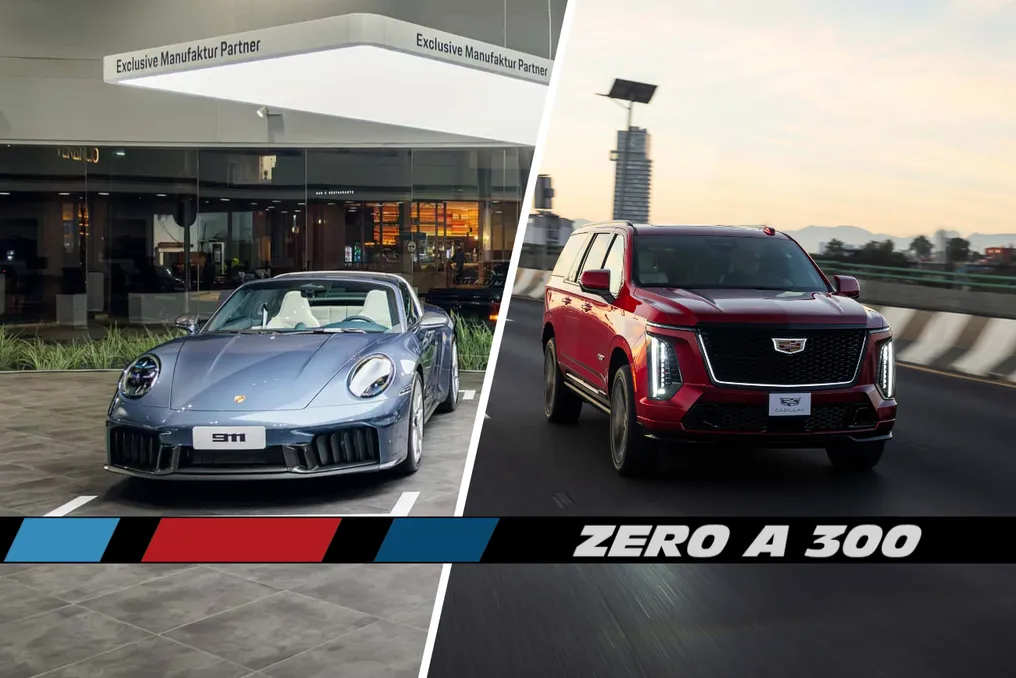
Porsche launches 911 GT3 S/C and Targa 4 GTS in Brazil; Cadillac plans to introduce Escalade V8
Read more
flatout.com.br

Porsche launches 911 GT3 S/C and Targa 4 GTS in Brazil; Cadillac plans to introduce Escalade V8

Porsche announced the launch of two variants of the 911 model in the Brazilian market this Wednesday, the 11th. The new arrivals are the 911 Targa 4 GTS and the new GT3 S/C. Both vehicles will be displayed to the public during the Porsche Fest event, scheduled for November 28th at Interlagos.

The GT3 S/C represents Porsche's first regular production convertible version, taking a position similar to the 2019 911 Speedster. It shares the same mechanical package as the GT3, utilizing the 4.0-liter naturally aspirated boxer engine, which generates 510 hp and 45.9 kgfm, coupled with a six-speed manual transmission.

To mitigate the weight added by the automatic roof, which opens in 12 seconds, Porsche employed materials such as carbon fiber and magnesium, in addition to carbon-ceramic brakes. Consequently, the GT3 S/C weighs 1,497 kg, only 35 kg more than the GT3 coupe with a manual gearbox. Despite this weight increase, the convertible maintains the performance of the closed model, reaching 100 km/h in 3.9 seconds and a top speed of 313 km/h. Its price in Brazil is set at R$ 2,060,000.

Meanwhile, the Targa 4 GTS operates with the T-Hybrid system, which integrates a 3.6-liter turbocharged boxer engine with an electric motor connected to the eight-speed PDK gearbox and an electric turbocharger. This setup delivers a combined output of 541 hp and 62.2 kgfm, allowing for 0 to 100 km/h acceleration in 3.1 seconds and reaching 312 km/h. The model features all-wheel drive, a steering rear axle, and active aerodynamic devices. It has been available for pre-sale since June and costs R$ 1,440,000.

The presentation is part of the celebrations of Porsche's 75 years in the automotive sector. In addition to these two additions, the manufacturer exhibited three customized GT3 Touring units through the Sonderwunsch program, which allows customers to request exclusive paint jobs, upholstery, and finishes. If the reader is in São Paulo, the cars are available for viewing at the Porsche Center São Paulo in Vila Olímpia.

GM advances plans to commercialize Escalade V8 in Brazil

It appears that General Motors (GM) is progressing with its plans to officially sell the Cadillac Escalade in Brazil. In an interview given to journalists this Wednesday (11) in Detroit, Fábio Rua, Vice President of GM South America, stated that introducing the SUV to the Brazilian market has become a matter of honor for the company. When questioned about the arrival of the model, he stated: 'It comes, or I am not called Fábio Rua.'

According to information from Jornal do Carro and Estadão, the Escalade is already undergoing the homologation process in the country, although there is no official launch date yet. The main hurdle lies in the differences between American and Brazilian homologation standards. While Brazil adheres to safety requirements aligned with international UN regulations, the United States uses its own standards, which are not automatically accepted locally. This implies adaptations and new certifications, whose costs may make official low-volume importation unfeasible. Additionally, the V8 engine needs adaptation for Brazilian gasoline, which contains 30% ethanol.

The Escalade is one of Cadillac's flagship models since its launch in 1998 and ranks among the largest American SUVs. In the standard configuration, it measures 5.38 meters in length, and the extended ESV version reaches 5.76 meters. In the US, the vehicle is equipped with a 6.2L naturally aspirated V8 producing 426 hp and 63.6 kgfm, linked to a ten-speed automatic transmission. There is also the Escalade-V, which uses a supercharged version of the 6.2L V8, generating 691 hp and 90.3 kgfm. Its interior accommodates up to eight passengers and features a 55-inch digital dashboard, massage seats, and an audio system with up to 42 speakers, often used as executive transport in the US.

The arrival of the Escalade would signify Cadillac's effective entry into Brazil, as the brand currently sells only the electric SUVs Lyriq and Vistiq in very small volumes. Although they opted for electric vehicles to start operations, the brand recognizes the demand for the Escalade, which is already being brought to Brazil by independent importers with some success. GM has not yet specified which versions will be offered, nor has it provided prices or a debut date.

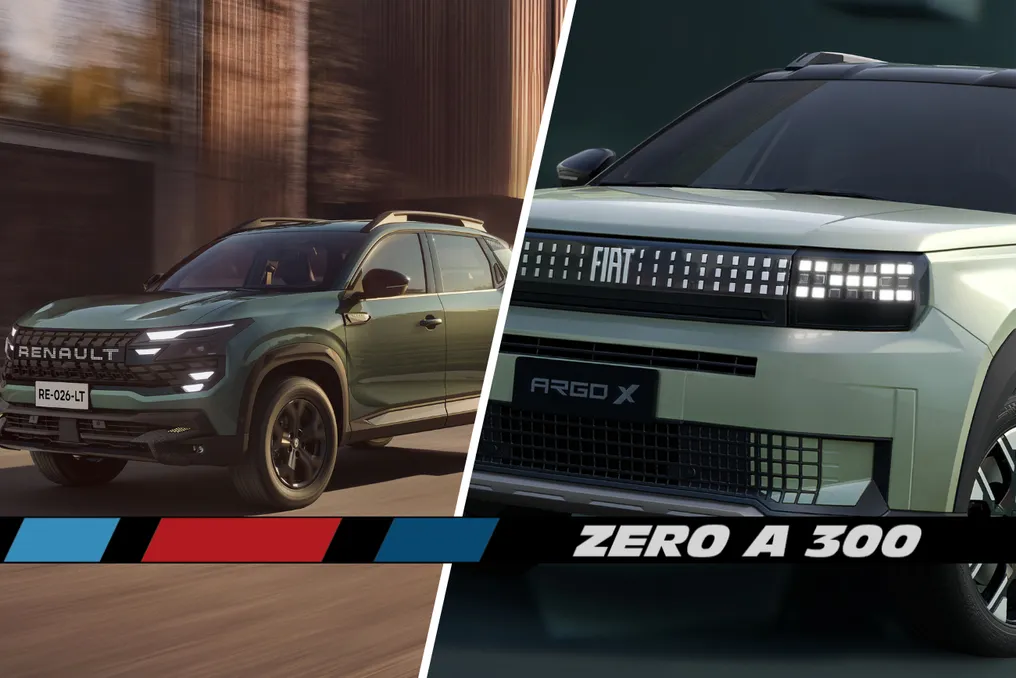
Renault lança Niagara no Brasil; Fiat revela Argo X híbrido leve; Ford confirma retorno do Mustang Cobra
Read more
flatout.com.br

Renault lança Niagara no Brasil; Fiat revela Argo X híbrido leve; Ford confirma retorno do Mustang Cobra

O mercado automotivo brasileiro recebeu novidades significativas com o lançamento da Renault Niagara, a revelação do novo Fiat Argo X e a confirmação do retorno do Mustang Cobra pela Ford.

A Renault introduziu a Niagara no Brasil em quatro versões distintas, com preços a partir de R$ 139.990. Este novo modelo de picape intermediária com construção monobloco entra em pré-venda com descontos de lançamento que podem chegar a R$ 15.000. As variantes incluem Evolution MT, Evolution AT, Iconic AT (todas com tração dianteira) e Outsider 4×4 AT, sendo que esta última tem previsão de chegada apenas em março de 2027. As três primeiras versões já estão disponíveis para reserva no site da Renault, com promoções válidas até 23 de novembro.

O motor utilizado em todas as versões é o 1.3 turbo flex TCe, que gera 160 cv e 27,5 kgfm de torque, o mesmo usado no SUV Boreal. A versão de entrada, Evolution MT, possui câmbio manual de seis marchas, enquanto as demais utilizam caixa de dupla embreagem de seis velocidades. Diferenças notáveis existem nos modos de condução: as Evolution oferecem Eco, Normal, Snow e Terrain, enquanto a Iconic apresenta os modos Sport e Smart, focados no uso urbano. A Outsider, por sua vez, terá modos específicos para condução off-road, ainda não detalhados.

Em relação aos equipamentos, a Evolution MT já vem equipada de série com faróis de LED, central multimídia de 10,1 polegadas, painel digital de sete polegadas, ar-condicionado digital, chave presencial, seis airbags e o pacote ADAS com 17 itens. A Evolution AT adiciona o controle de cruzeiro adaptativo com função Stop & Go. A versão Iconic eleva o nível com um painel de 10,2 polegadas, central multimídia aprimorada com assistente de IA Google Gemini e câmera externa de 360 graus. Seu pacote ADAS conta com 26 itens de assistência, e a caçamba recebe uma cobertura rígida retrátil de série.

Comparativamente, a Niagara demonstra maior atenção ao design e acabamento quando comparada à sua antecessora, a Renault Oroch. Embora a Oroch fosse competente, seu estilo mais utilitário e suas raízes no Sandero não a tornaram tão desejada quanto a Fiat Toro. Apesar da Toro permanecer como concorrente, a Niagara pode apresentar melhor custo-benefício, mesmo após o término das ofertas especiais. A Toro, por sua vez, não dispõe de câmbio manual e começa em R$ 167.490 na versão Endurance, equipada com motor turbo flex T270 de 1.3 litro, 176 cv, acoplado a caixa automática convencional de seis marchas.

Fiat revela novo Argo X com visual de Grande Panda e motor híbrido leve

A Fiat apresentou novas imagens do Argo X, seu futuro hatchback compacto, que será exibido em um evento na fábrica de Betim, Minas Gerais, nesta quarta-feira (11). Inspirado no Grande Panda europeu, o modelo deve ser lançado no Brasil em 2026, visando competir com o Volkswagen Polo no segmento de carros de passeio. Esta novidade também marca a introdução da nova identidade visual da Fiat no mercado brasileiro.

Mantendo o formato quadrado do Grande Panda, o Argo X contará com faróis de LED pixelados, lanternas verticais e uma carroceria que mescla características de hatch e crossover. Existem diferenças em relação ao modelo europeu, como o logotipo Fiat posicionado centralmente na grade e a ausência do nome do modelo estampado nas portas. O interior será simplificado, substituindo os revestimentos de fibras de bambu do Grande Panda por um painel de plástico convencional.

A linha de motorização prevista para o Argo X incluirá duas opções. As versões de entrada utilizarão o motor 1.0 Firefly aspirado de três cilindros, gerando 75 cv e 10,7 kgfm de torque, acoplado a câmbio manual de cinco marchas. As versões mais potentes virão com o 1.0 turbo flex equipado com sistema híbrido leve de 12 volts, sinalizado pelo emblema MHEV na traseira, com expectativa de 116 cv e 20,4 kgfm, utilizando transmissão automática CVT. Este sistema elétrico auxilia o motor a combustão durante acelerações e recupera energia em desacelerações, mas não opera o veículo sozinho.

É importante notar que o Argo X não substituirá o Argo atual; ambos serão comercializados simultaneamente. O modelo lançado em 2017 continuará sendo uma opção mais acessível, enquanto o Argo X ocupará uma categoria superior. Os detalhes finais sobre preços, especificações e equipamentos serão divulgados no lançamento comercial, esperado para as próximas semanas.

Ford confirma volta do Mustang Cobra para 2027

Recentemente, houve especulações sobre o retorno de uma versão clássica do Mustang para o próximo ano, posicionada entre o Dark Horse normal e o Dark Horse SC (com supercharger). Embora alguns especulassem sobre um sucessor espiritual do Shelby GT350, visto que a Ford não utiliza mais o nome Shelby devido aos altos custos de licenciamento, a informação veio de um teaser oficial da Ford.

A Ford liberou um breve vídeo nas redes sociais contendo apenas o nome “COBRA”, com o R destacado em azul, o que sugere uma ligação clara com o Mustang SVT Cobra R da quarta geração, acompanhado pelo som de um V8. A legenda da publicação indica que o novo Cobra será “all-motor”, sugerindo que não haverá sobrealimentação. Isso confirma o renascimento da família Mustang, mas sob a nomenclatura Cobra, e não Boss.

Brabus prepara Porsche 911 Turbo S de 800 cv

A Brabus anunciou sua nova customização para o Porsche 911 Turbo S, elevando a potência total do trem de força híbrido de 711 cv para 800 cv, e o torque de 81,6 kgfm para 91,8 kgfm. Nomeado Brabus 800, este modelo está disponível nas carrocerias cupê e conversível, apresentando modificações mecânicas, aerodinâmicas e de acabamento.

O incremento de potência é alcançado através do módulo eletrônico PowerXtra P36-800, que ajusta os parâmetros de injeção, ignição e pressão do turbo. O sistema elétrico T-Hybrid permanece inalterado, contribuindo com 52 kW (71 cv). Com esta preparação, o cupê consegue atingir 100 km/h em 2,4 segundos, um décimo mais rápido que o Porsche original, enquanto o conversível leva 2,5 segundos. A velocidade máxima permanece limitada a 322 km/h.

Além do motor, a Brabus desenvolveu um pacote aerodinâmico feito de fibra de carbono, incluindo novos difusores traseiros, saias laterais e spoilers. As rodas forjadas Monoblock ZL Platinum Edition possuem 21 polegadas na frente e 22 atrás, rodando pneus Continental SportContact 7. A preparação também engloba suspensão esportiva ajustável e um escapamento com válvulas para controle sonoro. Internamente, o Brabus 800 é equipado com revestimentos de couro costurados em padrão de losangos, detalhes em fibra de carbono e acabamentos exclusivos. A Brabus estabeleceu o preço de um cupê completo em aproximadamente 420.000 euros na Alemanha, sendo que essas modificações podem ser compradas separadamente.

Honda Civic Type R continua à venda no Brasil em 2027 apesar das baixas vendas

A Honda confirmou que o Civic Type R permanecerá disponível para venda no Brasil em 2027, mesmo registrando baixos volumes de vendas. Atualmente, o Civic migrou de um sedã médio de grande volume, competidor do Toyota Corolla, para um modelo de nicho, com foco no hot hatch Type R e no sedã Advanced Hybrid.

Os dados de emplacamento mostram essa tendência: entre janeiro e outubro de 2026, foram registrados apenas 79 Civic no Brasil, sendo 58 unidades do sedã híbrido e 21 do Type R. Apesar desse baixo desempenho, a Honda optou por manter o hot hatch no mercado. Para 2027, o Type R receberá atualizações importantes. Externamente, um novo para-choque dianteiro com spoiler mais proeminente foi implementado, o que não é apenas estético, mas também otimiza o fluxo de ar e o resfriamento do motor. Internamente, há uma nova central multimídia com funcionalidades Google, duas portas USB-C, bancos redesenhados com novo revestimento e outros refinamentos de acabamento.

As assistências de condução também serão revisadas, com ajustes na detecção de pedestres e ciclistas, no controle de cruzeiro adaptativo e no auxílio à mudança de faixa. Adicionalmente, foram recalibrados o sincronismo de rotações nas trocas de marcha no modo +R (conhecido como “punta-tacco eletrônico”) e a resposta do pedal de freio. A mecânica principal permanece inalterada, mantendo o motor 2.0 turbo VTEC de dois litros com 297 cv e a caixa manual de seis marchas. Os preços atuais são de R$ 266.500 para o Civic Advanced Hybrid e R$ 430.500 para o Type R, embora os valores para 2027 ainda não tenham sido divulgados.

Bosch vai fabricar motores elétricos no Brasil — até para caminhões a diesel

A Bosch anunciou que iniciará a fabricação de motores elétricos destinados a caminhões no Brasil em 2027, em sua unidade de Campinas, São Paulo. Este projeto faz parte de um investimento de R$ 1 bilhão da companhia e envolve uma colaboração com a Suspensys, pertencente ao grupo Randoncorp, para a produção de eixos de tração elétricos.

Essa tecnologia pode ser aplicada tanto em caminhões totalmente elétricos quanto em modelos a diesel, convertendo estes últimos em híbridos. O sistema é possibilitado pelo e-Sys, um eixo desenvolvido pela Suspensys que integra um motor elétrico. Em vez de depender unicamente do motor diesel, o sistema aproveita a energia dissipada durante as frenagens, armazenando-a em baterias para auxiliar na movimentação do veículo. Segundo as empresas, essa tecnologia pode diminuir o consumo de diesel em até 40%, dependendo das condições operacionais. Ademais, o eixo pode ser instalado em veículos e carretas já existentes, sem a necessidade de substituição completa.

A parceria também contempla a produção de um segundo tipo de eixo, destinado a caminhões e ônibus puramente elétricos. Neste cenário, o motor elétrico é integrado ao eixo de tração e à transmissão, formando um conjunto compacto capaz de mover veículos com cargas entre 30 e 50 toneladas. A fábrica da Bosch em Campinas terá capacidade inicial para produzir 20.000 motores elétricos anualmente. A empresa já está em negociações de fornecimento com cinco fabricantes de caminhões, incluindo montadoras chinesas que estão se estabelecendo no país, além de conversas com duas montadoras de automóveis sobre a possível produção nacional de motores elétricos para carros de passeio.

Popular