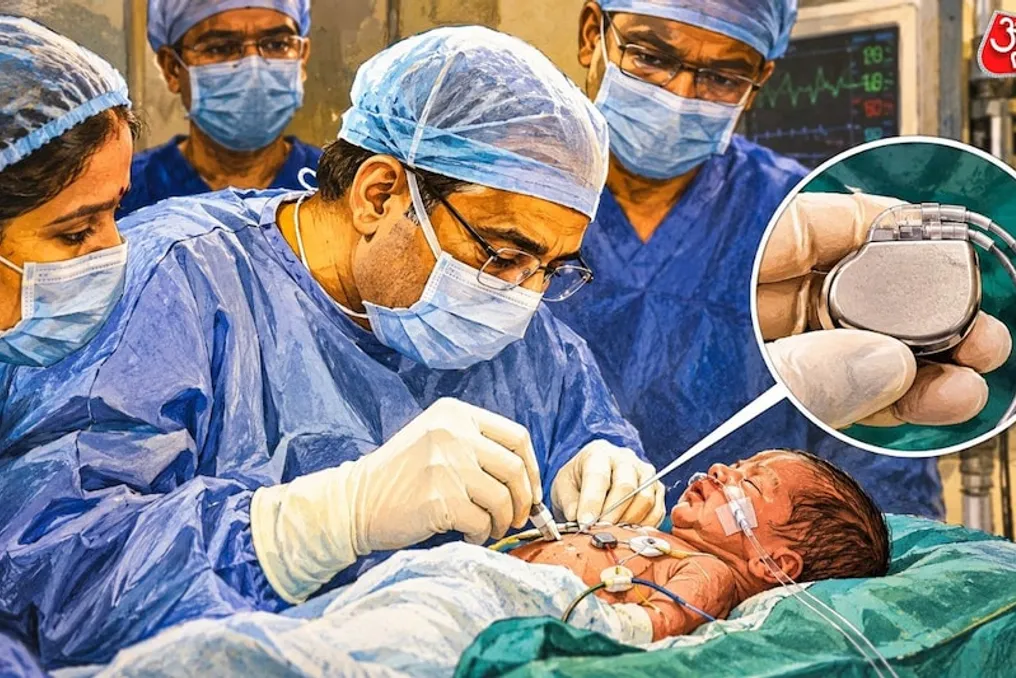
A team of over 30 doctors performed the first open fetal surgery in India, aiming to repair a baby's spine before birth. The procedure was conducted at the All India Institute of Medical Sciences (AIIMS).
The operation took place on Thursday and lasted six hours. Its main objective was to reduce the risk of paralysis and other permanent neurological complications for the infant.
The mother, who underwent the procedure at 25 weeks of gestation, along with the fetus, is recovering satisfactorily. The diagnosed fetus presented with lumbosacral myelomeningocele, considered the most severe form of spina bifida.
A member of the medical team, who requested anonymity, explained to the Efe agency that this congenital malformation prevents the complete closure of the spinal column, exposing part of the spinal cord and its membranes to progressive damage.
Children born with this condition are at risk of developing lower limb paralysis, difficulties in bowel and bladder control, in addition to hydrocephalus, which is the accumulation of cerebrospinal fluid and may require complementary surgeries.
Previously, in India, correction of this type of anomaly was only performed after birth, at which point certain neurological damages could already be irreversible. The current procedure was meticulously planned over five weeks.
To carry out the surgery, specialists from various fields gathered, including neurosurgery, maternal-fetal medicine, obstetrics, anesthesiology, plastic surgery, and neonatology. They used advanced microscopy and continuous ultrasound while the baby was still in the womb.
According to neurosurgeon Deepak Gupta, who was responsible for conducting this stage of the operation, prenatal intervention has the potential to reduce the need for future surgeries for hydrocephalus and promote better mobility in the child.
The hospital reported that it had been working for 14 years to develop this surgical capability. The next focus will be ensuring that this treatment can be offered safely and affordably to other Indian families.
Although prenatal correction of spina bifida is practiced in specialized centers in other countries, where clinical studies indicate improvements in certain neurological outcomes, it does not completely eliminate the consequences of the condition.