How the Escalade SUV became one of Cadillac's greatest modern icons
Read more
FlatOut
flatout.com.br

How the Escalade SUV became one of Cadillac's greatest modern icons

The Cadillac Automobile Company was established on August 22, 1902, marking 124 years of existence. Its name honors Antoine Laumet de La Mothe, Sieur de Cadillac, one of the founders of Detroit in 1701, and its emblem reflects this family tribute.

Considered one of the oldest automobile manufacturers operating globally, Cadillac has roots connected to Henry Ford. The brand emerged from the remnants of the Henry Ford Company after the American pioneer abandoned his second business attempt. Engineer Henry M. Leland was called in to evaluate the remaining equipment and saw an opportunity in the structure to start a new company, which launched its first vehicle in 1903.

Seven years later, in 1909, General Motors acquired Cadillac, integrating it as its luxury division. The brand's reputation grew rapidly due to manufacturing excellence, near-German engineering precision, and high levels of finish. In 1908, Cadillac won the prestigious Dewar Trophy from the Royal Automobile Club of the United Kingdom after demonstrating the ability to reassemble cars with mixed parts.

Cadillac also stood out as innovative. In 1912, it introduced a button electric starting system in the Model 30, eliminating the dangerous hand crank. Three years later, the Cadillac Type 51 was the world's first mass-produced car equipped with a V8 engine, offering smoothness and performance. In 1930, the brand reinforced its leadership by launching the V16 engine, maintaining its motto, 'Standard of the World.'

Throughout much of the 20th century, the tradition of luxury and pioneering built Cadillac's image as synonymous with American luxury, featuring large vehicles, refined finishes, and powerful engines. Classic models like Fleetwood, DeVille, and Eldorado became icons, representing the American dream on wheels.

The 1950s and 1960s brought exuberant expressions of this image, with monumental, long, heavily chromed cars equipped with massive V8s. The characteristic tailfins, which evolved from subtle to exaggerated proportions, became an iconic visual signature of the American industry. The 1959 Eldorado Biarritz exemplifies this period of extreme luxury.

However, starting in the 1970s, large American sedans gradually lost relevance. As the century advanced, SUVs began to gain market share, forcing Cadillac to seek an image renewal to attract a younger audience. It was in this context that the Escalade emerged, permanently changing Cadillac's contemporary face.

The development was accelerated: the Escalade was launched just ten months after the sketch, aiming to respond to the Lincoln Navigator, which debuted in May 1997. To meet the deadline, Cadillac utilized GM's Yukon Denali, a more sophisticated version of the GMC SUV. The design was approved and revealed in August 1998, as the 1999 model.

The name Escalade has meaning, being a French term related to military assault tactics on fortresses, referencing the idea of conquest and ascent, aligned with the proposal of a standout vehicle.

Initially, the first Escalade was essentially a Yukon Denali, sharing the 5.7-liter Vortec V8 engine producing 255 hp, along with a four-speed automatic transmission. Cadillac differentiated it with its exclusive front grille, proprietary emblems, and a more sophisticated interior, filled with perforated leather, genuine wood, and Bose sound, in addition to the OnStar system.

Although the initial focus was on aesthetics and market positioning, the solution was not considered unsophisticated for the turn of the millennium, given that the luxury concept of the time highly valued real materials, quality leather, and premium details, rather than digital screens and electronic aids.

The first generation, seen as an emergency transitional product, remained on the market for only three years, serving to gauge public acceptance. However, it was the second generation that consolidated the Escalade as an icon.

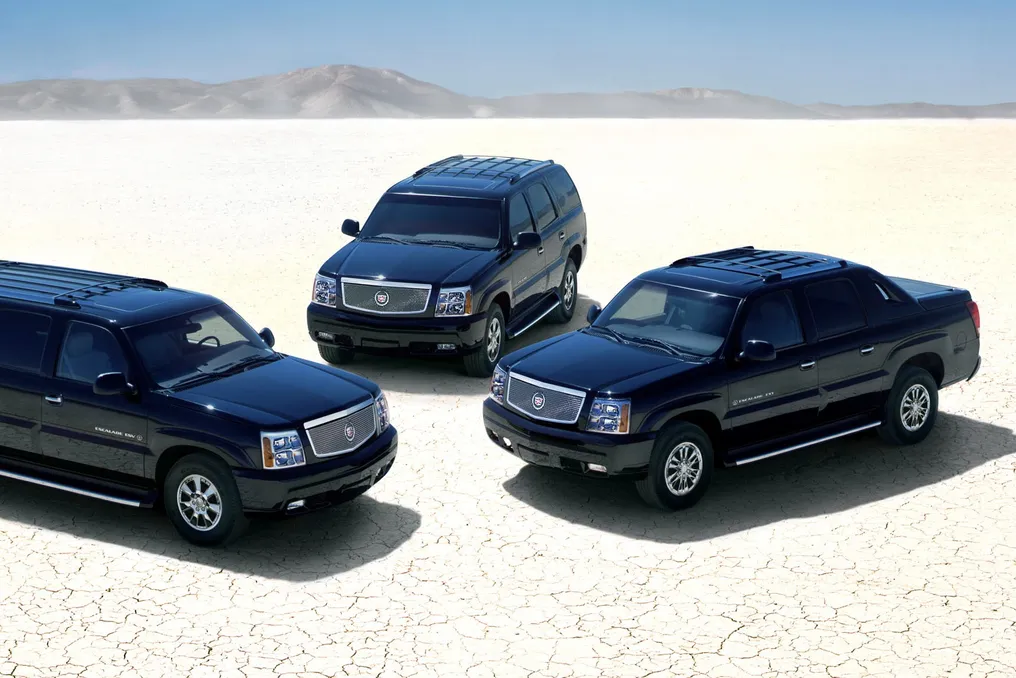
Introduced in 2001 as the 2002 model, the new Escalade abandoned much of the GMC Yukon's appearance, adopting Cadillac's Art and Science visual identity. The angular lines, imposing front grille, and vertical headlights defined Cadillac's modern look, giving the Escalade a distinct personality within GM.

Mechanical evolution also occurred: in 4x4 versions, the six-liter Vortec V8 engine generated 345 hp and 52.5 kgfm of torque; in rear-wheel drive, a 5.3-liter V8 produced 285 hp, both with a four-speed automatic transmission. The line included the extended ESV version and the EXT pickup, but the traditional SUV remained the flagship.

The biggest transformation of the second generation was not technical, but cultural: the Escalade was widely adopted by hip hop culture in the United States at the turn of the millennium. During a period of economic optimism, hip hop aesthetics—gold chains, baggy clothes, large cars, and chrome wheels—celebrated conquest and ostentation, making the Escalade a symbol of social ascent.

Its size, height, powerful V8, and striking front allowed for giant chrome wheels, customized sound systems, and accessories, transforming the SUV's appearance. This association was not the result of advertising campaigns; rappers and artists mentioned the Escalade spontaneously. Jennifer Lopez cited it in 'Love Don’t Cost a Thing' (2000), Nelly in 'E.I.' (around the same time), and Ludacris in 'What’s Your Fantasy' (2000). Later, The Game mentioned an Escalade with Lamborghini-style doors in 'How we Do' (2005).

Susan Docherty, who was responsible for Escalade marketing, confirmed that the brand never sponsored these appearances, summarizing the phenomenon by saying: 'You can't buy buzz, but you can create it.' Although Cadillac was already historically linked to hip hop, with models like the Coupe DeVille being popular for customization, the motivation changed with the Escalade: young people now had the purchasing power to acquire the most expensive and largest factory Cadillac.
Similar stories

Toyota Hilux 2005 and the revolution of mid-size pickups in the Brazilian market
Read more
flatout.com.br

Toyota Hilux 2005 and the revolution of mid-size pickups in the Brazilian market

The year 1989 was a significant milestone for the Brazilian automotive industry, as it introduced an entirely new vehicle to the national market, unlike mere derivatives of existing sedans, vans, or pickups.

The Chevrolet Kadett emerged as a phenomenon comparable to the Fiat Uno, launched in 1984. Its modern and unusual design generated both surprise and great appreciation. The sporty GS version, packed with comfort and technology features such as a trip computer and rear suspension leveling, was quite impressive. Its superior finish and aesthetics made the Gol, its main competitor, seem like an outdated and inferior vehicle in terms of comfort and overall appearance.

However, the Kadett was not the only highlight of 1989; a blue Gol attracted a lot of attention, competing on equal footing. This Volkswagen compact, designed to have the performance of a mid-sized car, received a two-liter engine, identical to the one used in the brand's larger family car.

The expectation for high performance was immense, but the vehicle actually delivered satisfactory results. Although it did not repeat the extreme accelerations announced by the manufacturer, its performance was robust enough to surpass all other national cars, including the Kadett GS.

Nevertheless, the Gol GTi transcended the mere enhanced look of the Gol GTS and the more powerful engine. By initiating the era of electronic injection in Brazil, the Gol GTi fundamentally changed the prevailing driving rules. The carburetor, which required meticulous maintenance and was frequently mentioned by drivers, gave way to the more efficient and simplified control of electronic injection as the technology matured.

The Gol GTi inaugurated a new phase of modern driving, whose benefits are evident today, in 2026, with the ease of starting the car and driving without failures or sputtering. After this innovation, Fiat introduced the multi-valve cylinder head and the turbo, and the rest of the industry continued to evolve, adapting to the pioneering innovations in the market, already influenced by advanced imported car technologies.

Although this history is known, it is relevant to revisit the fundamentals before analyzing another electronic era, although generally less impactful, but crucial for a specific niche: mid-size pickups. In this segment, there was an equivalent to the 'Gol GTi', a vehicle intended to redefine the standards of its category and guide the evolution of subsequent mid-size pickups. As suggested in the title, this truck is the 2005 Toyota Hilux.

Mid-size trucks in 2005 and the Hilux

Legislation is probably one of the most important transforming factors in the automotive industry. Naturally, all manufacturers seek to create more beautiful, better, more powerful, and more profitable products, as a well-received car generates abundant revenue. However, this success must comply with legal requirements, especially environmental ones.

It is unnecessary to judge whether such measures are positive or negative, or whether they stem from sincere concerns or less noble interests, given that the nature of these regulations is complex, involving economic aspects. However, it is necessary to consider the scenario if the world had followed the path of the 70s, without restrictions on pollutant emissions.

Returning to the topic, the environmental requirements of Proconve L4 forced pickups that emitted large volumes of black smoke to change. Mechanical injection via injection pump was gradually replaced by electronic management and the Common Rail direct injection system.

The 'rail' system is named so because it resembles the shape of a musical instrument, due to the tube that receives diesel from a high-pressure pump. The pressurized fuel is distributed to the injectors through this tube, with the electronics controlling the timing, duration, and amount of diesel for each nozzle. Furthermore, the system allows for pre-injections and post-injections in the same engine cycle, with the former being responsible for smoothing combustion and reducing noise. The finer atomization of diesel aids in reducing smoke and pollutants, classifying the engine as a 'clean' diesel and compliant with the new, stricter environmental standards.

The manufacturer that first introduced this technology and made a good impression would gain an early advantage with the pickup public. It became clear that the era of electronic pickups was inevitable, generating fierce competition among the first to adopt the new technology.

The first pickup in this new group with common rail electronic injection, displaying the 'Electronic' badge on the tailgate, was the Ford Ranger, launched in February 2005. Externally, nothing indicated the new heart besides the mentioned stickers and the '3.0' signaling the new displacement. The Power Stroke 3.0 Electronic replaced the old mechanical Maxion/International HS 2.8, which was a popular model among enthusiasts of the time, as it surpassed the MWM of the S10 and Nissan Frontier by 3 hp, a highly praised engine, despite having a certain delay in power delivery before 1,800 rpm.

The difference of 3 hp between engines of similar displacement may seem insignificant, but the sector was experiencing intense commercial dispute, where any advantage was amplified by brand marketing. The 135 hp of the Maxion engine were raised to 163 hp in the 3-liter MWM International. It is important to note that the Power Stroke differs from the Sprint in architecture, number of valves, and injection systems.

With 163 hp, the Ranger received a major benefit: the engine was larger and significantly more powerful than those of its competitors. The increase in torque, smooth operation, and efficiency provided by the electronics elevated the utility vehicle to a new level.

To illustrate the quality of this new Ranger, the author reports participating in the Mercosur Rally in 2005, invited by Quatro Rodas magazine. Ford provided three Rangers for the event: two electronic ones, a novelty, and one 2.8-liter mechanical one. Witnessing the performance of the electronic Ranger with experienced Rally Paris-Dakar pilots, he could confirm its strength on the roads.

The pickup easily overtook traffic, maintained acceleration on inclines even when loaded, and exhibited high speed on any surface, whether dirt or asphalt. On a long descent on a dirt road, the speedometer registered 190 km/h (probably more than 170 km/h actual), and the driver enjoyed the high-speed driving. During the most difficult dirt sections, the 2.8 Ranger was preferred for offering more constant torque. He observed that the electronics behaved more like a car than a rustic truck, being quieter and delivering power at higher revolutions.

In a direct comparison, on flat terrain near Buenos Aires, a double-cab S10 2.8 reached about 180 km/h on the dashboard (just over 160 km/h on GPS), a good result for a diesel utility vehicle from over twenty years ago, but considerably inferior to the performance of the new Ranger.

Calling it a 'new Ranger' might be an exaggeration, as externally it maintained the traditional mid-size pickup design, and the cabin preserved the basic dimensions of the model introduced in the country in the 90s. The interior was simple and dated. However, since competitors also did not offer more space, these limitations were little noticed, and the Ranger, thanks to its mechanical improvement, became the desire of most Brazilian pickup owners.

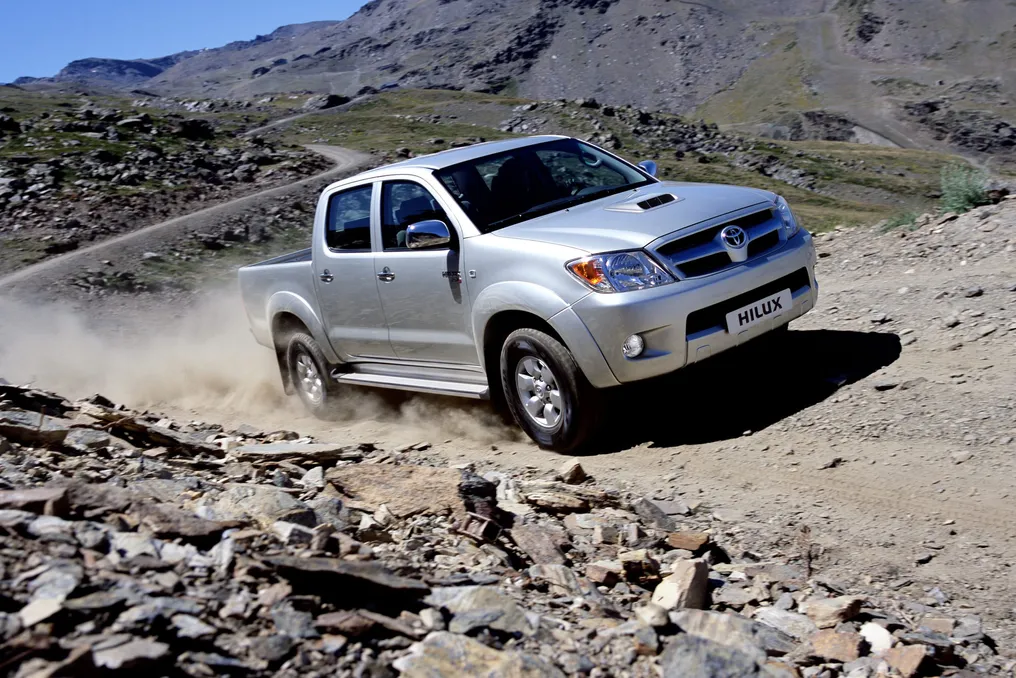
This dominance, however, was brief. Less than a month later, the seventh-generation Toyota Hilux was launched, a completely new model in terms of external design, internal space, and overall behavior compared to existing mid-size pickups.

Its engine was unprecedented and, naturally, already electronic. The 3.0-liter D-4D had the same displacement and power as its main rival's engine: 163 hp. The torque was 35 kgfm, slightly below the Ford's 38.7 kgfm, which was the only disadvantage of the Hilux. In all other aspects, it was a technological leap: the design was aligned with the expectations of the new millennium, leaving the 90s behind. The interior silence, the rear seat space, and the dynamic behavior (which at the time was superior to all) recalled a large luxury sedan. The rear doors of the 2005 Hilux demonstrate this advantage, with wide and smooth panels and generously sized windows in height and width, highlighting the superior space and comfort for the driver and passenger.

Besides the modern aesthetics, a differential of the Hilux was the availability of an automatic transmission in the top-of-the-line SRV version. Although Mitsubishi already offered this option in the L200 Sport since 2003, Toyota improved the experience with a peculiar gear selector, similar to that of Mercedes-Benz, with a serrated path and positions defined on side steps. With a little adaptation, the driver perceived the gear or function just by touch, without needing to look at the lever or dashboard. This represented a big difference compared to the long and firmly engaging, but somewhat rough, levers of other manual pickups, offering car comfort in urban traffic.

It is no wonder that the advertising slogan was 'Total Revolution', and this phrase was not an exaggeration. Behind the wheel, the pickup charmed with its excellent ergonomics and updated dashboard; the engine was exceptional, with the soft whistle of the turbo being the predominant sound of the four-cylinder engine.

}, {
Honda prepares to launch new full-size SUV Avancier, which will compete with Toyota Fortuner
Read more
www.aajtak.in

Honda prepares to launch new full-size SUV Avancier, which will compete with Toyota Fortuner

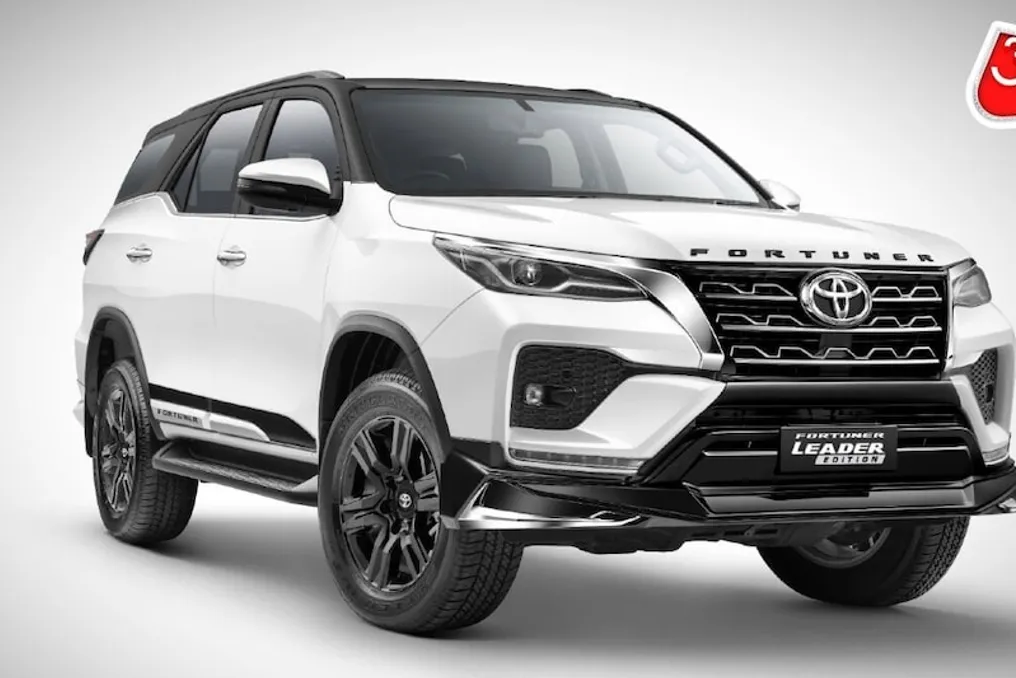
Japanese automaker Honda plans to introduce a new SUV model—the Honda Avancier. The launch of this seven-seater SUV is scheduled for December 1st. This full-size model, which will appear on the global market, will directly compete with the Toyota Fortuner. Notably, Toyota is also announcing the release of a new Fortuner on the same date.

According to information, the Avancier from Honda will have a length of about five meters and may be equipped with advanced hybrid technology. Although Honda has not yet confirmed the official dimensions or seating configuration, reports suggest that the vehicle will measure 4960 mm in length, 1950 mm in width, and 1690 mm in height, making it only 40 mm shorter than five meters.

The vehicle potentially could come in a seven-seater version. Honda released a teaser of the Avancier, demonstrating that the car will feature thin LED daytime running lights (DRLs). LED headlights are also planned, which will be located in the bumper, along with a split headlight design. The side profile differs from traditional boxy SUVs, resembling a more elevated estate car. The rear section will be equipped with an LED strip spanning the entire width of the body.

The Avancier will gain access to Honda's latest hybrid technology. According to sources, the upcoming SUV will feature a 2.0-liter four-cylinder gasoline engine working together with an electric motor. Information regarding the battery and range is currently unavailable. The hybrid setup will provide a combination of high performance and fuel efficiency.

Furthermore, there is a possibility that this SUV will integrate all-wheel drive functionality. Honda previously announced plans to launch 15 next-generation models with hybrid powertrains by 2030. The vehicle may appear in a six- or seven-seater configuration and will boast a premium cabin with three rows of seats. Details of the infotainment system and other features have not yet been disclosed.

Changes in the Indian auto sector: Toyota drops out of the top five sales leaders
Read more
www.aajtak.in

Changes in the Indian auto sector: Toyota drops out of the top five sales leaders

A report on the Indian auto sector for October has been released. In the passenger car segment, sales grew by over 25% compared to the previous month, indicating an improvement in company performance in October 2026 compared to September. However, the sales volume in October this year was lower than in October last year, representing a decrease of 23.80%.

The most significant changes occurred in the ranking of the five largest OEM passenger car manufacturers. Specifically, Toyota dropped out of this list. According to data from the Federation of Automobile Dealers Association (FADA), Maruti Suzuki took the first place in car sales in the country. Despite the strengthening positions of Tata Motors and Mahindra, the combined sales of these two companies do not reach the level of Maruti Suzuki.

In October 2026, Maruti Suzuki sold 211,996 vehicles, capturing a market share of 41.75%. Tata Motors ranked second, selling 73,449 units, with a market share of 14.47%. Mahindra & Mahindra is in third place, having sold 64,982 cars, holding a market share of 12.80%.

Hyundai Motor took fourth place, selling 58,099 cars and having a market share of 11.44%. Taking fifth place instead of Toyota, Kia Motors achieved results by selling 30,799 vehicles, securing a market share of 6.07%. Toyota sold 28,727 vehicles, reducing its market share to 5.66%. Additionally, Skoda Volkswagen Group sold 9,150 vehicles.

Other companies were also present in the market: JSW MG Motor sold 7,082 vehicles, Honda Cars India sold 5,455, Renault sold 3,505, Nissan Motor sold 3,273, and VinFast sold 2,571 vehicles.

Popular