UN Secretary-General condemns fossil fuel profits as morally unacceptable
Read more
Noticias ao Minuto
noticiasaominuto.com

UN Secretary-General condemns fossil fuel profits as morally unacceptable

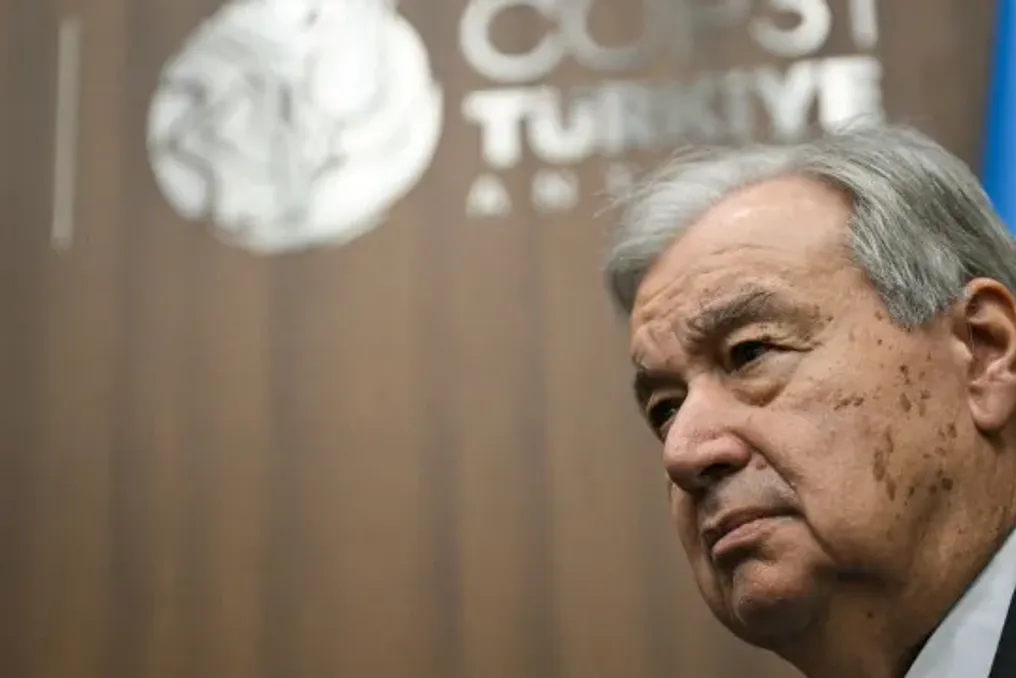
The UN Secretary-General, António Guterres, today expressed his condemnation of the increased profits generated by fossil fuels, classifying it as 'morally unacceptable.' He urged governments to accelerate the energy transition, moving away from the use of oil, coal, and gas.

In an interview with AFP during COP31, which is taking place in Antalya, Turkey, until November 20, Guterres stated that governments have a duty to prioritize the interests of their citizens, not those of a specific business group.

The Secretary-General warned that countries cannot promote the development of new fossil fuel sources while simultaneously claiming to fight climate change, including the host nations of the summit, Turkey and Australia. Old disagreements over fossil fuels resurfaced at the conference, dividing countries between those advocating for a faster elimination of oil, gas, and coal, and those defending the right to exploit these resources.

These discussions take place against a backdrop of a severe energy crisis, exacerbated by conflicts in Ukraine and the Middle East, which has led to rising prices for diesel, fertilizers, and other essential goods.

António Guterres deemed it 'absurd' and 'morally unacceptable' that nine major fossil fuel corporations earned $95 billion in a single quarter due to these price increases, while ordinary people struggle to cover heating and fuel costs.

He reinforced the idea that 'we are talking about powerful interests that are not easy to overcome,' reiterating that governments must defend the well-being of their people over the interests of specific oil and gas companies.

For the official, this implies that any new fossil fuel project should not proceed, even under coordinated pressure from industrial sectors on political leaders to safeguard their investments. The former Portuguese Prime Minister, aged 77, who will leave office in December after a decade in the organization, declared: 'No new fossil fuel project makes sense' and expressed a wish that all COP participants adopt the same stance, including the organizers.

Meanwhile, Turkey, the host country, celebrated the discovery of new oil fields at the beginning of the conference. On the other hand, Australia, responsible for leading the COP31 negotiations, is facing criticism for approving the expansion of coal mines.

António Guterres' diplomatic tensions were tested by the wars in Ukraine and Iran, a pandemic, and the inaction of the Security Council. On the issue of fossil fuels, he rarely held back, denouncing the 'sponsors of climate chaos' and accusing the oil and gas lobby of 'killing the planet,' while also criticizing governments for 'subsidizing suicide' by supporting the industry.

At COP31, neither the Australian Prime Minister, Anthony Albanese, nor the conference president, Murat Kurum, mentioned the term 'fossil fuels'—the main cause of global warming—in their opening speeches on Wednesday. In contrast, António Guterres received warm applause for calling for an end to fossil fuels 'like dinosaurs' and for criticizing governments for hindering the progress of clean energy. Regarding his controversial statements, he said: 'This is an existential threat; we cannot minimize it. And I think we need to use sufficiently clear language so that people understand that we are truly facing a serious risk now.'

Similar stories

China asks US not to restrict exports citing espionage allegations involving Nvidia
Read more
olhardigital.com.br

China asks US not to restrict exports citing espionage allegations involving Nvidia

The Chinese government has requested that the United States refrain from using espionage accusations related to Nvidia as a reason to implement new technology export barriers targeting the country.

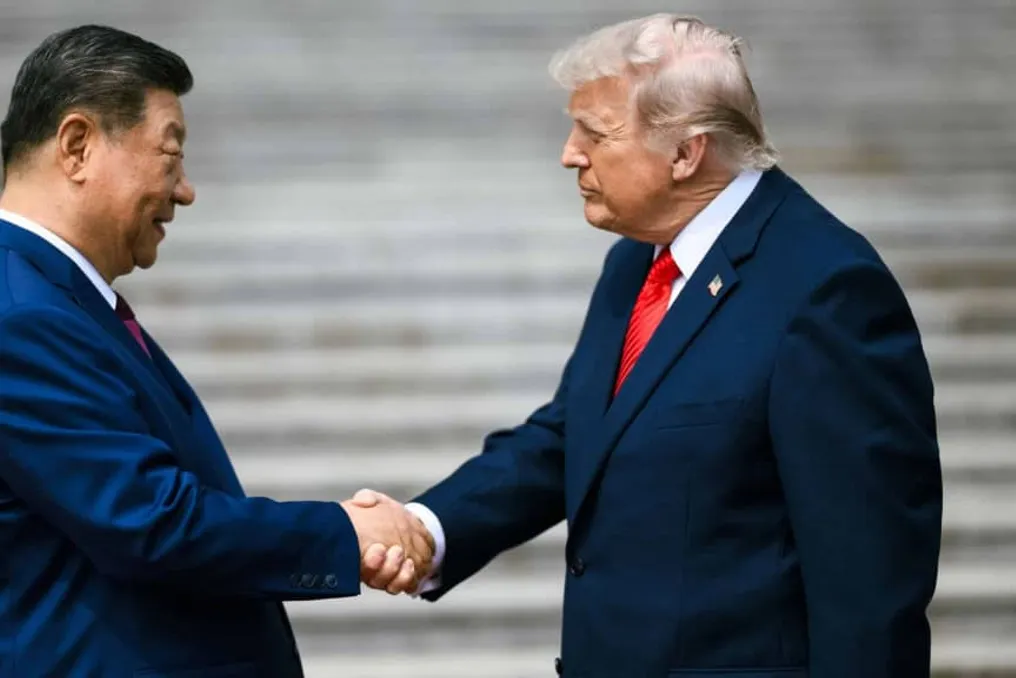
This statement comes amid a crisis involving the semiconductor manufacturer and its former CEO, Jensen Huang, and is close to a scheduled meeting between Presidents Donald Trump and Xi Jinping.

On Thursday, the 12th, the spokesperson for the Chinese Ministry of Foreign Affairs, Mao Ning, stated that Washington must cease creating espionage narratives to legitimize technological blockades. She emphasized that China's progress in this sector is sustained by autonomous innovation and transparent collaboration.

During a press conference, Mao also reported that Beijing and Washington are maintaining contact regarding the meetings between the two leaders, which are scheduled for next week during the APEC summit in Shenzhen, China.

Beijing's stance arises amidst questions about an alleged espionage case linked to Nvidia and its former CEO, Jensen Huang. These suspicions gained prominence after reports indicated possible commercial ties between Alice Huang, identified as a potential Chinese spy, and business activities associated with Huawei, the American company's competitor.

The Chinese government did not detail in its statement a specific analysis of the allegations involving Alice Huang. The spokesperson focused her argument on opposing any technological restrictions justified by espionage claims.

Moto G86 Analysis: Review of the Motorola Mid-Range and its Cost-Benefit Ratio
Read more
tecnoblog.net

Moto G86 Analysis: Review of the Motorola Mid-Range and its Cost-Benefit Ratio

The Moto G86 is one of the most popular mid-range smartphones offered by Motorola in the Brazilian market. This device was seen on promotions around R$ 1,500 at TB's Achados and stands out for having a 120Hz POLED screen, which provides vibrant colors and high brightness, as well as a battery designed to last more than a day without needing a recharge.

However, the device has limitations in terms of gaming performance, and Motorola's update policy for this model was considered disappointing. Therefore, Tecnoblog conducted tests on the model over the last month to determine if purchasing the Moto G86 is still justified in the current scenario.

Upon unboxing the Moto G86, the user finds the device, a 33W TurboPower charger, a USB-A to USB-C cable, the SIM tray ejector pin, the manual, and the warranty term. It is important to note that Motorola does not include a protective case in the box.

Regarding the design, the G86 shares similarities with the Edge 70, another phone analyzed by the publication. However, there are noticeable differences in handling: the G86 is thicker, weighs 185 grams, and has a simpler plastic construction. In the tested 256GB version, graphite and red colors were available. The analysis author did not highly appreciate the faux leather back finish, as small scratches become easily visible.

Like other models, the camera module is raised, causing the lens area to come into direct contact with the surface when the phone is placed face down. After a few days of use, small marks were observed on one of the lenses, reinforcing the absence of a case in the packaging. The device features volume and unlock buttons on one side, while the other side houses the SIM and microSD card slot, allowing for file storage of videos and series, freeing up internal space.

The G86 maintains the IP68 and IP69 ratings of the Edge 70, guaranteeing resistance to immersion in fresh water up to one and a half meters for 30 minutes, in addition to protection against pressurized water jets. During the testing period, the device was used with keys in the pocket without showing structural or screen damage, although the only issue noted was a scratch on the edge of the rear lens due to prolonged contact with surfaces.

The screen is a significant strong point of the G86. Its colors are vivid, the contrast is well-defined, and the brightness supported outdoor use. The definition quality of this display in a phone with a more accessible price than the Edge 70 was a big surprise, and in practice, the author perceived no difference between the two models. Thanks to the maximum brightness of 4,500 nits, it was possible to read content and use social media under the sun without difficulty.

The panel is a 6.7-inch POLED with 1.5K resolution, supporting HDR10 and HDR10+. The resolution helps maintain sharp text and subtitles at this screen size, while the 120Hz refresh rate makes system animations smoother, depending on settings. The screen features Gorilla Glass 7i protection, and the fingerprint reader is located under the screen, functioning even with wet fingers after physical exercise.

The audio of the G86 is provided by two speakers (one top and one bottom), offering stereo sound and Dolby Atmos. Although the audio separation is better in horizontal orientation, Motorola disappointed in terms of volume; even at maximum, the sound was considered low, with little bass and shrill highs. For calls and daily use, it is adequate, but for watching movies, the audio is deficient, recommending the use of Bluetooth headphones or external speakers.

The device has two rear cameras, in addition to the front camera. In well-lit environments, the main lens produced satisfactory photos, despite the perceptible intervention of post-processing. The main camera uses the 50-megapixel Sony LYTIA 600 sensor and features optical stabilization (OIS), aiding in low-light capture. The images show a good balance between light and dark areas, although the tones may be slightly more intense than expected, without excessive artificial contouring.

However, all this quality drastically decreases in Night Mode, where scenes appear washed out and artificially toned, presenting blown-out lights and white spots in brighter areas. The second camera, with 8 MP, serves for ultra-wide and macro modes, useful for including more people in the photo, but loses detail compared to the main one. During the day, this ultra-wide performed well, capturing details of the sky under strong sun and keeping urban shadows visible, although it shows slight distortion and loss of sharpness at the edges.

At night, the secondary camera reveals its limitations, but pleased by maintaining the dark sky without gray tones. However, heavy noise reduction processing blurred many textures, resulting in blurry leaves and facades when zoomed in. The 32MP front camera delivered reasonable results during the day, maintaining natural facial sharpness. In difficult lighting situations, such as selfies against the sun, the difficulty in avoiding blown-out images and night noise became evident. In portrait mode, the G86 surprised with the trimming around facial hair, although the blur was irregular in some body parts, being smooth in the background.

Since the Moto G86 does not have a telephoto lens, zooming is done digitally, which accentuates the loss of sharpness in fine details, such as license plate letters or distant textures.

For video recording, the model achieves 4K at 30 frames per second on both the rear and front; to increase the frame rate, the quality must be reduced to Full HD. Stabilization compensated for recording movements, generating a satisfactory result. Front stabilization is electronic but helps smooth tremors when recording by hand.

In terms of performance, the set is suitable for those who use social networks, listen to music, watch videos, and play games occasionally. Video editing tasks in CapCut are viable, but the author felt that the G86 heated up considerably, even when running multiple applications simultaneously. The device is equipped with a MediaTek Dimensity 7300 processor, 8 GB of RAM, and 256 GB of storage.

In more demanding games, such as Fortnite, the difference compared to the Edge 70 was noticeable, requiring graphics to be adjusted to minimum to achieve an acceptable frame rate. Furthermore, the camera application experienced occasional freezes when switching lenses or accessing advanced features.

Tests conducted on Geekbench 7 showed that the G86 achieved 800 points in Single-Core and 2,932 in Multi-Core, a performance lower than current competitors in the same price range. The device offers expected Android functionalities, such as Google Wallet, Android Auto, and Gemini, and facial recognition worked well. However, the amount of pre-installed factory applications was a negative point for the author.
Report indicates SpaceX and Tesla may announce merger in December 2026
Read more
olhardigital.com.br

Report indicates SpaceX and Tesla may announce merger in December 2026

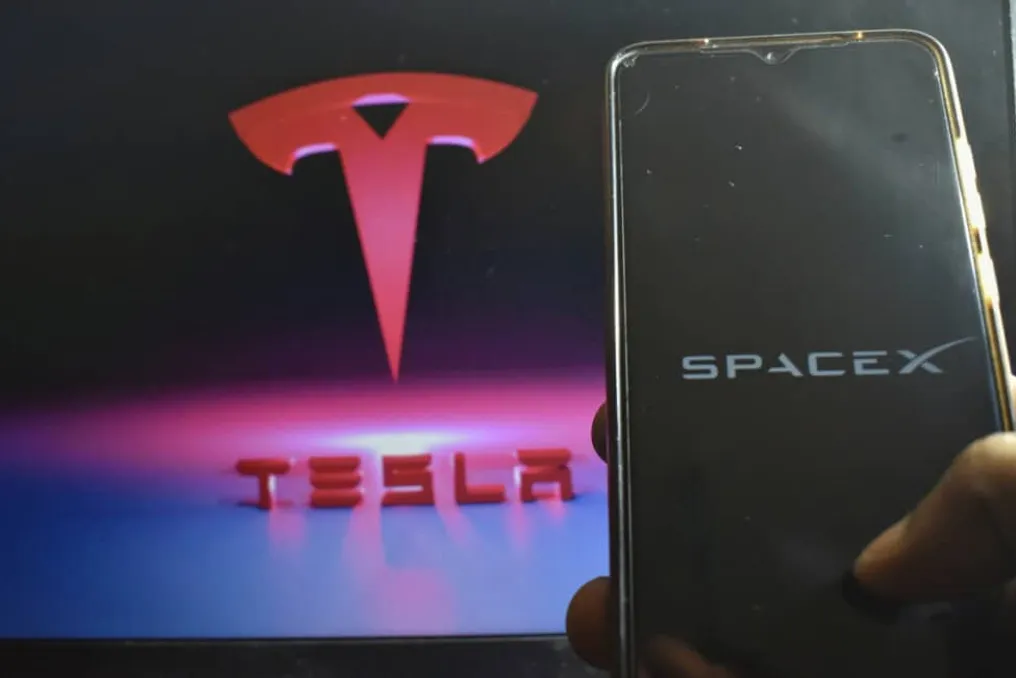
According to information released by Bloomberg, the companies SpaceX and Tesla, both linked to Elon Musk, may formalize a merger as early as December 2026. The companies are reportedly currently in negotiations to define the details of the transaction, including price and level of control.

Although the conclusion of the agreement is not yet certain, the beginning of 2027 is also seen as a possibility. If the merger occurs, the operation should follow the model of Tesla being absorbed by SpaceX.

SpaceX has a valuation exceeding US$1.9 trillion (equivalent to about R$10.1 trillion), while Tesla's market value is estimated at around US$1.5 trillion (approximately R$8 trillion). This union would represent one of the largest corporate mergers ever conducted.

Another crucial aspect is the distribution of power within the companies. Musk holds about 20% of Tesla but exercises control over approximately 85% of SpaceX's voting power through special rights shares. A potential share exchange would allow Tesla investors to become part of an organization where the entrepreneur would have significantly greater control over decisions.

The website Electrek highlighted the potential impacts of this operation on Musk's compensation. According to clauses in his 2025 remuneration package, a change in corporate control could accelerate the acquisition of shares tied to specific goals. The same site mentioned that a valuation of US$2 trillion (R$11.28 trillion) for Tesla would be sufficient to immediately meet the first market value tier stipulated in the agreement. Additionally, 286 million restricted shares from a 2018 compensation plan could have their acquisition expedited through a change in control.

One of the main challenges to finalizing the merger lies in Tesla's operations in China. Bloomberg indicated the need to establish how these businesses should be separated or protected, also considering SpaceX's activities with governments and defense agencies.

The factory located in Shanghai is Tesla's largest production unit, responsible for more than half of the vehicles manufactured by the company. In October, this facility recorded the output of 67,829 vehicles.

This situation could raise concerns among regulators and shareholders, given that SpaceX maintains contracts and activities related to the United States government and defense, while Tesla has a strong presence in the Chinese market.

The political landscape in the United States adds another layer of uncertainty. After the midterm elections, Democrats took control of Congress and signaled an intention to scrutinize Musk's companies and their political ties more rigorously.

Bloomberg had previously reported that the companies were interested in finalizing the operation before Donald Trump left the Presidency of the United States. To date, neither company has commented on the possibility of a merger. Following the report's publication, Tesla's shares rose by 1.9%.

Popular