Google launches Gemini 4 Hydrogen, a new AI model focused on daily tasks
Read more
Tecnoblog
tecnoblog.net

Google launches Gemini 4 Hydrogen, a new AI model focused on daily tasks

Google announced this Thursday, November 12th, a new artificial intelligence model designed to meet everyday needs. This model, named Gemini 4 Hydrogen, succeeds Gemini 3.8 Flash, promising 2.5 times faster responses and presenting improvements in accuracy.

Currently, Gemini 4 Hydrogen is accessible both in the Gemini app and Google Search, available even to users without a subscription. For developers interested in integrating this model into their own applications and services, the API has a specific pricing structure.

Access to the model can be made through integration tools provided by Google, including Google AI Studio and Android Studio. According to Google, Hydrogen balances speed, reasoning capability, and a lower operational cost compared to other models in its family.

Although it is better suited for text generation and routine tasks, it was observed that the basic version of the model achieved satisfactory results in certain activities. In Artificial Analysis Intelligence, an independent index that evaluates the performance of AI models through various tests, Hydrogen scored 51 points in its default configuration and reached 54 points when using the maximum reasoning level, surpassing the 50 points recorded by Gemini 4 Argon.

Compared to Gemini 3.8 Flash, Gemini 4 Hydrogen demonstrated a reduction greater than five times in the incidence of hallucinations and proved 2.3 times more resistant to prompt injection attacks.

When compared with competing models, such as Anthropic's Claude Sonnet 5.5 and OpenAI's GPT-6.1 Terra, the results indicate certain advantages. However, performance varies depending on the evaluation; in tests requiring system operation and the resolution of scientific and mathematical problems, the Google model lagged behind Claude Sonnet 5.5 in benchmarks such as Terminal-Bench 4.1, Terminal-Bench-Science 0.1, and OSWorld-2.1, a relevant test for agentic AIs that measures interactivity with the computer.

Additionally, the new basic model can be integrated with Gemini 4 Carbon within the same workflow, using the new Orchestrator functionality. This tool operates similarly to the /swarm command, which was introduced in Google Antigravity upon the launch of the frontier model. The strategy is to keep Carbon dedicated to more complex tasks, while Hydrogen handles steps that can be completed with fewer resources. Tests released by Google showed that the combination of these two models achieved success rates close to those obtained by Carbon alone in Terminal-Bench 4.0, resulting in a 24% decrease in token consumption and a 19% decrease in processing time.

Similar stories

Gemini is available on Apple CarPlay, allowing voice conversations with AI while driving
Read more
olhardigital.com.br

Gemini is available on Apple CarPlay, allowing voice conversations with AI while driving

Google has started making the Gemini application directly available on Apple CarPlay. This feature allows iPhone users to interact with the artificial intelligence (AI) by voice while driving, eliminating the need to hold the phone or leave the vehicle's multimedia system interface.

The feature uses Gemini Live, a mode that enables more fluid dialogues with the chatbot. The driver can start a new interaction or resume a previous conversation via an icon displayed on the CarPlay screen. Google stated that it will be possible to pause the dialogue, change the topic, or interrupt the conversation at any time. All conversations are kept synchronized with the Gemini app on the iPhone and recorded in the account history.

The implementation of this feature began this Wednesday, the 11th, and covers iOS users in all languages that support Gemini Live. To take advantage of this novelty, it is essential that the Gemini app is installed and updated on the iPhone, as well as that the user grants microphone usage permission and has initiated at least one conversation with Gemini Live via mobile.

After connecting the iPhone to CarPlay, the Gemini icon becomes visible on the vehicle's interface; simply selecting it starts or continues the voice communication. Prior to the direct integration, Google Assistant was already accessible via CarPlay through the Google Maps app; now, the company offers native access to the chatbot on the car screen.

This addition comes shortly after Google expanded Gemini's presence on Android Auto and in vehicles equipped with the integrated Google system, continuing to introduce personalized assistance features on these platforms.

Google launches Gemini 4 Carbon to the public with functionality for AI agent teams
Read more
tecnoblog.net

Google launches Gemini 4 Carbon to the public with functionality for AI agent teams

After a period of restriction to cybersecurity specialists, Gemini 4 Carbon was launched to general users and businesses this Tuesday, November 10th. This model is presented as the most advanced artificial intelligence developed by Google.

Developers can access the model through the API in Google AI Studio, Android Studio, and Gemini for Business. Costs are set at $2 per million input tokens and $10 per million output tokens (equivalent to approximately R$ 10 and R$ 53). However, this promotional price is only valid until the end of the month, at which point it is expected to double, reaching the cost level of Claude Opus 5.5.

According to The Verge, this pricing structure aims to increase the company's competitiveness against its rivals. Even after the end of the promotional offer, scheduled for the end of November, the cost per token for Carbon will remain below the GPT-6 Astra and Fable 5.2 models.

For the general public, access to Gemini 4 Carbon is available in the Gemini app, Search AI Mode, and Google Antigravity, but only for Google AI Ultra subscribers, whose initial monthly fee is R$ 779.90.

Gemini 4 Carbon positions itself as the most sophisticated AI within Google's offerings, surpassing Gemini 4 Argon, which was released in October. Argon is aimed at tasks requiring greater processing capacity and reasoning, such as scientific investigations, system audits, and identifying code flaws.

Although the model uses more tokens than Argon to perform such activities, it maintains extended verification cycles. This feature allows the AI to analyze multiple possibilities, review partial results, and explore alternatives.

One of the core functionalities introduced with the launch of Gemini 4 Carbon is the /swarm command, initially implemented in Google Antigravity. This command allows a single task to be distributed among multiple AI agents that operate in a coordinated manner.

In this process, Carbon can manage activities that require deeper reasoning, such as planning system architecture, while less complex tasks can be delegated to more agile models. The goal is to enable the execution of multi-phase projects without the user needing to manually orchestrate every step.

In demonstrations conducted by Google DeepMind, the technology was applied to create a library of graphical interfaces in the Rust language during the early morning hours. Another practical example involved agents who developed a three-dimensional game using Three.js, simulating the company's own campus.

In addition to programming tools, the model demonstrated 100% sensitivity in threat detection in Project Fortify, an internal Google system focused on mitigating and identifying vulnerabilities. In additional simulations, it managed to block 99% of intrusion attempts.

The advancement also covers defenses against prompt injection attacks. In internal tests, Gemini 4 Carbon was not susceptible to any type of attack. Furthermore, the company evaluated the model's behavior in scenarios where agents could fabricate results, achieving a 92% success rate in integrity tests.

Google launches Gemini Omni 1.2 Flash for creating videos up to 15 seconds
Read more
tecnoblog.net

Google launches Gemini Omni 1.2 Flash for creating videos up to 15 seconds

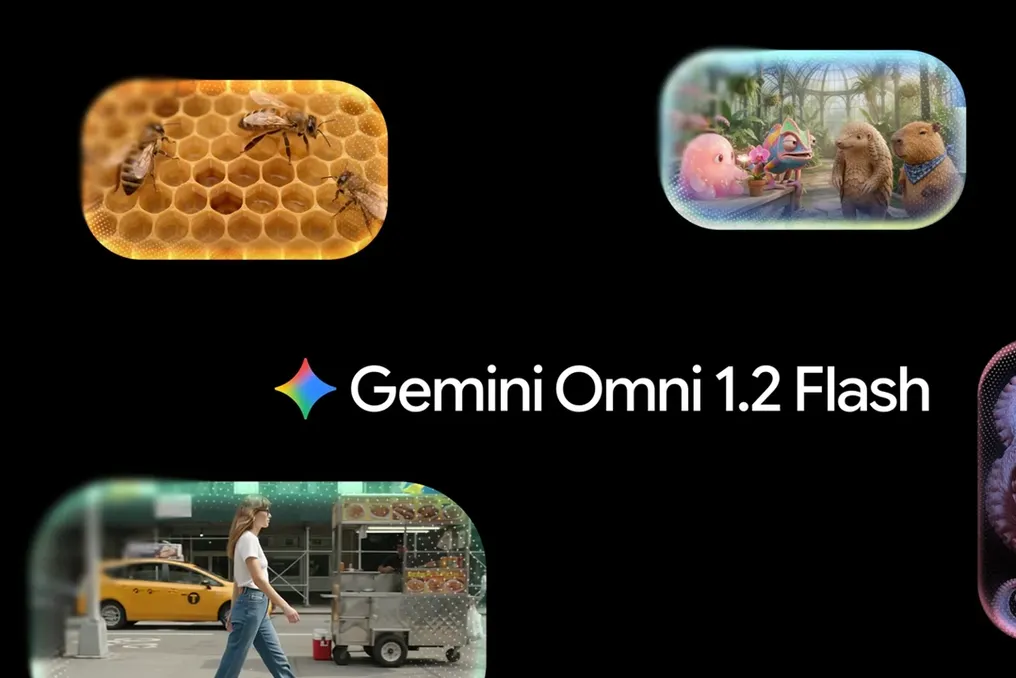
Google has unveiled Gemini Omni 1.2 Flash, its latest artificial intelligence model dedicated to video generation and editing. This update is notable for its ability to produce clips with a maximum duration of 15 seconds, offering higher quality and uniformity.

Although 15 seconds may seem like a short period, Gemini Omni 1.2 Flash was specifically developed for the production of short audiovisual content. This launch represents a significant advancement over the previous version, 1.1, which limited video creation to up to 10 seconds.

Additionally, Google announced that the new model allows users to specify the video duration in one-second increments. This eliminates the need to be restricted to predetermined times, such as 5, 10, or 15 seconds, allowing choices like 4, 7, or 8 seconds, with a minimum established time of 3 seconds.

Another point emphasized by Google is that Gemini Omni 1.2 Flash produces more cohesive results, maintaining the characteristics of people, objects, or scenes, which reduces the probability of 'aberrations' appearing in the video.

The AI model has also been enhanced to generate more natural dialogues, offering better lip synchronization and clearer distinction between different voices. Camera movement features have been refined, including options to zoom in, zoom out, or move the camera around specific elements.

To optimize workflow and reduce costs, Gemini Omni 1.2 Flash accepts voice or text commands to modify various aspects of the video, such as the background, lighting effects, or screen format, without requiring the entire process to be redone with each change.

To aid in tracking results and saving costs, the model allows for the creation of drafts in 360p or 720p resolutions. If the result is satisfactory, the final video can be exported in 1080p or 4K, as needed.

Regarding costs, Google highlighted a 30% reduction in the price of a 720p video, equivalent to US$ 0.07 per second.

As a model, Gemini Omni 1.2 Flash is being implemented across various Google AI platforms, with availability distributed across its services.

Popular