End of the last retrograde Mercury of 2026: scientific explanation of the phenomenon
Read more
Olhar Digital
olhardigital.com.br

End of the last retrograde Mercury of 2026: scientific explanation of the phenomenon

This Friday, the 13th, marks the end of the last period of retrograde Mercury predicted for 2026. Although astrology enthusiasts attribute this apparent movement to turbulent energetic influences in various spheres of life, science offers a different explanation for what it truly means for the planet to be in retrograde motion.

According to the Old Farmer’s Almanac, a traditional American publication focused on rural astronomy, Mercury showed apparent retrograde motion during certain intervals in 2026. Scientifically, this phenomenon is an optical illusion resulting from Earth's position relative to the planet, as every planet in orbit follows a defined trajectory and does not abruptly reverse its course.

For this reason, the correct term is apparent retrograde motion. Mercury exhibits this characteristic more frequently than other celestial bodies due to its short orbit, which results in an Earth year of only 88 days. Consequently, it appears to move backward in the sky about three or four times annually, with each episode lasting approximately three weeks.

Marcelo Zurita, a columnist for Olhar Digital and president of the Paraíba Astronomy Association (APA), a member of the Brazilian Astronomical Society (SAB), and technical director of the Brazilian Meteor Observation Network (BRAMON), clarifies that for planets with orbits outside Earth's (such as Mars onwards), the most appropriate term is 'retrograde loop.' This occurs because, when overtaken by Earth, these planets appear to form a loop in the sky.

Zurita details that in the case of inner planets, it is Earth that overtakes them in its orbit. Thus, the apparently retrograde motion is observed when these planets circle the Sun behind or in front, at which time a parabola typically forms, not a loop.

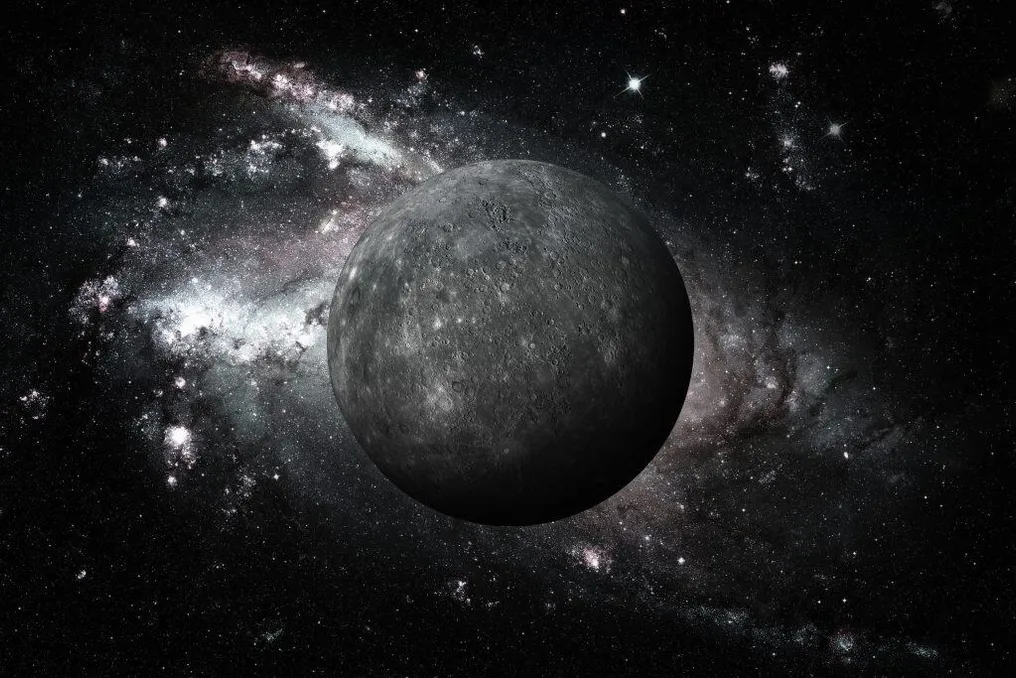
Mercury, being the planet closest to the Sun, is characterized by extreme temperatures, varying from 430°C on the illuminated side to -180°C on the night side, in addition to being rocky, lacking an atmosphere, and covered with numerous impact craters, being slightly larger than the Moon and quite similar to it.

Although science has known for years that Mercury is shrinking, specialists are still debating the real dimension of this shrinkage. Researchers from the University of Georgia recently published a paper presenting a new method aimed at measuring this process with greater accuracy.
Similar stories

Mercury enters inferior solar conjunction, making it difficult to observe in the sky
Read more
olhardigital.com.br

Mercury enters inferior solar conjunction, making it difficult to observe in the sky

On Wednesday (4th), at 11:20 AM Brasília time, Mercury began a phase termed by astronomers as 'inferior solar conjunction.' During this event, the planet passed between the Earth and the Sun, approaching approximately 0.674 astronomical units (AU), which corresponds to about 100.8 million kilometers.

According to information from the astronomical observation guide In-The-Sky.org, this conjunction occurs once every synodic cycle of the planet, which is the time required for Mercury to return to the same position relative to the Sun when viewed from Earth; this cycle lasts 116 days.

At the moment of the inferior solar conjunction, Mercury was located only 0°22' (zero degrees and twenty-two arcminutes) from the Sun. This extreme proximity causes the bright light of the main star to obscure the planet, which had already made its observation challenging in previous days. This phase represents Mercury's 'disappearance' in the night sky and its subsequent movement to become a morning object in the coming weeks.

The unit 'arcminutes' is used in astronomy to measure very small angles in the firmament. Considering that a full arc has 360°, 60 arcminutes equal one degree, meaning the apparent distance between Mercury and the Sun will be slightly more than one-third of that value.

Simultaneously with reaching inferior conjunction with the Sun, Mercury also reaches perihelion, which is the point closest to Earth, reaching a distance of 0.67 AU from us. This implies that the smallest planet in the Solar System will be only 100.2 million kilometers from Earth.

Regarding when it can be seen again, Marcelo Zurita, president of the Paraíba Astronomy Association (APA), member of the Brazilian Astronomical Society (SAB), technical director of the Brazilian Meteor Observation Network (BRAMON), and columnist for Olhar Digital, informed that Mercury will become visible again on the eastern horizon, shortly before dawn, around November 20th, when it will be further away from the star in the sky.

Additionally, an article published in the scientific journal Icarus mentions the possibility that fragments of Mercury have been found on Earth. Meteorites analyzed by British scientists exhibit characteristics suggesting a probable origin on this planet closest to the Sun. If this hypothesis is confirmed, it would constitute the first record of Mercurian rocks on terrestrial soil, providing a valuable opportunity for study.

November Astronomical Calendar: Notable Events Include Voyager 1's Historic Distance and End of Mercury Retrograde
Read more
olhardigital.com.br

November Astronomical Calendar: Notable Events Include Voyager 1's Historic Distance and End of Mercury Retrograde

The month of November begins with several important astronomical events, including the end of Mercury's last retrograde motion of the year, a meteor shower, the observation of Uranus at its best time, and the arrival of a Supermoon. Concurrently, space exploration records an unprecedented feat with the Voyager 1 probe reaching a distance of one light-day from Earth.

It is important to note that all mentioned times and dates are referenced to an observer in Brasília (DF) and may vary slightly depending on the location. To ensure the accuracy of observations, it is recommended to use applications such as Star Walk, Stellarium, or SkySafari, which indicate the exact position of celestial bodies according to the observer's location.

On November 9th, Carl Sagan's birthday will be celebrated, a date dedicated to honoring the contributions of the astrophysicist and the legacy of scientific outreach he left behind.

On November 13th, Mercury's retrograde motion ends. Due to its relatively short orbit, completing one trip around the Sun every 88 days, the planet often appears to move backward in the sky for about three weeks as it overtakes Earth.

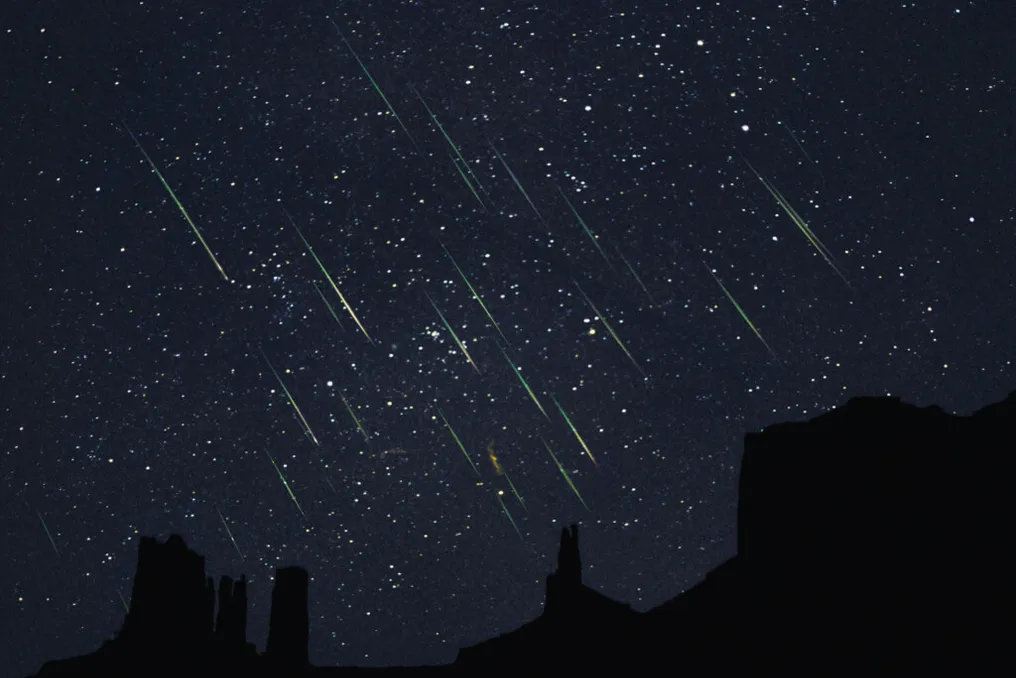
The peak of the Leonids meteor shower is expected on November 18th. On this day, with the Moon showing 61% illumination in the early evening, but setting before the ideal visibility time, the phenomenon can be seen in both the Southern and Northern Hemispheres.

Additionally, on November 25th, the Castor Supermoon will occur. This event happens when the Full Moon coincides with perigee, the orbital point closest to Earth, causing the lunar disk to appear slightly larger and up to 14% brighter than a common full moon. The name refers to periods when animals accumulated reserves for winter.

During this month, the Hera probe will arrive at the Didymos-Dimorphos asteroid binary system for the first encounter. This European Space Agency (ESA) spacecraft will study the consequences of the DART mission, conducted by NASA, assisting in improving planetary defense methods, and will release two cubesats before beginning its scientific activities in 2027.

Another milestone is the insertion of BepiColombo into Mercury's orbit. This collaborative mission between the ESA and the Japan Aerospace Exploration Agency (JAXA) will use the Mercury Planetary Orbiter (MPO) and the Mercury Magnetospheric Orbiter (MIO) to investigate the planet's magnetic field, interior, and surface.

Finally, around the 15th, the NASA's Voyager 1 probe will reach the mark of one light-day from Earth. Nearly fifty years after its launch in 1977, the spacecraft will be 25.9 billion kilometers from our planet, the time required for light to travel that distance.

Popular