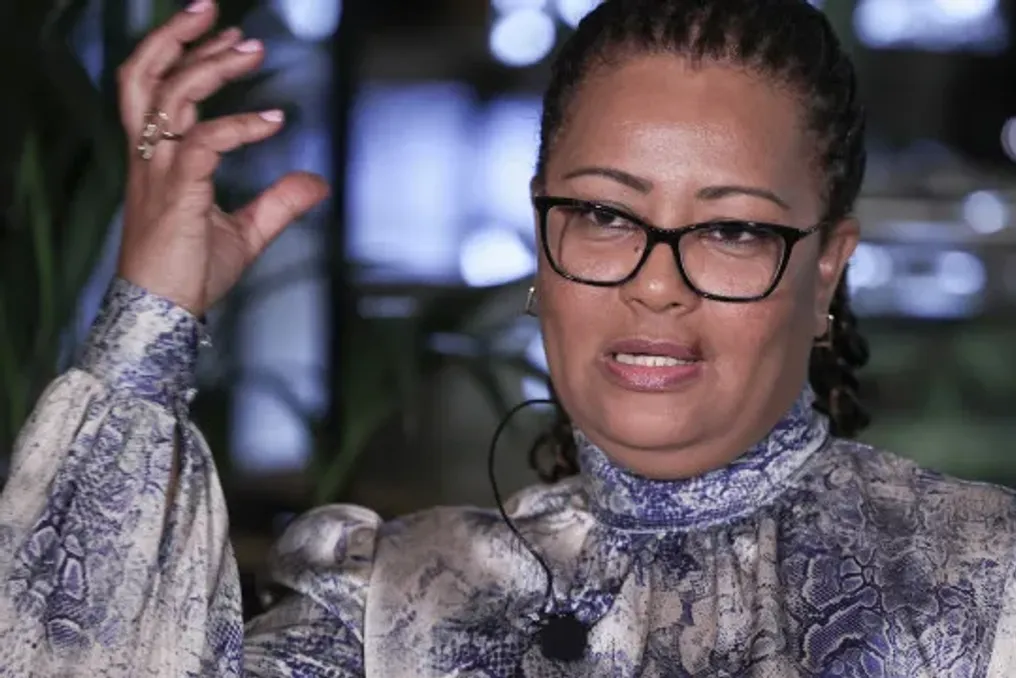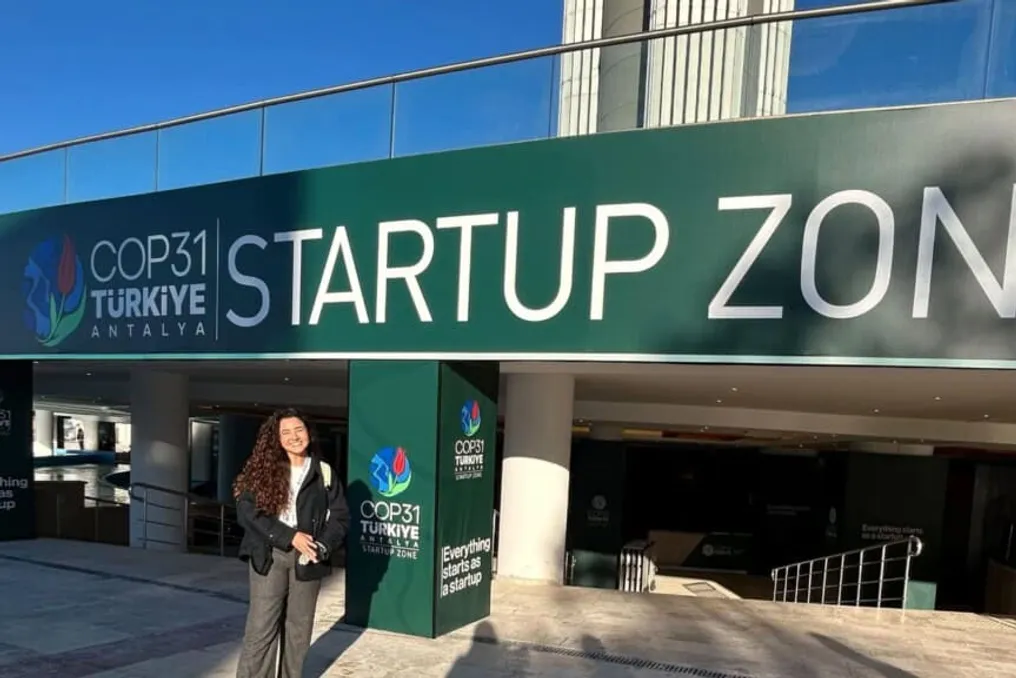
Flávia Macruz, CEO of ESG Data Core, shared her success story, which culminated in the startup's participation in COP 31. Initially, while COP 30 was taking place in Belém, Pará, in 2025, the company was in its early stages, with only a Minimum Viable Product (MVP) ready. Macruz recalls telling business contacts that she would one day take her company to COP, something that happened sooner than expected.
The decisive factor for ESG Data Core's presence at COP 31 was the creation of an Official Zone for the startup ecosystem, named Startup Zone, located in the Green Zone. This space covers 3.6 thousand square meters and features presentation stages, media studios, business areas, and investor lounges. The 2026 edition of COP began on November 9th and will run until the 20th.
ESG Data Core was partly born from Macruz's professional experience as a lawyer specializing in ESG regulation in Europe. Before entrepreneurship, she worked at Deloitte and held the position of Assistant Vice President (AVP) of European ESG and Compliance at State Street Investment Management, based in Dublin, Ireland, where she dealt with rigorous European guidelines.
Macruz is a co-founder of the startup, along with Alexandre Spezani de Moraes, who currently serves as CPO, and Henrique Sloty Gonçalves, who is the CTO. The three co-founders are Brazilian. Although the company is based in Dublin, Macruz resides in Ireland, Moraes in Portugal, and Gonçalves in Brazil, justifying the description of the startup as being of Brazilian origin.
ESG Data Core has offices in Brazil and Ireland and stands out as the only Brazilian startup selected for COP 31. The company's vision is to promote innovation focused on global sustainability, seeking positive impacts on people. The company focuses on engaging corporations to take roles in decarbonization, asset management, and social responsibility.
Macruz explained that after living abroad for about eight years, she completed a master's degree in human rights and began working with sustainability for investment funds and for Deloitte, focusing on data. It was during this period that she noticed the lack of reliability and auditing in data, observing that many consulting firms generated information only for reports, without the company knowing how to proceed with the decarbonization strategy or how to absorb global impacts.
In essence, ESG Data Core solves the lack of data visibility by transforming it into concrete actions. The company connects various corporate systems, preparing organizations not only for business reports but also for implementing decarbonization strategies. By centralizing this data, the startup aids in anticipating risks, including climate, geopolitical, social, and human rights risks.
The business model aims to offer internal knowledge, especially to small and medium-sized enterprises, showing them how they can use the data they already possess to boost their own growth. One example cited was a company that needed to present climate figures ready for renewing an important contract, and ESG Data Core could assist with this data collection.
Another illustrative example involved a hurricane in the United States in 2024, which affected a factory crucial for intravenous serums. With the ESG Data Core system, companies could identify excessive dependence on a single supplier and the associated climate risk, allowing for the suggestion of mitigation and adaptation measures to reduce costs and impact risks.
Participating in COP 31 is described as impressive, as the event is entirely focused on climate and social issues, unlike previous events. There is a feeling of unity, where participants seek to solve the same problem and exchange knowledge about various solutions. Collaboration is a central pillar, as everyone is working to reduce emissions and prepare for climate crises.
Macruz emphasized that even as a small company, the startup manages to generate impact by bringing innovative risk technologies to large corporations, participating in this collaboration to make problem resolution a reality in partnership.
Her first in-person participation in COP was very different from previous editions seen by the media. She highlighted the democratization of the event, where any level of company can interact. I had the opportunity to speak directly with CEOs of large companies, asking about the challenges they faced, because the purpose of a startup is to solve problems.
Regarding the relevance of ESG and data in the context of COP, Macruz mentioned the 2015 Paris Agreement, which requires signatory countries to set climate goals to limit temperature increase to 2°C, with the real focus being to stay at 1.5°C. She emphasized that the absence of correct data makes any effective strategy or planning impossible.
Concerning carbon emissions, there are three scopes: scopes one and two refer to direct company emissions, while scope three covers indirect emissions (such as travel and products). Of these, 90% come from scope three, mainly from small and medium-sized enterprises that lack the budget and personnel to manage gas reduction. Many of these medium-sized companies lose contracts because they do not have traceable data.
ESG Data Core works by decarbonizing the supply chain, focusing on scope three. Using existing company data, the startup assists in managing carbon reduction, preventing loss of space in the production chain, and aiding in the reduction strategy. The goal is to transform what is currently seen as a compliance burden into a profit strategy.
Macruz concluded that without clear and reliable data, the world will not achieve environmental goals, and climate tragedies will persist. She expressed satisfaction in representing Brazil and Ireland, showing that even if small, it is possible to bring significant changes and inspire the country with innovations.