Several interesting products were introduced in November 2026 across various fields, including high-performance chips, massage devices, audio accessories, and medical equipment.
Nvidia Chip
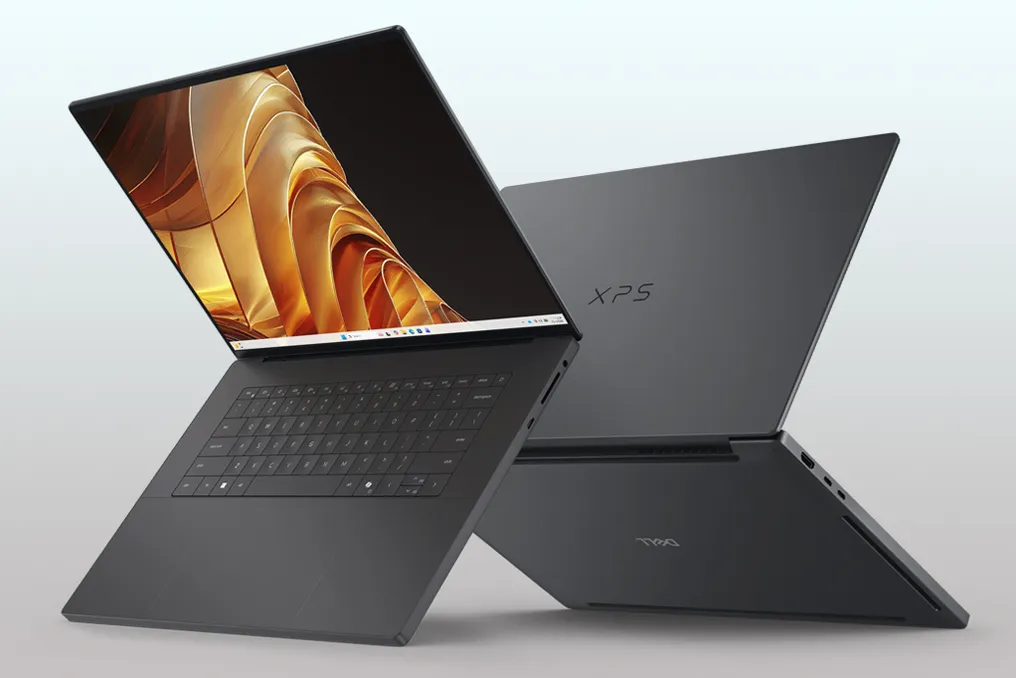
The RTX Spark combines a central processor with 18–20 cores and a graphics processor (video and AI accelerator) with up to 6144 cores. It is based on the Blackwell architecture, the same one used in Nvidia's data center chips, and is installed in laptops from six companies: Asus, Dell, HP, Lenovo, Microsoft, and MSI.
These powerful machines are designed for specialists involved in developing artificial intelligence algorithms. The model shown in the photo is the Dell XPS 16, which is planned for release in Brazil. Although the price has not been announced, this laptop costs $3800 in the USA.
Automatic Roller
The RheoFit A1 has an unusual shape, but its operating principle is simple: the user lies on a hard surface, and the robot glides under the body, using the person's weight to compress and relax muscles. It functions like a massage roller, requiring no movement from the user; they only need to remain still.
It is also possible to select which body parts will be affected. The robot costs $439 and comes with three interchangeable rollers for different levels of massage intensity. It is suitable for people weighing up to 135 kg.
Tuned in Brazil
Auri headphones (for 287 Brazilian reais) from the Brazilian brand Kuba are based on a Chinese model, but their audio equalizer was developed in Brazil by headphone reviewer and YouTuber Leonardo Drummond, who owns the company and the Mind the Headphone channel. This mirrors the common practice in recent years where various Asian brands released headphones tuned by reviewers such as Crinacle and HBB.
Nevertheless, Auri (which are wired, USB-C standard) have an additional advantage: users can upload ten other settings for these headphones via the website equalizador.kuba.audio.
End of Phobia
According to a study by the University of Michigan, 20% of adults suffer from needle phobia, which can turn a simple blood draw into a nightmare. However, the situation may change in the future.
The Food and Drug Administration (FDA, the US equivalent of Anvisa) has approved the use of the Aletta robot from the Dutch company Vitestro. This robot allows for blood collection without the patient seeing the needle, as it is hidden in the robot's arm. This machine, priced at $400,000, will be installed in clinics and laboratories.