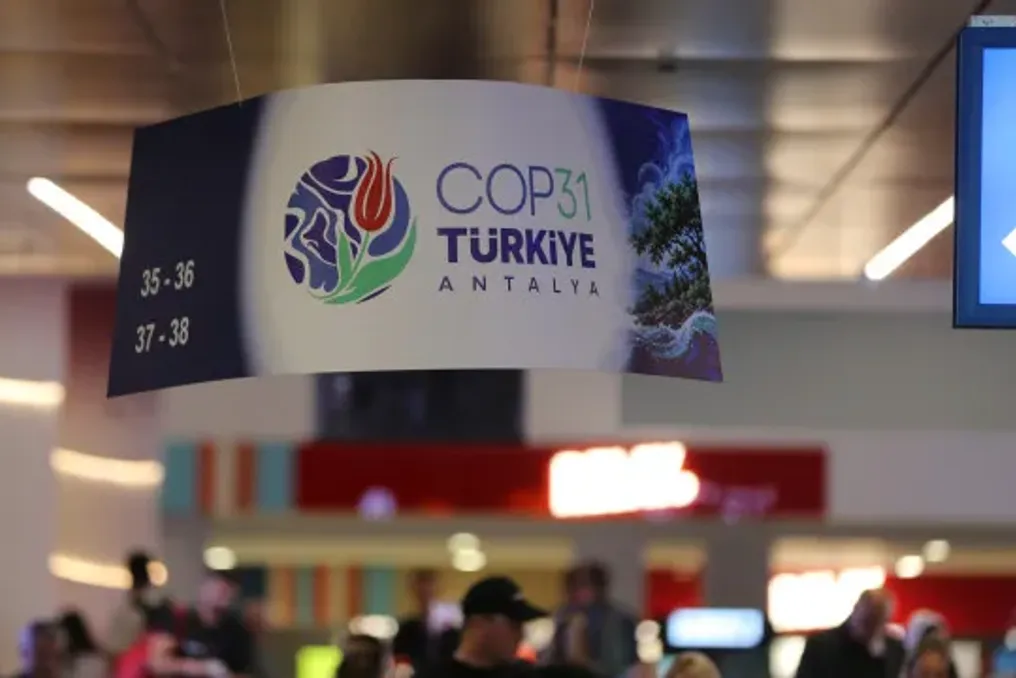
COP31 discusses the appointment of a climate security emissary and oil company policies
Read more
Noticias ao Minuto
noticiasaominuto.com

COP31 discusses the appointment of a climate security emissary and oil company policies

The fourth day of the UN Climate Conference COP31, held in Turkey, was marked by several significant events, including the UK's announcement regarding the appointment of a climate security emissary and Venezuela's stance on the oil business.

Despite organizational issues and delays that threatened the meetings and events, Greta Thunberg, a Swedish activist, also spoke at COP31, calling on Turkey to impose an energy embargo against Israel.

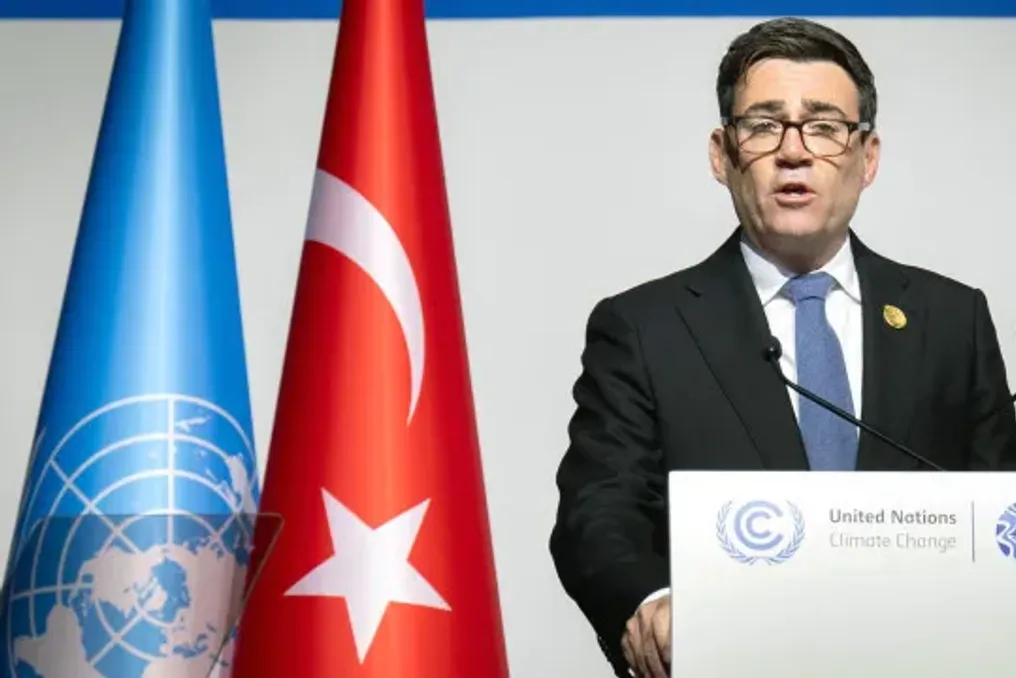
During the second and final day dedicated to speeches by heads of state and government, UK Prime Minister Andy Burnham announced the creation of a new global initiative—the appointment of a climate security emissary. Madlen Alessandra, former president of the UK Joint Intelligence Committee, will be appointed to this position and will work alongside the UK's State Secretary for Climate, Katie White.

Parallel to the calls to abandon fossil fuels, which are frequently heard at the main annual climate conference, Venezuelan interim President Delcy Rodríguez defended the country's 'sovereign right' to develop its oil industry as a 'vital engine of national development.' The President is in Antalya with hydrocarbon minister Paula Eno.

On Wednesday, Paula Eno met with her Brazilian counterpart, Lula da Silva, to discuss increasing Brazilian investments in the Venezuelan oil sector. Furthermore, Paula Eno held a meeting with Turkish counterpart Alparslan Bayraktar, whose country aims to expand its oil and gas activities beyond its borders. Delcy Rodríguez emphasized in her speech that 'there is no contradiction between energy development and environmental protection.'

Activist Greta Thunberg also appealed to Turkey to impose an energy embargo against Israel to stop the transfer of oil and energy from Israeli territory, which, according to her, directly fuels the genocide in Palestine. The activist referred to the Baku-Tbilisi-Ceyhan pipeline, through which Azerbaijani oil is allegedly exported to Israel via the Turkish port of Ceyhan over the years. Although Turkish authorities deny this, associations and the opposition confirm this information. She also stated: 'The planet is not dying; it is being killed, and we know who. It is being killed by the same people we often think will come to our aid.'

Also in Antalya, receiving many applause, Palestinian Prime Minister Mohammed Mustafa stated that 'the massive destruction of water supply systems, sanitation infrastructure, agricultural lands, and waste management systems has led to the exacerbation of environmental and health problems in the Palestinian territories.' Representatives from the US were present at the event, despite the absence of a delegation due to a decision by President Donald Trump. California Governor Gavin Newsom arrived in Antalya, as did Palo Alto Democrat Vicki Winkler, who noted: 'Mayors are those closest to the citizens we represent, and when Washington steps back, we take control.'

On his last day at COP31, Lula da Silva met with civil society representatives and was warmly welcomed for reducing Amazon deforestation to its lowest level in almost 40 years and for establishing the Ministry of Indigenous Peoples in 2023. The day was also marked by the publication of a report by the Climate Action Tracker (CAT) organization, which indicated that current global climate policy leads to warming of 2.7°C.
Similar stories

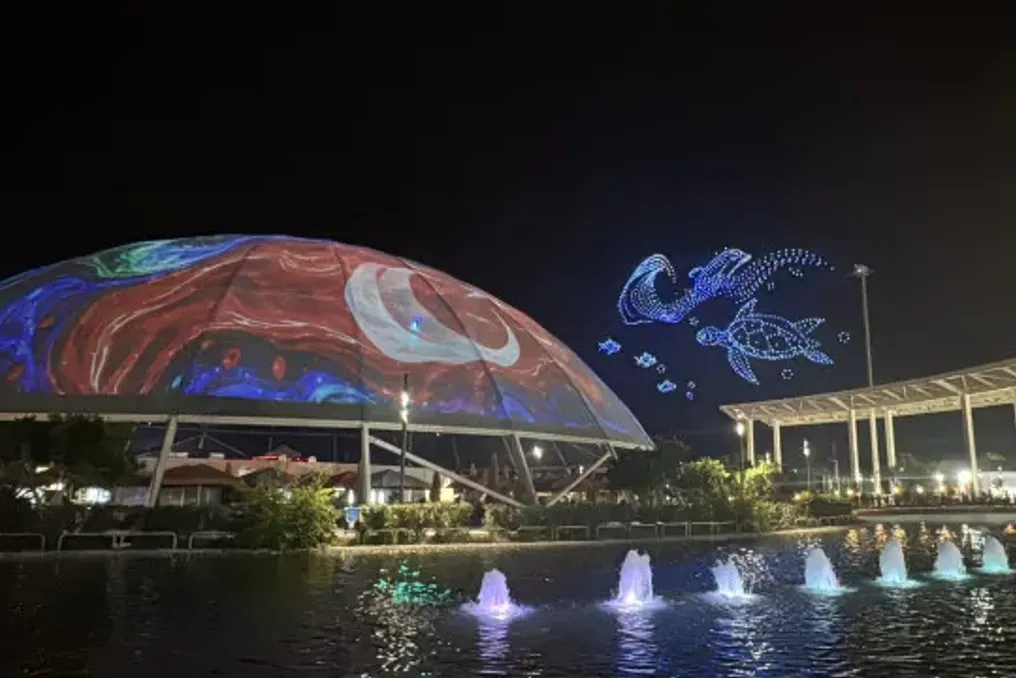
Contrast Between Military Spending and Climate Change Funding Noted at COP31 Conference
Read more
noticiasaominuto.com

Contrast Between Military Spending and Climate Change Funding Noted at COP31 Conference

At the climate conference held in Turkey, a sharp contrast was highlighted today between the huge sums allocated to defense and the insufficient funding for global warming mitigation measures, as well as the impact of wars on the environment.

This contrast was voiced on the third day of the 31st United Nations Climate Change Conference (COP31), taking place in Antalya, by various world leaders and non-governmental organizations.

Hilda Heine, President of the Marshall Islands, one of the countries most vulnerable to sea-level rise, stated: 'We are told there is no money, but military spending is rising. The biggest threat to our security remains underfunded.' She added: 'I urge you to find funds for life, not for death.'

Brazilian President Luiz Inácio Lula da Silva expressed regret over the G7 and G20 summits, noting that 'we are now talking more about armament and tariffs than about the survival of future generations.'

Turkish President Recep Tayyip Erdoğan also addressed the issue of environmental damage from military actions, stating that 'nature, like humanity, pays a high price for armed conflicts. Gaza is the clearest example... where genocide, as well as ecocide, is observed.'

The Iranian government also raised at the conference the issue that the war initiated by the US and Israel in February has become one of the main causes of pollution this year, triggering fires at oil storage facilities. These fires at fuel depots near Tehran released 'between half a million and one million tons of carbon dioxide.'

Iranian President Masoud Pezeshkian stated that 'the environment is the silent victim of wars. Destruction remains even after the conflict ends' during the world leaders' speaking round at COP31.

According to a report by the Stockholm International Peace Research Institute (SIPRI), global military spending reached nearly three billion dollars in 2025. Tasneem Essop, Director of the Climate Action Network, which unites various environmental NGOs, noted that this increase in military spending is noticeably absent from discussions at COP31.

She commented: 'Rich countries come here claiming they don't have money for climate action. However, they have significant funds to finance wars,' citing AFP. A study conducted in 2022 by the Scientists for Global Responsibility and the Observatory of Conflicts and Environment showed that armed forces are responsible for 5.5% of greenhouse gas emissions. Tasneem Essop asked: 'How can we ignore these significant emissions when we are desperately trying to reduce them?'

Turkey, as an NATO member, plans to increase its military budget by 229% by 2027. Last year, 32 NATO countries pledged to allocate at least 5% of their gross domestic product (GDP) to security by 2035, including 3.5% for military spending. Turkey's Minister of Environment and COP31 Chair, Murat Kurum, stated in September: 'Every cent allocated to defense must also be directed towards preserving life on this planet.' Tasneem Essop believes that 'Turkey's chairmanship at COP could have demonstrated more leadership on this issue.'

COP31 begins in Turkey with divergences over climate finance and action targets
Read more
noticiasaominuto.com

COP31 begins in Turkey with divergences over climate finance and action targets

The 31st United Nations Climate Change Conference (COP31) has begun in Turkey. The event takes place after a year marked by extreme weather events, such as floods and heatwaves, generating tensions regarding the financial resources needed for adaptation and mitigation of the climate emergency.

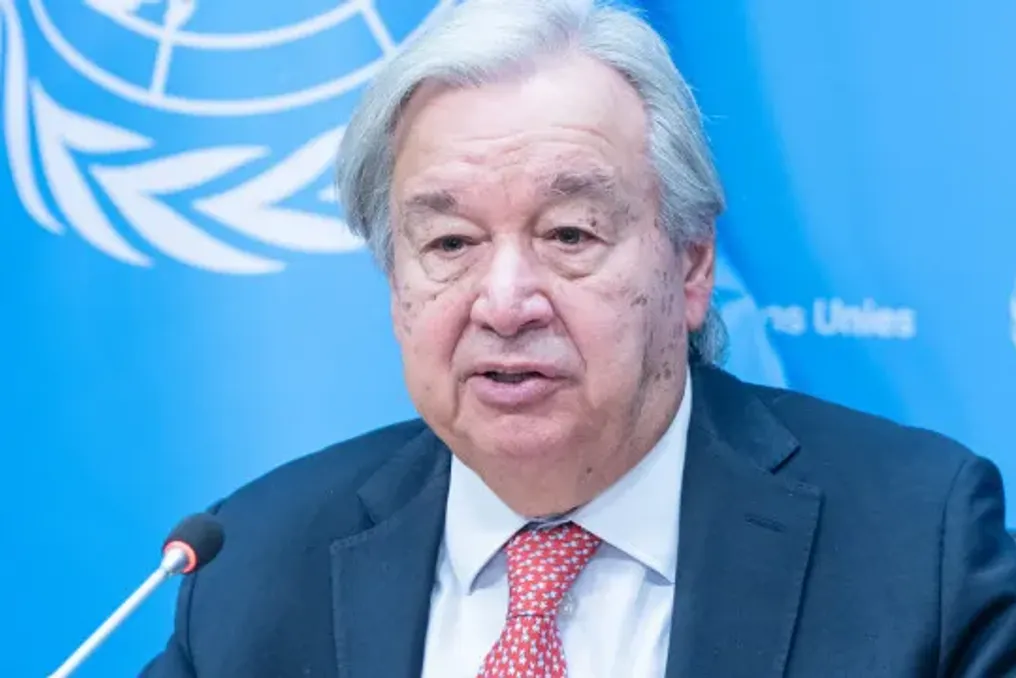
António Guterres, UN Secretary-General, called on leaders to 'be up to the task,' while Murat Kurum, Turkish Minister of Environment and conference president, emphasized during the opening session that 'any delay weighs particularly heavily on climate action.'

In 2026, the planet was again affected by climate change, evidenced by fatal floods in Nepal, heatwaves in Europe, and fires in Indonesia. Simultaneously, the energy crisis, driven by the Middle East conflict, has pressured costs and created significant budgetary challenges for governments, which ultimately diminishes climate ambition.

Held at the large exhibition center of the Turkish coastal city of Antalya, COP31 aims primarily to transform commitments made in previous UN meetings into practical measures. Maria da Graça Carvalho, Portugal's Minister of Environment and Energy, had previously argued that COP31 should be a conference focused on actions.

COP31, which brings together nearly 200 nations under the UN umbrella and has 68,544 accredited participants, is expected to be the forum for the 'implementation' of promises, according to Murat Kurum. Delegations spent the early hours of the start day negotiating the agenda. The main point of disagreement lies in the funding promised by developed countries—historically the largest greenhouse gas emitters—to developing countries.

A representative from the European Union had already signaled on Friday a lack of political will to increase spending. Jasper Inventor, leader of the Greenpeace delegation, described the start of COP31 as 'difficult,' warning that rich countries are refusing, especially, to include certain funding items on the agenda.

The 'Climate Finance Working Programme,' a mechanism defined at COP30 in Brazil in 2025 to discuss financial agreements, will be officially discussed. However, the tripling of funding for climate change adaptation, crucial for protecting nations most susceptible to droughts, floods, or sea-level rise, is not guaranteed.

The UN reported last week that developing countries will need $305 billion annually by 2035, an amount almost ten times higher than what they currently receive from wealthy nations. Simon Stiell, the UN's Climate Change Officer, acknowledged that 'frustration is palpable' in this context.

Another controversial issue is Turkey's intention to make electrification a central focus of COP31, suggesting that countries commit to raising the share of electricity in global energy consumption to 35% by 2035, compared to the current 20%. The European Union supports electrification with renewable sources, a position also defended by Maria da Graça Carvalho. However, several hydrocarbon-producing countries show resistance to accepting this proposal.

COP30, held in Belém, in the Brazilian Amazon, concluded without explicitly mentioning fossil fuels. In contrast, Brazil presented last week a 'roadmap' for countries to voluntarily replace oil, coal, and gas with renewable energies.

During a summit co-chaired by Turkey and Australia, Chris Bowen, Australian Minister for Climate Change, encouraged delegations to overcome divergences and prove that international cooperation can still yield results. He argued that 'we will show the world that multilateralism works,' despite the boycott by the US government, motivated by President Donald Trump's denial of climate change.

From carbon neutrality to the Paris Agreement: Context and themes of COP31
Read more
noticiasaominuto.com

From carbon neutrality to the Paris Agreement: Context and themes of COP31

The United Nations High Commissioner for Refugees (UNHCR) issued a report before the COP31 meeting, warning about the risks affecting 90 million displaced people in nations vulnerable to climate change.

The 31st United Nations Climate Change Conference (COP31) is scheduled to take place in Antalya, Turkey, between November 9th and 20th. This event occurs at a time when two global conflicts—the war in Ukraine since 2022 and the confrontation between Iran, Israel, and the United States since the beginning of this year—are diverting attention from the issue of climate control.

Due to these focal points, a recent UN report, which points out that the planet has already exceeded the 1.5ºC global warming limit above pre-industrial levels defined in 2015 in the Paris Agreement, has received little media coverage. This agreement is seen as a historic milestone for preventing catastrophic and irreversible climate change.

The UN conference, co-chaired by Turkey and Australia, focuses on the evolution of the energy transition and the necessary financing for decarbonization, seeking to revitalize the objectives set out in the Paris Agreement.

To contextualize the discussions of COP31, several concepts were presented. The Paris Agreement, adopted in 2015 at COP21, is an international treaty aimed at reducing Greenhouse Gas (GHG) emissions so that global temperatures do not exceed two degrees Celsius (2ºC) above pre-industrial levels, preferably remaining below 1.5ºC.

Climate Change refers to modifications in the Earth's natural climate patterns caused by human activity, mainly by the massive release of carbon dioxide (CO2) resulting from the intensive use of fossil fuels. These effects include the melting of polar ice caps, desertification, species extinction, ecosystem destruction, forest fires, sea-level rise, droughts, and extreme floods.

Global Warming is the increase in the planet's surface temperature over the last hundred years, driven by human activity, especially the consumption of fossil fuels. According to the World Meteorological Organization (WMO), every decade since 1980 has been warmer than the previous one, with 2024 being the warmest year ever recorded. The UN recognizes the possibility of temperatures rising up to three degrees by 2100.

Other terms addressed include the Ozone Layer, which protects the Earth from solar ultraviolet radiation; Fossil Fuels, such as oil, natural gas, and coal; and the Conference of the Parties to the United Nations Framework Convention on Climate Change, which organizes high-level meetings on environmental protection.

Nationally Determined Contributions (NDCs) are the commitments made by each country to reduce GHG emissions, following the Paris Agreement. Sustainable Development implies satisfying present needs without harming future generations, preserving nature. Carbon neutrality, or net-zero emissions, is achieved when the amount of GHG removed from the atmosphere equals that emitted by human activities, through source reduction and investment in forests.

The pre-industrial era refers to the period before the Industrial Revolution, consensually dated before the second half of the 18th century (1750). Extreme Weather Events are abnormal situations whose frequency is increasing due to human influence, such as heatwaves, severe droughts, and intense hurricanes. The Intergovernmental Panel on Climate Change (IPCC) and the UN warn about the increase of these events.

Greenhouse Gases absorb infrared radiation, warming the planet; although their production is natural, the burning of fossil fuels has increased it exponentially, with CO2 being the main one. Methane warms the Earth 80 times faster than CO2. The Carbon Market allows for the trading of emission credits between countries. Mitigation and Adaptation involve actions to reduce emissions (a global target of 50% by 2050 compared to 1990) and preparation for impacts. The Sustainable Development Goals are the 17 goals of the UN General Assembly's Agenda2030. Finally, Loss and Damage refers to the harm caused by climate change, a concept revisited in 2013 at COP19 in Warsaw.

Popular