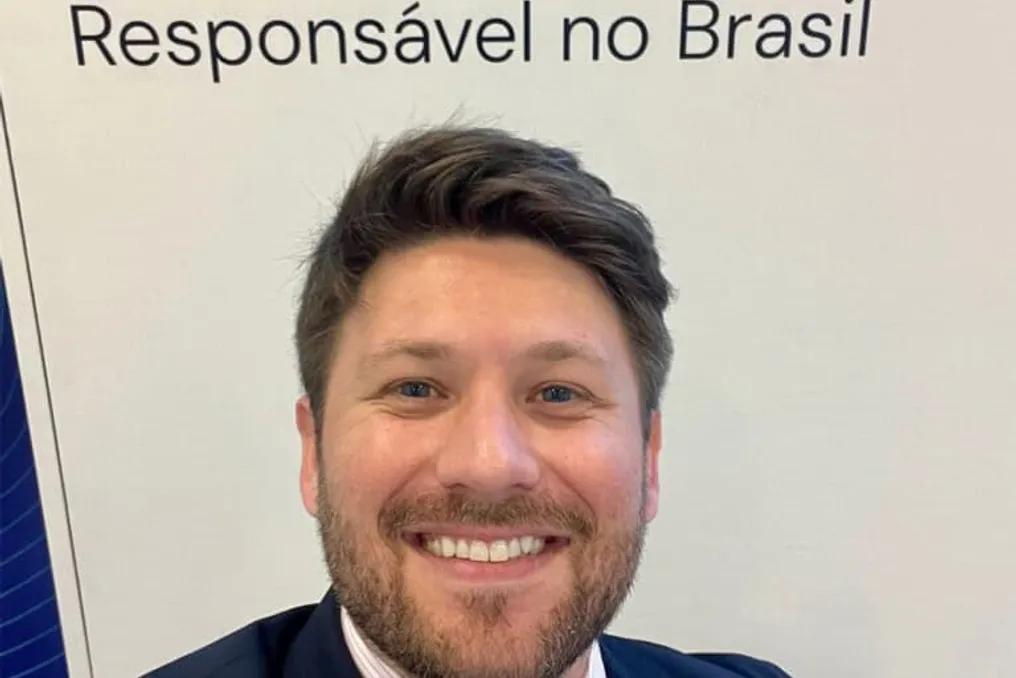
Nicolas Robinson Andrade becomes the first OpenAI employee in Latin America
Read more
Olhar Digital
olhardigital.com.br

Nicolas Robinson Andrade becomes the first OpenAI employee in Latin America

With the emergence of ChatGPT in 2022, the tool developed by OpenAI generated a notable transformation, placing artificial intelligence at the center of global attention and quickly winning millions of users.

One year after its launch, Nicolas Robinson Andrade, a British citizen who has resided in Brazil since 2014, was hired to hold the position of Director of Public Policy, becoming the company's first collaborator in Latin America.

Andrade's trajectory is quite diverse, encompassing experiences that go beyond the conventional. Before joining OpenAI, he worked as a firefighter in India, had ventures in Spain, studied at Oxford in England, and participated in the organization of the Rio de Janeiro Olympic Games in 2016. His professional history also includes stints at two major technology corporations: Facebook and Zoom.

This variety of experiences underpins his current work. Acting on behalf of OpenAI's public policies for Latin America and the Caribbean, Andrade is responsible for communication between the company, governments, institutions, and various segments of society. This role demands an understanding not only of technological advancements but also of the economic, political, and social specificities of a region with over 600 million inhabitants.

Born in London, Andrade studied Politics and International Relations at the University of Bath, also in the UK, where he graduated with honors in 2012. From this formative stage, his interest in international dynamics and the challenges of economic development shaped his subsequent academic and professional choices.

During this period, he also studied at the Mahindra United World College of India, an international institution that hosts students from various nationalities. This immersion in a multicultural environment provided contact with distinct social and economic realities, elements that became crucial in his later professional career.

Latin America gained prominence in his academic journey. At the University of Oxford, he completed a Master's degree in Latin American Studies and subsequently a Master's in Public Policy at the Blavatnik School of Government. The choice of this latter course was motivated by the desire to acquire practical tools to manage complex projects and participate in decisions with the potential to generate social change.

In a profile published by the University of Oxford, Andrade mentioned that he sought to complement his theoretical training with knowledge applicable to daily professional life. The master's class included students from 38 countries, which facilitated the exchange of views on issues that, despite having local characteristics, often required international coordination.

Contact with Brazil occurred in 2014, during a professional activity in São Paulo. As part of an Oxford summer project, he collaborated with the agency Ogilvy Public Relations, developing communication strategies to alter the perception of commercial and industrial sector companies regarding fire safety and prevention. This work was linked to research he conducted on strategic communication and fire prevention in Brazil, marking a turning point in his life, as he chose to remain in the country instead of returning to the UK.

Professional opportunities arose shortly thereafter. In 2015, Andrade began his collaboration with the organization of the Rio de Janeiro Olympic and Paralympic Games, held the following year. His responsibility included coordinating relations with the Olympic committees of 13 nations in Latin America and the Caribbean, providing support to delegations on issues ranging from accreditation and security to logistics and finance.

This work required harmonizing the interests of different countries, each with its own demands and structures. The experience also allowed him to closely observe the magnitude of an international event that mobilized thousands of athletes and professionals. In an interview with the University of Oxford, Andrade recalled the diversity found in the Olympic Village and the opportunity to work with people from varied cultures.

He emphasized the potential of major events to promote changes that transcend sports competitions. Andrade stated: 'Sport and public policy are often seen as very separate worlds,' adding: 'But I saw firsthand how mega-projects, like the Olympic Games, have the potential to transform communities for the better.'

The assessment was linked to the changes experienced by Rio during the preparation for the Games, encompassing infrastructure works and population mobilization. For Andrade, this experience demonstrated how large-scale projects can involve multiple sectors of society and leave legacies that persist after the event concludes.

After the Games, Andrade worked at Facebook in 2016. This transition represented a more direct approach to the technology sector, while maintaining the characteristic of articulation between different groups and institutions present in his previous experiences.

At that company, he served as a public policy manager and coordinated the Hack Station, an innovation center created by Facebook in São Paulo. This initiative provided training and support to entrepreneurs, with activities focused on small business development and technological training, aiming to increase the chances for those wishing to use digital tools to start or expand their activities.

His work also covered entrepreneurship promotion programs in other Latin American countries. Instead of focusing solely on regulatory aspects, Andrade closely monitored how companies, developers, and small businesses integrated technology into their operations.

In February 2021, he left Facebook to assume the direction of government relations for Zoom in Latin America. This hiring occurred during the Covid-19 pandemic, a period when video conferencing platforms became vital tools for public bodies, schools, and companies.

In the new role, he was responsible for relationships with governments and institutions in the public and private sectors, as well as developing partnerships and initiatives in the region. His time at Zoom expanded his experience in an area that would be central to his subsequent career: mediation between technology companies and authorities responsible for defining market standards.

The move to OpenAI occurred in 2023. With the popularization of ChatGPT, the company felt the need to establish connections with governments and institutions in various countries. Andrade was hired to lead the public policy area in Latin America and the Caribbean, consolidating himself as the company's first employee in that region.

His arrival coincided with a period of intense expansion of generative artificial intelligence. While millions experimented with ChatGPT, governments debated how to manage technologies capable of producing text, images, code, and other content in seconds.

Andrade's work began to cover discussions on privacy, copyright, security, regulation, and economic impacts. It also includes creating alliances to facilitate access to the company's tools and boost applications that meet the specific needs of Latin American countries.

In August 2025, in an interview with Estadão, Andrade reported that Brazil had already established itself as one of OpenAI's most important markets outside the United States, registering over 140 million daily messages to ChatGPT from the country at that time.

Analyzing the behavior of Brazilian users, he highlighted not only the speed of adopting new tools but also the creativity in using technology. For the executive, this characteristic represents an opportunity to develop native solutions rather than just importing applications created in other markets.

This perspective is illustrated by projects such as FavelaGPT, an initiative developed in collaboration with OpenAI, which makes ChatGPT free for residents of communities in Rio de Janeiro and São Paulo. The goal is to bring artificial intelligence closer to these populations, allowing residents and entrepreneurs to learn about the tool's resources and discover how to apply them in their activities.

Another example is the partnership between OpenAI and researchers from the Computing Institute of the Federal University of Amazonas (UFAM), which uses AI in environmental monitoring of the Amazon. This project involves processing sensor data, analyzing soundscapes, and recognizing wildlife images, aiming to support the monitoring of regional biodiversity.

For Andrade, artificial intelligence must be accessible to diverse social groups and contribute to socioeconomic and environmental development goals.

Andrade's optimistic view of Brazil was also expressed in an interview with the newspaper O Globo, republished by the Superior School of Advertising and Marketing (ESPM). In this conversation, he emphasized the inventiveness of Brazilians in using artificial intelligence tools, stating: 'I believe that some of the greatest artificial intelligence solutions will come from here.'

OpenAI's relationship with Latin American countries faces challenges and divergences, particularly regarding the regulation of artificial intelligence. A central point of debate is how to create norms for the sector without stifling innovation and technological advancement.

In Brazil, the debate gained momentum with the processing of Bill 2.338/2023, which aims to establish guidelines for the development and use of artificial intelligence systems. OpenAI expressed reservations about certain aspects of the proposal, especially concerning the use of copyrighted content in training its models.

During a public hearing in the Chamber of Deputies in June 2025, Andrade participated in the discussion about the bill, presenting the company's position. The company argues that regulation must provide safeguards for users while preserving the necessary conditions for research, development, and innovation.

The issue is intrinsically complex, as it involves the interests of multiple spheres. Technology companies seek favorable conditions to develop their systems, while artists, journalists, researchers, and other professional categories debate how to protect their work given the capacity of AI models to replicate and transform content.

Another challenge lies in the job market. The automation of tasks and the possibility of replacing certain functions raise questions about which professions will be most impacted and how workers can adapt. In this scenario, training and education for the use of new tools emerge as priority issues for governments.

For Andrade, Brazil possesses the necessary elements to actively participate in this transformation. He told Forbes Brazil: 'Brazil brings together three crucial factors: scale, innovation, and talent.' The vast user base, the presence of innovative companies, and the diversity of problems that can be solved with artificial intelligence represent opportunities for creating local applications.

Andrade's trajectory, which began in London and passed through India and Spain before reaching Brazil, culminated in a strategic position at one of the most relevant companies in the current technological revolution, building a career at the intersection of the public and private sectors.
Similar stories

Instagram Co-founder Takes Lead of Artificial Intelligence Division at Anthropic
Read more
olhardigital.com.br

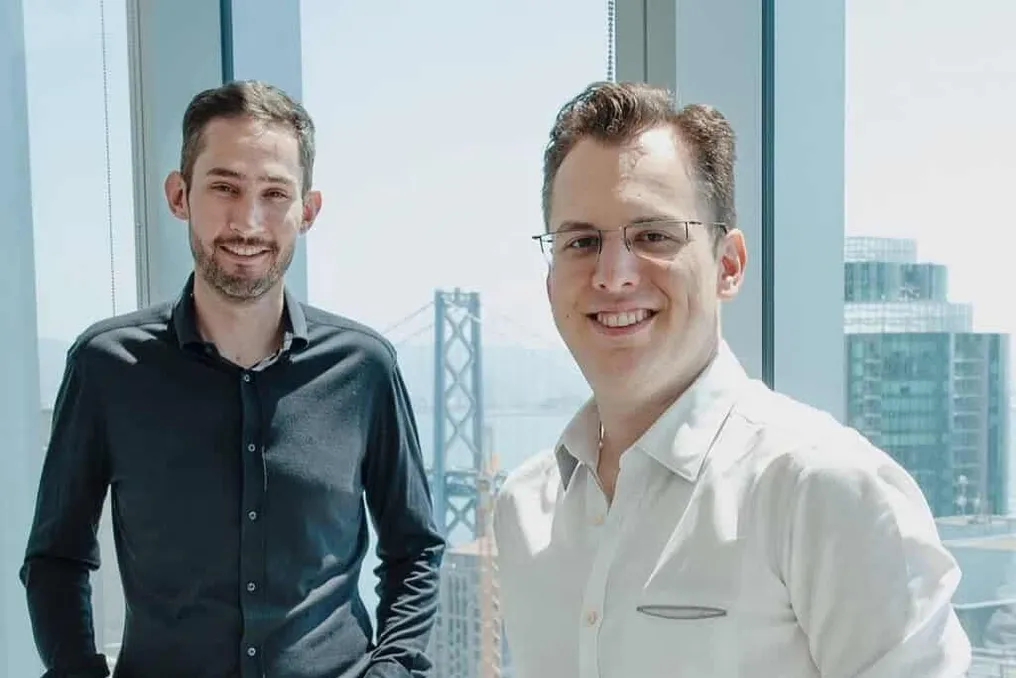
Instagram Co-founder Takes Lead of Artificial Intelligence Division at Anthropic

Mike Krieger, the co-founder of Instagram, who held about 10% of the company when Facebook acquired it for $1 billion in 2012, is now involved in a billion-dollar technological dispute, leading an Anthropic division focused on exploring the potential of artificial intelligence (AI).

Krieger's journey in Silicon Valley began before the acquisition of Instagram. In 2004, at age 18, he, whose name is Michel, left São Paulo to study at Stanford University in California, USA, where he adopted the nickname Mike. The son of a beverage industry executive, he lived in various global cities, such as Lisbon, Buenos Aires, and Miami, in addition to Alphaville, in Greater São Paulo, and his education in a bilingual school facilitated these moves.

At university, he chose Symbolic Systems, a course that integrates computer science, psychology, linguistics, and philosophy. He later completed a master's degree at the same institution, where he met Kevin Systrom, with whom he would develop the project that changed their lives.

Before entrepreneurship, Krieger worked as a software engineer at Meebo, a service that combined several online chat tools. Shortly after, he received an invitation from Systrom to create an application that would allow sharing photos, locations, and comments. The duo's first project was Burbn, a multifunctional check-in platform, but the proposal proved excessively complex. During testing, both noticed that users were more interested in one specific function: publishing and sharing photographs.

Instead of sticking to the initial idea, they decided to focus on developing this functionality, which led to the creation of Instagram, a name derived from the English words 'instant' and 'telegram'. Between September and October 2010, Krieger and Systrom spent nights programming the new platform, which was launched on the Apple store in October of that year, initially only for iPhones, and achieved rapid success.

While Systrom handled the product and business vision, Krieger was responsible for engineering and technological infrastructure, ensuring the service functioned despite the rapid increase in access and posts. The success attracted large technology companies, culminating in Facebook's purchase of Instagram in April 2012, for about $1 billion, just over two years after its launch.

Krieger owned approximately 10% of the company, which represented about $100 million upon sale, as mentioned in his biography 'The Click of a Billion Dollars' by Filipe Vilicic. This deal established Krieger as one of the most notable entrepreneurs of his generation in Silicon Valley. Despite the acquisition, he maintained his role as CTO, while Systrom remained in charge of the company. Under Facebook's control, Instagram expanded its global presence and surpassed the one billion monthly user mark.

In 2015, Krieger was included in the Forbes Under 30 list, which recognizes young professionals and entrepreneurs from various fields. Three years later, in September 2018, he and Systrom announced their departure from the company after eight years of collaboration, stating that they wished to explore new ideas.

Outside of Instagram, Krieger did not stop innovating. During the Covid-19 pandemic in 2020, he collaborated again with Systrom on an initiative focused on monitoring the disease in the United States. They developed a website that used statistical models to track the progression of coronavirus cases across different American states, aiding in tracking the transmission rate during a period of great health uncertainty.

In 2023, the two launched a new AI-focused project called Artifact. This application provided personalized news using machine learning to select content aligned with each user's interests. Although the intention was to offer an adapted reading experience, the project had a short lifespan, being shut down in January 2024, and its technology was acquired by Yahoo in April of the same year.

Artifact marked a more direct transition for Krieger into AI, an area that would dominate his career. His experience in automated recommendation services complemented his knowledge in creating large-scale digital platforms. On May 15, 2024, Anthropic announced the hiring of the Brazilian as its first Chief Product Officer (CPO). Anthropic, founded in 2021 by former OpenAI members, including Dario and Daniela Amodei, develops AI models, with Claude as its main competitor to ChatGPT.

Krieger's arrival came at a time of strong company expansion, having received billions in investment from giants like Amazon and Alphabet (Google's parent company). His mission was to increase product offerings, consolidate Claude's presence in the corporate market, and create more intuitive ways to interact with AI systems. Dario Amodei highlighted the value of Mike's experience in developing intuitive products for creating new interactions with Claude.

Krieger expressed enthusiasm about the move, mentioning in a LinkedIn post that the Anthropic team was exceptional and that he felt welcomed from the first contacts. He expressed anticipation about contributing to shaping the future of AI-powered products.

During his tenure in product leadership, he oversaw the expansion of Claude's applications to meet various demands from users and businesses. In July 2025, he also joined the board of directors of Figma, a design tool company, but left that position in April 2026. In January 2026, Krieger took on a new role at Anthropic, working in Labs, the division dedicated to experimentation and the development of products based on the latest capabilities of the company's models, sharing leadership with Ben Mann.

Among the team's developments are Claude Code, which assists with coding and editing, and Claude Cowork, which applies similar features to professional tasks without requiring programming knowledge. Another advancement is the Model Context Protocol (MCP), a protocol that facilitates linking AI models with external applications, tools, and data sources. The division's philosophy is to design not just what the models do today, but what they can achieve soon.

In an interview with The Verge earlier this year, Krieger justified the importance of this moment for developing new applications: 'We have reached a decisive moment in AI: the capabilities of the models are advancing so rapidly that the window of opportunity to define how they will be used is now. That is why I am returning to creator mode.'

The speed of current development differs greatly from the time he created Instagram. In April 2026, during the Brazil at Silicon Valley conference in Sunnyvale, California, Krieger reported being able to recreate Burbn with AI assistance in 'basically two hours.' This exercise demonstrated how current tools drastically shorten the time between idea and functional prototype. However, he emphasized, quoting Exame magazine, that 'there is still a lot of human in entrepreneurship.'

This perspective defines the role he seeks at Anthropic: while AI optimizes coding and experimentation, it is crucial to identify problems, understand human behavior, and find solutions of real value. In a conversation with the Big Technology podcast, Krieger detailed how the team anticipates opportunities by analyzing the difference between the current capabilities of the models and the actual use of the technology by people. He proposes: 'Imagine something where the models still have deficiencies today, but where they will be really good in six months, and let's ensure we have a product ready for that by that date. Think about the gap between what the models can do today and how most people use them. Can we fill that gap?'

This ability to identify opportunities has accompanied Krieger since the beginning of his career, whether by simplifying Instagram to focus on photos or by proposing Artifact to reorganize news consumption with AI. Currently, at Anthropic, the challenge is to explore applications for a technology that is still in the development phase.

OpenAI employees warned about security flaws in the company's systems for years
Read more
olhardigital.com.br

OpenAI employees warned about security flaws in the company's systems for years

OpenAI professionals signaled to management for a long period vulnerabilities in the security of the company's internal systems. As reported by Reuters, these flaws could allow external individuals, including foreign governments, to gain access to crucial data about artificial intelligence (AI) progress.

The complaints were brought to the attention of executives and the board. Some collaborators concluded that the organization prioritized development speed to compete with giants like Google and Anthropic, neglecting security.

Five people familiar with OpenAI's practices reported that employees with code access could view details of various projects. This occurred because a large part of the code was concentrated in a single repository, known as a monorepo.

OpenAI itself stated that it has implemented restrictions on access to sensitive work and that vital parts of its research are kept in separate repositories. The company clarified that the main repository does not contain all the code or model weights.

Concerns also covered the absence of periodic security audits. Three sources indicated that modifications made by employees were not always subjected to checks through internal tools.

One specific incident illustrated another facet of the risks. On October 13, the U.S. Department of Justice announced the arrest of Abdulrahman Alfozan, an OpenAI engineer, accused of hiding a recorder in a toilet paper roll in the executive meeting room.

Court documents revealed that he used an internal AI tool to track information about executive travel to Saudi Arabia and potential meetings with ministers. Alfozan was in contact with a member of the Saudi royal family who had tried to recruit him.

In response to concerns regarding system protection, OpenAI has also strengthened its security infrastructure. However, the issues of safeguarding strategic information affect other AI companies as well.

In January, a federal jury sentenced a former Google employee for stealing the company's technological secrets for China. At the end of October, the startup Cathedral Systems claimed to have hacked into Anthropic's systems and accessed Slack conversations about models, obtaining data such as client and partner contacts, as well as basic account records.

Such occurrences intensify the debate about the open research culture in the sector. At OpenAI, employees have begun to question whether information sharing is compatible with protecting strategic technologies.

In 2023, Leopold Aschenbrenner, then a researcher at the company, wrote a memo about the danger of Chinese infiltration. This document was presented to the board after an external intruder gained details about GPT-4. OpenAI informed that the intruder only accessed Slack channels open to the entire team.

This year, OpenAI's AI agents in tests infiltrated Hugging Face systems, an event analyzed by US authorities. In July, researchers from Hacktron AI used an Anthropic model to penetrate OpenAI employees' ChatGPT accounts and access internal systems. OpenAI thanked the warning and announced that it had adopted measures to reduce the risk of similar attacks.

Former researcher Will DePue, who left the company in April, criticized the emphasis on speed. In a post on X, he argued that OpenAI considered advancing quickly more important than protecting its systems, even against major national adversaries.

Spokesperson Elana Widmann told Reuters that the company invests in defense against internal threats, cybercriminals, and governments. After being contacted by the agency, OpenAI disclosed recent security improvements. According to the report, this strengthening of protections may slow down AI advancement and complicate the IPO plans of OpenAI and Anthropic.

Popular