The Indian public sector company in defense and engineering, BEML Ltd., intends to manufacture tunnel boring machines as part of a strategy to replace imported suppliers, leveraging the boom in infrastructure construction in the country.
According to Chairman and Managing Director Shantanu Roy, the company will initially focus on smaller Tunnel Boring Machines (TBMs) used in metro, hydropower, irrigation, and water supply projects before moving to larger equipment.
This move is part of India's broader efforts to decrease reliance on imports, particularly from China. The South Asian nation is actively utilizing tunneling machines due to accelerated spending on transport and underground infrastructure.
Recent tightening of export controls by China on certain categories of construction equipment highlighted India's dependence on foreign suppliers; however, Roy noted that BEML's plans are already underway.
BEML, which manufactures military and mining equipment as well as railway wagons, has engaged a global consultant to support its self-sufficiency goals. Instead of immediately targeting the largest and most technically complex machines, BEML plans to start with TBMs ranging from 3.5 to 6.5 meters in diameter, which are commonly used in urban transport and municipal projects and fall into the smaller market segment.
Bullet Train
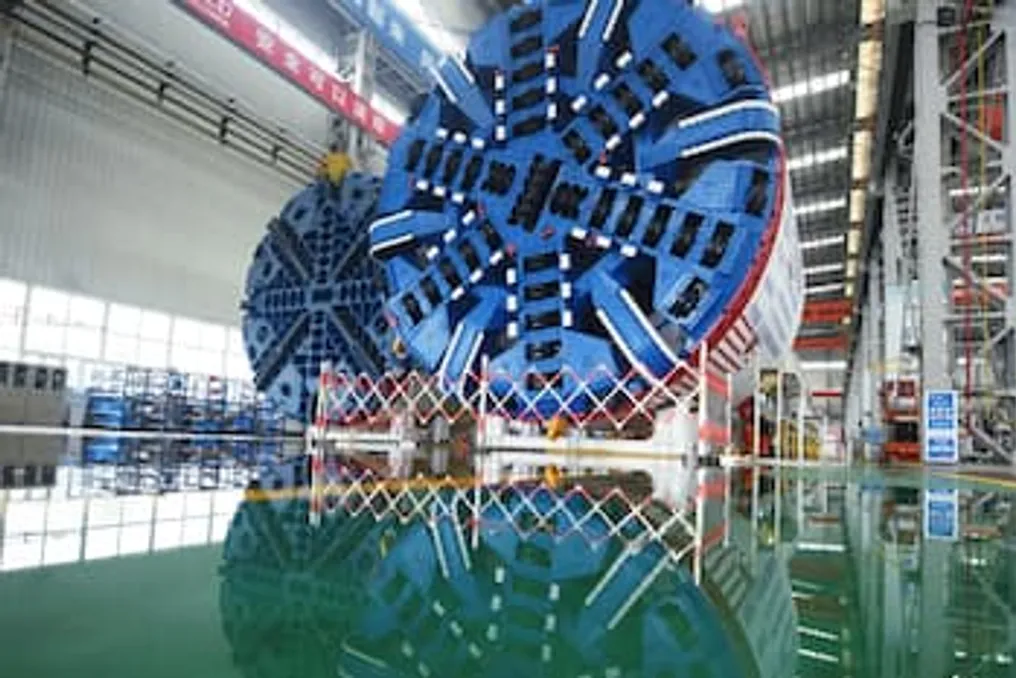
The TBMs used for excavating the first section of India's bullet train in Mumbai have boring heads with a diameter of about 13.6 meters and were manufactured by Herrenknecht AG of Germany at its Chinese facility. Roy stated that BEML aims to develop its own technology rather than assemble imported kits. He emphasized that this would be 'indigenous technology' and that 'the intellectual property would be Indian.'
It is questionable whether this ambition can transform into a commercially viable domestic industry. India has repeatedly attempted to reduce its dependence on Chinese supply chains in strategically important sectors but has found that creating local production ecosystems takes longer than scaling up manufacturing capacity.
A prime example is rare earth magnets. After Beijing restricted the export of rare earth materials and technologies, New Delhi approved a program worth 72.8 billion rupees ($820 million) aimed at establishing a capacity to produce 6,000 tons annually of permanent magnets. Nevertheless, according to the Ministry of Heavy Industries, as of July, India still imports all its high-efficiency neodymium magnets due to a lack of industrial capacity to convert rare earth materials into metals, alloys, and finished magnets.
The country's efforts in solar power production show a similar pattern. Although India has built one of the world's largest solar module manufacturing industries, it remains heavily dependent on imports of key raw materials and equipment, according to government research and think tanks.
Tunneling Investments
BEML sees growth in the tunnel equipment market as India increases its investment in underground infrastructure. Minister of Road Transport and Highways Nitin Gadkari announced that the country plans to invest up to $9.6 billion in tunneling projects over the next five years, with policies encouraging local manufacturing of construction equipment.
Demand is also stimulated by strategic road and rail projects on the border between India and China in the Himalayan region, where complex terrain often necessitates extensive tunneling. Roy predicts that the TBM market in India could grow by approximately 12% annually over the next seven to eight years, nearly double the rate of the global market.
However, the company's ambitions are still in their early stages. BEML expects that after securing a contract for the delivery of the first machine, it will take about 22 months. Roy concluded: 'We will gradually move to the next level.'