Sweet Shop Owner in Gonda Changed QR Code, and Customers' Money Went to Scammer's Account
Read more
Aaj Tak
www.aajtak.in

Sweet Shop Owner in Gonda Changed QR Code, and Customers' Money Went to Scammer's Account

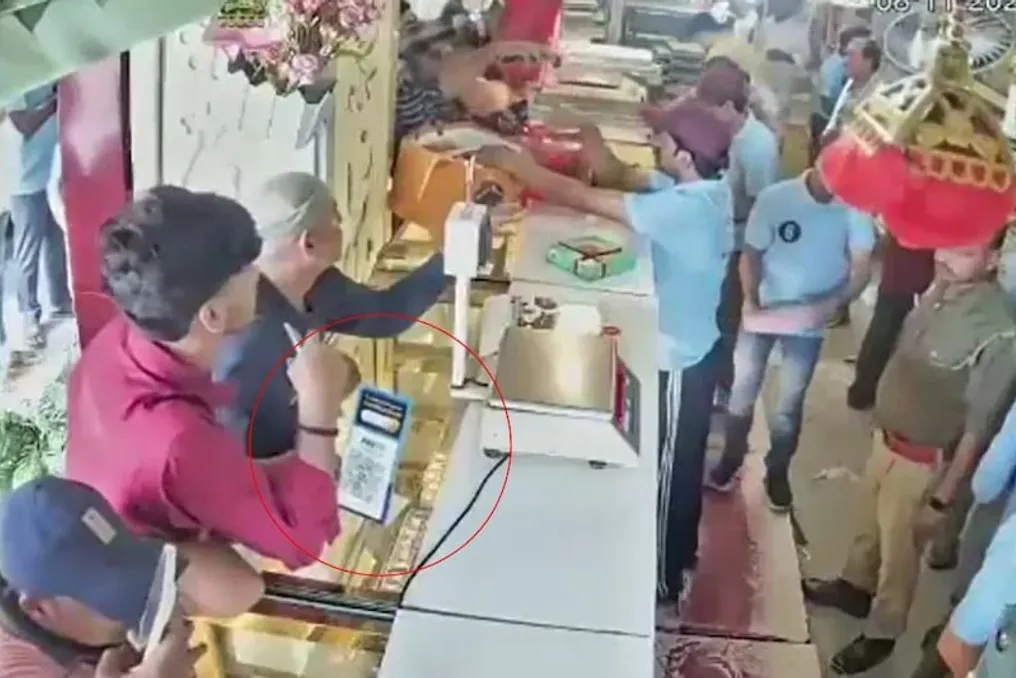
During the Diwali festival, a large crowd of customers gathered at a sweet shop, purchasing sweets and paying for their purchases by scanning QR codes with their phones. The shop owner believed that the funds were being deposited into his account, but something else was actually happening. One person took advantage of the situation and replaced the QR code installed in the store. Subsequently, customers made payments, but instead of the money reaching the owner's account, it went to the scammer's account.

This incident occurred in Gonda, Uttar Pradesh, in the Nagar Kotwali area, during Diwali. The entire fraud scheme was captured by the store's surveillance camera. After reviewing the footage, the owner discovered that a young man in a red shirt had replaced the QR code.

According to the owner, Omi Singh, there were many visitors in the shop during the festival. At that moment, a young man approached and, taking advantage of the opportunity, pasted his QR code over the store's payment scanner. The owner did not notice this immediately. After this, all customers who scanned this QR code to pay sent their money to the scammer's account. Customers saw a successful payment notification on their mobile devices, but the money did not reach the owner's account.

Initially, the owner and his family assumed that the problem might be related to network issues. However, after this happened several times and the money did not arrive in the account, they became suspicious. Upon careful inspection of the QR code, they realized that someone had pasted another QR code over their real one.

After discovering the manipulation of the QR code, the owner checked the surveillance camera recordings in the store. The video showed a young man in a red shirt changing the QR code. Omi Singh reported that this youth placed his QR code in two locations in the store, thereby receiving payments from many customers into his own account.

According to the owner, at least three or four transactions were made, the money from which did not reach his account. Omi noted that due to the large number of people in the store, no one noticed this malfunction. Only when his nephew reported the non-receipt of payments did they start the investigation.

Following this incident, Omi Singh approached Nagar Kotwali and filed a police report, also providing the surveillance camera recordings. Omi believes that if QR code replacement fraud occurs during holidays, running a business will become extremely difficult for shop owners.

The City Officer of Nagar Kotwali, Yogendra Singh, stated that a complaint was received from the shop owner in Nagar Kotwali. The complaint stated that someone had replaced the QR code in the store, causing customer payments to go to another person's account instead of the shop owner's. According to the officer, a criminal case has been registered in the matter. The investigation is being conducted with the help of surveillance and cyber police units. Further action will be taken after receiving information. Currently, the police are working to identify the suspect based on camera recordings and other evidence.
Similar stories

The Function of Three Corner Markers in QR Codes and the Absence of a Fourth
Read more
www.aajtak.in

The Function of Three Corner Markers in QR Codes and the Absence of a Fourth

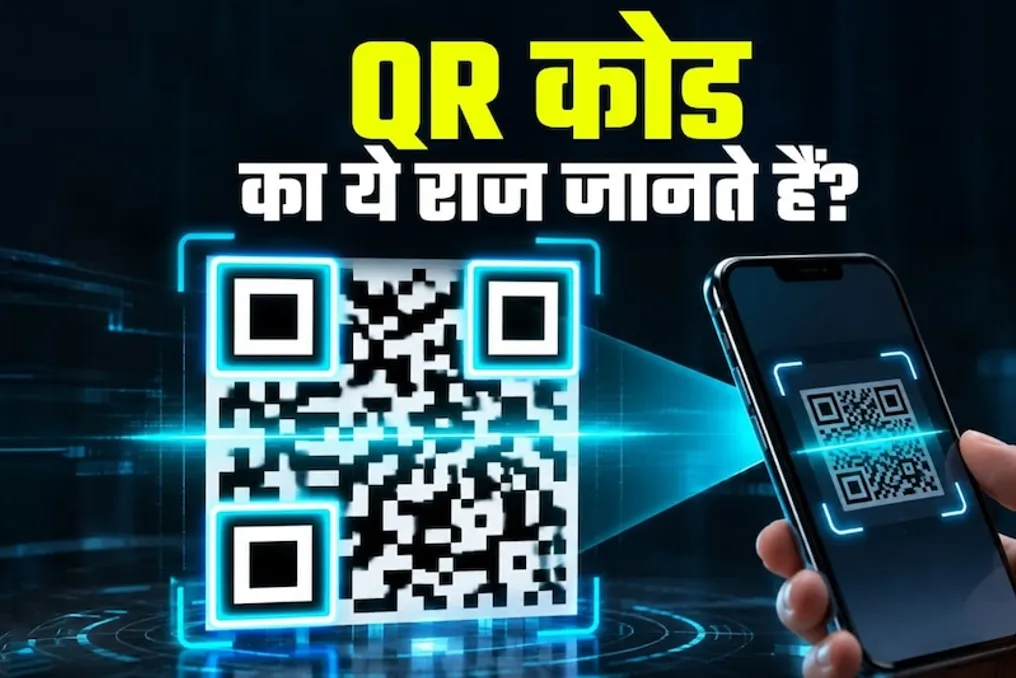
QR codes are now ubiquitous: they are used for payments in stores, viewing menus in hotels, booking tickets online, or navigating to websites, requiring only scanning the code with a mobile phone camera. In mere seconds, the device reads the information encoded inside. However, many users notice that there are large square markers located in the three corners of the QR code, while such a marker is absent in the bottom right corner. This raises the question: is the fourth corner intentionally left empty when creating a QR code, or is there some technical reason behind it?

These large square signs play a very important role. They allow the camera or scanner to understand where the QR code is, what its size is, and in what orientation it should be read. Without these markers, it would be much harder for a mobile device to quickly and correctly recognize the QR code.

The large markers located in the three corners of the QR code are called Finder Patterns. They usually consist of three square layers: an outer black square, an inner white square, and a small black square in the center. Their main task is to help the scanner identify the QR code. When the camera is pointed at the QR code, it first detects these three signs. Thanks to them, the system understands that a QR code is in front of it.

Next, the scanner analyzes the distance between these three markers and their relative positions, which allows it to determine the direction and scale of the code. It is important to note that these markers aid recognition even if the QR code is slightly tilted, flipped over, or viewed from an angle. This is why you do not need to hold your phone perfectly straight to scan a QR code.

A natural question arises: if having blocks in three corners simplifies recognition, why is the fourth corner not equipped with a similar element? The reason lies in the fact that every small black and white square in a QR code carries a specific meaning. It is in these small cells that digital data, such as website links, payment information, or text messages, is stored.

If a large finder pattern were also created in the fourth corner, it would significantly reduce the available space for storing information. Furthermore, the scanner does not require an additional marker to identify different parts of the code. Three signs are enough for the system to understand the orientation, size, and position of the QR code. Therefore, the fourth corner is not left empty but contains standard small black and white patterns carrying the QR code's information.

The QR code is designed so that it can be easily scanned in various directions and positions. Three finder patterns are used for this purpose. The presence of markers in the top two and the bottom left corner helps the scanner determine the code's position. These three signs give the scanner a kind of reference point, allowing it to understand which part of the code is on top, which is on the bottom, and in what order the information should be read. If markers were only in two corners, determining the direction and position of the code could cause more difficulties. At the same time, creating such markers in all four corners would lead to a reduction in data storage space. Thus, this scheme with three markers is highly effective.

Upon close examination of the QR code, besides the large markers, thousands of small black and white squares, called modules, are visible. It is through these modules that the information is stored in the QR code. When a user scans the code, the camera reads these black and white patterns, and then the phone's software converts them into digital data. After that, the desired website appears on the screen, payment information is displayed, or text is outputted. Thus, the large corner blocks help the system recognize the code and understand its orientation, while all other information is hidden within these small black and white modules, making the QR code a simple way to retrieve data in seconds.

Young man in Sikri (Rajasthan) receives message about blocking of 100 million rupees due to bank technical error
Read more
www.aajtak.in

Young man in Sikri (Rajasthan) receives message about blocking of 100 million rupees due to bank technical error

A young man working in a pharmacy in Sikri, Rajasthan, received a banking message on his mobile phone that shocked him. The message stated that an amount of 100 million rupees had been blocked in his bank account. The mere mention of such a huge sum caused surprise, but for the young man, the problem was that even the 55 thousand rupees previously in his account were frozen.

This incident occurred in the Sikri district area. The young man's name is Samir Khan; he lives in the Kotwali police station area and works at a pharmacy near the bus stand. According to the police, on Wednesday, when Samir was topping up his phone balance, he received this banking notification.

The received message indicated the blocking of 100 million rupees in his account. Upon reading it, Samir panicked because he did not understand where the information about blocking such a colossal sum could have come from. Notably, even the approximately 55 thousand rupees that were already in his account also became unavailable for use.

Concerned, Samir told the pharmacy owner, Diraj Matoli. Afterward, they went together to the Sikri cyber police station to report the incident. Dindyadai, an assistant to the senior inspector of the Sikri cyber police, reported that the police investigated the case. During the check, it was found that the message about blocking 100 million rupees arose from a technical glitch in the bank, as such a large sum had never actually been credited to Samir's account.

Thanks to the police confirming the technical error, Samir was advised to contact the bank. After speaking with the bank, they also confirmed the error made in the message. As a result, the block that affected the previously held 55 thousand rupees in his account was lifted. Thus, the news of receiving 100 million rupees turned out to be the result of a technical failure that temporarily caused significant difficulties for Samir.

Popular