American student Xisya Geisendorfer was thrilled to be in the cabin of a flying car in Guangzhou, the capital of Guangdong province in southern China, for the first time. He noted that observing this technology and its capabilities up close was astonishing.
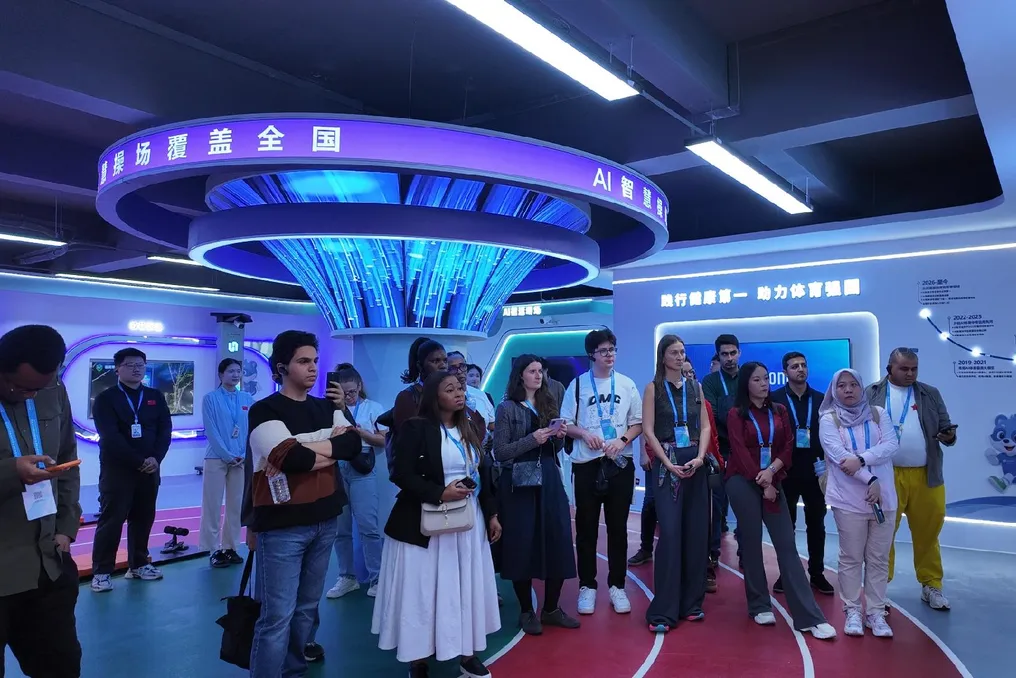
In October 2026, Xisya joined a delegation of 31 teachers and students from 11 American universities as part of a visit program to China. This program focused on pickleball, a sport that has united youth from both countries through friendly matches and exchanges. In addition to sporting events, the group visited cultural and technological sites, gaining a broader understanding of China.
This is just one example of the growing interaction between young people from China and the United States. In November 2023, China launched a five-year initiative aimed at inviting 50,000 young Americans to participate in exchange and training programs, and this goal was achieved a year and a half ahead of schedule. In September 2026, China announced a new initiative that provides for inviting 100,000 young Americans over the next five years.
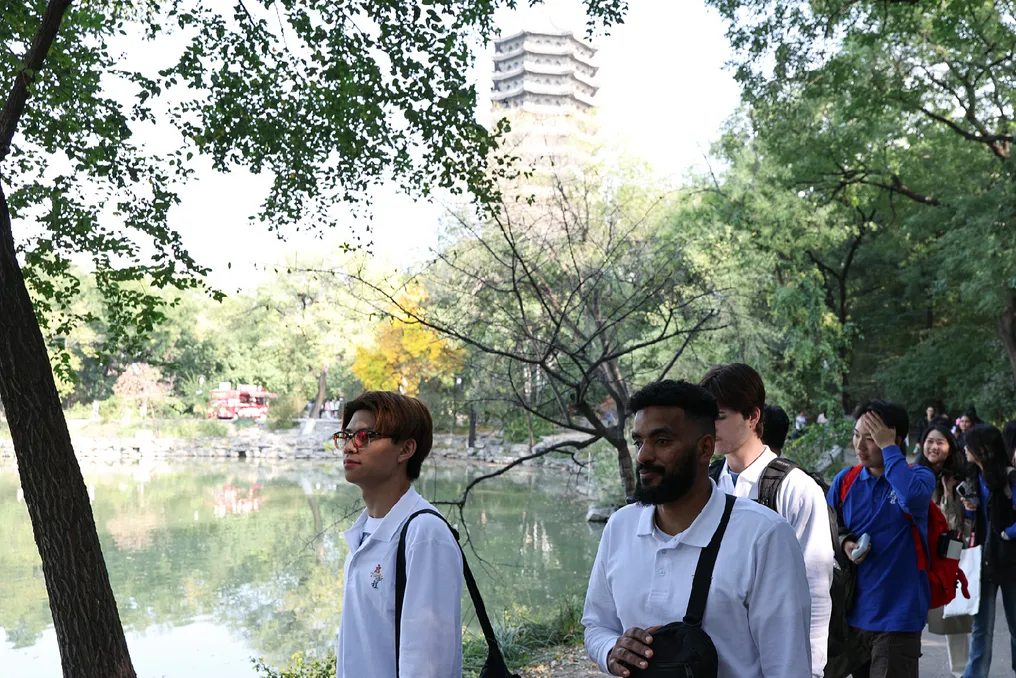
These programs provide more young Americans with the opportunity to personally experience daily life in China. In October 2026, over 200 students from China and the United States gathered in Beijing for an exchange that included campus visits, cultural events, and discussions. Milka Velasquez, a 20-year-old engineering student from Washington state, noted that it was her first trip to Asia, and she enjoyed Chinese food and social life, especially milk tea, hoping to stay in touch with her Chinese student friend.
David Chong, founder and president of the US-China Youth and Student Exchange Association, told Hintian that this initiative has created a long-term, stable, and sustainable platform for youth exchanges between the two countries. He also added that many young Americans who participated in the exchange programs continue to follow developments in China after returning home; some have started learning Chinese, while others have continued to facilitate exchanges between schools.
In the summer, 18 students from seven American universities participated in an international summer program at Huazhou University of Science and Technology in central China. They worked on practical technological projects, including AI-based robotics. Anthony Nemey, a student at Binghamton University, State University of New York, participated in academic lectures, hands-on robot building, and industrial site visits as part of the program. According to him, this experience gave him direct insight into China's intellectual production sector.
In March 2026, 20 students from China and the United States went on a two-week educational voyage on a research vessel as part of the 'China-US Youth Friendship Program: Joint Voyage'. During this trip, the students worked together on marine sciences and participated in cultural exchange. Dong Qianli, a student at the College of Environmental Sciences and Engineering at Peking University, shared that despite their different cultural backgrounds, they encountered the same environmental problems aboard the ship. In their free time, they also learned about each other's music and dances.
By the end of the voyage, the students had become so close that it was difficult for them to part ways, as Dong described, calling the group one family.