From childhood, Wang Tao, known as Frank Wang, showed a deep interest in remote-controlled helicopters. Later, while studying at the University of Hong Kong, he turned this childhood passion into a scientific project, developing a system that allowed helicopters to hover stably in the air.
Today, he is a billionaire; Forbes estimates his net worth at $6.2 billion. He is best known as the founder and CEO of DJI, the drone giant headquartered in Shenzhen, Guangdong Province, Southern China. The company commands over 70% of the global market.
Wang's journey was driven not only by his talent and hard work but also by the fertile ground of opportunity provided by Shenzhen and the vast Greater Bay Area (GBA) of Guangdong-Hong Kong-Macao.
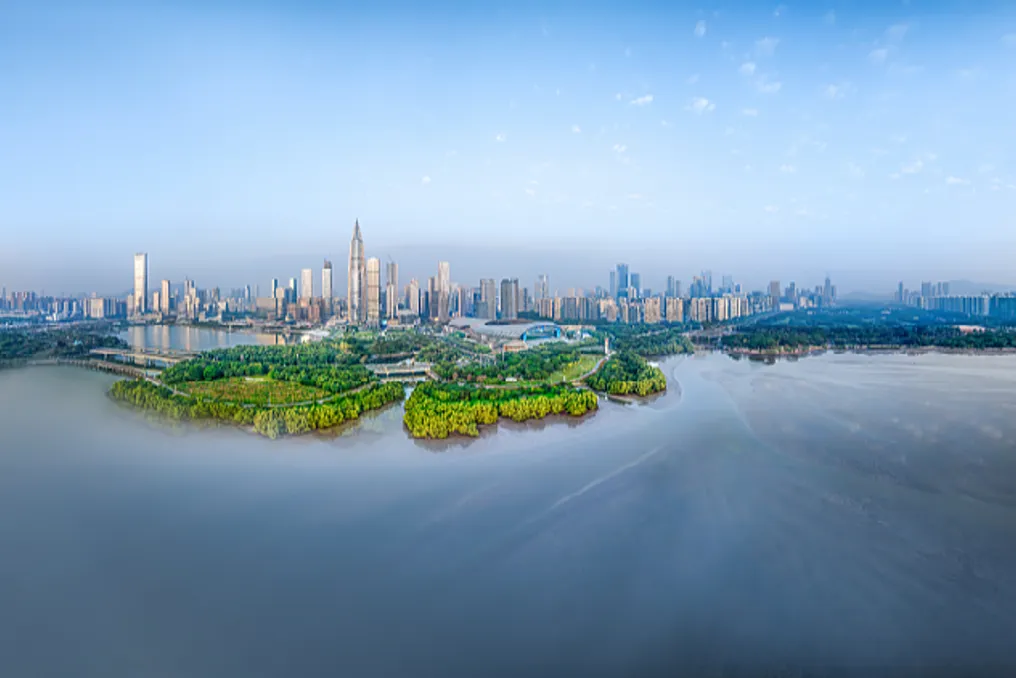
As Shenzhen prepares for APEC 2026, the city demonstrates the same energy that transforms companies like DJI from brilliant ideas into global powerhouses.
Culture
Looking back, Wang claims that Shenzhen made everything 'simple.' Speaking at an awards ceremony ten years ago, he described his early team as 'a group of young people just starting their careers who were able to reach the top of their industry simply by remaining humble, working hard, and achieving results—without flattering others or taking shortcuts.'
He added: 'Perhaps such a story could only happen in Shenzhen.'
With a culture that encourages bold ideas, embraces risk, and respects hard work, Shenzhen, often called the 'Silicon Valley of China,' has integrated entrepreneurship into its DNA, turning it into a magnet for talent.
However, a thriving startup culture does not emerge overnight. Behind it lies a system of political measures designed to support businesses at every stage of their development.
Support Ecosystem
For startups, securing funding remains one of the most challenging obstacles. To help early-stage companies survive, Shenzhen has created a comprehensive investment ecosystem. The city offers numerous ways to assist founders in turning ideas into reality—from state investment institutions like the Shenzhen Fund of Funds and the Shenzhen Capital Group to a wide network of private firms.
Wang recalls how government funding helped his young team overcome a difficult period. He noted: 'Government funding in 2008 allowed us to move into a spacious office for the first time.'
Funding is only part of the equation. Shenzhen has built an integrated ecosystem that supports innovation at every stage, focusing on five key elements: basic research, technical research, industrial realization of achievements, technological financing, and talent support.
The results of this approach are reflected in the city's Research and Development (R&D) metrics. In 2024, Shenzhen's R&D spending reached 6.46% of GDP, second only to Beijing among Chinese cities. To attract and support talent, the city provides qualified entrepreneurs with up to six months of free workspace.
Its pro-entrepreneurship policies continue to drive Shenzhen's growth as a leading innovation hub.
Everything Within Reach
Wang stated: 'Shenzhen provides the best environment for hardware innovation.' The city's supply chain is exceptionally comprehensive, as seen in Huaciangbei, also known as 'China's Electronic Street No. 1.' There, any drone component can be found within a couple of hours. The market serves as a single window for components underlying some of the most advanced modern technological products—from core control chips and specialized sensors to propellers and cables.
This easy access to supplies has been a significant advantage for other hardware companies as well. When Zhou Jian (James Zhou), founder of UBTECH, one of China's largest humanoid robotics companies, came to Shenzhen in 2009 looking for suppliers, he discovered that 'the city not only offered a wide selection but also had a well-established supply chain.'
Zhou told a local newspaper that this significantly increased the efficiency of the company's R&D and production.
'Take custom-made equipment as an example. In Shenzhen, there were many manufacturers who could meet our specific needs,' said Zhou. 'This helped us increase efficiency by at least 50% and reduce costs by about 30%.'
Zhou's experience reflects Shenzhen's main advantage: a fully functional supply chain covering semiconductors, AI servers, and robotics, making hardware creation cheaper and faster.
Leveraging the Bay Area Potential
Shenzhen's location is another key factor in its appeal. Situated near Hong Kong and at the heart of the GBA, it gives businesses access to the region's extensive manufacturing base and Hong Kong's international financial networks. This connects companies to a well-established industrial ecosystem while opening doors to global markets.
Wang's early days at DJI serve as a perfect example. While studying at HKUST, he received funding from his professor, Li Jieshan, who plays a leading role in connecting academic research with venture capital in Hong Kong.
Beyond funding, Hong Kong also links companies to global markets. Its common law system, widely used in international trade, and its well-established intellectual property protection provide companies with a reliable legal framework when expanding abroad.
By combining these complementary strengths, the GBA has transformed into an innovation powerhouse. In 2025, the GBA boasted 69,000 high-tech enterprises and a combined GDP exceeding 15 trillion yuan ($2.25 trillion), accounting for nearly 11% of China's national GDP, despite occupying less than 0.6% of the country's territory, according to a data book released in Guangzhou in October.
The region's strength as an innovation incubator has gained international recognition. For the second consecutive year, the Shenzhen-Hong Kong-Guangzhou cluster ranked first in the World Intellectual Property Organization's Global Innovation Index for 2026.
The US-based startup ecosystem research institute Startup Genome describes Shenzhen as a center where 'fast technological culture, deep supply chain integration, and relentless entrepreneurial energy' drive innovation at the forefront of China's industrial development.
As Shenzhen welcomes world leaders to APEC 2026, it showcases a city full of talent and ambition to the world, and a GBA whose creativity and openness extend far beyond its borders.
}, 2.0