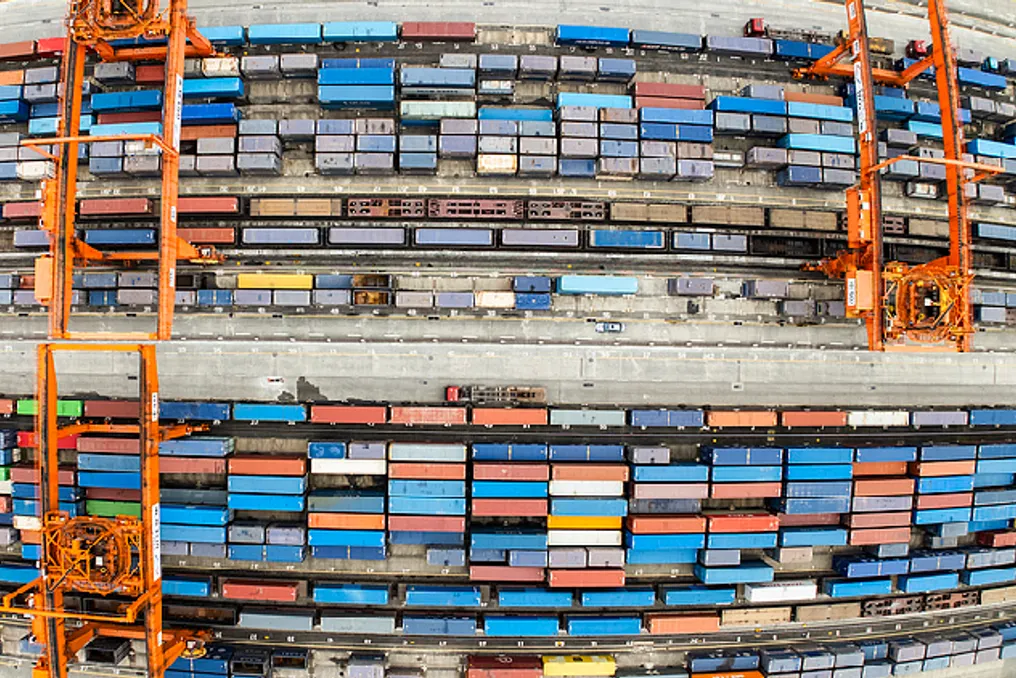
China's Belt and Road Initiative Partners Span Over 150 Countries and 30 Global Organizations
Read more
CGTN
cgtn.com

China's Belt and Road Initiative Partners Span Over 150 Countries and 30 Global Organizations

According to a statement by the official representative of China's chief economic planner, China has concluded cooperation agreements under the Belt and Road Initiative (BRI) with over 150 countries and more than 30 international organizations. This covers three-quarters of the world's nations and major international structures.

Lian Linzhong, Director General of the Department of Regional Opening of the National Commission for Development and Reform, announced this achievement during a press conference.

Since BRI was proposed by China in 2013, the initiative has gained widespread recognition for opening new avenues for global economic growth.

A report titled 'Building an Open World Economy Through Cooperation on the Belt and Road,' published by an analytical center on Tuesday, emphasizes that high-quality cooperation within the BRI demonstrates China's commitment to the principle of openness as a fundamental national policy and a mutually beneficial strategy of openness.

The report notes that countries are becoming more interdependent than ever before, creating significant opportunities to address global challenges through cooperation and openness. In light of these changes, China's approach is to consider both domestic and international conditions, expand high-standard openness, and form global partnerships in development.

According to the report, China thus aims to transform difficulties into a powerful impetus for building an open world economy and realizing the vision of inclusive development and mutual benefit for all.
Similar stories

Youth from BRICS countries gather in China to study innovation and cooperation
Read more
cgtn.com

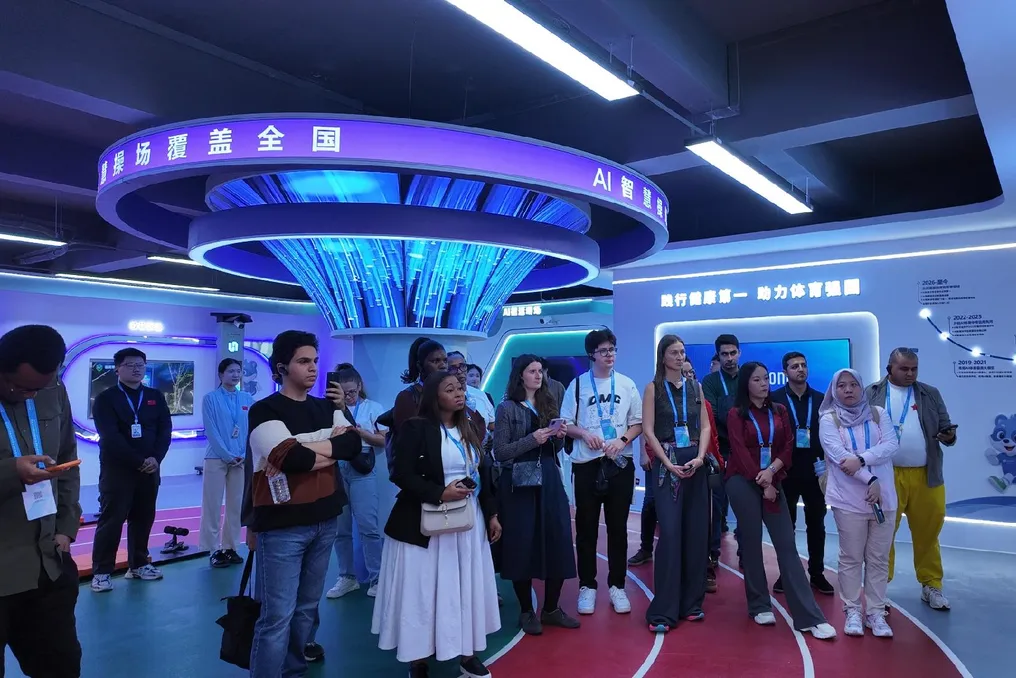
Youth from BRICS countries gather in China to study innovation and cooperation

Twenty-five young representatives from BRICS countries participated in a six-day exchange program in Fuzhou, Fujian Province, in southeastern China. The program aims to study opportunities in scientific and technological innovation and strengthen interaction among member states.

The event, titled 'BRICS Youth Leaders Camp on Science, Technology, and Innovation 2026,' will take place in Fuzhou and Xiamen from November 8 to 13. The camp's theme is 'Uniting Youth Innovations to Advance Practical BRICS Cooperation.'

As part of the program, participants will visit Chinese technology companies, major enterprises, and cultural attractions. This will allow them to familiarize themselves with China's development and the practical application of technologies in fields such as maritime economy, artificial intelligence, digital economy, and intelligent manufacturing. Furthermore, they will study local cultural heritage and how traditional culture integrates into urban development.

Wang Tinting, head of the International Projects Department of the China Youth Exchange Center, which organized the camp, told CGTN that the program is designed to transform youth exchange into practical cooperation and create more opportunities for young innovators.

Wang noted that 'scientific and technological innovation is one of the ten priority areas of cooperation for BRICS youth.' She also emphasized that the All-China Youth Federation leads the Working Group of the BRICS Youth Council on scientific and technological innovation.

According to her, BRICS countries possess their own strengths in areas such as green development, artificial intelligence, and the digital economy. The camp provides young people with a platform for exchanging experiences, mutual learning, and identifying potential directions for joint work.

The organizers expressed hope that this program will be the beginning of a longer-term partnership. Wang added that communication with participants will be maintained through the BRICS Youth Council after the event concludes, identifying promising projects and promoting further cooperation.

As China prepares to host the BRICS presidency in 2027, the organizers intend to continue strengthening interaction with youth organizations and young representatives of BRICS countries, working to promote high-quality development of broader BRICS cooperation.

The camp is organized by the All-China Youth Federation and hosted by the China Youth Exchange Center. Its mission is to strengthen mutual understanding and promote exchange among the youth of BRICS countries in the fields of scientific and technological innovation, industrial cooperation, and intercultural interaction.

MEPs demand China sign agreement to prevent trade war
Read more
noticiasaominuto.com

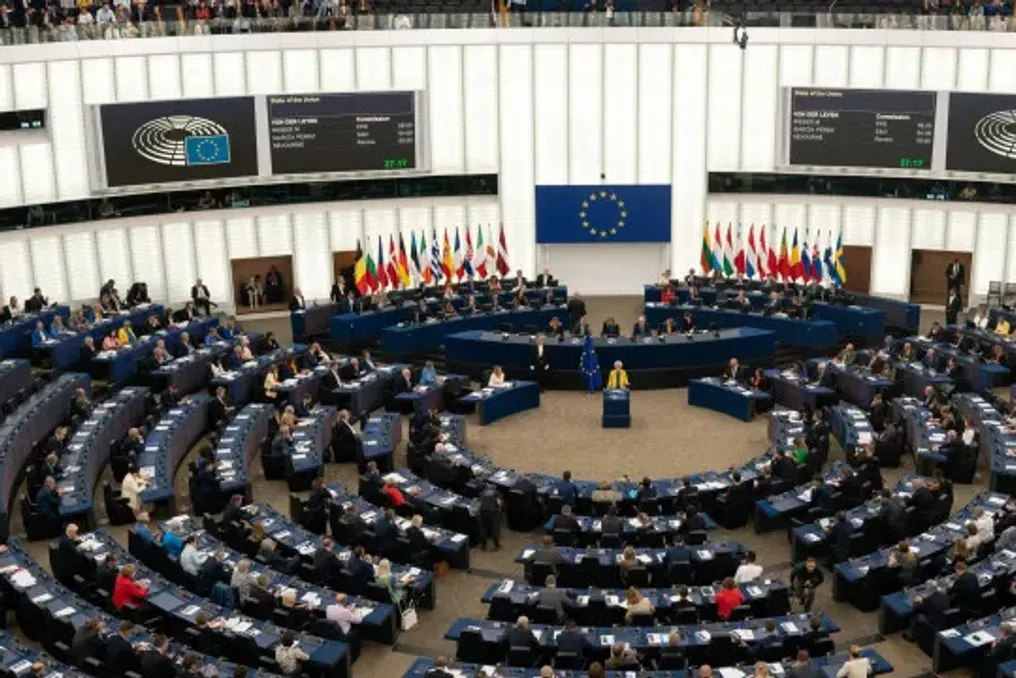
MEPs demand China sign agreement to prevent trade war

A delegation of MEPs appealed to Chinese authorities to hold negotiations for a comprehensive agreement with the European Union to avoid the start of a trade war. The deputies warned that the bloc could apply countermeasures if no agreement is reached.

This position was voiced by a group of seven MEPs after completing a two-day visit to China. This visit took place against the backdrop of warnings from several European officials that the trade deficit with China had reached one billion euros per day in 2025.

The statement from the European Parliament (PE) indicates that during meetings with Chinese officials, including Trade Minister Wang Wentao, the MEPs informed them that no one would benefit from a trade war. They called for the use of recent 'positive steps,' such as China's agreement to significantly reduce the export of hybrid cars to the EU, to develop a broader trade agreement.

MEP Bernd Lange, chairman of the European Parliament's Committee on International Trade and head of this delegation, stated: 'We made it clear to our Chinese colleagues that we hope this model will be extended to more sectors in the future, alongside the reliable fulfillment of already adopted commitments.'

He emphasized that a broader trade agreement is important not only for improving trade relations but also for strengthening economic and political ties between the European Union (EU) and China.

In turn, MEP Pascal Canfin, an PE staff member on trade relations with China and a member of the delegation, noted that the visit was important for conveying to the European Parliament the 'sense of urgency regarding the need to stabilize and rebalance' trade between the two sides. He added: 'Interdependence is at the heart of our relationship, and that is not necessarily negative. However, the Chinese export model is simply unsustainable for the EU.'

The MEP reminded that the EU has tools for countermeasures if it discovers a 'imbalance' in trade relations, which is a hidden threat to China. At the same time, he advocates the bloc's readiness for dialogue but insists on the need to 'see results.'

Pascal Canfin, welcoming the agreement reached at the beginning of the month on hybrid car exports, believes that these negotiations have created 'positive momentum and yielded concrete results.' He concluded: 'We hope to continue this spirit of cooperation and achieve greater results in the interests of the citizens of both sides in the near future.'

Popular