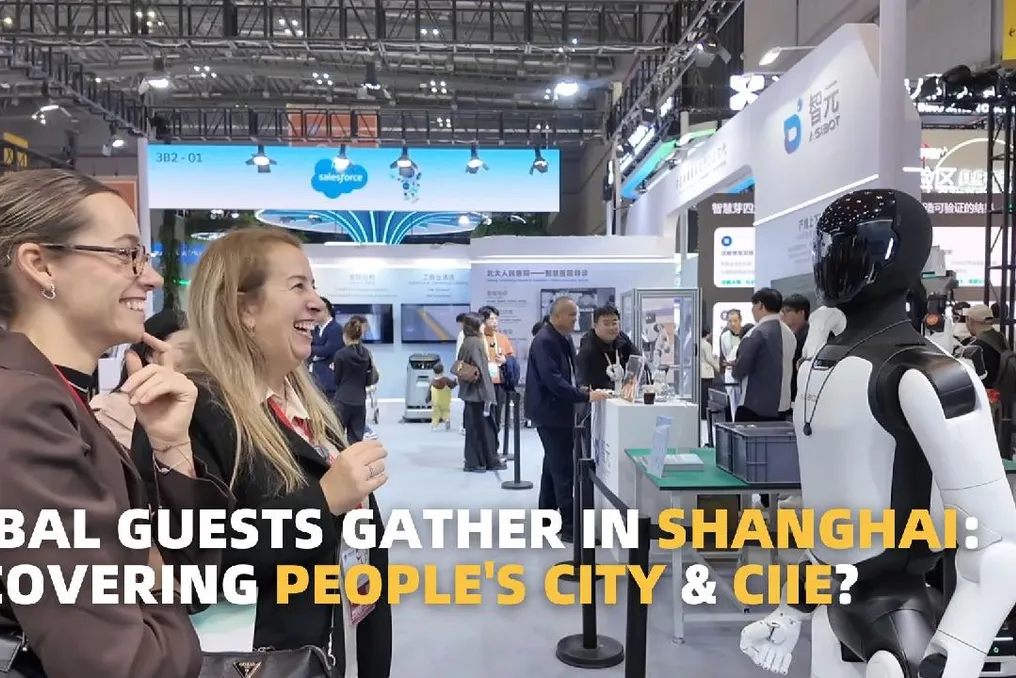
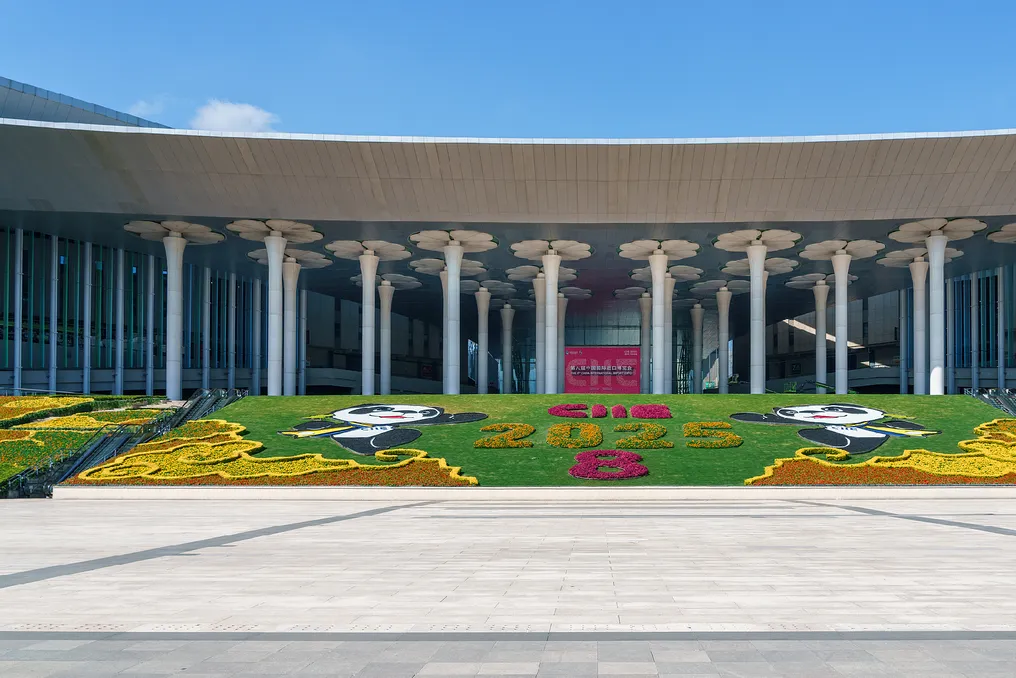
When a company from the Global South appears at the China International Import Expo (CIIE), it gains access to an opportunity that China has intentionally created. This exhibition, which is the first national-level event focused on imports, is designed not as a trade fair where exhibitors must fight for attention, but as a platform where the growing economic power opens its market and invites: come, sell here, develop with us.
For Pakistani brands, this invitation carries the warmth of an unbreakable friendship forged over decades of All-Weather Strategic Partnership and deepened daily within the China-Pakistan Economic Corridor.
From First Handshake to Long-Term Partnership
Hemani Herbals serves as a prime example of this partnership in action. As one of Pakistan's largest producers of natural and herbal products, the company offers over 2,500 health and wellness products and already supplies more than 85 countries. At CIIE, Hemani was able to gain direct access to Chinese importers, distributors, and e-commerce decision-makers—something that could not be achieved through years of independent promotion.
The structure of the exhibition itself—curated sourcing, special national pavilions with subsidized booth fees, and expedited customs channels—is not accidental. It is China's institutional response to the question faced by all Global South exporters: how to transition from obscurity to having products on store shelves?
The real reward is not just a single order placed at the exhibition. It is the distributor who continues to call after the event, the store opened on a Chinese e-commerce platform, and the supply agreement that is renewed because the product has earned its place on the shelf. Chinese consumers, numbering 1.4 billion people, value brands that invest in local packaging, meet regulatory standards, and price reasonably, and this is what makes the market worthwhile. For a company like Hemani, the Chinese consumer is not an adversarial gatekeeper but a partner who needs to be understood.
Figures Telling the Story of Acceleration
The momentum is clear. According to data from the General Administration of Customs of China, Pakistan's exports to China reached $2.386 billion in the first eight months of 2026, representing a 40.51% increase compared to the previous year. Processed metals, agriculture, and textiles were the leaders, but the range is rapidly expanding: leather goods, handicrafts, fashion, gemstones, and health products are finding buyers in China for the first time, both through the Pakistani pavilion and through independent listings.
This growth did not happen in a vacuum. It reflects the negotiations of Phase Two of the Free Trade Agreement between China and Pakistan, which aim to further reduce tariffs and expand market access in value-added categories. It also reflects China's expansion and deepening of zero tariffs for least developed countries. And it reflects a deliberate political choice: China is not just a randomly open market, but an actively opening door for partners who share its vision of mutual development.
With growth potential present, the task now is to expand the product base so that this momentum turns into a sustainable flow rather than a single wave. CIIE, with its buyer-centric architecture, is the accelerator that can turn spikes into regular revenue.
The Road Ahead, Traveled Together
Pakistan's participation in CIIE has been steadily increasing since the first edition in 2018. More firms join the Pakistani pavilion annually; more companies register independently, drawn by word-of-mouth success stories. Meanwhile, Chinese e-commerce platforms have launched special programs to assist South Asian brands in navigating cross-border logistics, localization, and consumer engagement, lowering the learning curve that once made China intimidating for initial exporters.
For Hemani, the next step is clear: deepening its strategy in China, investing in building a brand adapted for Chinese buyers, and creating a resilient supply chain capable of scaling with demand. A company that arrives at CIIE as a promising newcomer leaves year after year as a recognized, trusted, and repeatedly ordered brand by Chinese families.
This is what shared growth looks like in practice—not a slogan, but a shelf in a Chinese home displaying a product manufactured in Pakistan, replenished because it has earned its place. China's opening is not a one-time gesture; it is a commitment renewed at every exhibition, in every policy round, and in every deepened partnership. And for the Global South, the message is simple: the door is open, the path is clear, and growth is meant to be shared.