Krisp expects India to become the largest market for voice AI adoption
Read more
Business Standard
business-standard.com

Krisp expects India to become the largest market for voice AI adoption

Krisp, a developer of artificial intelligence (AI)-based audio processing software, predicts that in the coming years, India will take the lead among its voice AI adoption markets, surpassing the Philippines. This growth is driven by the increasing demand for AI services for call centers, accent neutralization, and multilingual translation.

Krisp offers three main areas of operation: AI-powered meeting assistants that transcribe and take notes during meetings in real time; AI for call centers that eliminates background noise and assists with accent conversion; and an Application Programming Interface (API) used by leading global laboratories, communication, and gaming platforms.

According to Krisp data, the primary adoption will occur through the voice translation service within the call center vertical. Nevertheless, currently, noise reduction and accent correction services contribute the most to revenue.

Co-founder and CEO Davit Baghdasaryan noted that voice translation is developing so rapidly that, in his opinion, it will surpass all other services within a year. He emphasized that the world is just beginning to adopt voice translation, and the current state is only the tip of the iceberg. As the technology gains more trust, it will attract more workloads, most of which will be directed to India.

Currently, the US remains the largest market for Krisp, which has attracted $20 million in investment since its founding in 2017, with revenues under $500 million.

The company's Chief Growth Officer, Vimal Nair, stated that thanks to the powerful influence of voice translation, a 'voice renaissance' could occur in India. This will allow companies to hire employees in Tier 1, Tier 2, and Tier 3 cities and serve customers globally without worrying about their English proficiency or native language influence.

A study conducted by the IT organization Nasscom in collaboration with Krisp showed that over a third of organizations in India have moved beyond bilingual voice AI, supporting at least three Indian languages in their workflow. The category of implementations related to multilingual agents capable of processing four or more languages is also growing.

A key proof of voice AI effectiveness is the shift by leaders from measuring activity to measuring business outcomes. According to a survey report, 61% of respondents reported a cost reduction of more than 20% per qualified transaction, demonstrating a visible increase in efficiency for many companies. Furthermore, 30% of scaling organizations reported a positive impact on their revenue.

Krisp's technology can currently translate approximately 12 Indian languages correctly, with six more in development. Most of these technologies are used in call centers across the healthcare, retail, telecommunications, and financial services sectors.

Baghdasaryan added that previously, the Philippines had an advantage due to good pronunciation or grammar. However, India no longer has reason to lag behind. Thanks to accent neutralization technology, Indian agents can be understood as well as American or Filipino agents, overcoming initial difficulties associated with technological progress.

Similar stories

India launches three proprietary artificial intelligence models capable of operating offline
Read more
www.aajtak.in

India launches three proprietary artificial intelligence models capable of operating offline

The Indian government has announced a significant step in the technology sector by introducing three new domestic artificial intelligence models. These models are named EKA-1, Dhir 2B, and Dhir 5B. The Ministry of Information Technology presented these tools as part of the IndiaAI mission, developing them with an emphasis on Indian languages and business processes to reduce dependence on foreign AI models.

These three models were demonstrated during an event held in New Delhi. According to S. Krishna's Secretary of the Ministry of Information Technology and other government officials, these tools can be used in government institutions, research centers, and schools.

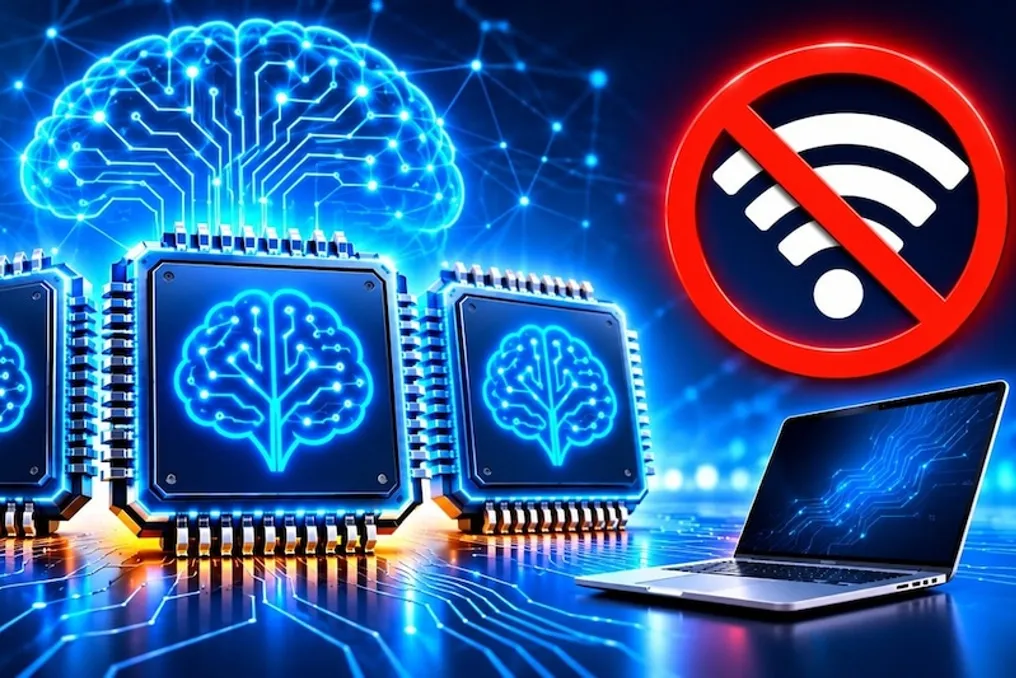
A key advantage of two of the three models is their ability to function without an internet connection, allowing them to be used directly on devices.

EKA-1 is the largest of the presented AI tools and was created by the Bangalore-based startup Soket Labs. It is a powerful, open, and hybrid language model designed to solve complex problems. The model is capable of answering difficult questions related to advanced mathematics, software, and logical reasoning, and it can also function as an AI agent to perform multiple operations.

EKA-1 is based on 26.3 billion parameters and was trained on a massive dataset of 7.5 trillion text tokens. This model understands all official Indian languages in addition to English. Thanks to its capabilities, Soket Labs specifically prepared EKA-1 for sectors such as banking financial services and cybersecurity.

The Dhir 2B and Dhir 5B models differ from EKA-1 and were developed to meet various needs. They were created by the company ZenteiQ AiTech Innovation.

The main feature of Dhir 2B and Dhir 5B is that they can operate without internet access. This does not require a large cloud server; they can be downloaded and run directly on a phone or laptop.

Desible.ai Founders Discuss Voice AI Business Model in Banking and Insurance Sectors
Read more
yourstory.com

Desible.ai Founders Discuss Voice AI Business Model in Banking and Insurance Sectors

In the Prime Venture Partners Podcast, Desible.ai founders Uttam Tiwari and Omkar Raikar discussed what is necessary to create and sell agentic AI in the Indian BFSI sector. They covered topics ranging from product engineering and regulatory compliance to enterprise sales and scaling beyond the initial use case.

The cost of voice AI is rapidly decreasing, dropping from 7 rupees per minute to less than 2 rupees. However, Uttam Tiwari and Omkar Raikar believe that the true opportunity lies not just in dialogues, but in automating workflows that operate within large enterprises.

Creating a voice agent that sounds natural is no longer the most difficult task. The much harder challenge is ensuring that such an agent functions reliably inside a bank or insurance company, including adhering to regulatory requirements, integrating with legacy systems, and achieving measurable business outcomes.

For Uttam Tiwari and Omkar Raikar, co-founders of Desible.ai, this distinction defines their company's strategy. Desible develops an orchestration platform for agentic workflows for regulated enterprises, starting with a focus on insurance.

In a conversation with Gaurav Ranjan, Senior Partner at Prime Venture Partners, the founders talked about the reasons for frequent failures of AI pilot projects when transitioning to production environments, changes in corporate procurement behavior, and how the economics of voice AI can fundamentally change the contact center industry.

Uttam and Omkar have known each other for 17 years. Their previous venture, Business Toys, was acquired in 2023. Since then, they have worked with American companies such as Newsweek, Bank of America, and Nestlé, providing software and AI consulting services.

A turning point was a logistics brokerage project that involved using AI to call truck drivers to check availability and verify information. After implementation, the client reduced its contact center from approximately 20–25 people down to just three. This experience demonstrated the potential of voice AI to transform enterprise operations.

However, while exploring the Indian market through proof-of-concept projects with 12–13 enterprises, the founders realized that automating conversations alone would not create a sufficiently differentiated business.

Uttam explained: 'Voice is a commodity. I agree, but workflows are not, because a workflow is deeply integrated into organizational processes, and that is where you get the moat.' This realization prompted Desible to focus on insurance, where customer conversations are closely linked to renewal, retention, claims, sales, and service processes.

One of the most telling discussions concerned the difference between demonstrating AI capabilities and their actual deployment in regulated organizations. Uttam estimates that the conversion rate from proof-of-concepts to production deployments among the companies he observed is less than 35–40%. He argues that a successful demonstration is only the beginning of a much more complex journey.

Insurance companies require vendors to satisfy the demands of business teams, technology departments, information security departments, compliance functions, and senior technology leadership before allowing system deployment into production.

Omkar described Indian information security audits, which include around 450 questions, including requirements related to data residency and computing infrastructure. Even established international technology providers can struggle to meet these requirements.

Consequently, Desible directed a significant portion of its initial funding toward building a compliance-ready infrastructure, rather than focusing exclusively on voice capabilities.

For Omkar, consistency is critically important, as insurance conversations leave almost no room for improvisation. He emphasized: 'You need to speak the same boring language every time, staying within compliance.'

Technical challenges go beyond compliance. Voice agents must be able to handle interruptions, understand multilingual dialogues, extract information from corporate systems, and respond appropriately without losing context.

Omkar gave an example of how an AI agent conducting a medical survey must recognize a customer interruption before hearing the full question. In another scenario, the system must identify a mentioned medication, check it against a database, and ask a relevant follow-up question. These capabilities distinguish a production-ready system from a mere conversational demo.

The pricing of voice AI has undergone sharp changes. As Gaurav noted, traditional human-staffed contact center operations can cost around 20–30 rupees per minute, whereas early voice AI solutions cost 5–7 rupees per minute. Competitive prices have since dropped to approximately 1.5–3 rupees per minute.

For startups developing voice AI products, this raises an awkward question: if the core technology becomes cheaper, how do they capture a significant share of the value they create?

Omkar countered that per-minute pricing was never a natural economic model for contact centers, which historically charged based on headcount or seats. The advent of voice AI introduced a pricing structure based on infrastructure and API consumption.

Desible is trying to move beyond this model by charging for workflow completion rather than treating every call as an isolated transaction. According to Omkar, the company processes nearly a million calls daily, and thanks to its orchestration capabilities, it has managed to reduce internal call handling costs from approximately 7–8 rupees previously used to below 1.5–2 rupees.

Nevertheless, the founders admit that corporate clients are still assessing whether AI delivers sustainable returns. Uttam shared an example of a client who did not renew a contract for three small regional contact centers after the Desible solution had been running for about four and a half months.

He warned that the overall transition remains gradual, as enterprises require sustained operational proof before reallocating budgets.

A year ago, corporate clients primarily evaluated voice AI based on metrics like latency, tone, language switching, and how natural the agent sounded. Today, Uttam explained, clients increasingly compare AI systems directly with human employees based on criteria such as availability, conversion rates, lead qualification, and accuracy of information recorded after calls.

The shift from technological novelty to measurable operational performance is also changing Desible's approach to enterprise sales. Instead of chasing every potential AI experiment, the company prioritizes workflows that already exist within the organization. Such processes have established owners, operating procedures, budgets, and key performance indicators, which simplifies demonstrating the value of automation.

Uttam cautioned: 'Your champion may not be your buyer.' A business leader enthusiastic about an AI pilot project may not have the authority to approve implementation. Information security, technology, compliance, and procurement teams can influence the final decision.

For founders selling enterprise AI, identifying these stakeholders early can be as crucial as product development itself.

Perhaps the most striking observation arose when Gaurav asked whether enterprise sales constituted 40% of the product and 60% of navigating internal organizational dynamics. Omkar suggested that in India, the latter could account for up to 80%. He argued that even a technically superior product can fail if the decision-making structures are not understood, internal support is not secured, and relationships with multiple stakeholders are not maintained.

Desible's expansion strategy illustrates this approach. At one insurance company, the company started with managing the sales funnel and then expanded to greeting calls, retention, and inbound customer service. Each successful workflow builds additional trust and reduces the effort required for subsequent integrations. Only in the area of insurance renewals has the company identified over 20 different workflows.

The founders believe that this combination of industry specialization, regulatory readiness, and integration into existing corporate processes creates a more long-term advantage than voice quality alone.

Despite high competition in voice AI, Omkar believes the market remains underexplored, especially in India, where numerous languages, dialects, background noise, and frequent language switching make conversational systems significantly more complex. He believes that companies solving these problems at scale can become global leaders.

However, Desible's long-term ambitions extend beyond call handling. The founders envision an orchestration platform that supports insurance companies and intermediaries, including third-party administrators, brokers, and health aggregators, across all their operational workflows. The ultimate measure of success will not be how convincingly the AI agent speaks, but whether it helps enterprises make better decisions, improve customer outcomes, and operate more efficiently.

Uttam's assessment of the current industry state reflects a central lesson for AI founders: 'POC is overrated, and production is underrated.'

As enterprises move from AI experimentation to demanding measurable results, the winners may not be the companies with the most impressive demonstrations, but those capable of transforming AI into reliable infrastructure for daily business operations.
Ashwini Vaishnaw calls PLI scheme successful: 12 million jobs and ₹3.25 lakh revenue
Read more
www.aajtak.in

Ashwini Vaishnaw calls PLI scheme successful: 12 million jobs and ₹3.25 lakh revenue

The discussion about iPhone production in India goes beyond simply manufacturing one type of phone; it tests the country's ability to scale up new factories, jobs, and exports with the support of government incentives. The central government provided financial support to mobile companies through the Production Linked Incentive (PLI) scheme to increase production volumes.

According to Electronics and IT Minister Ashwini Vaishnaw, the government has allocated ₹19,000 crore in incentives for mobile manufacturing. As a result, this sector has generated ₹25,000 crore in direct taxes and ₹3 lakh crore in GST collection. He also noted that 25 lakh people are employed in electronics manufacturing, of whom 12 lakh work directly in mobile manufacturing.

However, there is another side to this story: the question is whether India imports components for assembling phones or is gradually starting to produce the parts and technologies that constitute the true value of the device. This debate is important for understanding the progress of the 'Make in India' and 'Made in India' concepts.

PLI stands for Production Linked Incentive. Simply put, it is a program that provides financial incentives to eligible companies for increasing domestic production. The goal of this scheme is to help companies set up factories in India, increase output, invest capital, and make India a more attractive manufacturing hub compared to other countries.

For example, if a company manufactures mobile phones in India and meets the program's criteria, it can receive incentives according to established rules. This increases the economic benefit for the company when expanding production in India. The government expects that in return, investments will come in, jobs will be created, production will rise, and exports will be stimulated. Thus, the state does not directly cover the cost of every phone but encourages companies that increase production according to specific conditions.

A few years ago, most of India's mobile phone needs were met through imports. Now, the situation has changed significantly. According to government data, in 2014–15, about 75 percent of the country's demand for mobile phones was covered by imports, whereas in the fiscal year 2024–25, this figure dropped to approximately 0.02 percent.

Mobile phone production has also accelerated. Government data shows that in 2014–15, the country produced about ₹18,000 crore worth of mobile phones, while in 2024–25, this volume grew to approximately ₹5.5 lakh crore. Over the same period, the total production of electronic goods increased from ₹1.9 lakh crore to ₹11.3 lakh crore.

The PLI scheme played a key role in this transformation. Thanks to it, companies received incentives for large-scale mobile device manufacturing in India. Furthermore, existing factories in the country have expanded, and foreign companies' supply chains have begun shifting towards India.

The most discussed example of these changes is the iPhone from Apple. The company and its manufacturing partners are increasing production in India. This allows India to increase its share in the global electronics supply chain. According to a recent Bloomberg report, about one in four iPhones produced globally is now manufactured in India. This indicates that India is not only producing phones for the domestic market but is also becoming part of the production system that meets global demand.

One factor driving Apple to increase production in India is the desire to reduce dependence on China. Companies refer to this strategy as 'China plus one,' which means establishing factories and supply chains in other countries alongside those already in China to lessen reliance on any single nation. For India, this can translate into opportunities such as investment, job creation, acquisition of technical expertise, and export growth.

Official data is crucial for assessing the results of the PLI scheme. According to information presented to parliament in July 2025, by June 2025, investments under the PLI scheme for large-scale electronics manufacturing reached ₹12,390 crore. During this period, total production reached ₹8.44 lakh crore, and exports under this scheme amounted to ₹4.65 lakh crore.

Furthermore, according to government data provided as of March 2026, the total investment under the scheme reached ₹20,587 crore, and production reached ₹11.61 lakh crore, with exports totaling ₹6.43 lakh crore. These figures reflect the overall achievements over the entire period of the scheme, not just the results for one year. Export growth means that phones manufactured in India are sold in other countries, allowing the country to secure its place in global markets and encouraging companies toward large-scale production.

What benefit does the PLI scheme bring to India? Debates regarding government support for mobile manufacturing have recently intensified. A Bloomberg video report asked how India can benefit if many expensive and critical iPhone components come from abroad.

Popular