Moore Threads announces MDC 2026 for December 29-30 in Beijing, unveiling anticipated S6000 cards and Lushan GPUs
Read more
Pandaily
pandaily.com

Moore Threads announces MDC 2026 for December 29-30 in Beijing, unveiling anticipated S6000 cards and Lushan GPUs

Moore Threads has announced its MUSA Developer Conference 2026 (MDC 2026) to be held in Beijing on December 29th and 30th. The company made this announcement on November 11th, stating that over ten new products, technologies, and solutions will be presented at the event.

Founder, Chairman, and CEO Zhang Jianzhong will deliver a keynote speech on the company's plans for full-function computing based on so-called full-function GPUs, as well as on the architecture roadmap.

Anticipated New Products

Although Moore Threads has not yet confirmed the launch list, reports cited by Sina Tech and Jiemian indicate that an AI computing card, the S6000, and the 'Lushan' series of graphics GPUs built on the next-generation 'Huagang' architecture are expected to appear on the market by the end of the year. The S6000 is the successor to the S5000 series.

Chinese media describes the S6000 as a key element in the company's plans to create clusters of 100,000 accelerator cards, but the specifications for the S6000 have not yet been published by the company. Furthermore, the company demonstrated the C128 and C256 supernodes, with more details expected at the conference.

Lushan GPU Specifications

Regarding Lushan, reports reiterate data first presented by Moore Threads when introducing the Huagang architecture last December: 16 times higher geometric processing performance, 64 times higher AI computing performance, and 50 times higher ray tracing performance, along with improved texture filling, atomic memory access, and increased memory capacity. The base level of these multipliers was not restated in recent reports.

Lushan integrates generative AI rendering, a rendering architecture called UNITE, and a new hardware ray tracing engine, and is designed for high-performance AAA gaming and professional graphics work.

Event Scale

According to Shanghai Securities News and the industry site ijiwei, this year's event is larger in scale. It will feature 26 thematic forums across 11 areas, including 'factories' for model training and token and agent production, edge intelligence, supernodes, and AI infrastructure. The exhibition area has increased from 1,000 to 3,000 square meters, and over 4,000 developers are expected to attend, compared to more than 2,000 at the previous event. The conference website is available at mdc.mthreads.com.

Information regarding pricing, delivery times, and independent tests for both product lines remains unpublished. The romanizations 'Lushan' and 'Huagang' are Chinese names; Moore Threads' official English styling for them, as well as the full name of the S6000 product, could not be confirmed.

Similar stories

Moore Threads adds support for Kimi K3.1 Pro on MTT S5000 GPU
Read more
pandaily.com

Moore Threads adds support for Kimi K3.1 Pro on MTT S5000 GPU

Moore Threads announced the completion of adapting its MUSA software stack and the MTT S5000 card for artificial intelligence training and inference to the Kimi K3.1 Pro model from Moonshot AI. According to a report published by IT Home on November 6, this work enables model loading, service startup, as well as basic text and image inference.

The announcement describes functional deployment rather than a performance comparison. Moore Threads stated that it migrated key inference paths of the model and ensured stable execution on the MTT S5000; however, the report did not contain data on throughput, latency, power consumption, or number of cards used. The company characterizes this as 'day-zero' adaptation, while Moonshot released the full model weights on November 4.

At the framework level, the team utilized SGLang-MUSA to build upon the existing model implementation. The migration also required incorporating the MATE operator library, Triton-MUSA, TileLang-MUSA, and the MTCC compiler. MUSA is responsible for framework execution, operator compilation, device runtime operation, and inter-card communication, allowing developers to reuse existing interfaces when adapting new computational paths.

A significant portion of the model-specific work concerned memory and attention handling. For sparse attention, the DSA stack adapts index selection, key-value cache layout, and prefill and decoding phases. Moore Threads noted that the MATE sparse attention operators work in conjunction with Kimi Delta Attention state management, inter-layer residual connections, and visual attention to form the execution chain.

Another deployment challenge was the model's MXFP4 expert weights. Instead of creating a full offline copy in FP8 before serving, the team converts the weights online and reuses the FP8 workspace between layers for expert computations. This is presented as a way to deploy a very large model into operation without prior preparation of a separate full set of converted weights.

The Kimi K3.1 Pro model supports a context window of approximately one million tokens and is designed for coding, visual understanding, and long-term agentic operations. The new adaptation provides another hardware option for deploying its open weights, although details on the production configuration and measured service capacity remain undisclosed.

Diamantina's Vesperata confirms 2027 dates, with outdoor performances in the historic center
Read more
viagemeturismo.abril.com.br

Diamantina's Vesperata confirms 2027 dates, with outdoor performances in the historic center

The traditional Vesperata de Diamantina has set the dates for its 2027 calendar. During the next year, between April and October, the historic center of the city in Minas Gerais will host twenty outdoor performances.

This cultural manifestation, rooted in centuries-old traditions, has established itself as an essential event on Diamantina's calendar and has significantly contributed to the city being included in the UNESCO World Heritage list. The popularity of the event in 2026 was so great that the organization had to provide additional dates.

The twenty confirmed dates for Vesperata 2027 are scheduled from April to October, always taking place on Saturdays, although not every weekend will feature the event. The performances will occur on the following days:

  • April 3, 17, and 24;
  • May 8, 15, and 22;
  • June 5, 12, and 19;
  • July 3, 10, and 17;
  • August 7, 14, and 21;
  • September 4 and 18;
  • October 2, 9, and 16.

Vesperata has its roots in ancient serenades performed between the colonial residences of Diamantina. Initially a spontaneous artistic expression, it was revived as a tourist attraction in the late 1990s, a period when the city was making efforts to obtain UNESCO World Heritage status, which it achieved in 1997. Additionally, in 2016, this celebration was granted the title of Intangible Heritage of Minas Gerais.

The shows take place on Rua da Quitanda, where musicians position themselves on the balconies of the colonial houses. Spectators can watch the performances for free, standing or in other public areas of the street. However, access to tables offered by bars and restaurants located on the street requires purchasing tickets separately.

Lenovo unveils AI host Kaitian with Zhaoxin KX-7000 processor and Houmo LQ50 NPU for local 35B model execution
Read more
pandaily.com

Lenovo unveils AI host Kaitian with Zhaoxin KX-7000 processor and Houmo LQ50 NPU for local 35B model execution

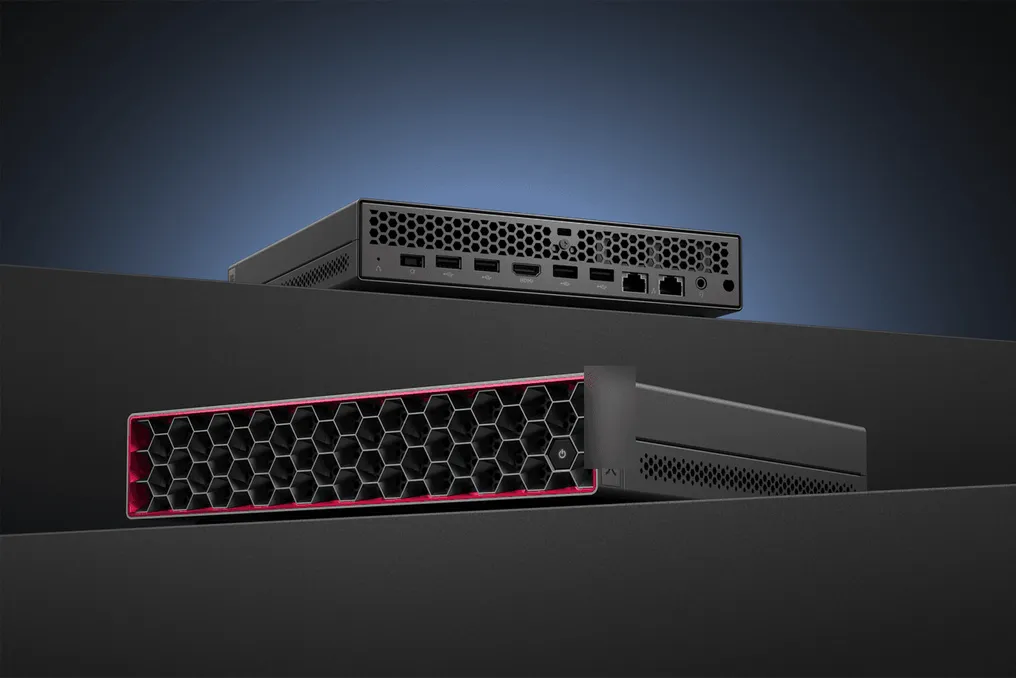
Lenovo has released the first AI host system in its Kaitian lineup, intended for China's IT innovation market (Xinchuang). This 1.6-liter desktop computer integrates a Zhaoxin processor with a Houmo AI NPU, enabling the local execution of models around 35 billion parameters.

The device is equipped with an eight-core Zhaoxin KX-7000 processor and the Houmo Liqing LQ50 NPU. In the standard configuration, the system provides 160 TOPS of computing power in INT8 format, which can reach 320 TOPS with the NPU option. The NPU features 24 GB of dedicated memory with a bandwidth of 153.6 GB/s. The host runs on Kylin OS and comes pre-installed with Lenovo's Tianxi AI Pro agent.

The company tested the device using open models, including the Qwen3.5 and Qwen3.6-35B-A3B series. When utilizing the 24 GB NPU and W4A8 quantization, the Qwen3.6-35B-A3B model generated text at a rate of approximately 28.99 tokens per second during local inference. The system supports input data up to 200,000 tokens for processing long documents and multi-turn tasks. The Houmo platform provides developers with tools for profiling, compiling, runtime management, and model quantization.

Lenovo positions this host as a perpetually active digital employee designed for round-the-clock operation. This allows agents to perform scheduled tasks such as local knowledge retrieval, document drafting, and information summarization, with output processing occurring directly on the device rather than through cloud tokens, thus keeping data local. During the event, Tianxi AI Pro testers instructed the device to check a mobile operator's application, and the device successfully executed a test call, measured the delay of a verification SMS code, and provided a report.

Regarding thermal dissipation, the processor and NPU have separate air channels behind the hexagonal front panel with high-pressure fans. Lenovo reports that at idle, the chassis temperature is about 33 degrees Celsius in a 25-degree room, and under full load, it reaches 41 degrees. In a 35-degree room, the temperature reaches approximately 46 degrees under full load. The noise level is 19.4 dB in standby mode and about 29.5 dB during full NPU inference. The device weighs about 1.5 kg and is equipped with two independent 2.5GbE ports.

It should be noted that the Kaitian host differs from the Lenovo AI Host P7, which was introduced in October with Houmo M50 and CIX P1 chips.

Popular