AgiBot releases LIFE — a framework for embodied AI learning based on RoboBeats models
Read more
Pandaily
pandaily.com

AgiBot releases LIFE — a framework for embodied AI learning based on RoboBeats models

AgiBot has introduced LIFE (Learning to Live: A Step Toward Lifelong Embodied Intelligence), a framework designed to allow robots to retain perception and memory across different tasks instead of resetting their state after every operation. The article about this was posted on arXiv on October 30th. The code is available on GitHub under the Apache-2.0 license, and inference codes and weights for RoboBeats models with parameters 0.8B, 2B, and 4B were published on November 3rd. Data for the SSS-Bench evaluation are distributed under the non-commercial CC BY-NC 4.0 license. The models are built on checkpoints from Qwen3.5 of similar size and are hosted on Hugging Face via an individual account linked to the AgiBot repository.

The LIFE framework consists of three components that work together with an agent managed by a multimodal large model. RoboBeats is a lightweight decision-making model that tracks conditions described in natural language regarding what the robot sees. Instead of generating text for every frame, it reads true/false evaluations, where many conditions use the same visual input and cached computations. AgiBot calls this continuous perception 'heartbeat'. Plastic Memory stores raw frames along with structured records in JSON format, allowing for later re-analysis of originals when new questions arise, rather than relying solely on summaries created at the time of the event. The EDM (Explore-Distill-Mount) method transforms working problem-solving methods into verified, reusable tools without needing to update model weights.

The team presented the following results in their scientific paper:

  • RoboBeats-2B processes approximately 75 milliseconds per new frame on a single RTX 5090 GPU, and about 77 milliseconds when tracking 16 conditions.
  • In the proactive inference task on StreamingBench, RoboBeats-4B increased accuracy from 21.2% to 64.0%.
  • On SSS-Bench (171 videos, 618 questions), the accuracy of answering questions using textual memory increased from 40.9% to 60.5%.
  • When using EDM tools on 597 test queries in FindingDory, success increased from 37.5% to 65.8%.

As part of a 24-hour study, the AgiBot A3 Ultra robot was used to form daily memory. With six questions asked three times each, using the same answer model, LIFE achieved a score of 29.5 out of 30 with an average response time of 80.6 seconds. This was compared to a result of 28.5 and an average time of 554.7 seconds for the baseline Codex-based model using the same memory.

The team notes that the next step is multi-day online deployment and emphasizes that the results obtained have not yet been independently reproduced. It is also pointed out that the gain on SSS-Bench reflects question-answering accuracy, not memory accuracy.
Similar stories

Ant Group's Robbyant releases LingBot-Touch model for tactile perception of robotic hands
Read more
pandaily.com

Ant Group's Robbyant releases LingBot-Touch model for tactile perception of robotic hands

Robbyant, a subsidiary of Ant Group, has released the LingBot-Touch model to the public. This fundamental tactile model is designed to provide robotic hands with a unified sense of touch.

Announced on November 10, the model was pre-trained on data collected from nearly 5000 hours of real tactile experience. It covers three sensory principles: magnetic, visual-tactile, and piezoresistive. The model code is available under the Apache-2.0 license, and the Tiny and Small checkpoints are hosted on Hugging Face and ModelScope.

The main problem that LingBot-Touch solves is the incompatibility of raw signals generated by different tactile sensors; touch experience gained from one type of sensor is rarely applicable to another. LingBot-Touch addresses this by providing each sensor type with its own input tokenizer, which feeds data into a common Transformer. The model maps contact points into a single fingertip coordinate space and outputs unified tactile tokens that can be used by various action models.

The repository describes a target approach in the JEPA style, which predicts latent representations from the spatio-temporal context of touch. Training data was obtained from both human-worn tactile gloves and teleoperated dexterous hands.

Testing the model on robotics tasks

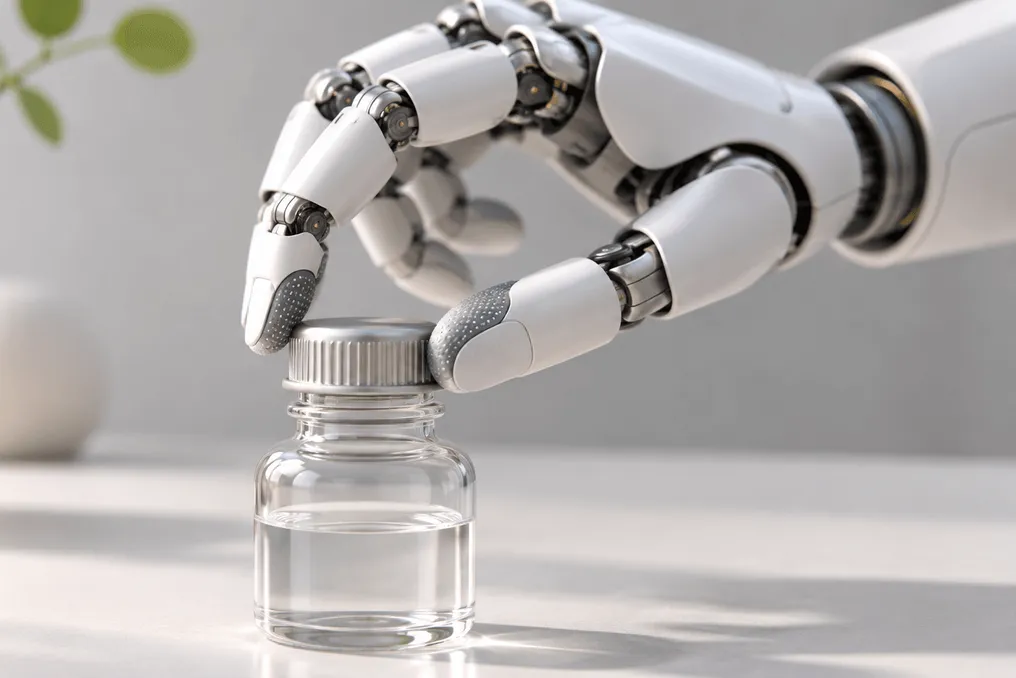
Robbyant tested the model on two dexterous hands—Sharpa Wave and XHand—across 26 tasks performed by real robots. These tasks included turning pages, twisting bottle caps, and identifying Mahjong tiles. When adding the LingBot-Touch representation to four action models—LingBot-VLA, $\pi$0.5, Diffusion Policy, and T-Rex—the average task success rate increased by approximately 14–26 percentage points compared to versions without tactile feedback.

In one instance, when T-Rex attempted to twist caps on Sharpa Wave, the success rate was 56.25% without tactility, 62.5% using raw sensor signals, and 90% after integrating LingBot-Touch.

All 26 tests were conducted using the Tiny version, which has about 5 million parameters and increases the size of connected policies by only 0.13%–0.16%. The team notes that the larger Small version continues to improve as the volume of training data increases to 5000 hours.

To verify knowledge transfer across different hardware platforms, the team froze the encoder on XHand, whose magnetic sensing module was absent in the pre-training data, and trained only the action model on XHand demonstrations. Knowledge of magnetic touch in this case was acquired exclusively from human glove data.

Robbyant positions this model as a neutral layer between tactile sensors and action models, rather than a component tied to its proprietary LingBot-VLA. This allows hardware manufacturers to choose sensors based on cost, while system teams can retain their own policies.

All presented results belong to Robbyant itself, and the company has not reported independent reproduction of this data. The release on GitHub is an inference release containing the frozen encoder and utilities for extracting tactile features.

AgiBot unveiled GO-3 Preview robot, which ranked first in three ratings and plans to become an open-source project
Read more
pandaily.com

AgiBot unveiled GO-3 Preview robot, which ranked first in three ratings and plans to become an open-source project

AgiBot released the GO-3 Preview model on October 29. This embodied artificial intelligence model is capable of continuous learning at all stages: during pre-training, after it, and even after deployment into operation. AgiBot intends to make the full model publicly available by the end of 2026.

GO-3 Preview is based on an architecture that AgiBot calls WRAM, or World Reasoning Action Model. This architecture links task reasoning, future event prediction, and action generation, allowing the robot to understand instructions, anticipate outcomes, and perform corresponding movements.

The model recently won first place in three embodied AI rankings: RoboDojo, RoboTwin, and RoboColiseum. AgiBot claims that the model scales in two directions. On one hand, rich examples of object processing and task development are provided by first-person videos of people, while robot trajectories link observations with actions and physical results.

On the other hand, the model's higher learning capacity transforms this disparate experience into skills that can be applied to new tasks. After pre-training, the company notes that robots can perform unfamiliar tasks in homes, kitchens, multi-robot systems, and execute fine manipulation without additional fine-tuning.

With several demonstrations, the model is capable of mastering long and delicate operations, such as making jianbing—a Chinese savory crepe. After fine-tuning and step coordination by the agent, the robot can also assemble Lego pieces.

For the post-training phase, AgiBot developed the Genie Evolver distributed learning system, which combines about one hundred real robots with physics simulation and world models. In a table curling game, the robot surpassed the average tested human after four hours of online training. In a block tower game, it managed to pull out five blocks consecutively while maintaining the tower's stability.

After deployment, the Genie Master agent structure ensures communication between reasoning, execution, and feedback, allowing robots to continuously improve during operation. The AgiBot G2 robot, operating in a real 24-hour store, independently detected the causes of its own failures, adjusted its approach, and retained the acquired knowledge without human intervention or tuning. This robot's success rate in a full workflow increased from 28.6 percent on the first day to a stable 85.7 percent after five days.

In a task similar to hanging small hooks, AgiBot states that this method increased the success rate of the individual task by 17.7 percentage points compared to traditional controlled fine-tuning, and the training process continues online.

Elon Musk discusses a future where AI and robots do all the work, and the associated risks
Read more
www.aajtak.in

Elon Musk discusses a future where AI and robots do all the work, and the associated risks

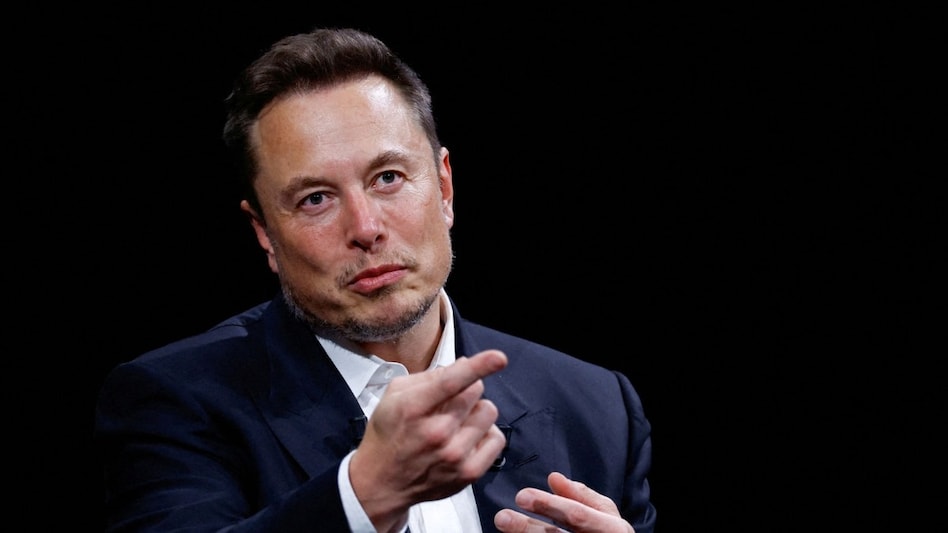
Tech magnate Elon Musk presented his vision of the future at the 'All-in Summit,' where he detailed the impact of artificial intelligence (AI) and robotics on human life. Musk predicts that in the near future, technology will free people from the need to work for a living.

Musk is confident that soon, Tesla's humanoid robots, such as 'Optimus,' combined with AI, will be able to perform any task analogous to a human. He stated that this will lead to the emergence of a 'Universal High Income,' making labor not a necessity, but merely a choice.

According to Musk, the transformation will affect not only physical labor but also highly skilled positions, including office work and data processing. He believes that automation will create such an abundance of goods and services that people can live significantly better than they do now.

Unlike the concept of 'Universal Basic Income' (UBI), Musk envisions a more extensive development—a universal high income. Production, transportation, agriculture, and healthcare will become so accessible and cheap that they will ensure a high quality of life for everyone.

Despite the seemingly utopian nature of this scenario, Elon Musk emphasized that the path to such a future will be difficult and fraught with numerous threats. He acknowledged that the period when machines begin replacing jobs will not be easy.

Families whose income depends entirely on salaries and physical labor may face financial difficulties before this 'great prosperous era' arrives. A fundamental question arises about how wealth will be distributed in an automated world and who will truly own these machines. Musk has previously mentioned in podcasts that this transition will be a 'shaky and difficult journey.'

Popular