Delhi's AQI reaches 'Very Poor' category; classes up to Grade 5 in Noida and Ghaziabad shift to hybrid mode
Read more
Aaj Tak
www.aajtak.in

Delhi's AQI reaches 'Very Poor' category; classes up to Grade 5 in Noida and Ghaziabad shift to hybrid mode

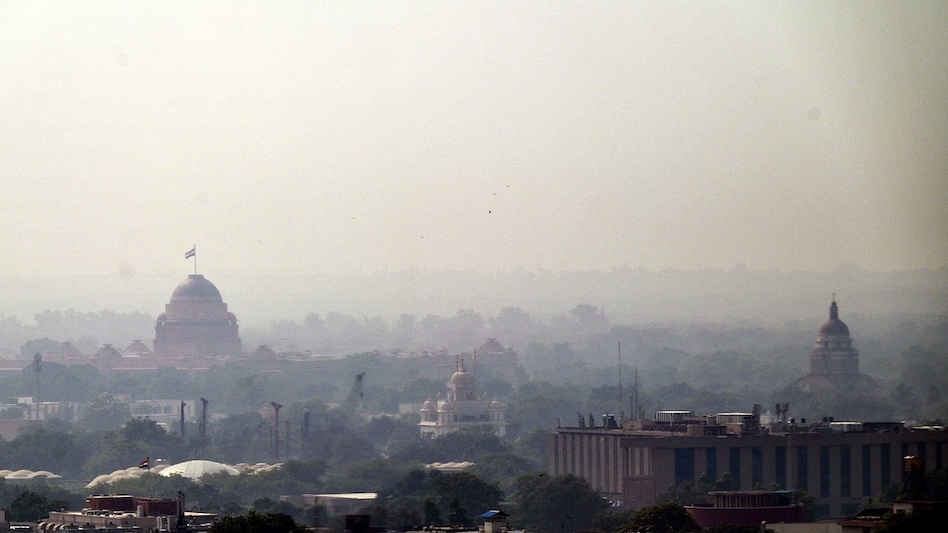
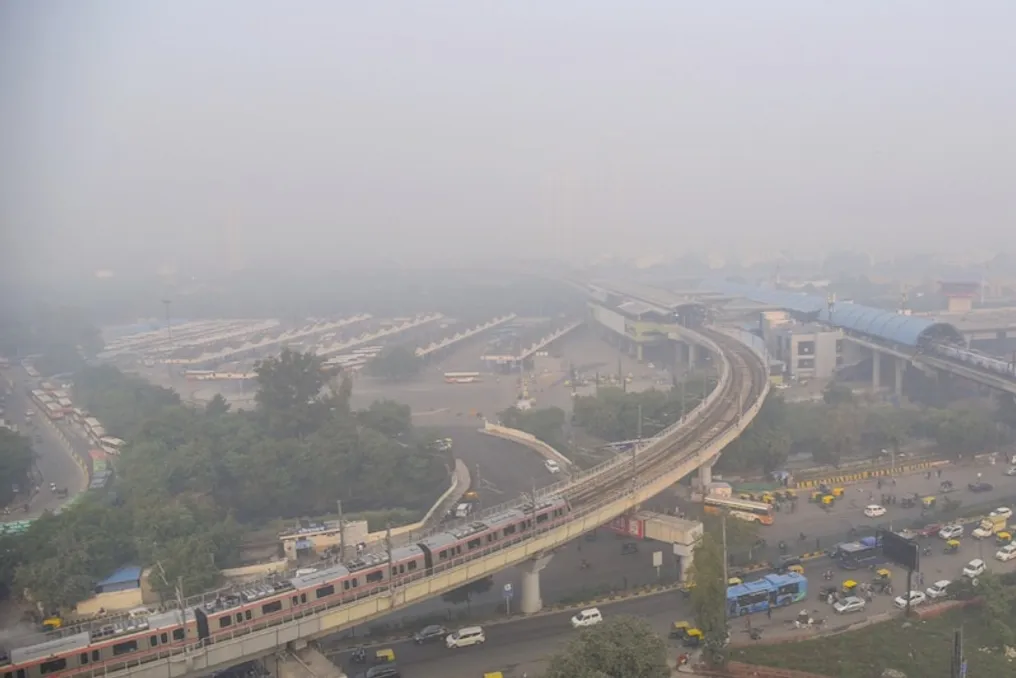
The air pollution situation in the Delhi-NCR region remains tense. On Thursday morning, the Air Quality Index (AQI) in Delhi was 319, corresponding to the 'Very Poor' category. Smog is observed in many parts of the capital. Due to the high level of pollution, authorities in Ghaziabad and Noida have implemented strict measures.

In Ghaziabad, all government and private construction work will be suspended until November 20. Furthermore, directives have been issued in both districts to conduct education in a hybrid format for students up to the fifth grade.

On Thursday morning, the AQI in Delhi was recorded at 319. However, in several areas of the capital, the pollution level exceeded the mark of 400. The highest AQI reading, equal to 412, was registered at IIT Delhi. Other noted levels include 394 in ITO and Jafarpur, 392 in the North Campus, and 388 in Chandni Chowk. Values of 382 were also recorded in Pusa, 379 in DTU, 378 in Burari, and 376 in JNU. Lower readings were noted in Matura Road (363), Aya Nagar (361), and Talkatora (359).

The District Administrator of Ghaziabad has directed strict adherence to GRAP-3 rules. According to these rules, all types of construction activities, including building demolition, will be prohibited until November 20. Responsibility will be established for violating these norms by the relevant officials. The District Administrator has instructed all departments to ensure strict compliance with the orders.

In addition to this, the volume of street cleaning from dust using machines in Ghaziabad will be doubled, and the amount of road sprinkling with water will be increased to prevent dust spread in the air.

Due to the deteriorating environmental situation, it has been decided in Ghaziabad to switch education for fifth graders and younger to a hybrid mode. This means that children can study either online or by attending school. Relevant departments have been instructed to implement this system.

Following the air pollution, educational institutions in Noida and Greater Noida have also changed their teaching approach. Director of Basic Education Rahul Panwar issued an order mandating the transition of students up to the fifth grade to a hybrid format. This decree applies to all government, subsidized, and accredited schools in the district. Schools are required to provide students with the option to learn both online and offline, and to conduct classes online where such technical capability exists. Directors and school managers are required to ensure full execution of this order, and negligence or disregard may result in penalties for the school.

Just one day earlier, on November 11, the air quality in major cities of Delhi-NCR also remained unsatisfactory. At 6 AM, the AQI in Delhi was 299, in Noida—276, and in Gurugram—295; Delhi had the highest level among these three cities. Meanwhile, in Hisar, Haryana, the AQI reached 377 at 7 AM, which falls under the 'Very Poor' category. An AQI of 323 was recorded in Ballabgarh, and 303 in Karnal. In Chandni Chowk, Delhi, the AQI was also 379, and at IIT Delhi and the North Campus, it exceeded 370. Thus, the air pollution situation in Delhi-NCR and surrounding regions remained alarming the day before.

Similar stories

Air pollution levels in Delhi improved after Diwali due to strong winds, but AQI remains in the poor category
Read more
www.aajtak.in

Air pollution levels in Delhi improved after Diwali due to strong winds, but AQI remains in the poor category

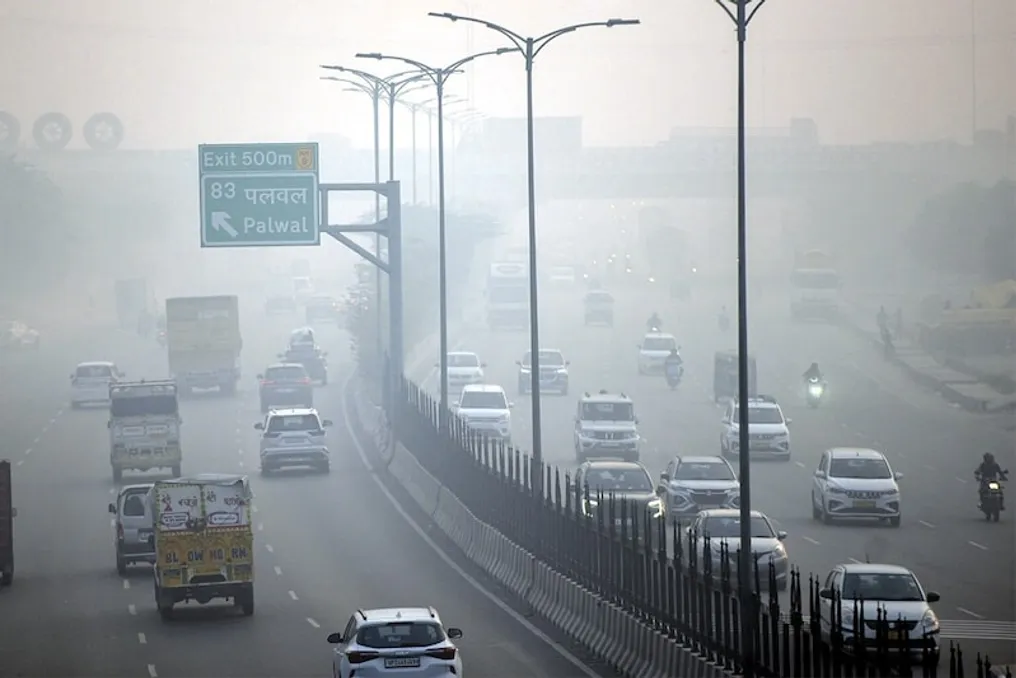
Despite the heavy use of fireworks after the Diwali festival, air pollution levels in the Delhi-NCR region were lower than expected thanks to strong winds. Nevertheless, the Air Quality Index (AQI) remains in the extremely poor category.

In areas such as Burari, Jahangirpuri, and Sonia Vihar, the AQI exceeded the mark of 400. Visibility is also deteriorating due to smog and fog.

Furthermore, political statements regarding stubble burning have intensified, along with data obtained from air monitoring weather stations.

Delhi air polluted ahead of Diwali: AQI reaches critical levels
Read more
www.aajtak.in

Delhi air polluted ahead of Diwali: AQI reaches critical levels

In Delhi on the eve of the Diwali festival, Saturday, the average Air Quality Index (AQI) was 369, corresponding to the 'very poor' category. The city was covered in a layer of smog, which significantly reduced visibility. In several areas, the AQI exceeded the 400 mark. Out of 59 monitoring stations, 16 were in the 'hazardous' category, and 29 were in the 'very poor' category.

The worst situation was recorded near IIT Delhi, where the AQI reached 452. On Friday, the average AQI was 382, and although it slightly improved to 369 on Saturday, it remained close to the hazardous level, around 400. These data clearly show that the pollution level in the capital remains alarming, and there is a risk of further deterioration during the holidays.

According to the Early Warning System for Air Quality (EWS), the air in Delhi is expected to be in the 'hazardous' category on Sunday and Monday, November 8 and 9. Over the next six days, air quality will fluctuate between the hazardous and very poor categories.

According to the Central Pollution Control Board (CPCB) classification, values from 0 to 50 are considered good, 51 to 100 satisfactory, 101 to 200 moderate, 201 to 300 poor, 301 to 400 very poor, and 401 to 500 hazardous. Weather and air quality experts note that the combination of adverse weather conditions, Diwali-related celebrations, vehicle emissions, and the peak season for stubble burning in neighboring states increases the pollution load.

On Saturday, the main pollutant in Delhi was PM10. According to the Decision Support System (DSS), the transport sector contributed the most, accounting for 21.4 percent. Stubble burning contributed only 1.7 percent, but this is projected to rise to 5.4 percent on Sunday.

Satellite data showed 589 instances of stubble burning across six states on Friday. Of these, 357 were in Punjab, 9 in Haryana, 23 in Uttar Pradesh, 58 in Rajasthan, 3 in Uttarakhand, and 139 in Madhya Pradesh. Between September 15 and November 6, a total of 6226 field fires were recorded in these six states. This data is presented in a bulletin released by the Creams laboratory of the Indian Agricultural Research Institute. Although the contribution of stubble currently appears small, local sources also contribute to increased pollution due to seasonal conditions.

Adverse weather conditions exacerbate the situation. According to EWS, the ventilation index is below 6000 square meters per second, and the average wind speed is less than 10 kilometers per hour. Both these factors hinder the effective dispersion of pollutants. Due to cold and stable winds, pollutants accumulate near the ground, forming a layer of smog and haze.

If fireworks are used during Diwali, the situation could worsen. Increased traffic and construction work also raise pollution levels. Specialists believe that stubble cannot be blamed alone, as internal city sources such as traffic, dust, and industrial emissions play an important role.

Air in the 'very poor' and 'hazardous' categories increases the risk of respiratory diseases, eye irritation, throat problems, and cardiovascular risks. Children, the elderly, and people with pre-existing conditions are the most vulnerable. Reduced visibility due to smog also increases the risk of road accidents. Consequences for schools and disruptions to outdoor events are possible.

People are advised to wear masks, stay indoors, and use air purifiers. The government and local administration are conducting awareness campaigns, but pollution control measures often take a backseat due to festive excitement.

This air quality crisis in Delhi repeats every year around Diwali. The combination of stubble burning, transport emissions, weather stability, and festive events worsens the situation. Short-term measures, such as fireworks bans, traffic control, and spraying, can help, but long-term solutions require clean fuels, public transport development, an effective stubble management system, and regional cooperation.

It is necessary to improve the management of field residues by coordinating with Punjab, Haryana, and other states. It is also important to control urban dust, enforce rules at construction sites, and monitor industrial emissions. Citizens must also contribute at a personal level, for example, by reducing unnecessary transport use and avoiding fireworks.

Unless comprehensive and permanent efforts are made, the air in Delhi will deteriorate in the same way every year. Current data and forecasts demand vigilance and collective responsibility to protect both health and the environment.

Delhi's air quality deteriorates: AQI reaches 349
Read more
www.aajtak.in

Delhi's air quality deteriorates: AQI reaches 349

The air in the capital city of Delhi has become extremely polluted this season. On Monday morning, a thick haze hung over the city, and pollution levels sharply increased. Although previous rains provided some relief, the air once again turned toxic.

According to data from the Central Pollution Control Board (CPCB), at 7:05 AM on Monday, the Air Quality Index (AQI) reached 349, which falls into the 'very poor' category. The average daily AQI on Sunday was 261 (poor), while the day before that it was 117 (moderate). On Friday after the rain, the AQI dropped to 60, marking the cleanest day in October in four years, but the situation worsened again.

Ninety-eight percent of the available data was collected from 58 out of 59 air quality monitoring stations in Delhi. At 36 of these stations, the air was in the 'very poor' category. The Jahangirpuri station was the only one where the AQI reached 417 and entered the 'hazardous' category. Five stations showed a 'moderate' level, and the rest were classified as 'poor.'

In the morning, PM2.5 was the main pollutant at most stations. PM2.5 was the primary source of pollution at 51 of the 58 stations, and PM10 at the remaining seven. CPCB defines air quality as follows: 0-50 — good, 51-100 — satisfactory, 101-200 — moderate, 201-300 — poor, 301-400 — very poor, and 401-500 — hazardous.

According to NASA satellite observations, 1394 instances of field burning were detected in Punjab and Haryana between November 1 and November 1: 1249 in Punjab and 145 in Haryana. Only 171 fires were registered on November 1. Last year, 1861 fires were detected during a similar period. However, this data does not reflect the full picture, as most straw is now burned in the evening. In 2025, about 98 percent of fires occurred after 3:00 PM, compared to 94 percent in 2024. Since the satellite passes around 1:30 PM, evening fires often go unnoticed. These burnings are one of the main external factors affecting the air in Delhi.

The rise in AQI is due to a combination of several scientific reasons. Firstly, there are local pollution sources: vehicle exhaust, factories, construction work, and road dust release pollutants daily. Rain washed away these substances, but as soon as the rain stopped, these sources became active again. Secondly, a significant factor is the smog from straw burning in Punjab and Haryana, which is carried by the wind into Delhi-NCR. Thirdly, and this is a very important factor, are adverse weather conditions. Meteorologist Navdeep Dahiya noted that the wind is blowing from the northwest and has a very low speed, meaning it is calm. With calm winds, pollutants do not disperse and remain in the air for a long time. During winter, temperature inversion is often observed, where the air near the ground remains cold, and a warm layer forms above it. This layer prevents pollutants from rising, causing them to accumulate near the ground surface. PM2.5 particles are very small and can penetrate the lungs, coming from transport, burning, and industry. When the wind is still, these particles easily accumulate, and the AQI rises quickly. With the approach of Diwali, the use of fireworks and burning may intensify pollution.

Meteorologist Navdeep Dahiya warned that the smog season has begun. Most sensors in Delhi-NCR show an AQI above 300, and at night in many places, it approaches 400-500. With calm winds from the northwest, all emissions will remain in the atmosphere for a long time. Favorable weather conditions are not expected for the next seven to ten days, which means a possible further intensification of smog. This year, Delhi last recorded 'very poor' air quality on February 11, when the average AQI was 305; before that, on February 4, it reached 339. The worsening situation in early November is causing concern.

The government is implementing measures to combat smog and is carrying out pollution control measures. Fines amounting to millions of rupees have been imposed in a single day, and many vehicles have been impounded. However, long-term relief is only possible with a reduction in field fires, decreased transport emissions, and favorable weather conditions. Citizens are advised to spend less time outdoors in the morning and evening, use masks, and pay special attention to children and the elderly. Home air purifiers can help. The air in Delhi reached the 'very poor' category for the first time this season. After the relief from the rains, pollution took over again. Straw burning, local emissions, and adverse weather jointly increase the AQI. From a scientific point of view, calm wind and temperature keep pollutants near the ground. The situation may worsen in the coming days. Only caution and collective efforts can bring relief.

Popular