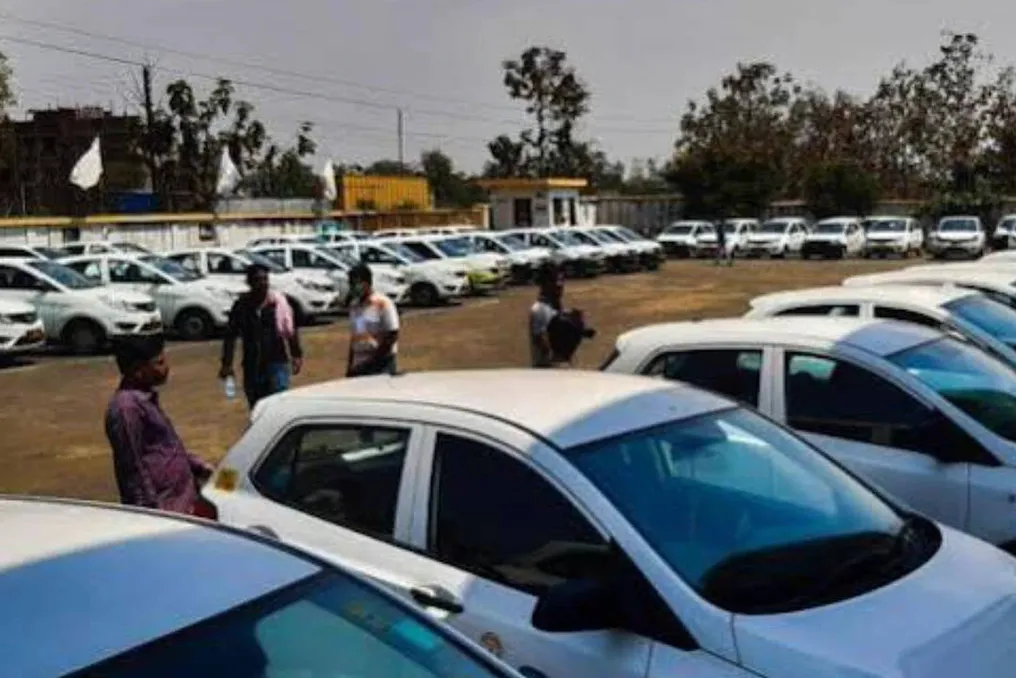
Ministry of Road Transport proposes reducing minimum fleet size for rentals to five vehicles
Read more
The times of India
timesofindia.indiatimes.com

Ministry of Road Transport proposes reducing minimum fleet size for rentals to five vehicles

The Ministry of Road Transport has presented a draft amendment to the Rent-a-Cab Scheme (2026), which could simplify entry into and expansion of the business in car rental with and without drivers. According to the proposal, the minimum fleet requirement will be reduced from the current 50 vehicles to just five.

This project represents the first comprehensive update to the framework established in 1989, after 37 years. Previously, limited amendments were made in 2021, expanding the scheme's scope to include electric vehicles and vehicles running on methanol and ethanol, which are exempt from permit requirements.

Reducing the minimum fleet size to five cars—provided there are at least two vehicles at each service point—is likely to stimulate the entry of small entrepreneurs, local rental companies, and startups into the market. Furthermore, it may help existing operators expand their operations in new locations without maintaining a large fleet.

The proposed scheme, which the ministry plans to implement next year, also establishes stricter requirements for safety, insurance, and operational activities for companies renting out vehicles. Concurrently, it proposes introducing online licensing, temporary permits, and an official mechanism for handling complaints.

It is proposed to fix the licensing fee at 25,000 rupees, regardless of the fleet size or number of job positions. The new regulation also introduces a nine-year age limit for vehicles. Possession of valid registration, technical, and environmental certificates, paid vehicle tax, and comprehensive insurance covering the renter, driver, and other passengers up to the vehicle's capacity is required. Vehicles must also be free from specified unpaid fines and outstanding tolls, and not listed in the National Bureau of Crime Records police database.

Another significant change is that the scheme explicitly includes the rental of vehicles both with and without a driver. Previously, the 1989 framework was primarily oriented towards self-service. Now, operators are obliged to provide drivers with valid licenses, proof of identity and background, no outstanding fines, and social security in accordance with the Social Protection Code of 2020.

The project also provides for passenger safety requirements, including vehicle tracking devices, child restraint systems, first aid kits, and 24-hour customer support. Operators are obligated to resolve issues reported via the website within 24 hours, and investigations into driver complaints must be concluded within seven days.

According to the project, licensing will become digital. Applications and renewals will be submitted electronically, and authorities must review them within 60 days. The license validity period will be five years. Applications to add or remove job positions or vehicles will be considered approved if the authorities do not make a decision within 30 days.

The new structure also provides for differentiated penalties for violations, including monetary fines, suspension, or cancellation of licenses, which will be determined by state governments. The ministry invited interested parties to submit their comments on the project by December 5.
Similar stories

Offer of vehicles with manual transmission increased in the Brazilian market in 2026
Read more
autopapo.com.br

Offer of vehicles with manual transmission increased in the Brazilian market in 2026

Although more than half of new cars sold in Brazil currently come equipped with automatic transmission or alternative solutions, such as electric propulsion, models with manual gearboxes remain present, especially in entry-level and sports categories.

In 2026, an increase was observed in the availability of cars with manual transmissions in Brazil, driven mainly by the sports vehicle segment. Toyota, for example, introduced a new batch of the GR Corolla and continues to sell the GR Yaris. Simultaneously, Porsche expanded its three-pedal options for the 911 model.

Other available brands and models

In the national scenario, the new Hyundai i20 arrived, which has two configurations with a 1.0 naturally aspirated engine and a five-speed gearbox. In November, Renault plans to launch the Niagara pickup truck, confirming that the entry-level version will have a manual transmission.

Chevrolet stands out as the only manufacturer offering 1.0 cars with six gears in the country, while the Onix and Onix Plus models also feature a manual transmission with a 1.0 turbo engine. Furthermore, the brand offers the manual option in other vehicles such as Spin, Montana, and S10; although the Tracker previously had this option, it is currently sold only in the automatic version.

The current Citroën lineup focuses on simpler models with 1.0 engines, whether naturally aspirated or turbo. However, in the turbo models, the gearbox is always CVT, reserving the manual gearbox for the naturally aspirated Basalt and C3 versions.

Fiat offers manual transmission in its cars equipped with 1.0 and 1.3 naturally aspirated engines. An exception to this rule is the medium pickup Titano, in the entry-level Endurance version, which uses the 2.2 turbodiesel engine with 200 hp.

Ford launched the manual Mustang GT in 2025 in a limited edition of 200 units, which sold out quickly. Currently, the only vehicle from the brand with three pedals is the Ranger pickup, in the XL work version.

Honda maintains a well-operating manual transmission, even in its compact cars, but today it is offered exclusively in the sporty Civic Type R model.

Hyundai made the HB20 1.0 turbo with a manual transmission available up to the 2024 line, with six gears. Currently, the offer is restricted to the 1.0 naturally aspirated models, which have a five-speed manual gearbox.

The new generation of the Mitsubishi Triton was launched with a complete variety, including the GL work model. This medium pickup is notable for being the only one that does not suffer power or torque loss in its manual version.

Peugeot simplified its 208 model range in Brazil, offering the 1.0 naturally aspirated engine only in the Style model, which includes a sunroof and sporty trim. The French brand also sells the Partner Rapid van, which shares a platform with the Fiat Fiorino.

Porsche has never discontinued the manual gearbox, but it was absent in Brazil for several years. Currently, the manual option is available in the Carrera T and in three variants of the GT3.

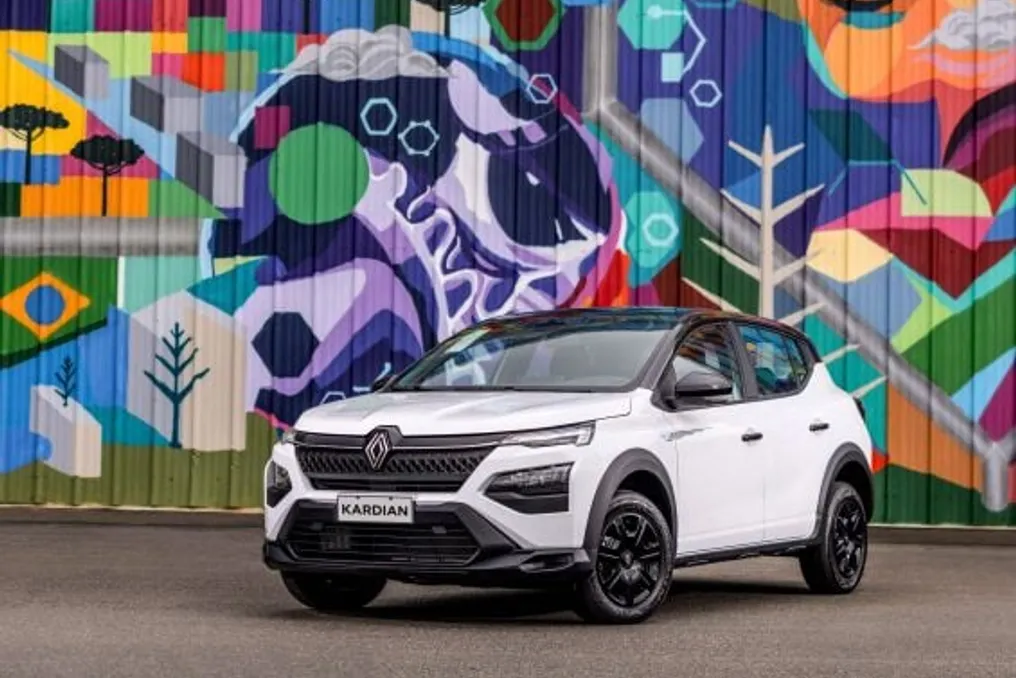
Renault initially launched the Kardian only with a dual-clutch transmission, but soon added a manual version. In 2026, the entry-level Vibe model was introduced, priced below R$ 100 thousand and featuring efficiency improvements. The French brand also maintains simple models in its portfolio, such as the Duster, aimed at fleets, the subcompact Kwid, and the Oroch pickup.

Toyota sells its special models in limited batches of 99 units. In 2026, the GR Yaris compact and the medium GR Corolla were launched with updates. The Japanese brand also offers the entry-level Hilux with a manual transmission.

In the Volkswagen line, there are the Tera TSI and Virtus Sense, which combine a manual gearbox with a 1.0 turbo engine. The Polo Track, Tera MPI, and Saveiro use naturally aspirated engines.

Dealerships of brands like Fiat and Jeep will now sell Michelin and Continental tires
Read more
autopapo.com.br

Dealerships of brands like Fiat and Jeep will now sell Michelin and Continental tires

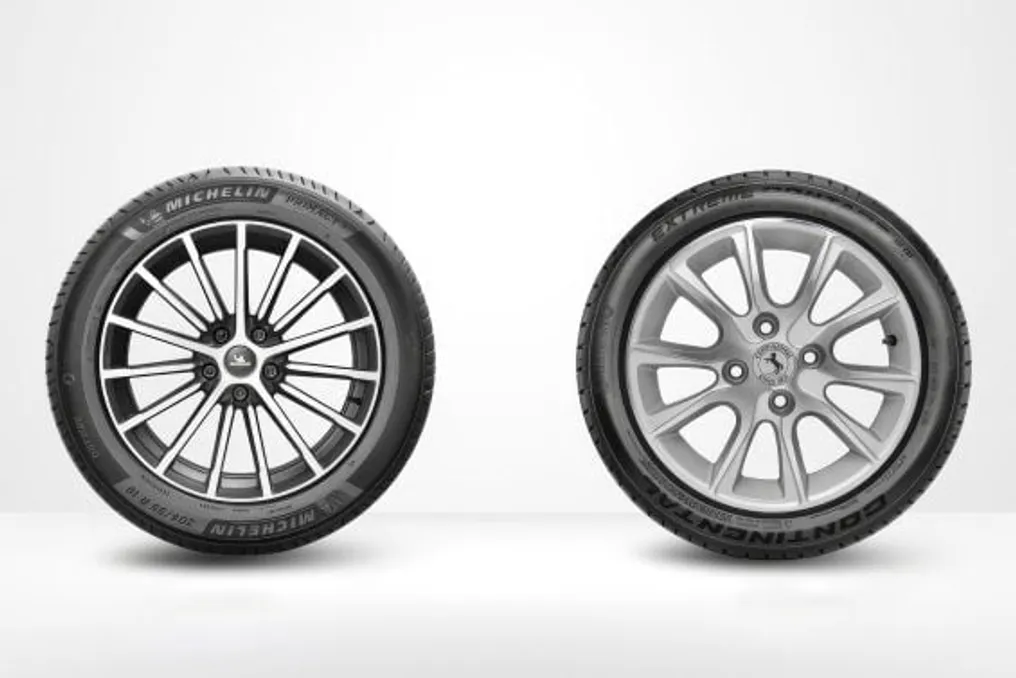
Owners of vehicles from Stellantis brands have gained a new option when replacing their tires. The company has started selling Michelin and Continental tires at Citroën, Fiat, Jeep, Peugeot, Ram, and Leapmotor dealerships, the latter being a Chinese partner company, throughout Brazilian territory.

These tires have been added to the after-sales catalog, which previously offered original parts, accessories, and lubricants.

The announcement of this novelty occurred this Wednesday, the 28th. Both manufacturers offer tires suitable for various types of vehicles, ranging from compact cars to SUVs, pickup trucks, utility vehicles, and sports models.

Both Michelin, of French origin, and Continental, German, have production units in Brazil: Michelin operates in Rio de Janeiro, and Continental is established in Camaçari, Bahia.

Michelin introduces a total of 35 products, organized into nine categories, covering rim sizes from 15 to 19 inches. According to Stellantis, 18 of these items are new additions to the dealerships' catalog.

This selection meets various usage profiles: it includes the Primacy line in three versions and Energy XM2+ for passenger cars; Agilis 3, intended for vans and cargo vehicles; X LT A/S and LTX Force, aimed at pickup trucks and SUVs (the latter being suitable for unpaved roads); Latitude Sport 3, for sports-profile SUVs; and Pilot Super Sport, for high-performance models.

Continental, for its part, integrates 32 items into the catalog distributed across seven lines. Its tires are compatible with rim sizes from 14 to 19, in addition to some applications for 20-inch wheels.

Continental's offering covers compact cars, sedans, SUVs, pickup trucks, and commercial vehicles.

By combining the offerings of both manufacturers, 67 items are made available in the stores of the six Stellantis brands, expanding replacement options without the consumer needing to leave the authorized network.

Popular