Haval H6 approaches leadership among best-selling cars in Brazilian retail
Read more
AutoPapo
autopapo.com.br

Haval H6 approaches leadership among best-selling cars in Brazilian retail

Over the last three years, the retail sector has shown distinct growth in the Brazilian market, presenting a sales profile different from that observed in direct sales. In October, the most commercialized vehicle in this modality was the BYD Dolphin Mini, which achieved a minimal advantage of only 100 units over the GWM Haval H6.

For comparison, in direct sales, the Hyundai HB20 registered the highest number of registrations. However, in the retail segment, this model occupied the 36th position, totaling only 993 units sold.

The progress of Chinese vehicles is notable in this type of sale, although established brands maintain a strong presence. In October, the Toyota Yaris Cross ranked third, followed by its competitor, the Volkswagen T-Cross.

The combustion engine hatchback with the best performance in retail was the Chevrolet Onix. Regarding entry-level SUVs, the Volkswagen Tera leads the ranking, positioning itself in sixth place.

The hybrid SUVs Omoda 5 and Jaecoo 7 have been standing out in retail. These brands belonging to Chery are achieving the best results among new Chinese models launched in 2025 and 2026.

There was a drop in new car sales in retail during October; the participation of this channel decreased from 53.7% to 51.9% when compared to September. This reduction can be partly attributed to the electoral period.

Considering the year-to-date accumulation, retail accounts for 55% of all automobile registrations in Brazil. In this annual overview, Volkswagen leads sales in this modality, followed by BYD. Chevrolet holds the third position, Fiat is in fourth place, and Toyota is in fifth place.

Similar stories

European electric vehicle market presents new challenges for Chinese automakers
Read more
technode.com

European electric vehicle market presents new challenges for Chinese automakers

Chinese automotive brands captured 12.7% of the new car market in Europe in the third quarter of 2026, surpassing Japanese brands (11.9%) for the first time in a full quarter, according to Dataforce data.

In Norway, the share of these brands reached 22.5% in October, as reported by the Norwegian Road Traffic Council (OFV).

The activities of several automakers demonstrate their momentum: on October 7, the first production test of the XPeng G9L model concluded at the Magna plant in Austria. On October 16, Leapmotor and Stellantis began production of the B10 model at the Stellantis plant in Spain, with plans for the B05 model announced three days later.

Recently, on October 27, Great Wall Motor announced an agreement to produce the Ora 5 model in Bulgaria. Production is planned to start in early 2027, with an annual capacity of 50,000 vehicles.

These production plans reflect the ambitions of Chinese automakers in Europe, driven by tougher competition in the domestic market, the attractiveness of foreign growth, and changing trade rules in Europe.

In 2025, China produced nearly 75% of global electric vehicles and over 80% of battery cells, giving its manufacturers significant advantages in scale and cost.

The International Energy Agency (IEA) estimates that manufacturing a small crossover in China costs more than 30% less than in developed economies. This cost gap has attracted suppliers' attention.

Japanese company Koito Manufacturing is dismantling BYD and Aito headlights to study their design and materials; one engineer warned that reducing costs is necessary to maintain competitiveness, according to Nikkei Asia on November 9.

Nevertheless, low costs could not alleviate domestic pressure: in 2025, EV production exceeded demand by 20%, and the price war squeezed margins, forcing automakers to seek overseas markets.

Some companies are also competing technologically by developing driver assistance systems, cabin software, and adapting chips independently. An XPeng insider told TechNode: 'Equipment production can be replicated, but the intelligent architecture, which is constantly evolving across all vehicle lines, requires sustained long-term investment.'

Exports of Chinese electric vehicles more than doubled in 2025, reaching a record 2.5 million units. Sales of Chinese EVs in Europe grew by almost 50%, amounting to about 940,000 units. However, according to the IEA, more than half of Chinese EVs exported abroad go to markets other than Europe and the US.

Shipping cars from China may incur higher tariffs, additional logistics costs, and longer delivery times. Local assembly helps solve these problems while facilitating the adaptation of vehicles to local conditions.

An XPeng insider noted: 'Local production increases supply chain efficiency, reduces trade risks, and brings us closer to end-users.'

However, local production is not always feasible. The choice between exporting, contract assembly, and establishing local plants depends on market size, trade rules, supply chains, and regulations, added the insider.

The proposed EU Industrial Accelerator Act could tie certain state incentives and procurement to 'Made in Europe' rules, potentially increasing costs for Chinese exporters. According to the IEA, this proposal would require relevant small EVs and corporate vehicles to be assembled in the EU, with 70% of components sourced in the EU (excluding batteries) in certain cases, as well as separate battery origin rules. This issue is still under discussion.

Reuters reported that an agreement between Beijing and Brussels in October could cut exports of Chinese hybrid and plug-in hybrid vehicles to the EU by more than half within four years, while battery-cell Chinese EVs remain subject to EU anti-dumping duties.

Looking back at XPeng's entry into the Norwegian market in 2020, which was its first foreign market, an insider suggested that the company might have underestimated differences in consumer preferences, sales channels, and subsidies in Europe, as well as the pace of changes in trade policy.

XPeng now considers long-term demand, policy stability, compliance costs, and the possibility of local production when assessing markets. The company prefers exporting to smaller or politically unstable markets, considering fully knocked down (CKD) assembly or local plants where market size, trade rules, supply chains, and regional strategy support local production. The partnership with Magna in Austria is one such example.

XPeng's choice may reflect a broader calculation facing Chinese automakers in Europe: how much to produce locally, how much to procure regionally, and whether economic viability remains as trade rules change.
New Chinese cars redefine the value of used combustion vehicles in the Brazilian market
Read more
autopapo.com.br

New Chinese cars redefine the value of used combustion vehicles in the Brazilian market

With the entry of Chinese manufacturers into the Brazilian automotive market, a significant change is observed in how the value of used combustion vehicles is perceived. Consumers who bought combustion SUVs a few years ago may now have a direct competitor in a brand new Chinese car when trying to resell their vehicle.

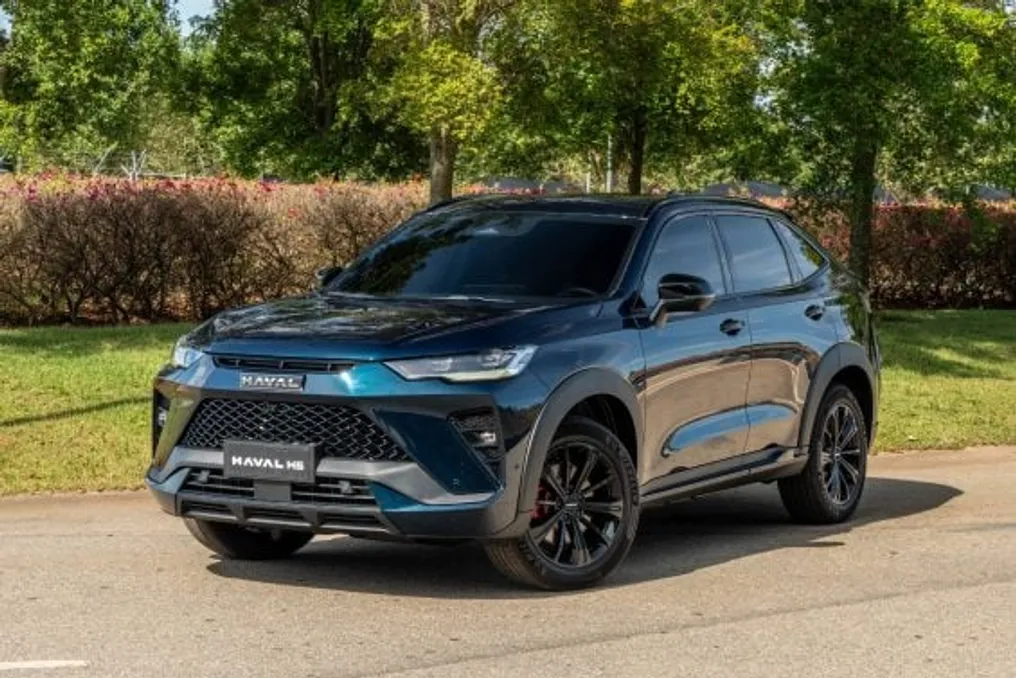
This movement gained momentum in 2023 with the introduction of models like the BYD Dolphin and GWM Haval H6, and intensified between 2024 and 2025 due to continuous launches and price competitiveness. In 2026, the Chinese influence is already noticeable: according to Bright Consulting, these brands accounted for 21.4% of light vehicle registrations in September, more than double the participation recorded the previous year, transforming a mere purchasing alternative into a factor influencing the entire sector's dynamic.

The price dispute in the mid-range

Competition is particularly visible in the price range between R$ 100 thousand and R$ 150 thousand. A buyer interested in a used combustion SUV with two or three years of use can find, within the same budget, an entry-level Chinese electric car, such as the BYD Dolphin Mini. Despite differences in size and purpose, these vehicles begin to compete for the attention of the same consumer, which explains the pressure exerted on the values of used SUVs in this category.

Although some customers prioritize the space and versatility of a traditional SUV, others opt for a new vehicle, which offers embedded technology, factory warranty, and after-sales support, even if they give up a larger body. Thus, market comparison transcends similar models, starting to involve the benefits of distinct categories, requiring a new analysis of cost-benefit in the used segment.

Impact on pricing and challenges for retailers

The main impact of this competition lies in price formation. Historically, the brand-new vehicle served as a crucial reference for the value of a used one. However, when Chinese manufacturers offer discounts, bonuses, or more advantageous financing conditions, this reference is altered, pressuring the depreciation of combustion models and consequently lowering the value of used ones.

For merchants, the challenge is amplified, as a car acquired for stock may need a price reduction to remain competitive, directly affecting profit margins. Data provided by IBV Auto, from Banco BV, indicates that combustion vehicles comparable to those electrified in 2023 suffered a depreciation of 22.2% by September 2026. It should be noted that this drop is not exclusive to Chinese brands, as electric and hybrid vehicles also registered even greater losses in this survey, demonstrating that the pressure on resale value affects various technologies.

Retail adaptation and manufacturer reaction

The current scenario imposes on retail the need to manage inventory with greater rigor. The liquidity and price of the same model can vary regionally, depending on local supply and demand, suggesting that pricing must go beyond traditional references, using updated data, artificial intelligence, and behavioral analysis to optimize sales and profitability.

Established manufacturers are also responding to this dynamic, either through more attractive commercial offers or by investing in equipment updates and electrification. Hybridization projects with flex technology, such as those developed by Stellantis, illustrate the search for solutions suitable for the Brazilian market. However, there is an additional risk in this dispute: preserving the residual value of the vehicles. Very aggressive discounts can boost short-term new car sales but can also distort the price reference for those who already own a car of that brand.

Future prospects of the automotive market

Looking ahead to the coming years, it is expected that the competition will gain new layers. The production of Chinese vehicles in Camaçari, Bahia, and Iracemápolis, São Paulo, adds an important variable related to the recomposition of import taxes. Simultaneously, the recently introduced electric and hybrid vehicles in Brazil are consolidating a broader used market. With potentially lower prices, these models will compete directly with used combustion vehicles, expanding the rivalry beyond new electric models.

This moment is seen as a phase of maturation for the Brazilian market. Combustion vehicles will maintain their relevance, but their competitive capacity will depend less on brand tradition. For buyers and sellers, possessing reliable information about prices, history, maintenance, and vehicle conditions will be essential for more transparent and secure negotiations. Ultimately, the value of a used car will be determined not only by its condition when leaving the dealership but also by the vehicles it will have to compete against at the time of sale.

Chinese company BYD achieves record sales for the Sealion 7 model in the Indian market
Read more
www.aajtak.in

Chinese company BYD achieves record sales for the Sealion 7 model in the Indian market

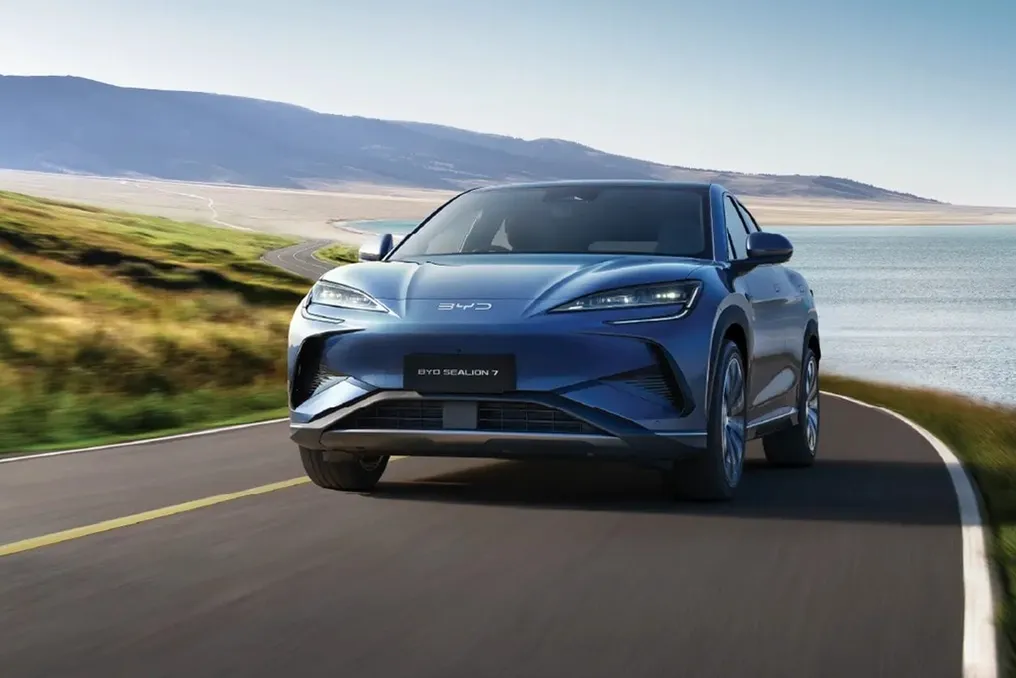
The Sealion 7 model from the Chinese company BYD has demonstrated outstanding results in the Indian market. This model is currently the best-selling BYD vehicle in India. The company introduced it last February, and to date, 5,000 units have been sold.

Sales of this car in the Indian market indicate the growing influence of BYD. The Sealion 7 is positioned not as a budget option, but as a luxurious electric SUV equipped with powerful features. Among the price categories that the Sealion 7 falls into are many other premium brands.

The Sealion 7 is developed based on BYD's specialized electric vehicle architecture and utilizes the company's Blade battery technology. In the premium configuration, the car is equipped with an 82.56 kWh battery, which has a claimed range of 567 kilometers.

The highest-spec version includes a dual-motor setup and all-wheel drive capability. This variant is capable of developing 530 hp and 690 Nm of torque, and can accelerate from 0 to 100 km/h in just 4.5 seconds. Premium and sport versions are also equipped with a panoramic glass roof and a 15.6-inch rotating touchscreen. The car received a 5-star safety rating from Euro NCAP.

BYD added a dynamic version to its lineup, which was presented in August 2026. The dynamic version of the Sealion 7 is priced at 41.90 lakh rupees and is equipped with a 71.8 kWh battery, providing a claimed range of 520 kilometers. The sale of 5,000 units is a positive sign for the company.

Recently, BYD released a special edition Sealion 7, which was available only in a quantity of 150 units in the Indian market. This edition, based on the premium version, was released at a price of 50.6 lakh rupees for the car with an exhibition price. Furthermore, BYD plans to soon launch its new brand Denza in India.

Popular