Advertised power in hybrid cars may be higher than effective power due to legal loophole
Read more
AutoPapo
autopapo.com.br

Advertised power in hybrid cars may be higher than effective power due to legal loophole

Some manufacturers choose to advertise the higher power when announcing hybrid vehicles, utilizing a gap in legislation. According to Autoesporte, manufacturers exploit this loophole by presenting the total installed power of electrified vehicles, instead of the combined power, which is the actual force driving the car.

Total installed power corresponds to the simple addition of the horsepower of all present engines, both combustion and electric. In contrast, combined power represents the maximum force that actually reaches the wheels. The discrepancy in the numbers occurs because the combustion and electric engines reach their peak performance at different moments.

For example, in the BYD Song Plus Premium model, a plug-in hybrid, the sum of the three engines results in 497 hp. However, the combined power disclosed by BYD itself is 324 hp. Other companies adopt the strategy of highlighting only the sum; Jetour, for instance, advertises 597 hp of installed power in its T2 4x4 SUV, without mentioning the combined value.

GAC, on the other hand, displayed the sum of 500 hp on the GS9 SUV website as the combined power of the electric motors. The brand informed Autoesporte that it was an error and that it would correct the page, but did not provide the correct combined data.

During the approval process, manufacturers are required to register both values—installed and combined power—in the Traffic Legislation Compliance Certification System (Siscat), managed by the National Transit Secretariat (Senatran). However, no regulation requires that the combined power be displayed in advertising.

Henrique Sampaio, Jetour's marketing director in Brazil, told the magazine that the company omitted the combined information because there is no oversight on the data entered into Siscat, which makes it impossible to verify if competitors perform the same tests.

Currently, a working group from the Brazilian Automotive Engineering Association (AEA) is debating a standard from the Brazilian Association of Technical Standards (ABNT) with the aim of standardizing the measurement and disclosure of this data. The main obstacle is that no Brazilian laboratory has the capacity to measure the combined power of a plug-in hybrid, as pointed out by SAE Brazil. For this reason, brands use results obtained from tests conducted abroad, following the global GTR 21 standard.
Similar stories

Fipe analysis indicates that best-selling electric cars depreciate less in the last year
Read more
autopapo.com.br

Fipe analysis indicates that best-selling electric cars depreciate less in the last year

An analysis conducted by AutoPapo, using data from the Fipe Table, revealed that among the best-selling vehicles in Brazil, fully electric models registered the lowest depreciation over the last year.

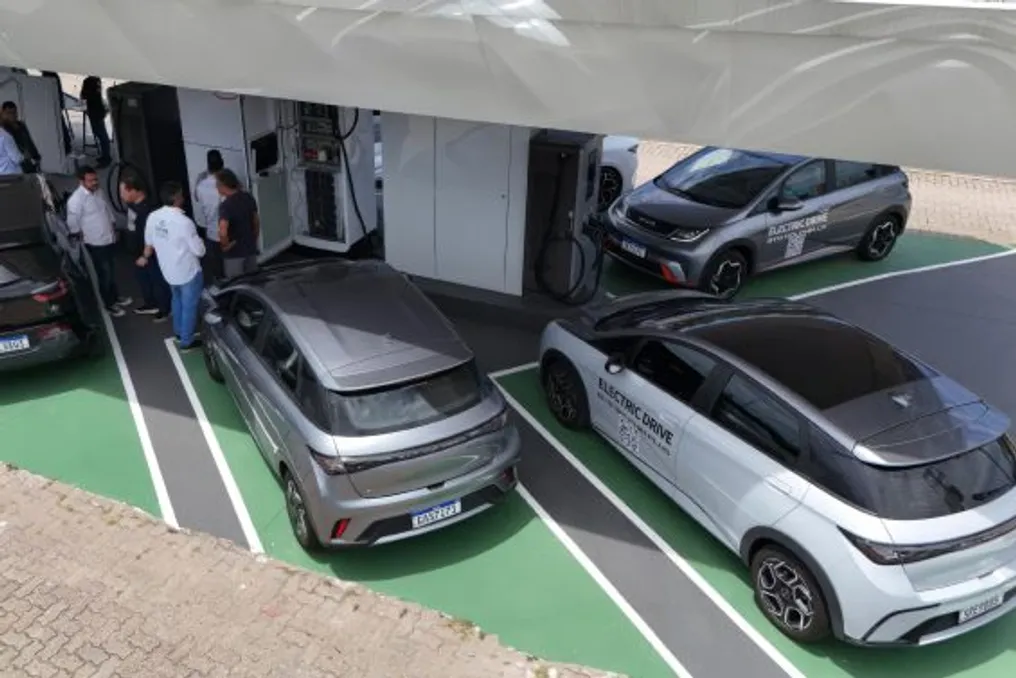
Specifically, the BYD Dolphin Mini, which leads retail sales, suffered only a 1% drop over twelve months, as did the BYD Dolphin, with a 1.8% reduction. In contrast, combustion engine models in the same list showed an average drop of 8.5%.

The survey compared the price of each version in November 2025 with the corresponding price in November 2026, meaning it evaluated the same vehicle after one year of use. 105 versions of 15 models present in Fenabrave's best-selling rankings were analyzed, all priced between R$ 100 thousand and R$ 210 thousand.

At the top end of the list are the Jeep Compass, with a depreciation of 13%, followed by the GWM Haval H6, with 10.9%, and the Jeep Renegade, with 10.8%. Hybrid vehicles constituted the group with the worst performance in the survey, registering an average loss of 9.9%, even surpassing the drop rate of combustion engine cars.

After discounting inflation for the period, calculated at 4.58% by the IPCA, all depreciation rates increase: combustion engine cars had an effective loss of 12.5%, hybrids of 13.8%, and electric cars of 6.1%.

The data points to two main reasons for this variation. The first is tax-related: since July 1st, imported electrified vehicles have been subject to a 35% import tax, reaching the ceiling of a schedule that began in January 2024, when the rate for 100% electric vehicles was 10%. This impact is visible in Fipe: the table price of a brand new electric car rose by 2.1% in twelve months, while that of combustion engine models fell by 0.4%, indicating that the used vehicle does not lose value when the new equivalent becomes more expensive.

The second explanation comes from a study by the consultancy Bright, which indicates that electric cars costing up to R$ 170 thousand lost 7.9% of their real value in one year, compared to 13.4% for combustion engine models in the same range. The consultancy attributes this result to the still limited supply of used electric vehicles, improvements in charging infrastructure, and increased battery warranties.

However, this result does not apply to all electric cars. By applying the same statistical method as AutoPapo to 197 electric versions from various brands sold in the country, the average depreciation rises to 11.3%, concentrating on higher-value models. Above R$ 250 thousand, the analyzed electric cars suffered a loss of 12.5% in twelve months. The most extreme examples are all imported: the 2023 Porsche Taycan Turbo S depreciated by 30.2%, falling from R$ 953,724 to R$ 665,521; the 2024 Chevrolet Equinox EV, by 27.3%; and the 2024 Nissan Leaf, by 27.2%.

New Chevrolet Silverado and GMC Sierra models with diesel engines receive larger tanks and can travel nearly 1500 km without refueling
Read more
autopapo.com.br

New Chevrolet Silverado and GMC Sierra models with diesel engines receive larger tanks and can travel nearly 1500 km without refueling

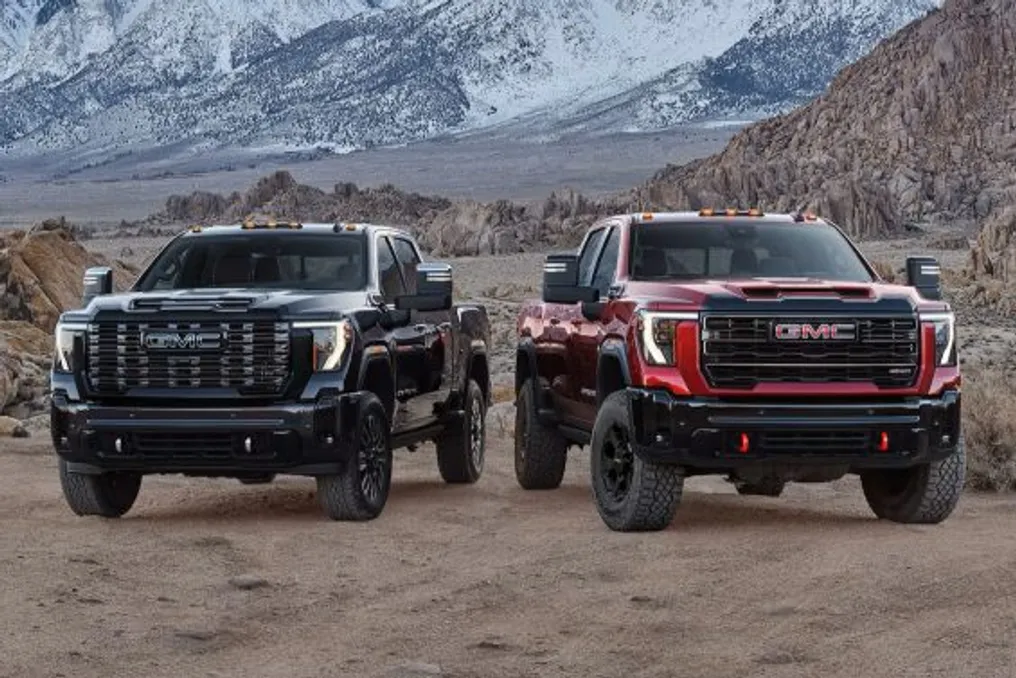
The new generation of Chevrolet Silverado 1500 and GMC Sierra 1500 pickups, which will arrive on the American market as the 2027 lineup, will be equipped with larger fuel tanks in diesel versions.

The reservoir for Arla 32, which reduces emissions from diesel engines, has been increased from 20.5 liters to 28 liters. It is standard equipment on all versions with the 3.0 Duramax six-cylinder inline turbocharged diesel engine.

This change corresponds to a new optional fuel tank with a capacity of 129 liters. It costs $445 USD (about 2200 Brazilian reais) in some cabin configurations and comes with the most expensive trims, such as ZR2, AT4X, and Denali Ultimate.

In the previous generation, the diesel pickups had tanks with capacities of 83 or 91 liters. Thanks to the larger tank, the diesel versions can now cover about 1480 km on the highway without needing to refuel, based on GM's stated fuel consumption of 11.5 km/L for rear-wheel-drive configurations.

However, GM's pickups lag behind competitors in this aspect: the Ford F-150 offers a 136-liter tank, the Ram 1500 offers 125 liters, and the Toyota Tundra offers 122 liters.

In practice, this means that drivers transporting cargo over long distances will have to make fewer stops to refuel with diesel and Arla 32.

However, the new pickups have lost the hidden compartments in the rear seat back that were offered since 2019. American sites speculated that the reason for this change was the larger tanks. Nevertheless, GM product managers told GM Authority that the reason was low demand, as few owners used this space.

One explanation is accessibility: these compartments cannot be opened if there are passengers or child seats in the back seat. To compensate for this, the new generation features a redesigned center console with movable cup holders and almost 5 liters more storage space.

In Brazil, the current generation Silverado is sold only with a V8 gasoline engine.

Toyota plans to generate billions in revenue by selling combustion and hybrid engines to other automakers
Read more
autopapo.com.br

Toyota plans to generate billions in revenue by selling combustion and hybrid engines to other automakers

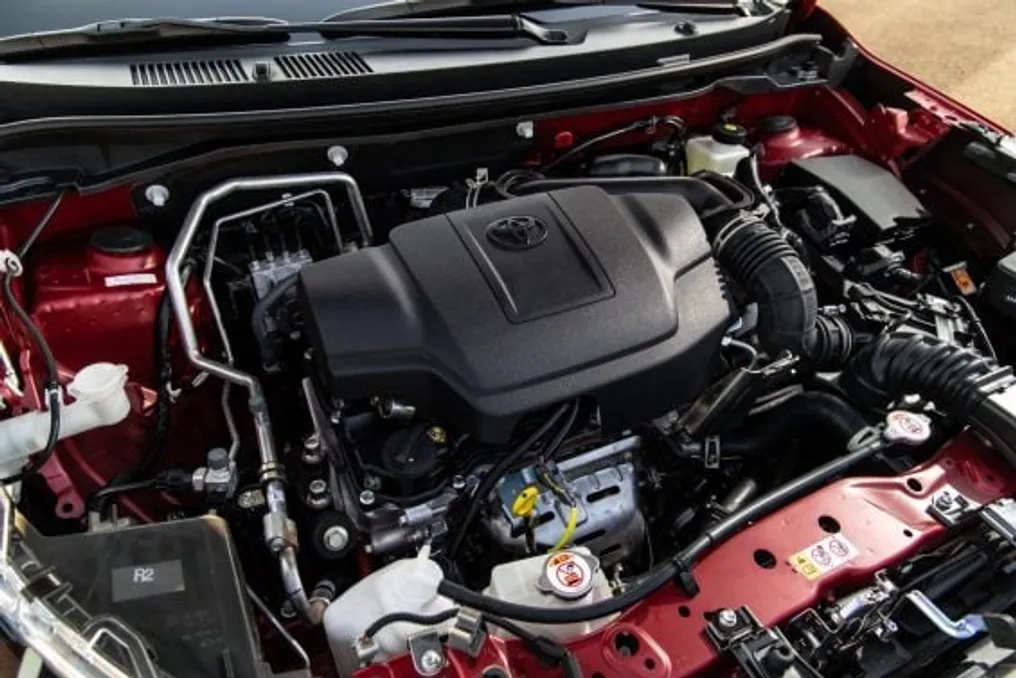
While much of the automotive industry is reducing investments in internal combustion engines, Toyota has chosen to transform this technology into a new and significant source of revenue. The Japanese manufacturer intends to commercialize its engines and hybrid systems to other automakers, aiming to generate approximately R$ 9 billion annually from this venture by 2032, according to Automotive News.

This goal represents a threefold increase over the estimated revenue of R$ 3 billion that third-party supply should generate in 2026. The first deliveries of this new engine line are scheduled for 2027.

The new engine family consists of three alternatives, all with four cylinders: a 1.5 naturally aspirated model, a 1.5 turbo, and a 2.0 turbo, all of which have the capability to operate integrated with hybrid systems. The 1.5 engine will be used to replace the units currently installed in models such as the Yaris and Corolla. The 1.5 turbo offers power equivalent to an existing 2.5 naturally aspirated engine, and the 2.0 turbo promises to surpass the performance of the 2.4 turbo that equips large SUVs and trucks of the brand in the United States.

Developed already considering electrification, these engines present physical advantages, being 10% smaller in volume and height. This dimensional reduction allows for a lower hood height, which contributes positively to aerodynamics and gives designers greater flexibility.

According to Toyota itself, the adoption of the new 1.5 engine results in a 12% fuel economy saving in a sedan.

The first expected buyers are traditional partners of the company, including Mazda, Subaru, and Suzuki, in addition to Daihatsu, which is a Toyota subsidiary. These five brands together move about 16 million vehicles annually.

It is important to note that this partnership does not imply abandoning the internal projects of these automakers; for example, Mazda continues to develop the Skyactiv-Z engine and a hybrid system for the CX-5, while Subaru maintains its focus on boxer engines, characterized by opposed horizontal cylinders.

For Toyota, this strategy serves to distribute development costs across a larger number of units and make its engines more competitive against competition from China. In turn, the other manufacturers benefit by gaining access to innovative mechanics without having to bear the full cost of creating them from scratch. Additionally, Toyota has also developed the 4.0 V8 engine, but for now, it is not part of the sales plans for other brands.

Popular