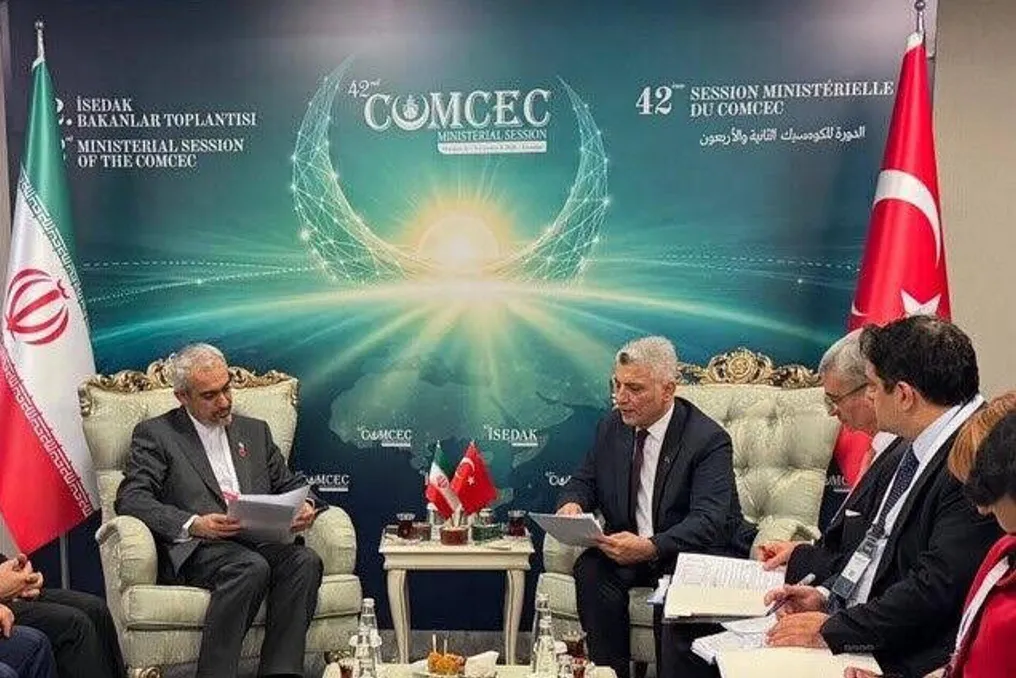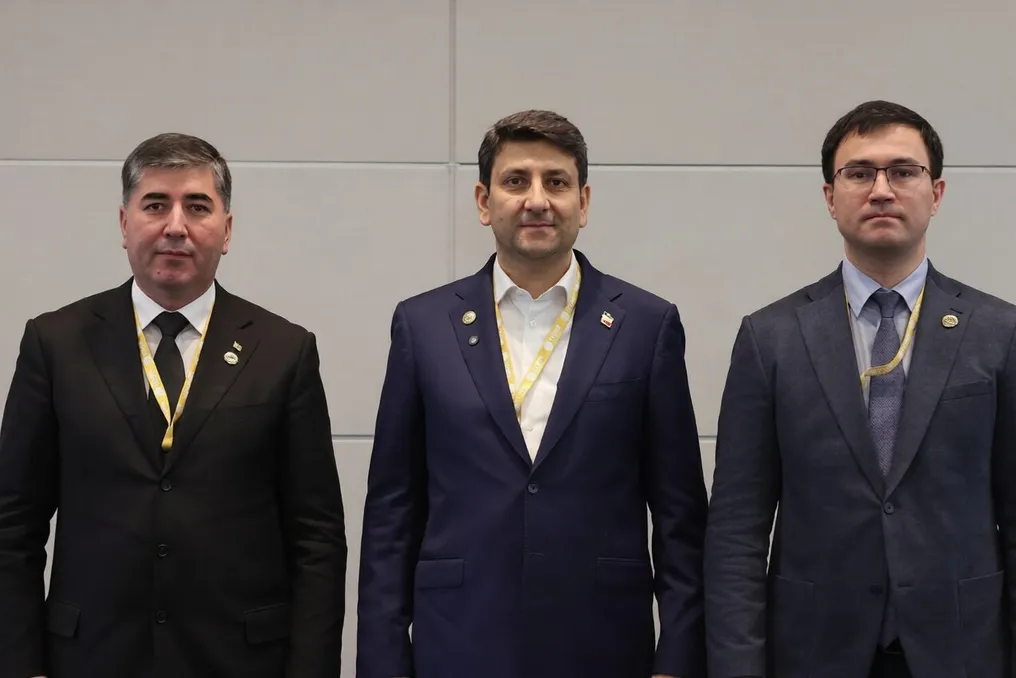
Iran, Turkmenistan, and Kazakhstan reach preliminary agreement on creating a joint digital corridor
Read more
Tehran Times
www.tehrantimes.com

Iran, Turkmenistan, and Kazakhstan reach preliminary agreement on creating a joint digital corridor

Iran, Turkmenistan, and Kazakhstan have concluded an initial agreement regarding the creation of a common digital corridor. The goal of this project is to connect Central Asia with the Persian Gulf and neighboring states, which is intended to strengthen regional telecommunications infrastructure and expand digital connectivity.

The principle of the agreement was reached during a trilateral meeting attended by Iran's Minister of Information Technology and Communications, Sattar Hashemi; Turkmenistan's Minister of Communications, Hajymurat Hudaigulyev; and Kazakhstan's Deputy Minister of Artificial Intelligence and Digital Development, Musaliyev Dozshan Uladinovich.

The meeting took place on the sidelines of the International Telecommunication Union's (ITU) Conference of Plenipotentiaries (PP-26), which is being held in Doha, Qatar, from November 9 to 27, as reported by IRIB.

Discussions focused on enhancing cooperation in the field of telecommunications and improving digital connectivity across the region. The proposed corridor should help strengthen regional communication infrastructure and increase the resilience of digital services by developing new communication routes and increasing the interconnection capacity between the three countries.

Furthermore, this will allow the participating countries to more effectively utilize their geographical position and existing infrastructure to improve digital channels and accelerate data exchange between Central Asia, the Persian Gulf, and neighboring states.

Development of ICT ties with Brazil and Ghana

The Iranian delegation, led by the Minister of ICT, is participating in the conference to strengthen technological diplomacy, bilateral and multilateral cooperation, and promote the country's interests in global governance of information and communication technologies.

As part of the planned events, the Iranian delegation plans to hold meetings with colleagues and high-ranking officials from member states to explore opportunities for cooperation in advanced technologies and the digital economy.

On the second day of the conference, Hashemi met with Brazil's national regulator, Carlos Manuel Baigorry, to discuss ways to activate joint efforts. Addressing the possibilities of both countries, Hashemi proposed increasing cooperation in areas such as communication infrastructure, fiber optic networks, data centers, artificial intelligence, and cybersecurity.

Other issues raised included the development of academic and scientific ties, exchange of specialized experience, conducting joint research projects, cooperation in space technologies and satellite applications, and establishing interaction between science-oriented companies and the private sector of the two countries.

Detailing the potential of the ICT research institute, Hashemi invited Baigorry to visit Tehran to better familiarize himself with the country's scientific and technological potential.

For his part, the Brazilian official expressed Brazil's interest in deepening its partnership with Iran in the field of ICT. Baigorry welcomed the ideas proposed by Iran's Minister of ICT, noting that fostering cooperation between the private sectors, technology companies, and scientific centers of both nations would pave the way for implementing joint projects and initiatives.

The Minister of ICT also met with Samuel Nartey George, Ghana's Minister of Communications, Digital Technologies, and Innovation, discussing ways to develop technological interaction between Iran and Ghana, especially in the field of artificial intelligence.

Highlighting the country's technical and engineering capabilities in developing communication infrastructure, Iran expressed readiness to cooperate in connecting schools, medical institutions, and community centers in rural and underprivileged areas of Ghana through the establishment of fiber optic networks, equipment supply, transfer of technical knowledge, and personnel training.

Other proposals included expanding public digital services, studying the potential for joint investment in the production of fiber optic cables and devices necessary for communication networks, and strengthening cooperation between the scientific and research institutions of the two countries in areas such as AI, cybersecurity, modern communication technologies, and smart management.

The official invited his Ghanaian counterpart to visit Tehran to explore the country's opportunities in AI, digital government, and science-oriented firms.

Nartey George welcomed the feedback, calling for strengthening interaction in digital infrastructure, knowledge sharing, and specialized expertise; he also emphasized the importance of transforming existing opportunities into concrete and actionable programs.

The Conference of Plenipotentiaries is the main governing body of the ITU. It serves as an authoritative decision-making mechanism for the organization's strategic and financial plans, guidance, and overall direction. Held every four years, the ITU Conference of Plenipotentiaries (also known as 'Plenipotentiary' or 'PP') confirms the common positions among ITU Member States worldwide. PP-26 calls for countries to work 'Together for a Connected Digital Future.'

Delegates from 194 ITU Member States will consider the most pressing digital opportunities and challenges of the world, define the UN agency's strategic vision until 2031, and elect its leadership for the next four years. The conference is also expected to address critical collective issues such as expanding global connectivity and investment, increasing the resilience of digital infrastructure, ensuring reliable emergency and humanitarian communications, promoting space connectivity and sustainability, and utilizing new technologies for development.

PP-26 includes an extensive Ministerial Level Programme with high-level thematic discussions on sustainability and new technologies, providing senior leaders with a platform to exchange views, showcase national achievements, and solve common problems. The conference also supports significant participation of women and youth through special inclusivity and accessibility events in the digital transformation agenda.

ITU Member States will elect the organization's top executive leadership, as well as members of the ITU Council and the Radiocommunication Sector. Member States will also agree on the organization's strategic and financial roadmap for the period from 2028 to 2031.
Similar stories

Iran proposes creating a network for regional educational cooperation within ECO
Read more
www.tehrantimes.com

Iran proposes creating a network for regional educational cooperation within ECO

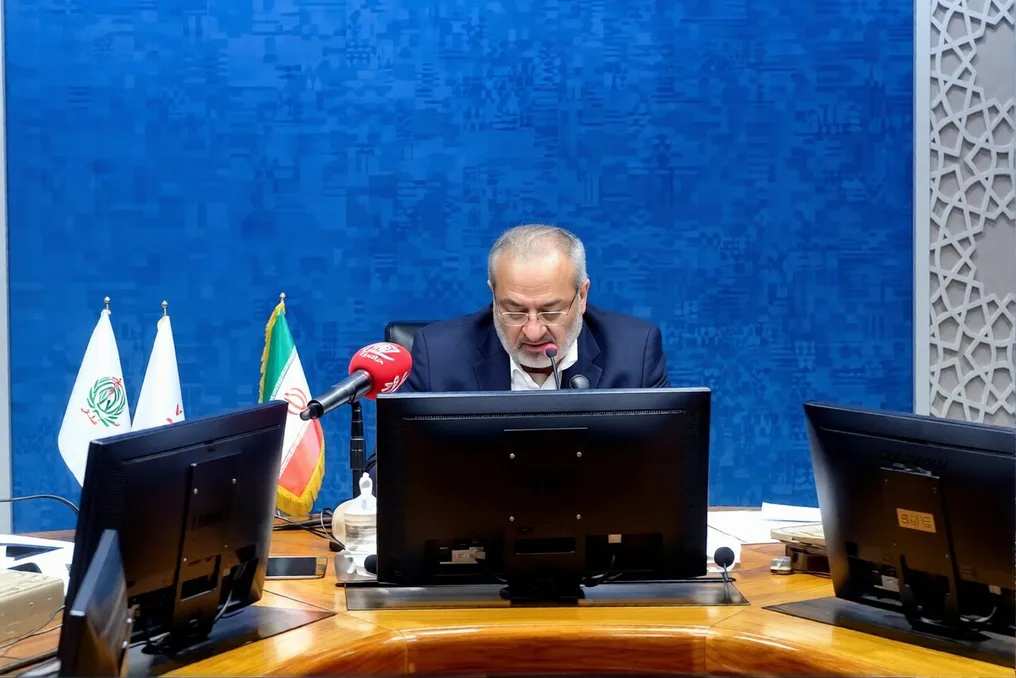
Iran has put forward a proposal to establish a network for educational cooperation within the Economic Cooperation Organization (ECO). The goal of this network is to stimulate the exchange of experience, joint research, and scientific and academic interaction among member states, utilizing existing capacities with minimal costs.

This proposal was presented by Education Minister Alireza Kazemi during the fifth meeting of the Board of Trustees of the ECO Educational Institute, which took place on Friday with the participation of education ministers from member countries.

Speaking at the meeting, Kazemi emphasized the common historical, civilizational, and cultural heritage of the region's peoples, asserting that the ECO zone is not merely a common geographical area, but a land with a shared history, civilization, culture, knowledge, and aspirations.

He stated that the task of the current generation is to transform this valuable heritage into an asset for building a future based on knowledge, education, and solidarity among nations. The minister views education not only as a tool for development but also as an investment in peace, sustainability, and the common future of states.

Kazemi also drew attention to the rapid development of technologies, artificial intelligence, the digital economy, and changes in labor markets, stressing the need to transform educational approaches. In his opinion, modern education must go beyond the simple transmission of knowledge and focus on nurturing capable, creative, and responsible individuals equipped with critical thinking and problem-solving skills.

Highlighting the potential of the ECO Educational Institute to become an active platform for regional cooperation, Kazemi outlined three Iranian initiatives to strengthen educational ties between member states.

The first proposal concerned the creation of an ECO educational cooperation network that would cover universities, teacher training institutions, and research centers across the region. Such a network, according to Kazemi, could facilitate the exchange of experience, joint research projects, and broader academic interaction by leveraging existing resources and incurring minimal additional costs.

The second proposal focused on expanding cooperation in new technologies and artificial intelligence in education. Kazemi noted that the region's countries should act not just as consumers of technology, but as partners in knowledge creation and the development of innovative educational solutions.

As the third priority, he named strengthening technical and vocational education, equipping youth with practical skills, and ensuring the right of children and adolescents to education during crises. He particularly stressed that no child should become a victim of war or crisis.

Kazemi also regarded the exchange of students, teachers, experts, and educational experience among member states as an important opportunity for regional interaction. These contacts, he said, go beyond academic cooperation and represent a form of educational diplomacy that promotes mutual understanding, unity, solidarity, and friendship among the region's peoples.

Expressing Iran's readiness to share its educational experience and capabilities with other ECO members, the minister called for translating joint decisions and agreements into practical cooperation. He added that the ECO Educational Institute can only become a true community of educational cooperation when its decisions lead to the creation of effective networks connecting teachers, schools, teacher training centers, and educational institutions in member countries.

Emphasizing the significance of knowledge and education in shaping the region's future, Kazemi concluded that the future of the ECO region will be determined not by wars and conflicts, but by knowledge, education, creativity, cooperation, and the will of its peoples. He urged member states to activate educational cooperation and transform the ECO Educational Institute into a symbol of the region's collective determination to achieve progress, peace, and development. In his view, sustainable peace must first germinate in the consciousness of future generations before it can take shape on geographical borders, and education is the most crucial means to achieving this goal.

Iran and China Discuss Developing Cooperation in Digital Technologies
Read more
www.tehrantimes.com

Iran and China Discuss Developing Cooperation in Digital Technologies

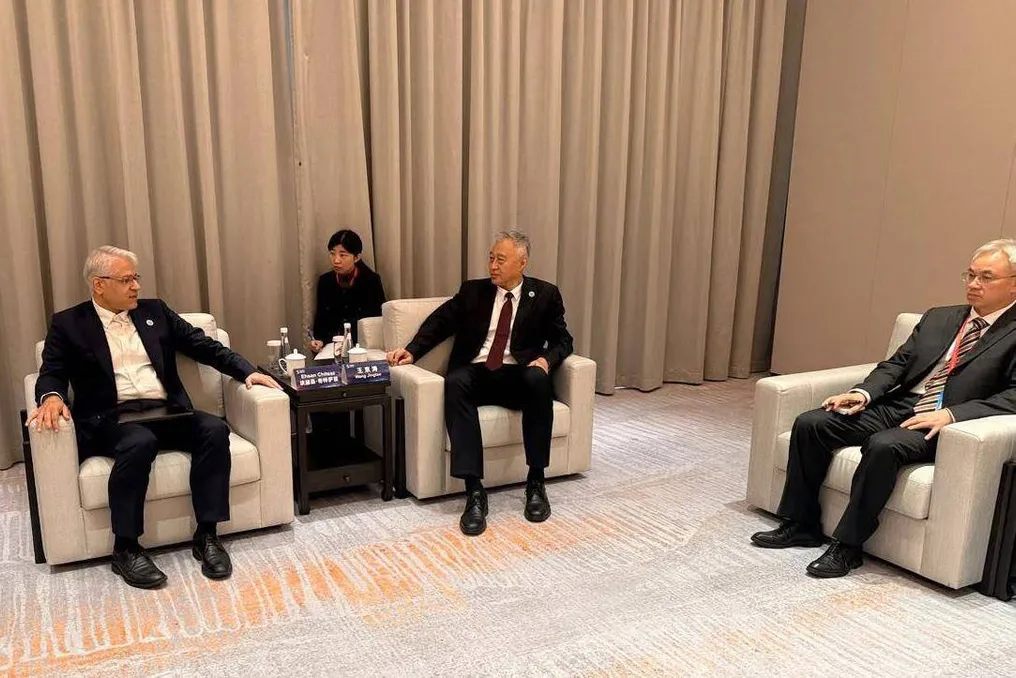
During the World Internet Conference (WIC) summit in Uzhichen, Zhejiang Province, a meeting took place between Ehsan Chitsaz, Deputy Minister of Information Technology, Communications, and Technology of Iran, and Juan Junwen, Director of China's Cyberspace Administration. These officials examined opportunities to strengthen interaction in the field of digital technologies.

The Iranian representative emphasized that the development of artificial intelligence (AI) and the digital economy are common priorities for both countries, stressing the need to transform existing potential into concrete, measurable, and time-bound projects.

Chitsaz, outlining the ministry's responsibilities in digital infrastructure development, cybersecurity, data management, AI, and social media platforms, expressed Iran's interest in joint efforts with China's Cyberspace Administration and proposed developing an action plan to deepen cooperation.

Key areas proposed by the Iranian side for improving interaction included experience exchange in regulating generative AI services, risk assessment, detection of AI-generated content, personal data protection, secure and lawful data transfer, and platform accountability.

Initial steps toward practical implementation of specialized cooperation between the two states were identified as conducting joint training courses for experts and regulators, as well as implementing pilot projects. Chitsaz noted that current interaction between specialized institutions in Iran and China will help stimulate innovation, increase public trust, and open new business opportunities in the digital economy.

The WIC Wuzhen summit was held from November 2 to 5 and gathered about 1800 delegates from 138 countries and regions. Central discussions focused on open-source AI, AI governance and security, advanced technologies, and digital cooperation. The conference highlighted a collective commitment to a more inclusive and collaborative digital future, emphasizing open-source AI and international cooperation.

Iran and Turkey agree to eliminate transit barriers and develop border cooperation
Read more
www.tehrantimes.com

Iran and Turkey agree to eliminate transit barriers and develop border cooperation

The Iranian Minister of Economic Affairs and Finance and the Turkish Minister of Trade discussed ways to develop economic and trade interaction, as well as simplifying the transportation and transit of goods and services, and eliminating existing obstacles at the common border.

During the meeting, Seyed Ali Madanizadeh, Minister of Economic Affairs and Finance of the Islamic Republic of Iran, met with Ömer Bolat, Minister of Trade of the Republic of Turkey, where the importance of strengthening customs and border cooperation between the two states was emphasized.

The parties reached an agreement to establish a joint working group and hold regular meetings of directors of border customs administrations. The purpose of these meetings is to review, monitor, and resolve executive and operational issues.

A key area of discussion was facilitating truck movement and developing a schedule for the transit of goods and services between the countries. Participants also highlighted the need for 24-hour operation of border customs posts to increase throughput, reduce truck downtime, and accelerate trade processes.

Particular attention was paid to the situation at the Bazargan border and existing problems in this important trade crossing. The current plan of the Turkish side for modernizing and repairing customs offices and its impact on goods transit and transport movement was also discussed. Both sides stressed the need for coordination to ensure the unimpeded passage of cargo and prevent disruptions in trade flow.

Issues regarding the activation and effective use of the potential of other common borders for passenger and truck movement, as well as the management and facilitation of sensitive goods, were also raised. The parties insisted on maximizing the capacity of border crossings and establishing the necessary coordination to optimize movement at these borders.

During the negotiations, the formation of a joint working group for free trade and industrial zones of the two countries was discussed. In this area, the parties emphasized the importance of accelerating the review of documents and proposals related to this working group and preparing for its commencement of activities.

Furthermore, the issue of problems and obstacles faced by Turkish companies in Iran was considered, and emphasis was placed on the need to track and resolve the issues of these companies, as well as creating suitable conditions for the continuation and development of their economic and investment activities.

In conclusion, the ministers of Iran and Turkey, emphasizing the significance of economic and trade relations, called for the continuation of dialogue, strengthening coordination between executive and customs bodies, and implementing agreements through joint mechanisms to promote trade, develop transit, and expand economic cooperation.

In the first half of the current Iranian calendar year (from March 21 to September 21), trade between Iran and Turkey reached 7.914 billion US dollars, demonstrating a growth of 10.3%. Meanwhile, Iran's exports increased by 56.1%, and Turkey ranked first among Iran's export destinations, while imports decreased.

According to a report by Mehr News Agency, the analysis of Iran's foreign trade for the first six months of 1405 showed that the volume of trade with Turkey grew from 7.173 billion US dollars in the same period last year to 7.914 billion US dollars, representing an increase in trade of approximately 741 million US dollars.

This growth occurred against the backdrop of an overall decrease in the volume of Iran's foreign trade: if the total volume in the first half of 1404 was about 54.666 billion US dollars, it was 41.798 billion US dollars in the same period this year. Thanks to this, Turkey's share in Iran's total foreign trade increased from 13.1% to 18.9%.

The increase in Turkey's share is due not only to the growth in bilateral exchanges but also to the decrease in Iran's trade volumes with other partners.

One of the key aspects of Iranian-Turkish trade in the first half of the year was the change in the structure of exchanges in favor of Iranian exports. In the first half of 1404, Iran's imports from Turkey accounted for 61.7%, and exports to Turkey accounted for 38.3% of the total bilateral trade volume. However, in the same period of 1405, the share of Iranian exports rose to 54.1%, while the import share fell to 45.9%.

Export details show that the value of goods sent from Iran to Turkey increased from 2.744 billion US dollars in the first half of last year to 4.284 billion US dollars in the first six months of the current year, representing an increase of about 1.54 billion US dollars and a growth of 56.1%. This figure was achieved against a backdrop of a roughly 25% decrease in Iran's total exports, while exports to Turkey significantly increased, contrary to the country's general trend.

Moreover, the weight of exported goods to Turkey increased from approximately 5.057 million tons to 7.172 million tons, indicating a growth of 41.8%. The average customs value per ton of exported goods also rose from approximately 543 US dollars last year to 597 US dollars.

Comparing these figures shows that the main contribution to the growth in export value to Turkey came from the increase in the volume of exported goods; it is estimated that about three-quarters of the growth in export value is related to the increase in the weight of goods, and the remaining part is due to the increase in the average unit value of exports.

On the other hand, Iran's imports from Turkey decreased in value in the first half of 1405. The import value dropped from 4.429 billion US dollars in the first six months of last year to 3.63 billion US dollars in the same period this year, corresponding to a decrease of approximately 799 million US dollars or 18%.

However, the analysis of the weight of imported goods shows a different picture of import trends. The weight of imports from Turkey not only did not decrease but also increased from approximately 3.626 million tons to 3.81 million tons, meaning the import weight increased by 5.1%. Simultaneously with the increase in weight and decrease in import value, the average customs value per ton of imported goods also decreased from approximately 1222 US dollars to 953 US dollars. This difference indicates that the decrease in import value does not necessarily mean a reduction in the volume of imported goods or a uniform drop in prices for products; changes in the composition of imports, including an increase in the share of heavier goods with lower unit value, can contribute to a decrease in the average cost per ton.

The combined growth in exports and decrease in imports resulted in Iran's trade balance with Turkey becoming positive in the first half of the current year, after showing a significant deficit in the first half of last year. According to published statistical data, in the first half of 1404, Iran had a trade deficit of 1.685 billion US dollars with Turkey; however, in the same period of 1405, the situation changed, and the trade balance of the two countries reached a surplus of 654 million US dollars.

Thus, Iran's trade balance with Turkey improved by approximately 2.339 billion US dollars. Of this improvement, about 1.54 billion US dollars is attributed to the increase in exports, and about 799 million US dollars to the decrease in imports. Consequently, the growth in Iranian exports is considered the most important factor in turning the trade deficit into a surplus in trade with Turkey.

Changes in bilateral trade between Iran and Turkey have also affected Turkey's position among Iran's export markets. In the first half of 1404, Turkey ranked fourth among Iran's export destinations after China, Iraq, and the United Arab Emirates; however, in the first half of the current year, thanks to the increase in exports to Turkey and the decrease in exports to the three other major destinations, Turkey rose to the first place among Iran's export destinations.

According to customs statistics, the value of Iran's exports to China decreased by 52.5%, to the UAE by 49.4%, and to Iraq by 30%. Conversely, Iran's exports to Turkey increased by 56.1% and reached 4.284 billion US dollars. As a result, Turkey's share in Iran's total exports increased from 10.6% in the first half of last year to 22% in the first six months of the current year.

Of course, the rise in Turkey's ranking is not limited only to the growth of exports to this country; the decrease in exports to other major destinations also played a role in changing this ranking, which once again emphasizes the importance of diversifying export markets and maintaining access to the Turkish market.

Overall, Turkey ranked second among Iran's trading partners in terms of foreign trade turnover. In the first half of 1405, the UAE ranked first with a volume of 8.982 billion US dollars, and Turkey followed with 7.914 billion US dollars, while China ranked second and third respectively with a volume of 7.808 billion US dollars. The gap between the volume of Iran's trade with Turkey and China was only about 106 million US dollars, so relatively small changes in exchanges in subsequent periods could change the positions of these two countries.

In the import sector, Turkey remains the third source of imports for Iran after the UAE and China.

Analysis of Iranian-Turkish trade customs data shows that Bazargan customs is the most important point for registering exports to Turkey. In the first half of 1405, out of the total volume of Iran's exports to Turkey amounting to 4,284,020,000 US dollars, 1,643,630,000 US dollars was registered at Bazargan customs. Accordingly, Bazargan ranks first among export customs with a share of 38.3%.

Following Bazargan are Tabriz customs with 293,880,000 US dollars, Lamerd Special Economic Zone with 285,470,000 US dollars, Rafsanjan Special Economic Zone with 266,860,000 US dollars, and West Tehran customs with 180,520,000 US dollars. These five customs offices accounted for a total of 58.1% of the value of Iran's exports to Turkey, while the share of the remaining customs offices amounted to 1,795,660,000 US dollars, equivalent to 41.9%.

In the import sector, the largest source of import registration from Turkey is the Imam Khomeini Port Special Economic Zone with a volume of 724,800,000 US dollars. Next are Bazargan customs with 433,720,000 US dollars, Tehran customs with 348,380,000 US dollars, Imam Khomeini Airport Free Zone with 329,850,000 US dollars, and Mazandaran-Amirabad Free Zone with 228,650,000 US dollars. The total value of imports registered in these five customs offices amounts to about 2,065,400,000 US dollars, equivalent to 56.9% of Iran's total imports from Turkey. The remaining customs offices registered 1,566,570,000 US dollars, accounting for 43.1% of imports.

Differences in the weight and value of imports registered in various customs offices also indicate that the composition of imported goods is not uniform across different customs points; for example, the import value registered at Imam Khomeini Airport is high compared to its weight, whereas at Imam Khomeini Port, the weight of imported goods is higher.

Overall changes in Iranian-Turkish trade in the first half of 1405 indicate the strengthening of Turkey's position in Iran's foreign trade; however, an analysis of statistical details shows...

38.3%

Popular