Joint Iran-Kazakhstan Terminal to be Created in Shahid Rajaee Port
Read more
Tehran Times
www.tehrantimes.com

Joint Iran-Kazakhstan Terminal to be Created in Shahid Rajaee Port

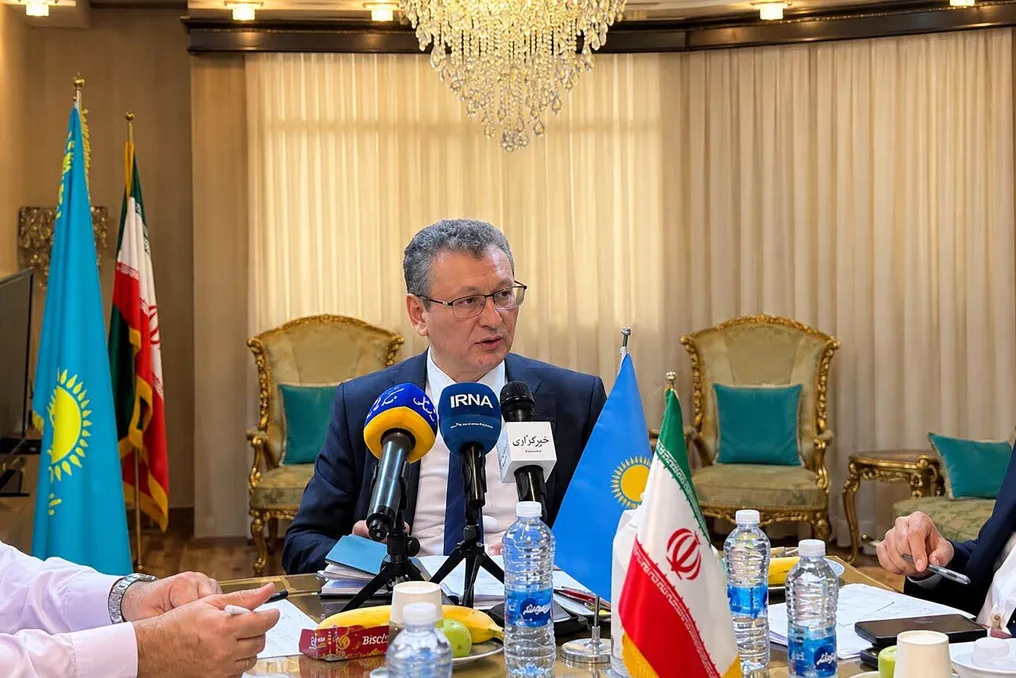
The head of the Consulate of Kazakhstan in Hormozgan stated that the creation of a joint terminal between the two states is planned at the Shahid Rajaee Port. He emphasized that his country pays special attention to the ports of Hormozgan.

According to IRNA reporter Dauirbek Duisbay, during a press conference marking the anniversary of the independence of the Republic of Kazakhstan, the director of the General Director of the Kazakhstan Trade Development Fund, along with a delegation of economic activists and investors, visited the Shahid Rajaee Port. There, they closely examined the opportunities, facilities, and infrastructure of this strategic port in Hormozgan province.

Duisbay noted the readiness of the private sector of Kazakhstan to participate in port development projects and contribute to joint maritime cooperation. An agreement was signed for the creation of this joint terminal, which will provide platforms for the activities of traders and investors from both countries at the port.

The head of the consulate viewed the presence of high-ranking Kazakh economic delegations at the Shahid Rajaee Port as evidence of the serious determination of the two countries to develop trade exchange, increase investments, and fully utilize the potential of this important transit route.

Referring to the priorities outlined in the message of the President of Kazakhstan Kassym-Jomart Tokayev to the people on the occasion of the anniversary of independence, he added that these priorities open up favorable opportunities for elevating trade, economic, and investment cooperation between the Republic of Kazakhstan and Iran to a new level.

Duisbay highlighted that the President of Kazakhstan proposed designating 2027 as the year of large-scale national construction. In this regard, an increase in the volume of construction of residential buildings, social facilities, intercity roads, as well as technical and engineering infrastructure in Kazakhstan is expected.

He continued that the main idea of the message, which includes three priorities—strengthening the country's economic power, accelerating the modernization of infrastructure and technologies, and improving the welfare of the population—aims at transforming Kazakhstan into a country with technological development, a competitive economy, and modern infrastructure. Furthermore, the results of this growth should be reflected in improving the standard of living and welfare of citizens.

The head of the consulate in Hormozgan also noted that this is an excellent opportunity for Iranian construction and engineering companies to participate in Kazakhstan's infrastructure projects, as well as to supply Iranian building materials to the Kazakh market and establish production capacities in the country.

Mentioning that about 500 Iranian companies are currently operating in Kazakhstan, he added that cooperation in the fields of investment, trade, and industry can be expanded by utilizing their experience. Kazakhstan's policy of economic diversification and attracting foreign investment creates new opportunities for Iranian traders and investors, allowing Iranian companies to establish themselves in the markets of Central Asia and the Eurasian Economic Union through participation in industrial, mining, agricultural, energy, infrastructure, and processing projects.

Duisbay stressed the desire of the two countries to raise the level of bilateral exchange to $3 billion annually. He noted that amid the complex regional situation, attracting Iranian investment into Kazakhstan and expanding investment activities through the creation of joint ventures can become one of the priority areas between the two countries.

The topic of exports was also discussed: Kazakhstan supplies wheat, barley, and other agricultural products to Iran, while Iran is interested in developing the export of dates, citrus fruits, rice, and other products to Kazakhstan. It is proposed to consider the creation of agricultural divisions and Iranian rice farms in Kazakhstan, as well as the participation of Iranian companies in projects for building industrial greenhouses and developing aquaculture.

The head of the consulate also drew attention to the development of scientific and educational cooperation, stating that the Consulate General is working on establishing and expanding interaction between Aktau University and Hormozgan University. A memorandum of cooperation is currently being prepared, and a permanent joint committee has been formed with Hormozgan University.

Regarding tourism, he reported that Hormozgan province has great tourism potential. A memorandum to enhance cooperation between Kazakhstan and this province has also been prepared, which will be signed during the planned visit of a political and economic delegation from Hormozgan to Kazakhstan.
Similar stories

DP World CEO states that eastern coast terminals will be an alternative, not a replacement for Jebel Ali Port
Read more
www.khaleejtimes.com

DP World CEO states that eastern coast terminals will be an alternative, not a replacement for Jebel Ali Port

Despite the acceleration of development work on the eastern coast following the closure of the Strait of Hormuz, the CEO of DP World emphasized that Jebel Ali's status as a major port will not be lost.

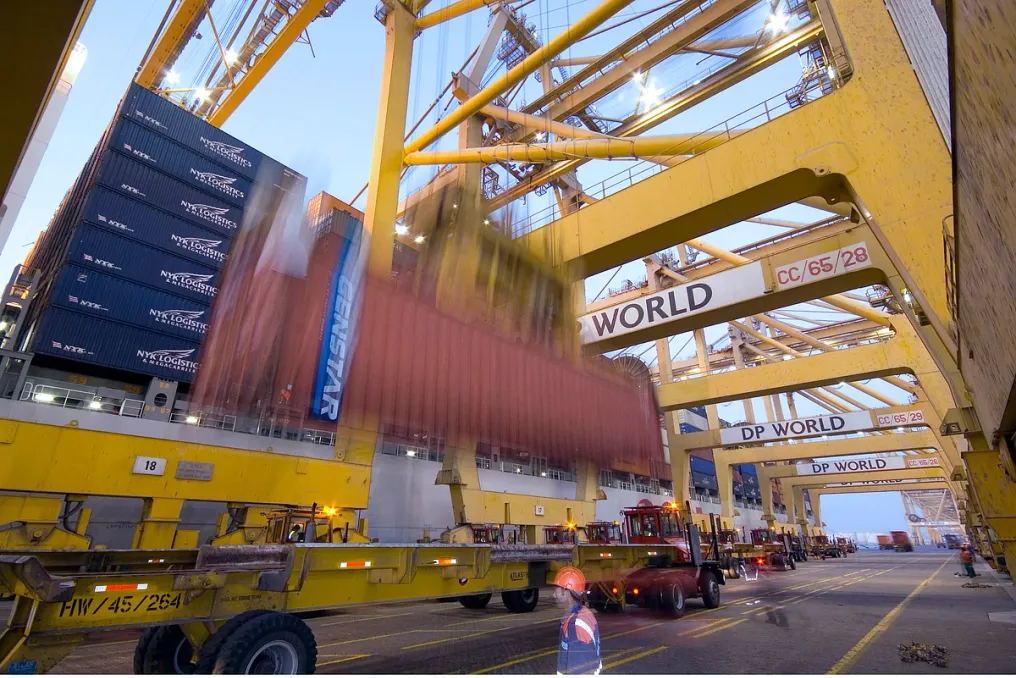
DP World, an international logistics company based in Dubai, announced in July plans to create two terminals on the country's eastern coast: Al Rugailet container terminal and Dibba general cargo terminal. These projects became possible after signing a 50-year concession agreement with the Fujairah Ports Authority.

Ahmad Yousef Al Hassan, Executive Director and Managing Director for GSC, stated on Tuesday that the eastern coast terminals are intended only to serve as an 'alternative' to Jebel Ali, not to replace it. He told reporters during a press briefing that Fujairah will never become a replacement or sole backup for Jebel Ali, as replicating the scale and capacity of Jebel Ali Port could take another 40–50 years.

Jebel Ali Port is the world's largest artificial port and has connections with 150 ports worldwide, capable of handling 19.4 million twenty-foot equivalent units (TEU) annually. The Al Rugailet terminal is estimated to handle up to 2.5 million TEU annually, as well as 1.7 million tons of general cargo and 190,000 equivalent car units (CEU). Meanwhile, Dibba will add up to 3.6 million tons of annual general cargo throughput.

Al Hassan noted that both terminals are expected to be operational within the next 18–24 months. He also commented on the war that began on February 28, noting that Jebel Ali Port was closed for only six hours and has been functioning at full capacity since then. The CEO called the conflict a 'short-term distraction' and expressed confidence that Jebel Ali will remain a destination port for DP World clients after the reopening of the Strait of Hormuz.

The Jebel Ali Free Zone (Jafza) is located near the port and hosts about 12,000 companies. Al Hassan stressed that thanks to this free zone, as well as DP World's scale and connectivity, operations have shown resilience over the past eight months. DP World's revenues grew by 13.1 percent, reaching $12.7 billion in the first half of 2026, which was ensured by the company's strong global network that allowed it to navigate issues caused by the war. Growth in the logistics, maritime services, and international portfolio of ports and terminals helped offset the decline in activity at Jebel Ali; excluding Jebel Ali, container volumes increased by 6.5 percent on a comparable basis, including growth in Africa, the Asia-Pacific region, Europe, and the Americas.

Kazakhstan and China are preparing a second NPP; both stations are planned to be commissioned by 2035
Read more
podrobno.uz

Kazakhstan and China are preparing a second NPP; both stations are planned to be commissioned by 2035

Kazakhstan is negotiating with the Chinese side regarding the construction of a second nuclear power plant. The project, named 'Moyinkum,' is planned to be implemented with the assistance of the China National Nuclear Corporation (CNNC). Meanwhile, the first NPP in the country will be built with the participation of Russia.

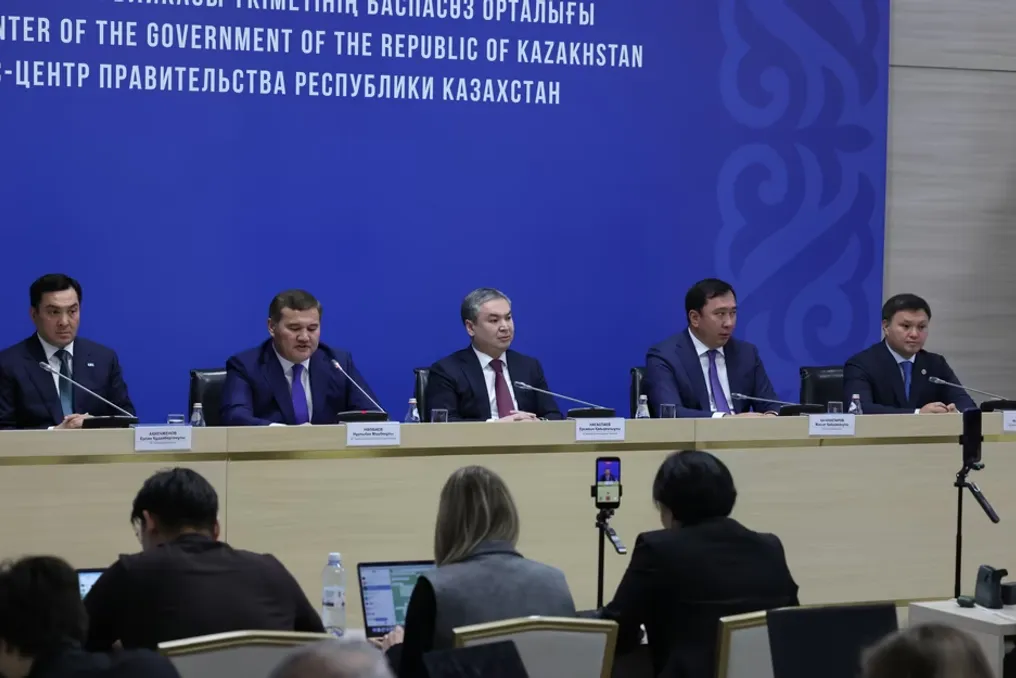
The Minister of Energy of Kazakhstan, Yerlan Akkenzhenov, reported on the progress of the project on November 4. He specified that the parties are currently agreeing on the key aspects of the proposed deal, including construction timelines. Kazakhstan aims to complete the construction of both nuclear power plants by 2035.

The second station is intended to be located on the shore of Lake Balkhash, in the Zhambyl district of the Almaty region. Previously, the Kazakh Atomic Energy Agency informed that CNNC would lead the consortium responsible for building this NPP, but the final terms of the project are still under development.

The first nuclear power plant, named 'Balkhash,' is planned to be built with the involvement of a Russian consortium led by Rosatom.

Additionally, it has become known that Uzbekistan is studying the possibility of building a second and third nuclear power plants. President Shavkat Mirziyoyev intends to discuss the issue of building a second NPP with potential investors and new partners.

The first nuclear project in Uzbekistan is being implemented in the Farish district of the Jizzakh region. On June 4, the presidents of Uzbekistan and Russia, Shavkat Mirziyoyev and Vladimir Putin, began the construction of the first unit of the integrated NPP via video conference, during which the 'first concrete' was poured into the foundation of the future station.

Popular