Mercedes President predicts combustion engines will remain on the market for at least 10 to 15 years
Read more
AutoPapo
autopapo.com.br

Mercedes President predicts combustion engines will remain on the market for at least 10 to 15 years

Mercedes-Benz, which had declared in 2021 its intention to exclusively sell electric vehicles by the end of the decade, now projects considerable longevity for its combustion engines.

According to the company's CEO, Ola Källenius, both gasoline and diesel engines will remain available on the global market for a minimum period of ten years, potentially reaching fifteen. This statement was made to journalists in Pune, India, during the launch of the electric version of the GLC SUV in the country, as reported by the Indian magazine Autocar Professional.

Källenius argued that the transition to electric vehicles represents an industrial shift that will take between twenty and twenty-five years, given that each market evolves at its own pace. He compared this to the strategy of industry leaders, who do not abandon their foundations while building new ones.

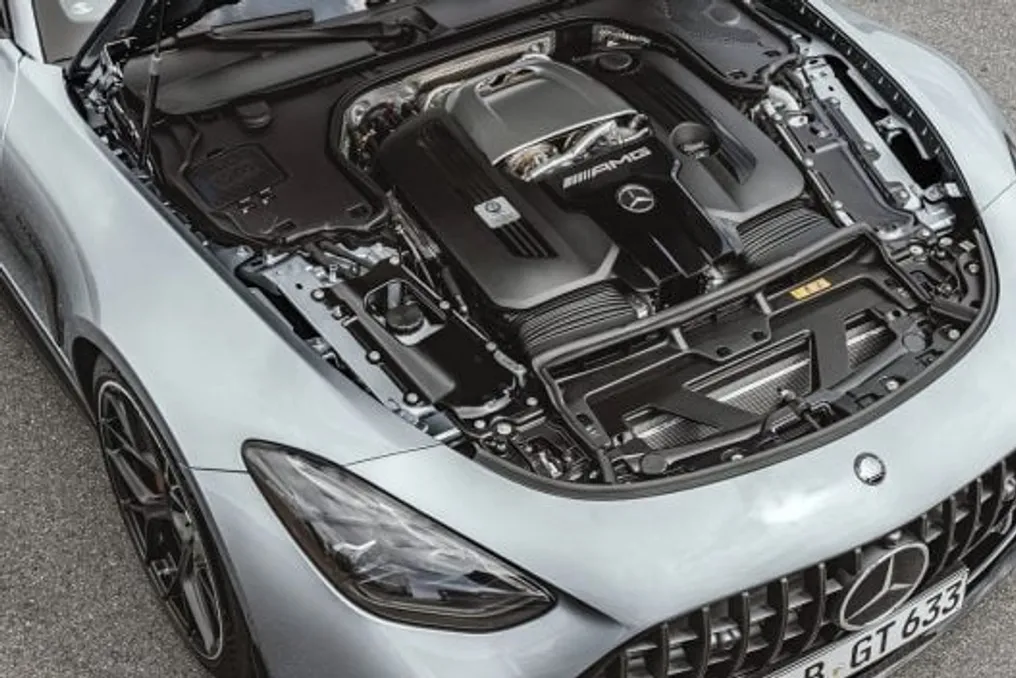
The goal established in 2021 was applicable only under certain market conditions and was revoked by Mercedes in 2024. The executive informed that the brand has modernized its combustion engines to meet Euro 7 standards, the next phase of European emission standards, which is analogous to Proconve in Brazil. This investment even includes the development of a new V8 engine.

The executive also assured that Mercedes diesel engines are prepared for the future and will remain in the catalog indefinitely. For him, the use of fossil fuels is still relevant in light utility vehicles and large automobiles used by people traveling between sixty and seventy thousand kilometers annually, whether for work or long trips.

Regarding the local scenario, Källenius mentioned in India that diesel still has a lower cost than gasoline at gas stations. In Brazil, however, diesel for passenger cars has been banned since 1976, being permitted only in pickup trucks, utility vehicles with a load capacity exceeding one ton, and models equipped with 4x4 and low range.

In parallel, Mercedes committed to offering an electric alternative in all relevant categories of its lineup by the end of this decade, as part of a plan that foresees forty launches in three years, covering both electric and combustion models. Källenius concluded by stating that the brand will continue to offer combustion engines as long as there is significant demand for them electrified.
Similar stories

Fipe analysis indicates that best-selling electric cars depreciate less in the last year
Read more
autopapo.com.br

Fipe analysis indicates that best-selling electric cars depreciate less in the last year

An analysis conducted by AutoPapo, using data from the Fipe Table, revealed that among the best-selling vehicles in Brazil, fully electric models registered the lowest depreciation over the last year.

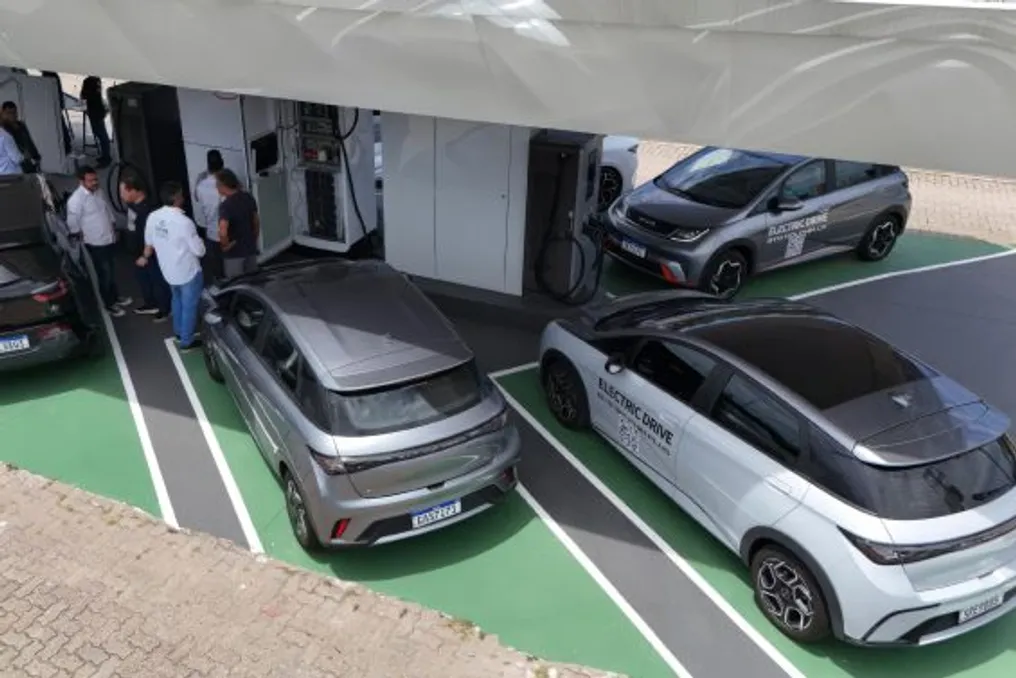
Specifically, the BYD Dolphin Mini, which leads retail sales, suffered only a 1% drop over twelve months, as did the BYD Dolphin, with a 1.8% reduction. In contrast, combustion engine models in the same list showed an average drop of 8.5%.

The survey compared the price of each version in November 2025 with the corresponding price in November 2026, meaning it evaluated the same vehicle after one year of use. 105 versions of 15 models present in Fenabrave's best-selling rankings were analyzed, all priced between R$ 100 thousand and R$ 210 thousand.

At the top end of the list are the Jeep Compass, with a depreciation of 13%, followed by the GWM Haval H6, with 10.9%, and the Jeep Renegade, with 10.8%. Hybrid vehicles constituted the group with the worst performance in the survey, registering an average loss of 9.9%, even surpassing the drop rate of combustion engine cars.

After discounting inflation for the period, calculated at 4.58% by the IPCA, all depreciation rates increase: combustion engine cars had an effective loss of 12.5%, hybrids of 13.8%, and electric cars of 6.1%.

The data points to two main reasons for this variation. The first is tax-related: since July 1st, imported electrified vehicles have been subject to a 35% import tax, reaching the ceiling of a schedule that began in January 2024, when the rate for 100% electric vehicles was 10%. This impact is visible in Fipe: the table price of a brand new electric car rose by 2.1% in twelve months, while that of combustion engine models fell by 0.4%, indicating that the used vehicle does not lose value when the new equivalent becomes more expensive.

The second explanation comes from a study by the consultancy Bright, which indicates that electric cars costing up to R$ 170 thousand lost 7.9% of their real value in one year, compared to 13.4% for combustion engine models in the same range. The consultancy attributes this result to the still limited supply of used electric vehicles, improvements in charging infrastructure, and increased battery warranties.

However, this result does not apply to all electric cars. By applying the same statistical method as AutoPapo to 197 electric versions from various brands sold in the country, the average depreciation rises to 11.3%, concentrating on higher-value models. Above R$ 250 thousand, the analyzed electric cars suffered a loss of 12.5% in twelve months. The most extreme examples are all imported: the 2023 Porsche Taycan Turbo S depreciated by 30.2%, falling from R$ 953,724 to R$ 665,521; the 2024 Chevrolet Equinox EV, by 27.3%; and the 2024 Nissan Leaf, by 27.2%.

New Chevrolet Silverado and GMC Sierra models with diesel engines receive larger tanks and can travel nearly 1500 km without refueling
Read more
autopapo.com.br

New Chevrolet Silverado and GMC Sierra models with diesel engines receive larger tanks and can travel nearly 1500 km without refueling

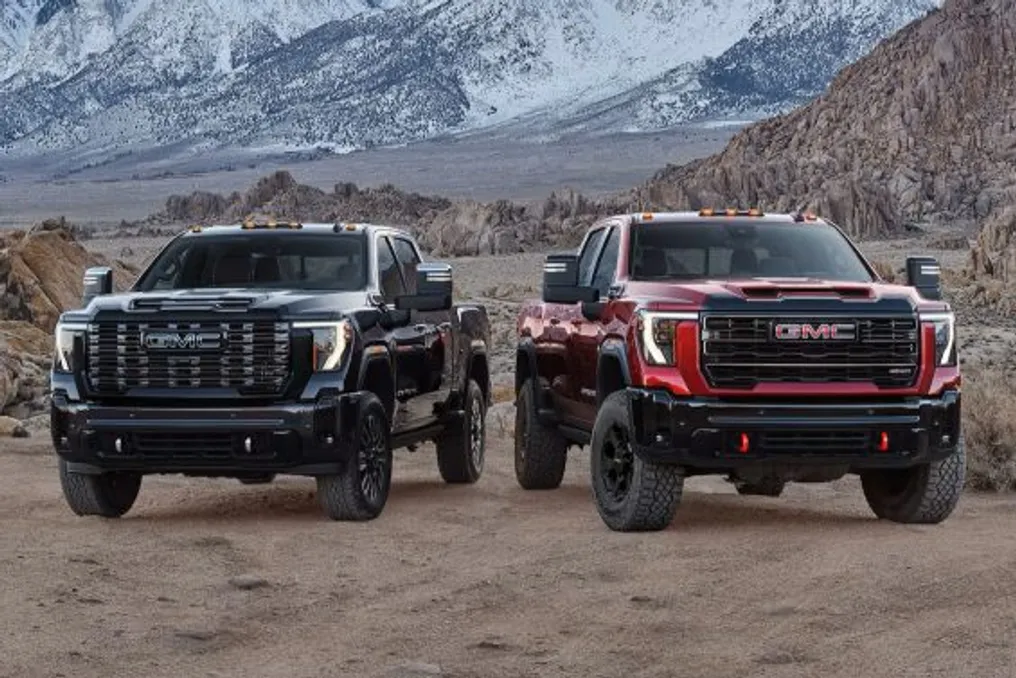
The new generation of Chevrolet Silverado 1500 and GMC Sierra 1500 pickups, which will arrive on the American market as the 2027 lineup, will be equipped with larger fuel tanks in diesel versions.

The reservoir for Arla 32, which reduces emissions from diesel engines, has been increased from 20.5 liters to 28 liters. It is standard equipment on all versions with the 3.0 Duramax six-cylinder inline turbocharged diesel engine.

This change corresponds to a new optional fuel tank with a capacity of 129 liters. It costs $445 USD (about 2200 Brazilian reais) in some cabin configurations and comes with the most expensive trims, such as ZR2, AT4X, and Denali Ultimate.

In the previous generation, the diesel pickups had tanks with capacities of 83 or 91 liters. Thanks to the larger tank, the diesel versions can now cover about 1480 km on the highway without needing to refuel, based on GM's stated fuel consumption of 11.5 km/L for rear-wheel-drive configurations.

However, GM's pickups lag behind competitors in this aspect: the Ford F-150 offers a 136-liter tank, the Ram 1500 offers 125 liters, and the Toyota Tundra offers 122 liters.

In practice, this means that drivers transporting cargo over long distances will have to make fewer stops to refuel with diesel and Arla 32.

However, the new pickups have lost the hidden compartments in the rear seat back that were offered since 2019. American sites speculated that the reason for this change was the larger tanks. Nevertheless, GM product managers told GM Authority that the reason was low demand, as few owners used this space.

One explanation is accessibility: these compartments cannot be opened if there are passengers or child seats in the back seat. To compensate for this, the new generation features a redesigned center console with movable cup holders and almost 5 liters more storage space.

In Brazil, the current generation Silverado is sold only with a V8 gasoline engine.

78-Liter Diesel Engine Used in Mining Trucks is Now Used in AI Data Center Generators
Read more
autopapo.com.br

78-Liter Diesel Engine Used in Mining Trucks is Now Used in AI Data Center Generators

A 78-liter diesel engine, originally designed for the world's largest mining trucks, has found a new application: powering artificial intelligence data centers during grid failures.

Cummins has increased the power of generators equipped with the 78-liter QSK78 diesel engine to 3 MW. This new offering was unveiled at the DCD Connect Brasil event, dedicated to the data center sector, which took place in São Paulo on Thursday and Friday.

When the QSK78 was launched in 2000, Cummins called it the world's largest engine for the mining industry. It was developed in collaboration with the Japanese company Komatsu for off-road trucks, such as the Komatsu 960E, capable of carrying up to 327 tons of cargo in a single trip.

The engine's specifications are impressive: it features 18 cylinders, each with a displacement of about 4.3 liters, which is larger than the entire 2.8-liter Toyota Hilux engine. The total weight of the unit exceeds 11 tons, and in its mining version, it produces 3,549 hp and a torque of 1,404.3 kgm.

Data centers cannot tolerate power outages, so they maintain backup diesel generators that activate when the main grid fails. With the expansion of artificial intelligence, which demands significantly more computing power and electricity, these generators needed to become more powerful.

In 2024, one of Cummins' executives noted that hospitals, which previously used 1 MW installations, have begun purchasing 2 or 3 MW models. According to the company, data centers can achieve up to a 20% revenue growth over the next five years.

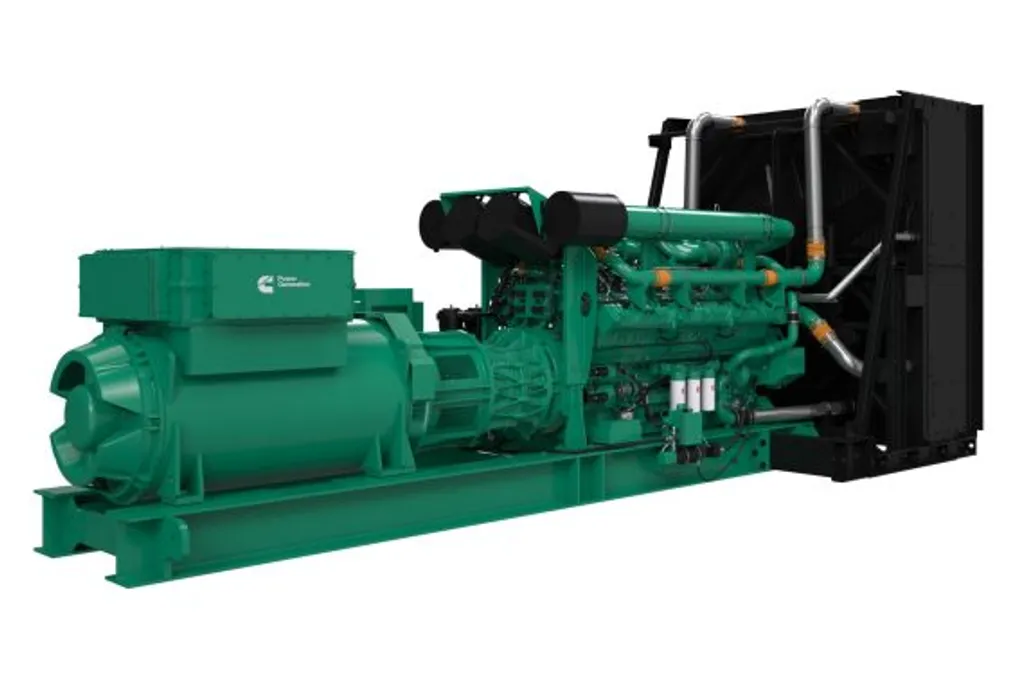
Thanks to the increased power, the QSK78 now covers the range previously served by the 95-liter QSK95 model, which remains in the catalog for generators up to 3.5 MW. Centum series generators, such as the C2750D6E and C3000D6EB, have capacities of 2,750 kW and 3,000 kW, equivalent to approximately 3,739 hp and 4,079 hp. The largest of these reaches over 7 meters in length and 3.5 meters in height.

According to the manufacturer, the unit takes less than ten seconds to take on a load and can run on HVO—renewable diesel made from vegetable oils and fats—without losing power. Leandro Vilhena, Data Center Manager at Cummins Brazil, emphasized that the generator's size must correspond to the load growth and expansion plans of each facility.

Popular