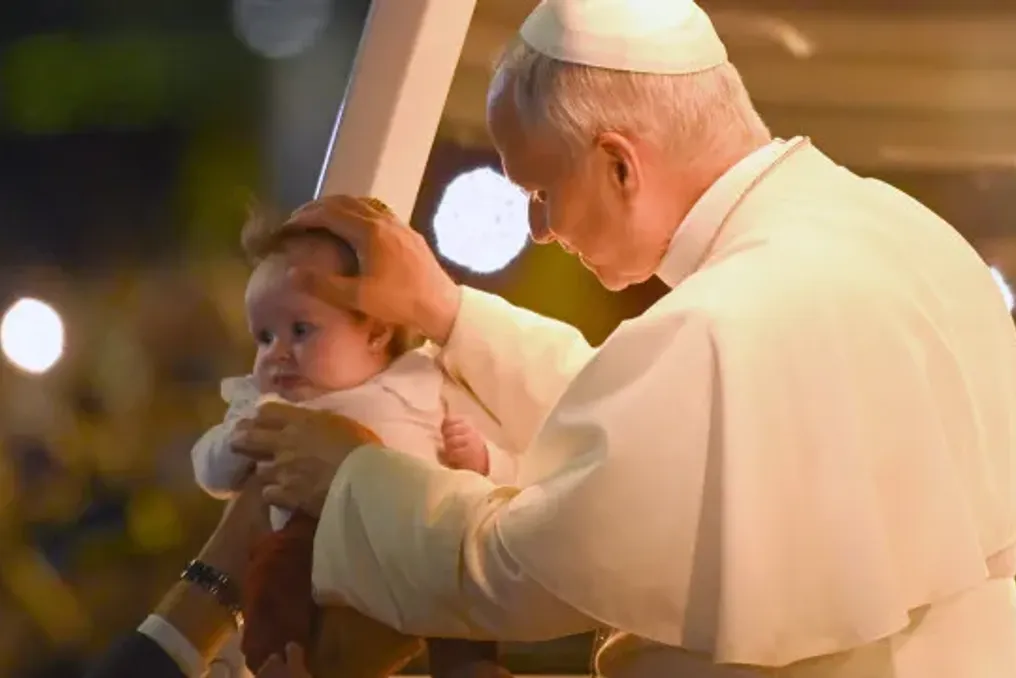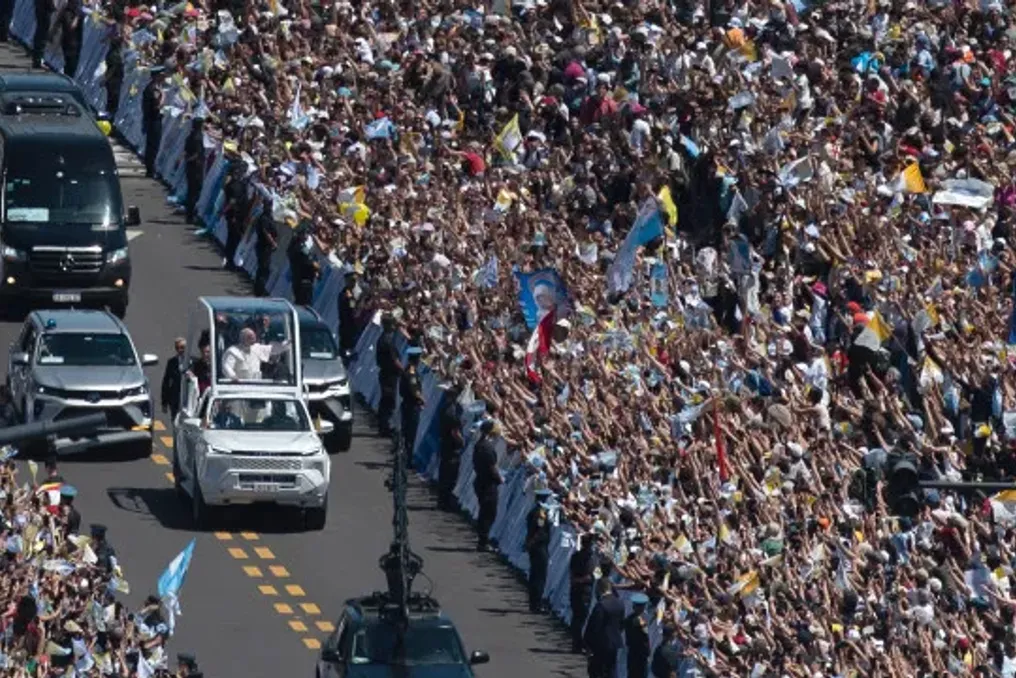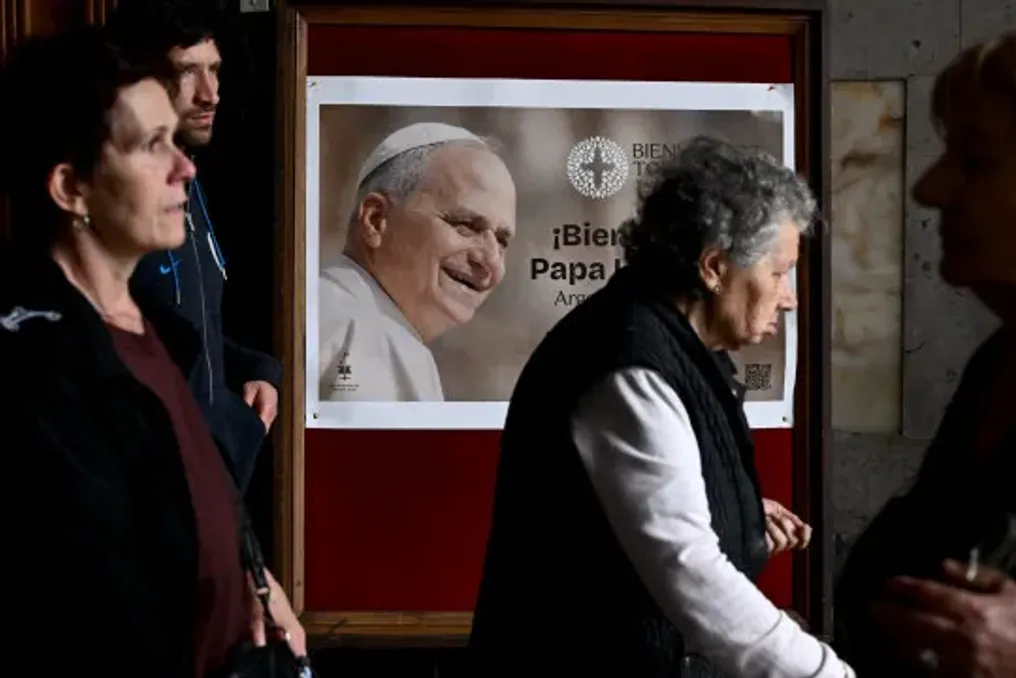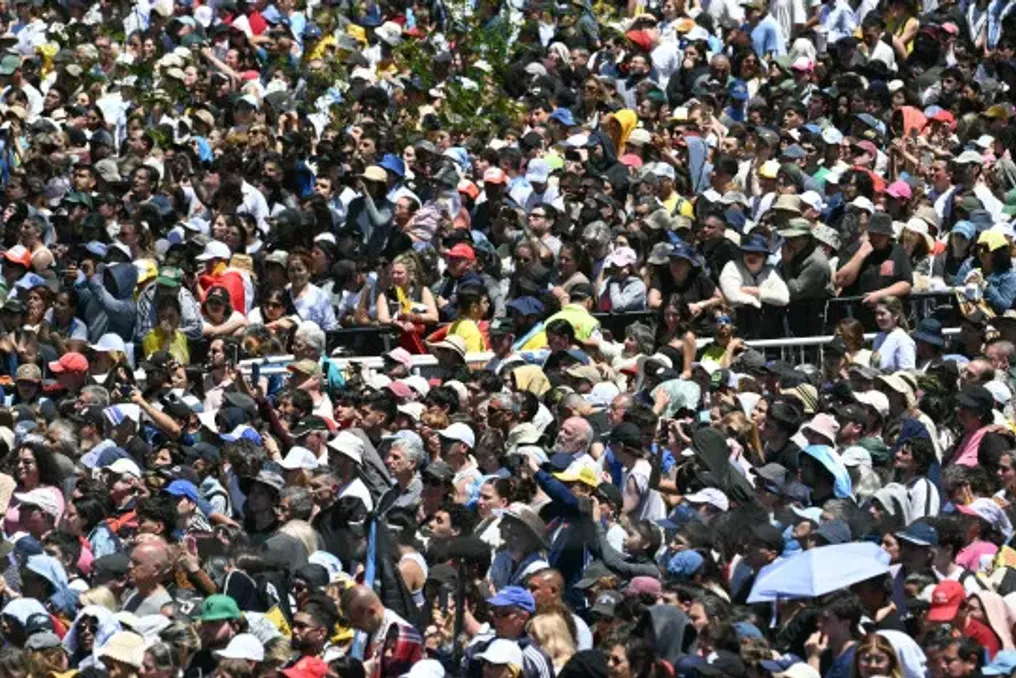
Around one million young people attended a night vigil in the Argentine capital, Buenos Aires, in the presence of Pope Leo XIV. The Pope also delivered a homily to 650,000 people in the city of Córdoba, located in the center of the South American country.
On Tuesday night, Leo presided over a large gathering of young people at the Monumento de los Españoles, an intersection of important avenues in Buenos Aires, which was packed for the event. At the same location, on Monday, Leo had gathered 2.5 million people for his main mass in Buenos Aires, setting a record in his pontificate, which is still in its early stages.
The liturgical ceremony held in Córdoba took place on the grounds of the Fábrica Argentina de Aeronaves. This facility was administered by the Air Force for much of the 20th century and was responsible for manufacturing attack aircraft used by the military for the first time in late 1975 against left-wing guerrillas.
This counterinsurgency campaign served as a prelude to the period of state terror experienced during the military dictatorship between 1976 and 1983. It is estimated that, according to human rights groups, approximately 30,000 individuals were killed or disappeared during this period.
After the mass, the Pope met privately with twenty people selected by the archbishop. Among them was Alba Camargo, whose family—father, stepmother, aunt, and uncle—disappeared during the Argentine military dictatorship (1976–1983). Camargo informed the Pope that she was present on behalf of relatives who are still searching for traces of victims in 'La Perla,' a former clandestine detention center near Córdoba. She gave him a folder containing photographs from the excavations and the names of the people already identified.
Camargo told the Associated Press that the Pope 'nodded his head, as if he already knew everything; looked me deeply in the eyes, held my hand, and blessed the Franciscan crosses I had brought him.' She added that other group participants, including a rural worker, the organizer of a community kitchen, and a human trafficking survivor, were so moved they could barely speak, describing the feeling as 'something incredibly strong to feel so human, to be heard in that way, just 15 centimeters away.'
At 71 years old, Leo XIV is undertaking an extensive 12-day journey through Latin America, with stops in Uruguay and Argentina (until Wednesday), and subsequently in Peru. This is his first trip since the surgery he underwent four weeks ago.
Historically, the health condition of Popes has always been a delicate subject in communication, although this approach has become progressively more open over time. In 2023, his predecessor, Benedict XVI, the penultimate before him, resigned the papacy, surprising everyone by citing the decline of his physical and mental capabilities.
Also on Tuesday, near Córdoba, Leo XIV encouraged the congregation to seek 'holiness,' drawing inspiration from Argentine saints dedicated to the 'building of a fraternal and supportive homeland,' a message that resonates particularly in a society marked by social tensions and political polarization.
On the third day of his visit to Argentina, Leo XIV asked the Catholic Church and its representatives to persist in 'making noise,' echoing a famous exhortation made by his predecessor, Francis, to young people years ago. The Pope declared in Córdoba, addressing bishops, priests, seminarians, and local religious: 'Dream of a Church that continues to make noise, as your compatriot Francis asked!'
Additionally, he encouraged the use of technology and creativity in his pastoral mission, emphasizing: 'Nowadays, the idea of using technology to continue bearing witness is wonderful: be creative and find new ways to continue preaching.'