Huawei presents how the Kirin 9050 chip runs a 30-billion parameter model on device
Read more
TechNode
technode.com

Huawei presents how the Kirin 9050 chip runs a 30-billion parameter model on device

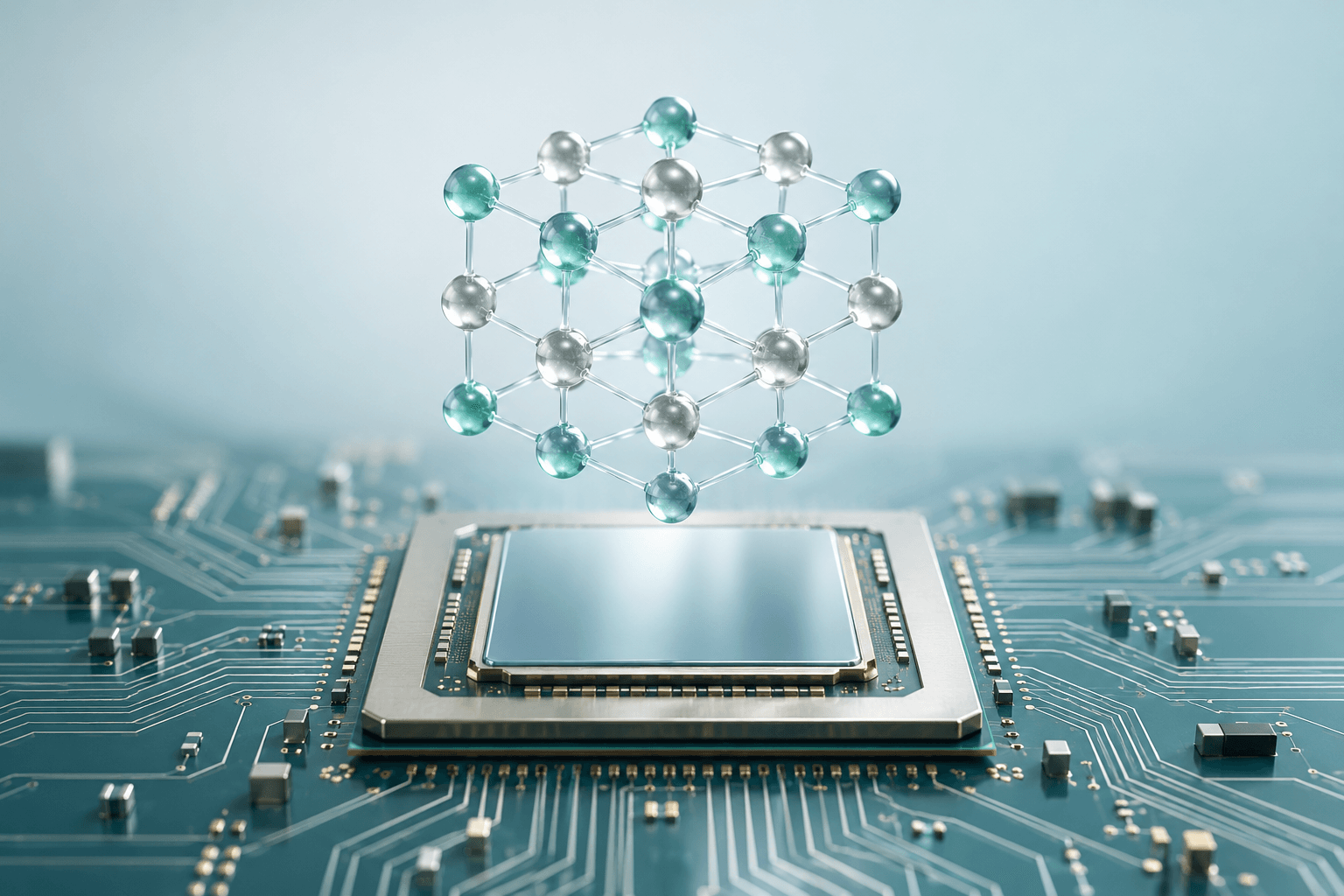
Huawei revealed on Wednesday details on how the Kirin 9050 chip series can perform artificial intelligence by running a 30-billion parameter model locally, without needing an internet connection.

The new Da Vinci neural processor in this chip allows the model to run directly on the phone through the use of low-bit quantization and efficient coordination of memory and computing resources.

The 'mixture of experts' type model activates approximately 2 billion parameters simultaneously. Previously, Huawei announced this figure during its October chip briefing, and this week the company described how the same processor supports features such as AI screen reading and page turning via eye tracking.

Similar stories

Lenovo unveils AI host Kaitian with Zhaoxin KX-7000 processor and Houmo LQ50 NPU for local 35B model execution
Read more
pandaily.com

Lenovo unveils AI host Kaitian with Zhaoxin KX-7000 processor and Houmo LQ50 NPU for local 35B model execution

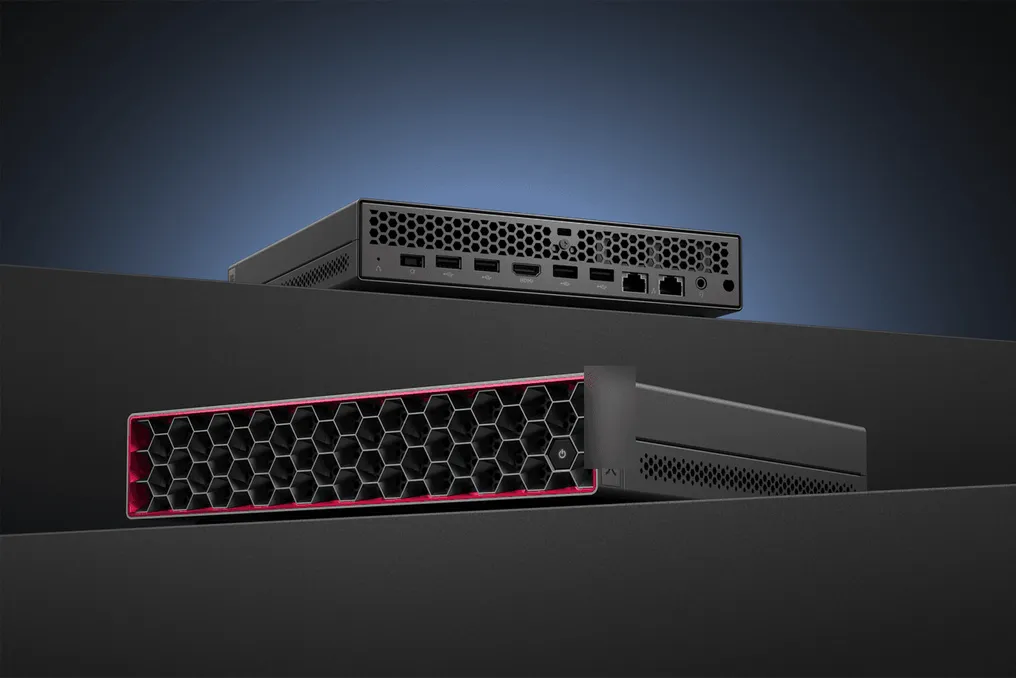
Lenovo has released the first AI host system in its Kaitian lineup, intended for China's IT innovation market (Xinchuang). This 1.6-liter desktop computer integrates a Zhaoxin processor with a Houmo AI NPU, enabling the local execution of models around 35 billion parameters.

The device is equipped with an eight-core Zhaoxin KX-7000 processor and the Houmo Liqing LQ50 NPU. In the standard configuration, the system provides 160 TOPS of computing power in INT8 format, which can reach 320 TOPS with the NPU option. The NPU features 24 GB of dedicated memory with a bandwidth of 153.6 GB/s. The host runs on Kylin OS and comes pre-installed with Lenovo's Tianxi AI Pro agent.

The company tested the device using open models, including the Qwen3.5 and Qwen3.6-35B-A3B series. When utilizing the 24 GB NPU and W4A8 quantization, the Qwen3.6-35B-A3B model generated text at a rate of approximately 28.99 tokens per second during local inference. The system supports input data up to 200,000 tokens for processing long documents and multi-turn tasks. The Houmo platform provides developers with tools for profiling, compiling, runtime management, and model quantization.

Lenovo positions this host as a perpetually active digital employee designed for round-the-clock operation. This allows agents to perform scheduled tasks such as local knowledge retrieval, document drafting, and information summarization, with output processing occurring directly on the device rather than through cloud tokens, thus keeping data local. During the event, Tianxi AI Pro testers instructed the device to check a mobile operator's application, and the device successfully executed a test call, measured the delay of a verification SMS code, and provided a report.

Regarding thermal dissipation, the processor and NPU have separate air channels behind the hexagonal front panel with high-pressure fans. Lenovo reports that at idle, the chassis temperature is about 33 degrees Celsius in a 25-degree room, and under full load, it reaches 41 degrees. In a 35-degree room, the temperature reaches approximately 46 degrees under full load. The noise level is 19.4 dB in standby mode and about 29.5 dB during full NPU inference. The device weighs about 1.5 kg and is equipped with two independent 2.5GbE ports.

It should be noted that the Kaitian host differs from the Lenovo AI Host P7, which was introduced in October with Houmo M50 and CIX P1 chips.

Peking University team ports DFT ABACUS software to Huawei Kunpeng 920 processor, achieving up to 10.7x speedup
Read more
pandaily.com

Peking University team ports DFT ABACUS software to Huawei Kunpeng 920 processor, achieving up to 10.7x speedup

A research group led by Chen Mohan from Peking University adapted ABACUS—an open-source density functional theory (DFT) package developed in China—for the full line of Huawei Kunpeng 920 processors. Furthermore, the team optimized 19 different classes of core operators. This was reported by Huawei Computing in a publication on October 31, as learned by IT Home. The code was uploaded to the project repository on GitHub.

Density functional theory (DFT) is a primary first-principles method for studying the properties of materials such as metals and semiconductors. ABACUS was jointly developed by several institutions and has over a thousand users across more than one hundred organizations.

According to the team's data, when configuring both sides to 28 cores with 28 processes running one thread each, the Kunpeng 920 build, utilizing the SVE instruction set, showed speeds 1.3 to 3.9 times faster than a standard x86 CPU when working with a standard set of 10 material systems containing 8 to 216 atoms, including GaAs, MoS2, BaTiO3, iron, and silicon. When using the chip's matrix computation unit, the speedup reached up to 10.7 times when operating on all cores of a single node. In cases of stochastic DFT, the team recorded a speed increase of 2.8 to 3.1 times for SVE and 6.1 to 20.1 times for the build using the matrix block.

The initial step was porting, as various Kunpeng 920 models support vector instructions NEON, SVE, or SVE512, as well as a dedicated matrix block, which remain unused when using general compiler options. The team created separate toolchains: gcc with OpenMPI and OpenBLAS was used for NEON and SVE builds, while clang with HMPI and KBLAS from Huawei was used for others, and the USE_KML option was added for integration with the Kunpeng Math Library. All compiled versions passed ABACUS integration tests covering DFT for plane waves and LCAO Kohn-Sham, stochastic DFT, and DeePKS, with results matching the main implementations.

Next, the team rewrote frequently called small operators. Replacing the recursive procedure for the generalized Laguerre polynomial with an iterative recurrence allowed complexity reduction to O(n) and made it approximately eight times faster in a million-test run. Switching interpolation search to binary search reduced the average number of comparisons in a 400-entry table from about 200 to nine. Other changes included trigonometric recurrences, cycle invariant lifting, mixed-precision tuning, and memory layout, with the numerical results of each operator being re-verified.

Using automatic source code optimization in Huawei's DevKit, the team also increased the processing speed for an 8-atom high-density carbon case by 2.28 times and a 512-atom silicon case by 2.66 times on the newer Kunpeng 920 model. Huawei notes that the resulting tuning experience can be applied to other scientific software.
Huawei first names Kirin 9000S as processor in Mate 60 Pro model
Read more
pandaily.com

Huawei first names Kirin 9000S as processor in Mate 60 Pro model

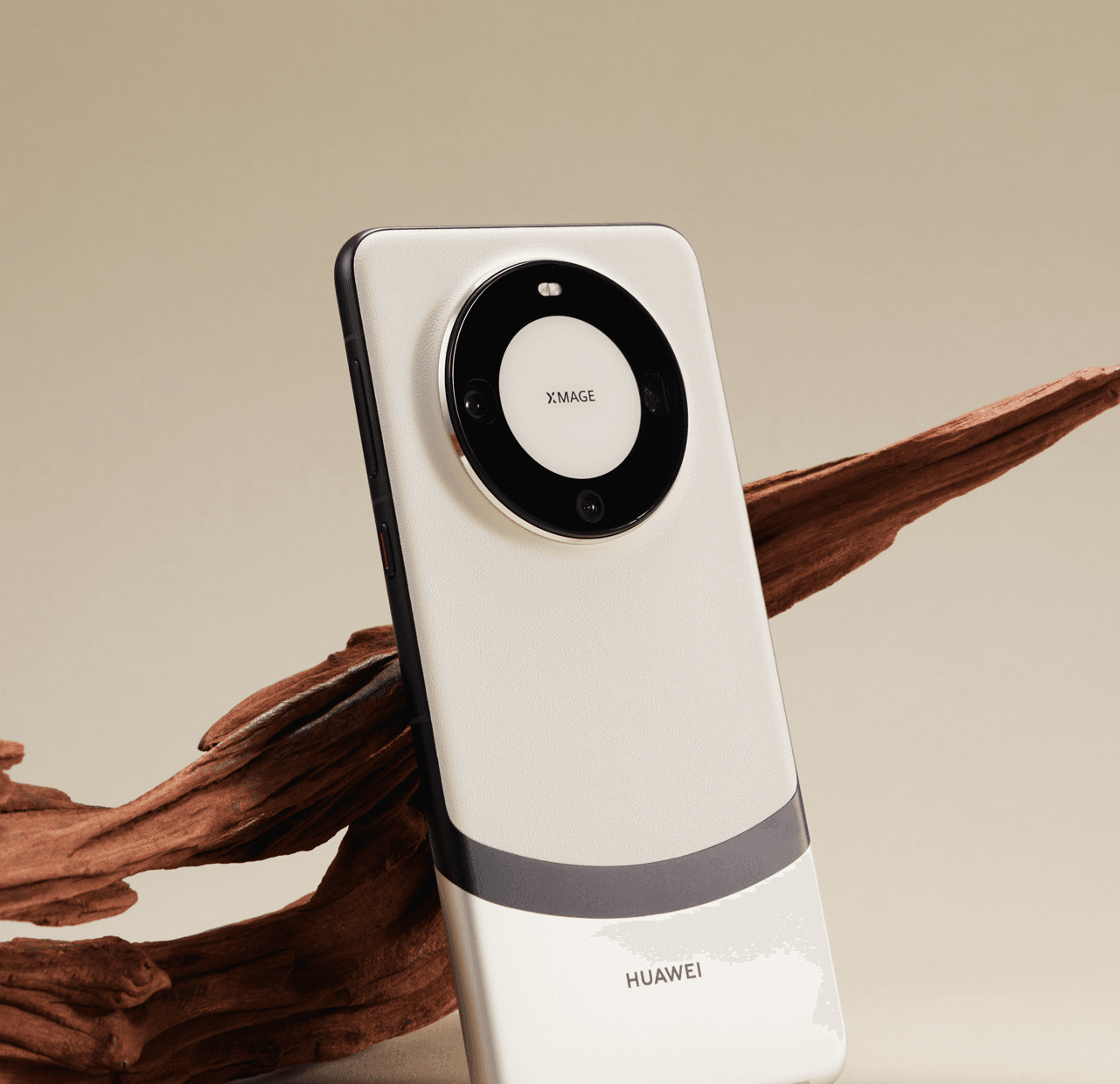
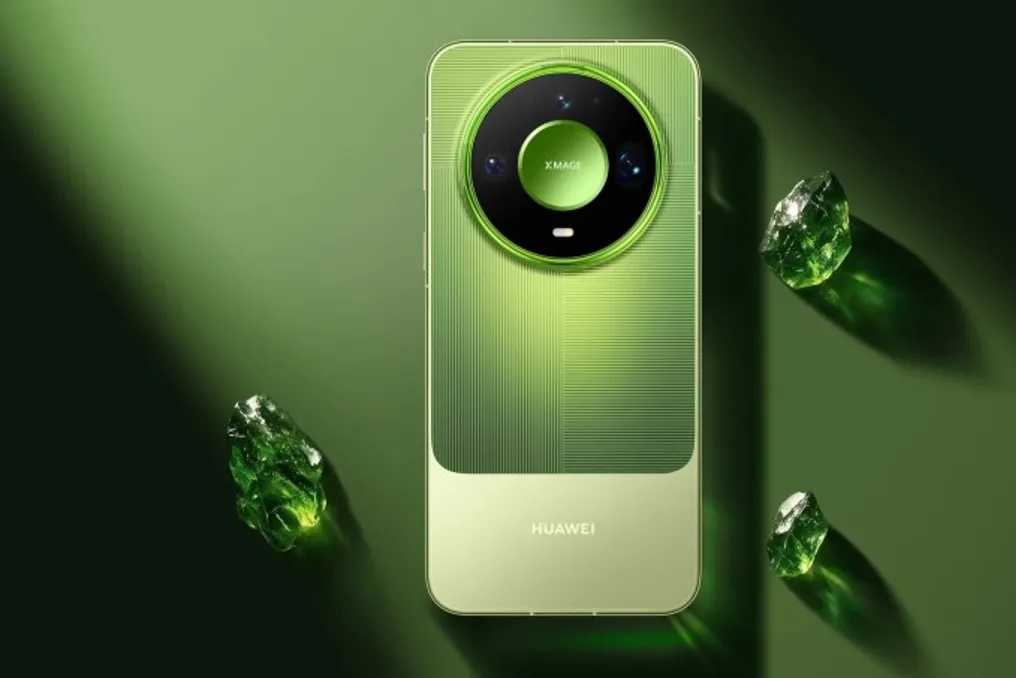
Huawei officially named the Kirin 9000S chip as the processor for the Mate 60 Pro smartphone in one of its internal specification documents, according to IT Home reported on October 30. This information appeared in a post on Huawei's official WeChat account, which promoted the Mate 90 series and presented the main characteristics of the Mate 30, 40, 50, and 60 Pro models alongside the new Mate 90 Pro model.

In the performance comparison table, Huawei indicated that the Mate 90 Pro is equipped with Kirin 9035, while the Mate 60 Pro uses the Kirin 9000S. Meanwhile, the Mate 50 Pro utilizes the first generation Snapdragon 8+ 4G, the Mate 40 Pro features the Kirin 9000, and the Mate 30 Pro 5G has the Kirin 990 5G. The Mate 60 Pro model comes with 12 GB of RAM and offers storage options of 256 GB, 512 GB, or 1 TB, whereas the Mate 90 Pro can reach 16 GB and 1 TB.

Despite the Mate 60 Pro being released in 2023, the manufacturer did not specify the chip model on official product pages or technical sheets. Previously, third-party performance testing applications identified the processor as Kirin 9000S, noting its octa-core design with 12 threads and support for hyperthreading.

At an event on October 28, He Gang, Huawei's Director of Consumer Devices, stated that the Mate 60 series marked the return of Kirin chips in 2023. The slide presented by He Gang featured the Kirin 9000S model, but the chip was not tied to the Mate 60 series. The official announcement regarding the phone chip's name was made by Huawei in September 2025 when presenting the Kirin 9020 along with the foldable device Mate XTs.

The same diagram demonstrates the evolution of other features over five generations. Screen sizes range from 6.53 inches on the Mate 30 Pro 5G to 6.82 inches on the Mate 60 Pro and 6.75 inches on the Mate 90 Pro. The refresh rate increased from 60 Hz to 120 Hz. Battery capacity grew from 4,500 mAh on the Mate 30 Pro 5G to 5,000 mAh on the Mate 60 Pro and 6,600 mAh on the Mate 90 Pro; the latter supports 100W wired charging and 50W wireless charging.

Popular