Reasons for the high cost of saffron: labor-intensive production and low yield
Read more
Aaj Tak
www.aajtak.in

Reasons for the high cost of saffron: labor-intensive production and low yield

Saffron is one of the most expensive spices in the world, with prices that can reach thousands or even millions of rubles per kilogram. Despite the fact that a small amount of this product can drastically change the taste, aroma, and color of dishes such as pilaf, kishar, sweets, and milk, the reasons for its high cost remain a question.

The main reason lies in the complexity of the production process: hundreds of thousands of flowers may be required to obtain one kilogram of finished saffron. The process of extracting saffron from these flowers is done manually. Next, we will look at how saffron is produced, how many flowers are needed to make one kilogram, and why it is so expensive.

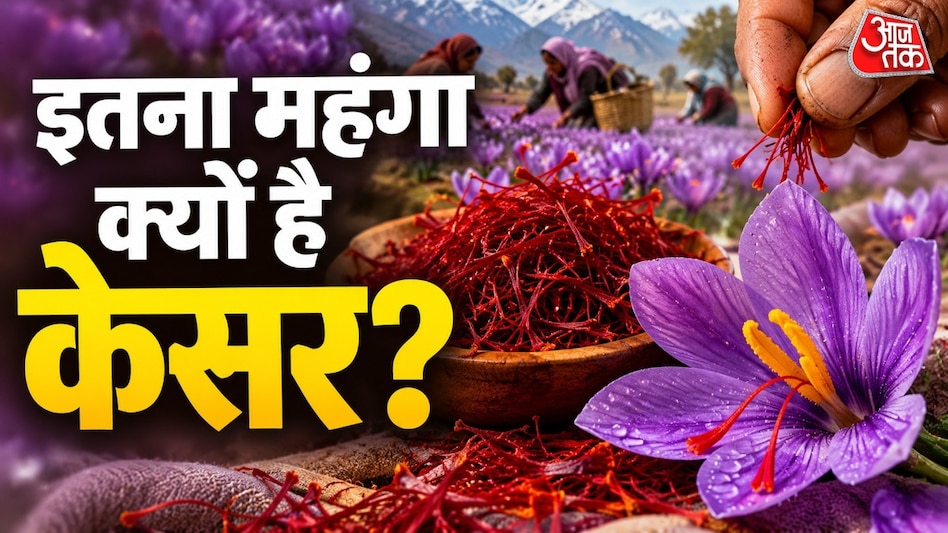
Saffron is obtained from a special flower called Crocus sativus. This flower has a purple hue, and in its center are three thin, reddish threads. These threads are the saffron. In fact, they represent part of the flower's female reproductive organ, called the stigma. These threads must be very carefully separated from the flower, after which they are dried to obtain saffron.

The blooming of saffron flowers occurs during a specific season. A cold climate and suitable soil are necessary for cultivation. The Pampor region in Jammu and Kashmir, India, is known for cultivating saffron. Kashmiri saffron is in demand not only domestically but also abroad.

The main factor determining the high price of saffron is the labor-intensive nature of its preparation and the huge number of flowers required. Only three red threads are obtained from one flower, which means an extremely low yield of saffron per flower. According to agricultural experts, obtaining one kilogram of dried saffron may require between 150,000 and 200,000 flowers.

After extraction from the flowers, saffron is dried, causing its weight to decrease. Official data from state and agricultural institutions indicates that approximately 150–160 thousand flowers are needed to produce one kilogram of dried saffron, and under certain conditions, this figure can reach two hundred thousand. Thus, a very small amount of saffron is obtained from such a large number of flowers.

Extracting saffron is not an easy task. After the flowers bloom, they are collected with great care. Then, three red threads must be carefully separated from the center of each flower. This work requires a high degree of meticulousness, as damaging the threads or having other parts of the flower get on them can negatively affect the quality of the saffron.

The red threads obtained from the flowers are carefully dried. After drying, their weight significantly decreases. They are then stored away from moisture and light to preserve their natural color, aroma, and taste. This entire multi-stage process plays a key role in forming the high price of saffron.

In India, saffron is mainly grown in Jammu and Kashmir, especially in the Pampor region of Pulwama district, where the soil and climate are considered favorable for this crop. Besides India, saffron is cultivated in countries such as Iran, Spain, Greece, and Afghanistan. Iran holds the position of the world's largest saffron producer.

Kashmiri saffron is valued for its color, aroma, and quality and has received the corresponding Geographical Indication (GI Tag). This means that the product under this name is associated with a specific geographical area.

Saffron is grown not from seeds, but from tubers resembling bulbs, which are underground and called corms. Farmers plant these tubers in the field. After some time, plants emerge from them, which then produce their purple flowers. Cultivation requires land where water does not stagnate; good drainage is necessary, as saffron plants do not like excess moisture.

In India, the flowering period usually falls in October-November. The flowers are collected early in the morning. Then, the red threads are extracted from them and dried.

The high cost of saffron is due to several factors. Firstly, only three red threads are obtained from one flower, leading to a small volume of finished product from a large number of collected flowers. Secondly, most of the work—from collecting the flowers to separating the threads and drying—is done manually. Furthermore, saffron cultivation cannot be carried out universally due to specific requirements for climate and soil.

It is important to note that the high price of saffron is determined not only by its taste or aroma qualities but also by the enormous labor invested in its production and its low yield. That is, for a small amount of threads used in milk or sweets, farmers and workers have to work with hundreds of thousands of flowers, which makes saffron one of the most expensive spices in the world.
Similar stories

Reasons for the high cost of black turmeric and potential income from one plant
Read more
www.aajtak.in

Reasons for the high cost of black turmeric and potential income from one plant

The market often features regular yellow turmeric, but black turmeric has a deep blue-black color inside and can cost significantly more than the regular variety. In some areas, its price ranges from 500 to 2000 rupees per kilogram, and on online platforms, it can be even higher. This factor is generating growing interest among farmers who view cultivating black turmeric as a good source of income. The question arises as to why black turmeric sells for so much and whether a single plant can yield thousands of rupees.

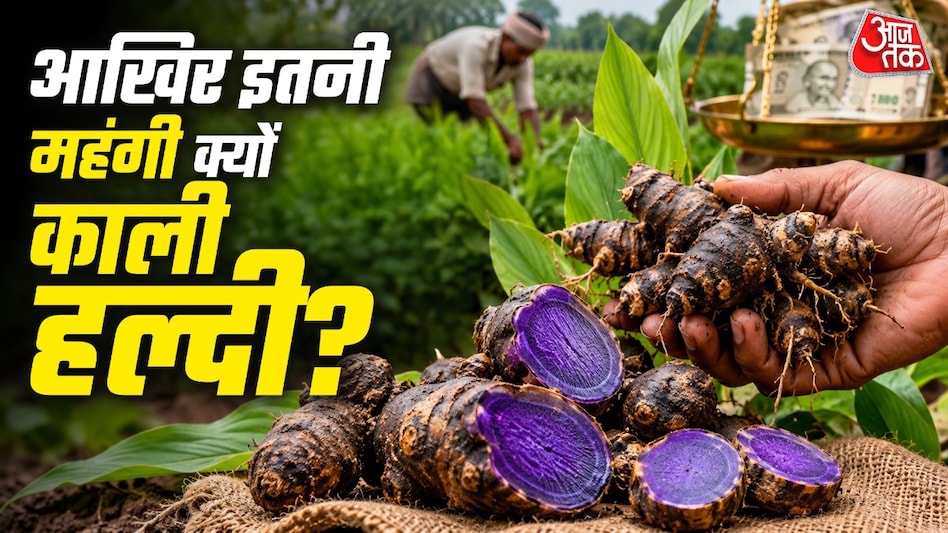
Black turmeric is called Black Turmeric, and its scientific name is Curcuma caesia. It belongs to the same family as ginger and regular turmeric. Its characteristic feature lies in the rhizomes that grow underground. Although it may look like regular turmeric externally, a cross-section reveals a blue-black or dark purple color, and the aroma differs from the usual. While yellow turmeric is primarily used in food as a spice and coloring agent, black turmeric is utilized in traditional medicine, certain Ayurvedic products, cosmetics, and scientific research because it contains various natural chemical compounds that are being studied.

The main reason for the high price of black turmeric is its limited availability. Unlike the mass cultivation of regular yellow turmeric, the cultivation of black turmeric is not yet widespread, and the number of farmers engaged in this is limited. Another important factor is demand. It is used in the production of traditional medicines, cosmetic goods, and for research, which sustains a constant demand for high-quality rhizomes. Furthermore, the price depends on the quality of the rhizomes, humidity level, size, purity, and whether the turmeric is dried or fresh, causing its cost to vary across different locations.

It was expected that the price of black turmeric would be between 500 and 900 rupees per kilogram, but in some places, it is sold for up to 2000 rupees per kilogram.

To understand the potential income from growing black turmeric, one must know the yield. Typically, preparing the harvest takes 8 to 9 months. After this, the underground rhizomes are dug up. The amount of turmeric a single plant yields depends on the seed variety, soil type, weather, irrigation, and care, so there is no guarantee of uniform yield. It is important to understand that the weight of fresh and dried rhizomes differs, and the farmer must account for this difference when calculating profit.

Suppose a farmer harvests 100 grams of fresh black turmeric from one plant. If a buyer is willing to pay 500 rupees per kilogram, the value of that plant's harvest would be about 50 rupees. However, if the same farmer manages to find a buyer at a price of 2000 rupees per kilogram, 100 grams of turmeric would be worth 200 rupees. Nevertheless, this is only an example calculation, not a guaranteed profit, as the 2000 rupees per kilogram price is not available to every farmer; it is often associated with special quality, limited volume, or a specific buyer. Additionally, the farmer's expenses include costs for seeds, fertilizers, irrigation, labor, digging, and packaging, so it cannot be assumed that every plant will bring in hundreds of rupees solely due to the high market price.

Black turmeric is grown not from seeds, but from fragments of its rhizomes. Farmers dig up the rhizomes from the ground and plant them in the field, from which new plants subsequently emerge. Soil suitable for this crop is one that does not retain water but maintains necessary moisture. When preparing the field, it is recommended to mix well-rotted manure compost. According to agricultural information, the planting distance is approximately 30x30 centimeters. The optimal time for planting is considered mid-April in northeastern India, while in other regions, the period before the monsoon season may be suitable. During the growth of the crop, maintaining soil moisture through necessary irrigation and regularly weeding are crucial.

It takes about 8–9 months for black turmeric to fully mature. When the leaves of the plants begin to turn yellow and wither, farmers proceed to dig up the rhizomes. After extraction, the rhizomes are cleaned of soil. They are then either sold fresh or cut into small pieces for drying. Drying leads to a significant reduction in weight, so prices for fresh and dried black turmeric cannot be directly compared.

Farmers can contact companies that produce Ayurvedic products, herb traders, wholesale spice dealers, and certain cosmetic firms to sell black turmeric. The Khari Baoli market in Delhi is also among the major markets for herbs and spices.

Five beautiful flowering plants you can plant in November for a small price to decorate your balcony in winter
Read more
www.aajtak.in

Five beautiful flowering plants you can plant in November for a small price to decorate your balcony in winter

When winter arrives, having flowers on the balcony gives the house a special atmosphere. As November approaches, temperatures begin to drop, and this time is ideal not only for taking out winter clothes but also for decorating the balcony and roof with bright flowers. In November, you can plant various colorful flowers that will delight the eye and fill the air with fragrance throughout the winter.

If you want your pots to be full of flowers soon, it is worth starting gardening preparations in advance. It is worth noting that you do not need to spend large sums of money on expensive decorative plants from stores for this. In nurseries, you can find flowering plants that can be purchased for about 10 rupees and planted at home. Below is a list of five plants that can be planted in November to decorate your balcony with flowers.

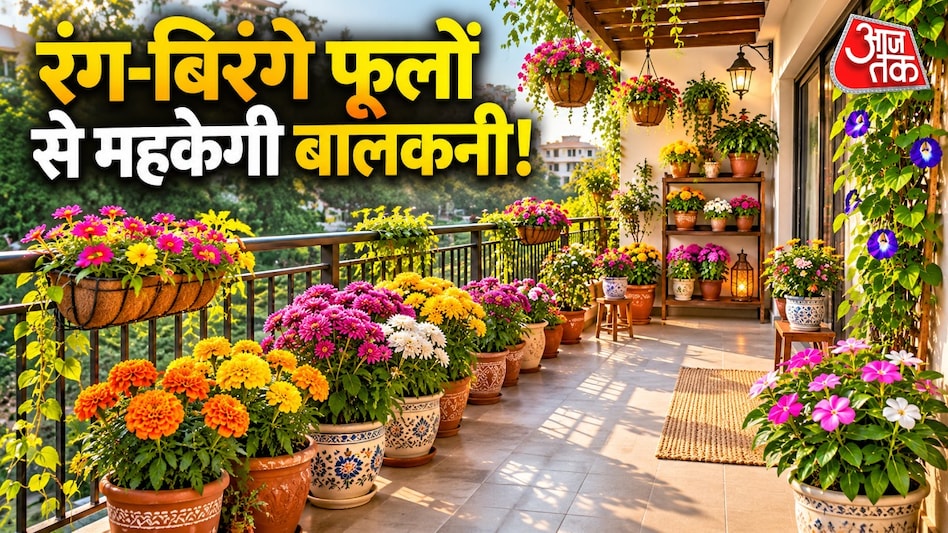
Which plant might be best suited for decorating a home in winter? Marigold flowers with their yellow and orange shades add beauty to both balconies and roofs. Marigold plants can be found in a nursery for about 10 rupees. They should be planted in a pot in November and placed in a well-lit area. Soil moisture must be maintained, but excessive watering should be avoided. With proper care, the plant can bloom continuously.

When choosing flowers to plant in November, it is important to consider aster. This is a beautiful flower that blooms in winter and is available in many colors, including white, yellow, pink, and red. The plant can be purchased from a nursery at a low price. Furthermore, a new specimen can be grown from its cutting. Place the aster where it receives good light. When it blooms in winter, even a simple pot will look very beautiful.

If you want to fill the balcony with bright flowers without much effort, you can plant an evergreen. Its local plant can be bought from a nursery for about 10 rupees. It blooms with pink and white flowers. Plant it in a pot and place it where there is good light and sun. However, since its growth may suffer with the increase in cold, the plant needs to be protected from severe cold and frost.

Portulaca, also known as moss rose, is famous for its small and colorful flowers. A new specimen can be prepared from its shoot. Portulaca cuttings can be purchased from a nursery at a low price. Nevertheless, this plant develops best in warm and sunny climates. If you plan to plant it in November, keep in mind that severe cold and frost can harm it. Place it in a well-lit area.

If you want to make not only the pots but also the lattice or grid of the house green, you can plant the climbing flower aprazita. A small packet of its seeds can be bought for about 10 rupees. Its blue and white flowers look very beautiful. Plant it in a pot and provide support for the vine to grow upwards. It should be remembered that aprazita grows best in a warm climate. Germination and growth after sowing in November will depend on the temperature. In cold regions, it is crucial to provide protection against frost and give it plenty of sun.

When gardening in the winter period, it is important to consider some small details. First of all, choose a pot and location according to the plant's needs. The pot must have drainage holes. In cold weather, the rate of soil drying slows down, so you cannot water daily without checking. Provide the plants with plenty of sunlight, and if there is a risk of frost at night, place them in a safe place.

In Kashmir, 150 thousand flowers are required to obtain one kilogram of saffron
Read more
thebetterindia.com

In Kashmir, 150 thousand flowers are required to obtain one kilogram of saffron

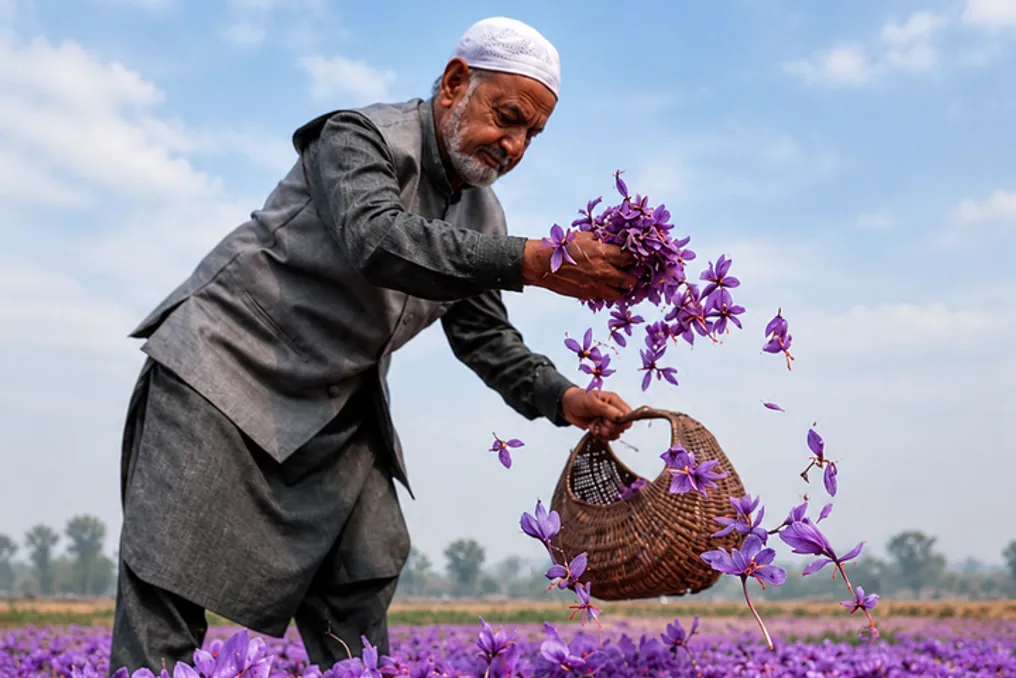
Every autumn season, the fields around Pampore, a town in the Pulwama district of Kashmir located approximately 16 kilometers from Srinagar, turn purple almost overnight. The crocuses bloom at the end of October and disappear by mid-November each year.

This short period is significant because Pampore produces about 80 percent of Kashmir's saffron, which is obtained from the stigmas of Crocus sativus flowers. The plant blooms only once a year, and this occurs only when autumn becomes cool.

The blooming time is determined long in advance. Farmers plow the fields in March and April, treat the soil during the summer to retain moisture, and then plant the bulbs at the end of July into soil that remains moist but never waterlogged.

After planting, the bulbs await changes in weather. Cool days closer to the end of October trigger flowering, and timely rains in September and October support it, causing the flowers to bloom within the same few weeks every year.

As soon as the flowers open, families must act very quickly. They go out at dawn, hand-picking every flower into woven baskets, and walk through each field three times to collect the flowers in full bloom.

All these efforts yield a small harvest because only a part of each flower is used. Each flower has three crimson stigmas, and approximately 150,000 flowers are needed to obtain one kilogram of dried saffron, which explains its high price.

The harvest ends quickly, but the work continues indoors. In November and early December, families gather in living rooms to separate the stigmas from the petals, sharing old stories and songs with visiting relatives.

Saffron is closely linked to local culture. On the first day of the harvest, farmers bring some saffron to the shrine of Hazrat Sheikh Sharif-ud-Din in Namblabal, Pampore, and an annual state festival welcomes visitors to the fields.

After separating the stigmas, they are dried, which preserves quality and extends shelf life for several years. Thus, fresh Kashmiri saffron only reaches the markets from late November, after sorting and grading each year.

The short saffron bloom depends on cool days, soil moisture, and autumn rains; recent dry periods have reduced harvests. For the families of Pampore, these few weeks of the year provide both a livelihood and a shared heritage.

Popular