Alibaba unveiled preliminary version of Qwen4-Max model with one million token context window
Read more
TechNode
technode.com

Alibaba unveiled preliminary version of Qwen4-Max model with one million token context window

Alibaba made the preliminary version of Qwen4-Max available on Wednesday, the flagship model in its new Qwen series. This model is capable of processing images and videos and can handle a context volume of up to one million tokens.

Developers can access this preliminary version through an Alibaba Token Plan subscription. Furthermore, the model is already available for early use in the Qwen app, Qoder, QwenWork, and QwenStudio applications.

Similar stories

Mercedes-Benz unveils updated E-Class with China-developed AI cockpit and Doubao AI integration
Read more
technode.com

Mercedes-Benz unveils updated E-Class with China-developed AI cockpit and Doubao AI integration

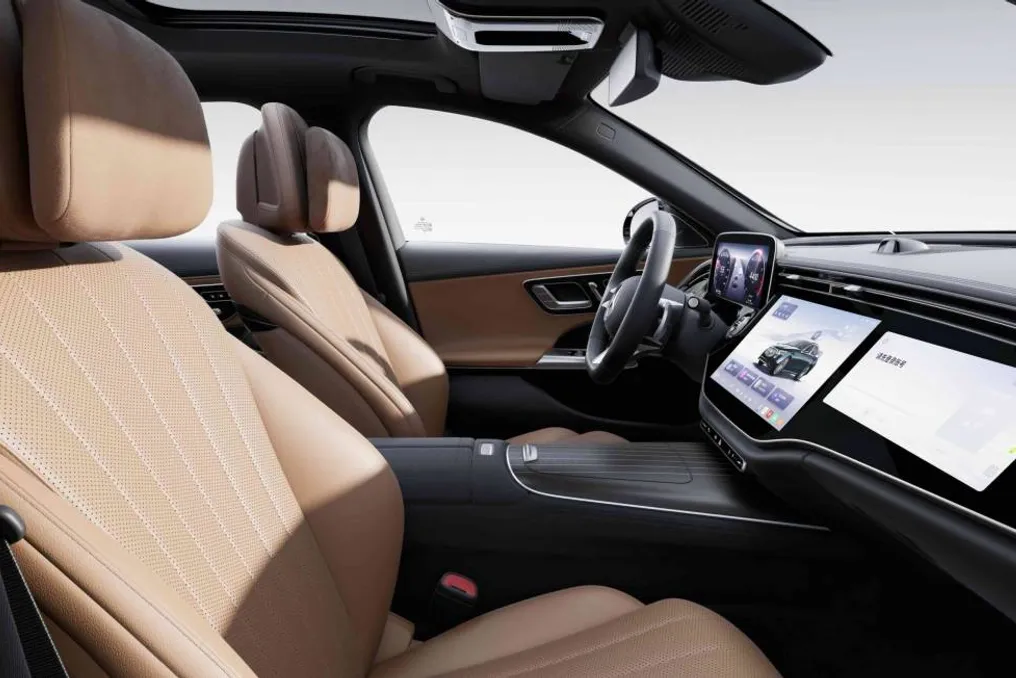
Mercedes-Benz released an updated version of the E-Class with an extended wheelbase in the Chinese market on November 2nd. As part of the launch, an AI cockpit system was presented, which was independently developed under the guidance of the company's Chinese research team.

Three modifications of the E 300 L are available in the price range of 423,800 to 509,800 yuan. The cockpit integrates ByteDance's Doubao model into the Mercedes-Benz virtual assistant and also includes support for Huawei HiCar alongside Apple CarPlay.

The voice control system supports voice recognition for six users and allows commands to be executed via the screen. Furthermore, drivers can create personalized driving scenarios by combining various conditions and actions through a customizable interface.

It is planned that this system will be regularly updated via over-the-air updates quarterly, and it will also be expanded to other Mercedes-Benz models, both internal combustion engine and electric.

Alibaba Cloud introduces Memory service for long-term memory in personal agents
Read more
pandaily.com

Alibaba Cloud introduces Memory service for long-term memory in personal agents

Alibaba Cloud has released the Memory service on its Model Studio platform. This service is designed to create long-term memory in personal AI agents. According to a report from IT Home dated November 2, this functionality allows agents to remember user preferences, plans, and previous commitments across various dialogues. The system collects this history into a structured user profile that the agent can use subsequently.

Alibaba Cloud claims that its system leads in two public memory tests. In charts published at the launch, where the system is presented under the name Mementis, it ranked first across four HaluMem-medium factual memory metrics, including recall, precision, and F1 scores. Furthermore, the system scored 85.15% in question-answering tasks, surpassing the next system, Zep, which scored 81.71%. On the PersonaMem-v2 personalization benchmark, the system achieved an overall score of 56.82, the highest among eight compared systems and the best in seven out of nine tasks; MemBrain ranked second with a score of 55.72. Alibaba Cloud notes that data on other systems was obtained as part of the OmniMemEval assessment, and these figures were provided by the company itself and have not undergone independent verification.

The company provided an example where a capital management consultant can recall a client's risk appetite, goals, and past discussions. This ensures that subsequent recommendations remain consistent with what the user has already stated, rather than starting the process from scratch in every new session.

Developers have the ability to independently define memory retention rules and profile fields to control what information the agent should store. The console provides tools for debugging and tracking changes, allowing teams to see exactly how the memory was formed or updated. Access to Memory is available via API, as well as through MCP and a command-line tool that integrates with various agent environments such as Codex, DeepSeek Harness, Claude Code, and OpenClaw. Additionally, the service is compatible with Skills, enabling agents to combine stored context with pre-built functions.

This launch aligns with Alibaba's broader strategy for developing personal agents. At the CNCC event last month, Jiang Guanjun from Qwen described the concept of a personal agent framework based on three core elements: models, memory, and an ecosystem of capabilities.

XPENG launches MONA L05 in China with prices starting from 139,800 yuan for EV versions and increased range
Read more
pandaily.com

XPENG launches MONA L05 in China with prices starting from 139,800 yuan for EV versions and increased range

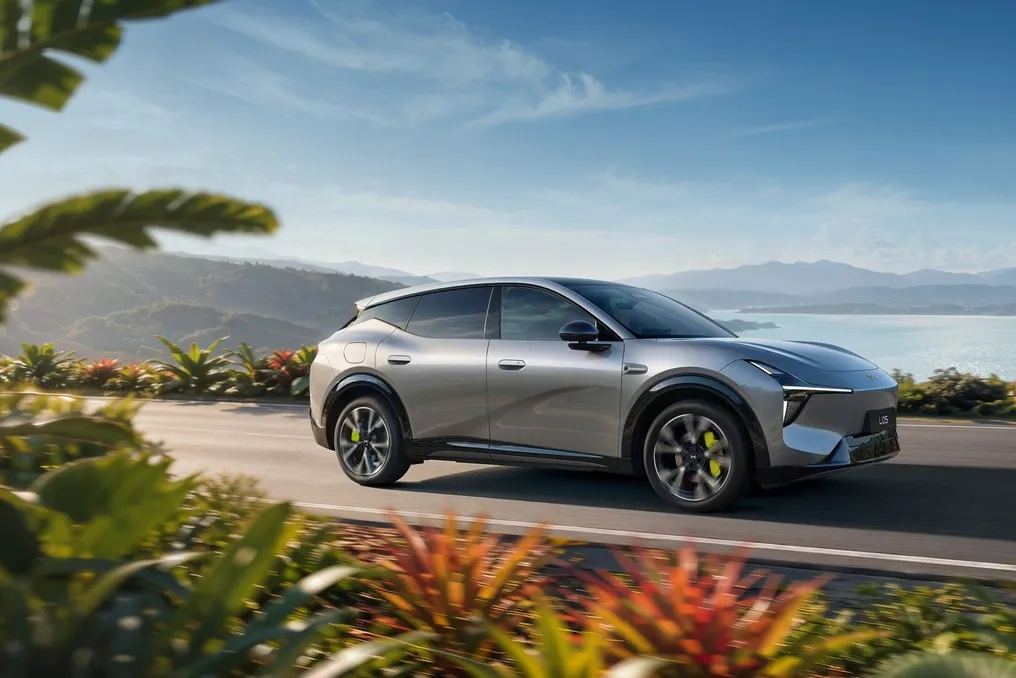
XPENG has released the MONA L05 model in China, which is the first five-seater large SUV in the MONA series. The model is available in six configurations, including both fully electric and extended-range versions.

According to an XPENG press release to Chinese media and a report by IT Home, the event took place on October 29th in Guangzhou. Official recommended prices range from 144,800 to 176,800 yuan, while launch prices start from 139,800 to 171,800 yuan. XPENG announced that the first 5,000 units have already left the special production line, and deliveries began on November 1st.

The lineup of pure electric versions includes the 560 Plus (launch price 139,800 yuan), 535 Max (149,800 yuan), 635 Max (159,800 yuan), and 635 Ultra SE (171,800 yuan). Extended-range versions are represented by the 1310 Max (149,800 yuan) and 1310 Ultra SE (161,800 yuan). These prices are approximately 20,000–30,000 yuan lower than the pre-sale range of 169,800 to 191,800 yuan, announced on October 15th, as noted by Chinese publications, including National Business Daily and Bitauto. Orders placed before December 15th are eligible for additional launch bonuses.

This SUV measures 4,870 mm in length, 1,930 mm in width, and 1,636 mm in height, with a wheelbase of 2,940 mm, which is longer than the XPENG G6. The exterior design was led by Juanma Lopez, who previously served as the head of external design at Ferrari. Storage space includes a front trunk of 102 liters and a rear trunk of 702 liters, which expands to 1,913 liters when the rear seats are folded down.

Each electric version is equipped with a rear motor of 183 kW and lithium iron phosphate batteries with capacities of 58.2 kWh or 71.1 kWh, providing a CLTC range of 560 km, 535 km, or 635 km, respectively. XPENG states an energy consumption of 11.7 kWh per 100 km, acceleration from 0 to 100 km/h in 6.8 seconds, and the ability to charge from 30% to 80% in 15.8 minutes. The extended-range model combines a 70 kW, 1.5-liter range extender and a 37.2 kWh battery, yielding an electric range of 310 km and a total CLTC range of 1,310 km.

The driver assistance system is based on a visual setup. The Max versions are equipped with the XPENG Turing AI chip with an effective computing power of 750 TOPS and run on the distilled VLA Lite model, while the Ultra SE versions use two Turing chips to achieve 1,500 TOPS and the full second-generation VLA model, whose architecture, according to XPENG, is similar to their Robotaxi program's architecture. All modifications support NGP city and highway assistance, as well as parking assistance from spot to spot. The cabin is equipped with a 26.8-inch W-HUD display, a 17.3-inch central screen, an optional roof-mounted rear screen, and the Master Agent voice assistant for route finding and trip planning.

The chassis uses a MacPherson front suspension and a rear multi-link suspension with DCC adaptive dampers. The vehicle has a turning radius of 5.4 meters and a braking distance from 100 to 0 km/h of 34.22 meters. XPENG asserts that the vehicle was designed according to five-star safety standards of China, Europe, and Australia, and is equipped with seven airbags, as well as standard automatic emergency braking and steering systems.
Popular