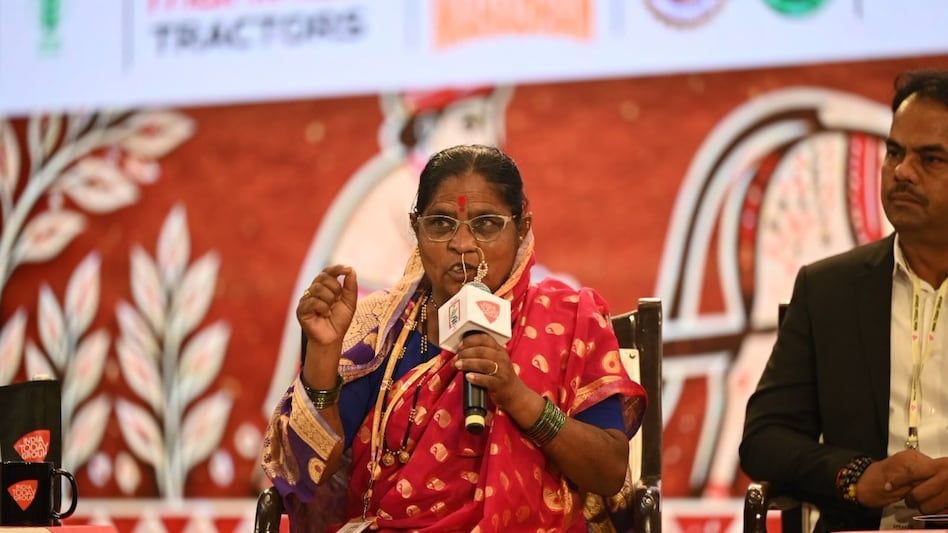
Rahibai Soma Popere, titled 'Mother of Seeds,' preserves traditional seeds in Maharashtra
Read more
Aaj Tak
www.aajtak.in

Rahibai Soma Popere, titled 'Mother of Seeds,' preserves traditional seeds in Maharashtra

At an agricultural conference in India, as part of the 'Agricultural Heroes' session, Rahibai Soma Popere from Maharashtra shared the story of her work in preserving traditional seeds and protecting traditional farming. She recounted how, relying on the knowledge of her family and ancestors, she began collecting and preserving traditional seeds, which gradually attracted thousands of women to her initiative.

Rahibai, who once stored seeds in clay pots under limited resources, has now become a significant figure in the field of local seed conservation in Maharashtra.

She explained that her family previously practiced agriculture using traditional seeds, but the use of hybrid and chemical seeds available on the market gradually increased. This negatively affected her family's agriculture, leading her to realize the potential of traditional seeds for improving life and farming. Consequently, she started re-collecting and preserving old local seeds.

According to Rahibai, her work began based on life experience and lessons learned within her family. Gradually, other people joined this effort. She is convinced that traditional seeds are not only a heritage of agriculture but also something that must be preserved for future generations.

Rahibai stated that she learned seed preservation techniques from her father, grandfather, and grandmother. In childhood, she observed older family members carefully storing seeds in clay pots along with wood ash. She continued this traditional practice.

According to Rahibai, seeds stored in clay pots with ash can remain viable for about three years, and they can be kept for consumption for approximately ten years. Rahibai believes that preserving seeds traditionally is highly important for both health and agriculture.

She emphasized that she gained most of her knowledge about agriculture and seed preservation from family experience and personal life journey, rather than formal education, but it was family knowledge that guided her in this direction.

Rahibai shared her difficult childhood: she was married at the age of just 12 and spent about 40 years in extremely constrained circumstances. Despite this, she continued her efforts to save traditional seeds. When she started farming with old local seeds on her fields, local residents began asking her about these seeds. People showed interest in where she got them, which prompted her to understand that awareness about the value of traditional seeds could be raised.

Initially, she initiated the creation of a women's organization with minimal investment of 10 rupees. This group gradually grew, and today about 3,500 women from Maharashtra are members of this organization. Rahibai faced numerous difficulties in her work to conserve local seeds; some sellers and companies tried to stop her, but she did not cease her efforts. Her main goal was to ensure the preservation of the traditional seed heritage for coming generations.

Rahibai started her seed conservation work in her small home and hut. In addition to storing seeds in clay pots, she gradually created her own seed bank. Later, when her work became known, she received support in developing this endeavor.

During a meeting with the then Maharashtra Agriculture Minister Chandrakant Dada Patil, Rahibai presented her problem, stating that she maintained a seed bank in a small hut. When offered more suitable accommodation, Rahibai insisted on establishing a seed bank rather than housing. Following this, infrastructure was organized for her, which helped advance her work.

Today, students from various agricultural colleges in Maharashtra visit her seed bank. There, Rahibai shares with them information about the importance of traditional seeds, their preservation methods, and their usefulness in agriculture.

Rahibai Soma Popere's work has received national recognition: in 2018, she was awarded the Nari Shakti award, and in 2020, the Padma Shri award. Her efforts to promote traditional farming and preserve local seeds earned her the title 'Mother of Seeds.'
Similar stories

According to Vastu, five plants attract wealth and improve luck in the home
Read more
www.aajtak.in

According to Vastu, five plants attract wealth and improve luck in the home

Everyone wishes for their home to never lack money, for the blessings of Mother Lakshmi to remain with the family, and for happiness and prosperity to reign in the household. Therefore, people use various methods, from worship to different Vastu practices. However, perhaps you do not know that some plants planted in the home are also associated with prosperity and wealth?

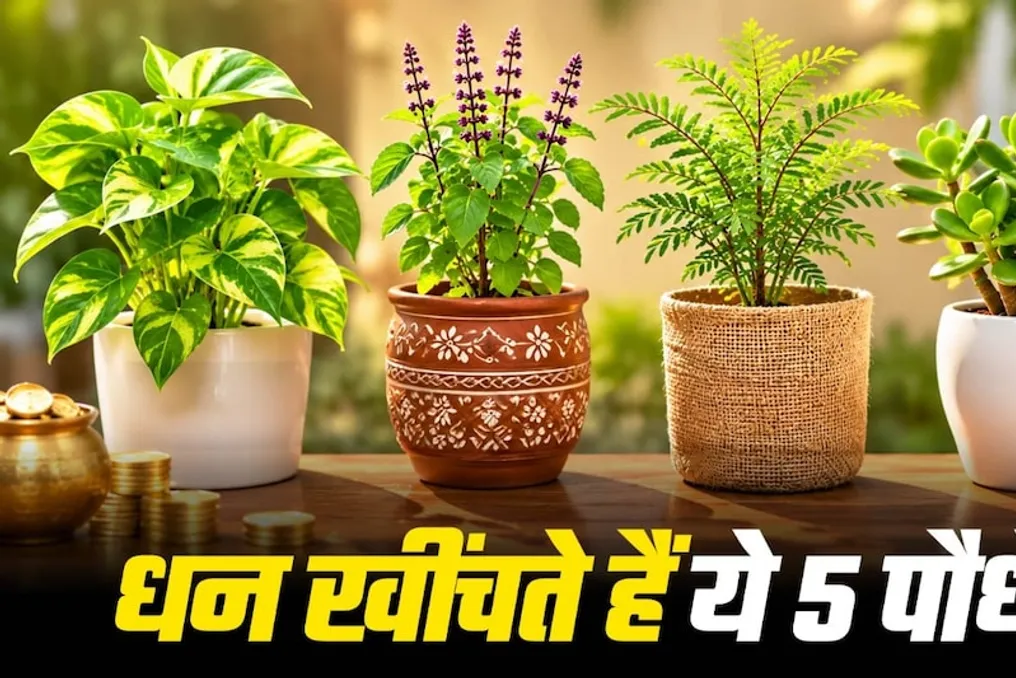
Vastu Shastra mentions five such plants that are considered extremely auspicious for the home. There is a belief that planting them in the correct direction brings positive energy into the house. The following discusses these five plants and where they should be placed in the dwelling.

Auspicious Plants According to Vastu

1. Money Plant

The Money Plant is considered a symbol of well-being and financial prosperity in the home. According to Vastu, it is most favorable to place it in the southeast direction of the house. It is believed that placing the Money Plant in this direction promotes good opportunities related to money. It is important to always keep its shoots in a green state: water regularly and remove dried leaves.

2. Tulsi Plant

In Hinduism, the Tulsi plant is considered very sacred. Its presence in the home brings good luck. According to religious beliefs, a home where the Tulsi plant remains green maintains peace, tranquility, and positivity. It should be placed in the yard or on the balcony in a spot that receives good sunlight. In many homes, there is a tradition of lighting a lamp next to the Tulsi daily.

3. Shami Plant

The Shami plant is also considered very auspicious in Hinduism. It is associated with the god Shiva and the god Shani. According to belief, having the Shami plant in the home eliminates negativity and supports prosperity. According to Vastu, it is best to plant it in the north or east direction of the house.

4. Jade Plant

The Jade Plant, also called Crassula or Money Tree, is associated with wealth and progress due to its thick green leaves. According to Vastu, it is favorable to keep it near the main entrance of the house. It should be placed where soft sunlight falls. It is believed that this plant brings happiness and well-being into the home.

5. Bamboo Plant

The lucky bamboo is considered beneficial for the home. It is a symbol of peace, progress, and luck. This plant holds special significance in Feng Shui as well. According to belief, placing it in a home or office creates a favorable atmosphere. It should be placed in a spot with sufficient light.

Tulsi Placement Rules According to Vastu Shastra to Attract Prosperity
Read more
www.aajtak.in

Tulsi Placement Rules According to Vastu Shastra to Attract Prosperity

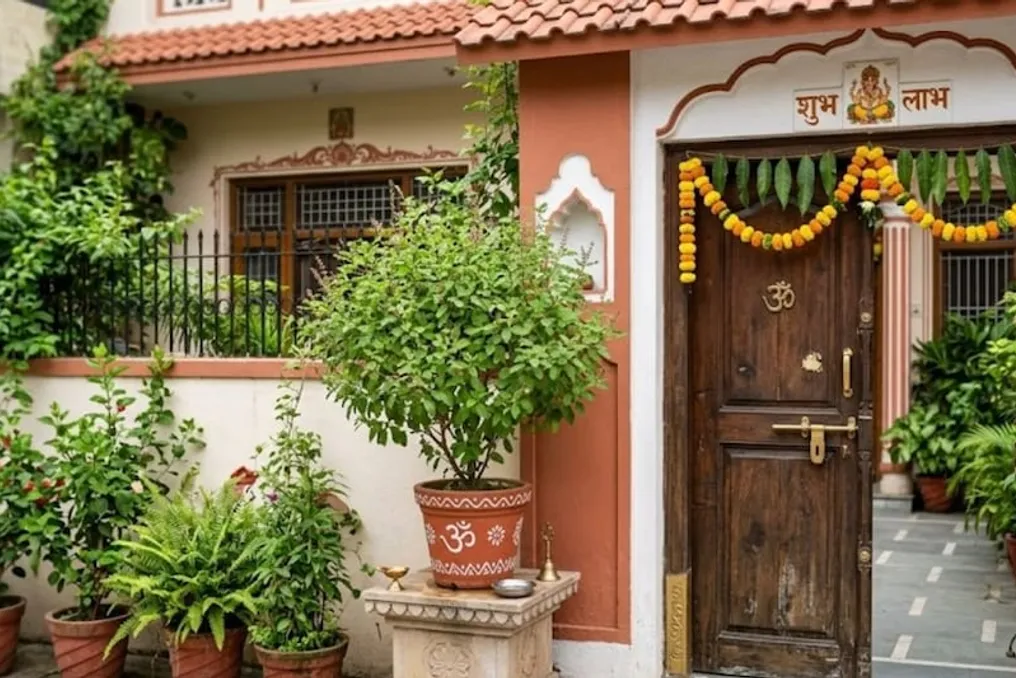
In Hinduism, the Tulsi plant is considered extremely sacred. There is a belief that having this plant in the home helps maintain peace, tranquility, and a positive atmosphere. This is why people often prefer to plant Tulsi in the yard, on the balcony, or near the main entrance. Nevertheless, before planting Tulsi, it is crucial to consider the correct placement and direction, which is also stipulated by the principles of Vastu Shastra.

A common question arises as to whether Tulsi should be placed to the right or left of the main entrance. According to Vastu Shastra, placing the plant to the right of the doorway is considered auspicious, although this also depends on the entrance structure and available space. It is important to place the plant where it will receive sufficient sunlight and fresh air, while ensuring its safety and lack of obstruction to passage.

Vastu Shastra recommends the northeast, known as Ishan Kona, as the most suitable place for planting Tulsi, as this direction is associated with deities. Furthermore, it is considered favorable to plant Tulsi in the east and north; it is believed that in these directions, the plant brings prosperity and positive energy into the home.

According to Vastu traditions, one should avoid placing Tulsi in the south direction, as it is not considered suitable for this plant. If there is no space at the main entrance, Tulsi can be placed on a balcony or in the yard, facing northeast, provided the plant receives adequate light.

In accordance with religious beliefs, Tulsi must receive proper respect and placement. Therefore, instead of placing the pot directly on the ground, it is recommended to place it on a high pedestal or table. One can also create a small decorative garden (vrindavan) for Tulsi, which will make its location more organized and noticeable.

Vastu requires special attention to cleanliness around Tulsi. Shoes, trash cans, or unnecessary items should not be left near the plant. It is necessary to prevent dirt accumulation around the plant, regularly removing dry leaves and branches, which will improve its care.

In Hinduism, there is a tradition of lighting a lamp near Tulsi in the morning and evening, with special significance given during the month of Kartik. It is believed that lighting a ghee lamp in the evening brings prosperity to the home. The lamp should be placed at a short distance from the plant's leaves and dry branches to avoid fire.

Tulsi is known not only for its religious but also for its medicinal properties, so its proper care is essential. You should monitor that it receives enough natural light daily. Water only when the soil has dried out, avoiding waterlogging in the pot. Regularly clean the plant of dry and damaged leaves. It is also important to ensure good air circulation around Tulsi. The pot must have drainage holes so that excess water can escape and the roots do not rot.

It is important to remember that the rules regarding the direction and worship of Tulsi are based on Vastu and religious beliefs and may vary depending on different traditions.

Vastu Consultation: 8 Types of Plants That Can Bring Financial Problems Despite Their Beauty
Read more
www.aajtak.in

Vastu Consultation: 8 Types of Plants That Can Bring Financial Problems Despite Their Beauty

Although placing plants in the home is a good way to make living space more beautiful and pleasant, as greenery improves aesthetics and creates a sense of natural freshness, Vastu Shastra recommends considering not only the appearance of the plants but also their growth pattern and associated traditional beliefs.

According to Vastu principles, some plants are associated with negative energy, stagnation, and family discord. Therefore, it is advised to avoid planting thorny, dry plants, and certain trees inside the house.

Cactus: Although cacti are popular for home decoration due to their ability to stay green with minimal care, Vastu beliefs associate their sharp spines with stress, disagreements, and bitterness in relationships. For this reason, it is not recommended to keep them in the living room or bedroom. If you like cacti, it is better to place them on a balcony or roof.

Bonsai: Bonsai holds a special place in decor due to its small and attractive form, achieved by controlling the tree's natural growth. However, according to some Vastu beliefs, bonsai is considered a symbol of stagnation and obstacles to life progress precisely because of this. Preference should be given to naturally growing plants instead of these.

Peepal (Imli): The Peepal is known for its dense leaves and sour fruits. In some traditional Vastu beliefs, it is not recommended to plant it too close to the house, as its presence may negatively affect the atmosphere of the dwelling.

Dry and Withered Plants: Although wilting or yellowing of houseplants can be common, constantly ignoring this process is unacceptable. Vastu associates dry and dead plants with stagnant energy and negativity. Furthermore, such plants detract from the appearance of the home. Regular pruning, removal of dry leaves, and watering as needed are necessary. If a plant has completely dried up and has no chance of revival, it is best to remove it.

Cotton: The cotton bush is easily recognizable by its white fluff and is used for various purposes, including textile production. Nevertheless, some traditional beliefs advise against planting cotton indoors, as in these beliefs, it is viewed as a symbol of mourning and misfortune.

Henna Leaves: Henna is used to create patterns on hands and dye hair, possessing traditional and cultural significance. Despite this, some Vastu beliefs caution against placing henna indoors, believing that the traditions associated with it are unfavorable for the home environment.

Acacia (Babool): Acacia is known for its thorns and strong branches. According to some Vastu beliefs, thorny trees should not be planted inside the house or too close to the main entrance, as they are associated with tension and relationship obstacles. However, acacia is useful in its natural environment, so when deciding to plant it near the house, its height, spread, and potential thorn-related problems should be taken into account.

Mango Tree (Madar): The mango tree is known for its unique flowers and milky sap. Some traditional beliefs advise against planting it indoors. However, the most important aspect is safety: the milky sap of the mango tree can cause skin and eye irritation. Therefore, if there are small children or pets in the house, it should be kept out of their reach. Avoiding indoor planting is also a good option from a safety perspective.

Popular