Artificial intelligence has simplified the process of product creation, idea testing, customer acquisition, and even revenue generation at earlier stages for founders. However, as barriers to starting a business decrease, a question arises: are investors raising the bar for their first institutional checks?
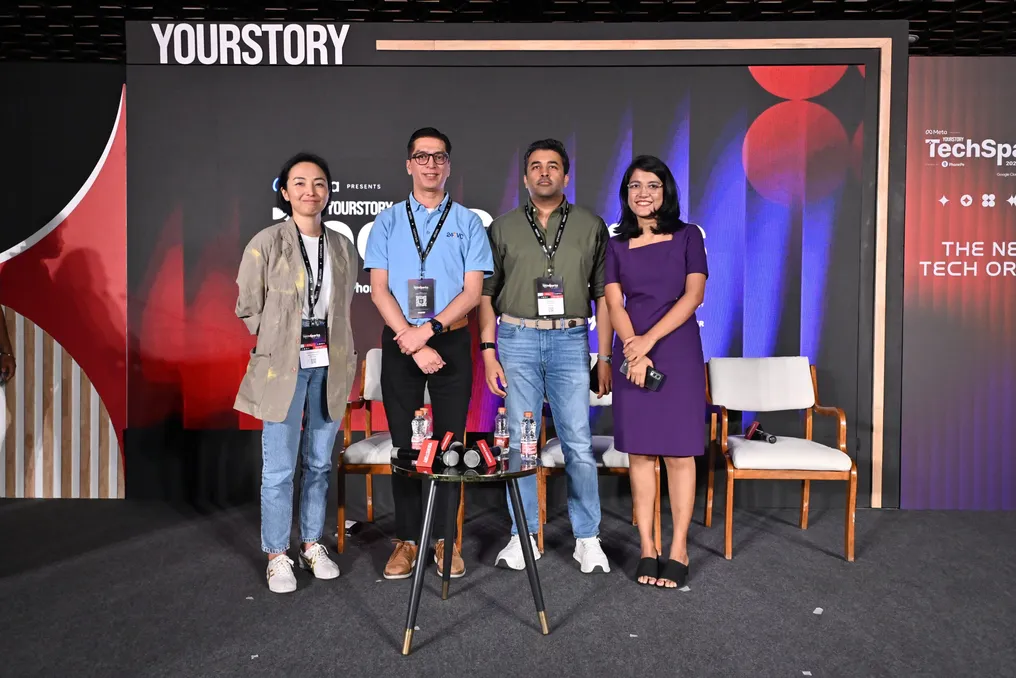
This question became the central theme of the panel discussion 'First Cheque, Harder Questions: The New Seed Playbook,' which took place at the TechSparks 2026 event.
The session featured Yoonmin Cho, Head of APJ at Snowflake for Startups; Shashank Randev, Founder and General Partner at 247VC; and Anvesh Ramineni, Venture Partner at Endiya. Shubhangi Mishra, Senior Creative Lead at YourStory, moderated the discussion. The conversation focused on investor expectations at the seed stage and whether traditional startup metrics retain their significance.
Cho noted that AI has changed the venture capital ecosystem, especially after a period of funding slowdown. Snowflake has significant interest in enterprise AI, particularly vertical AI, as well as new opportunities in frontier AI.
Despite AI making product development more accessible, Cho emphasized that founders must still focus on fundamental aspects of the business. Having a clear competitive advantage—whether through industry expertise, sales channels, or other strengths—is becoming increasingly important.
Randev added that AI is also changing how investors evaluate companies in the corporate technology space. Progress in AI helps deeptech startups prototype faster and achieve product-market fit, but corporate technologies face a different challenge: AI is replacing several individual enterprise products, making it difficult to determine which solutions will remain relevant long-term.
He remarked, 'I think it's getting a bit harder to figure out which product in the enterprise tech ecosystem will survive the five-year journey.' Randev also pointed out that AI has disrupted 10–15 year old corporate technology models, complicating investors' assessment of individual products and their place in the value chain.
Ramineni agreed that AI has reduced the need for personnel to create a Minimum Viable Product (MVP) or demonstration. Nevertheless, since similar technologies are available to everyone, a ready product is no longer enough to stand out. He stated, 'What founders really need to work on is beyond the product itself. What do they bring to the table that can set them apart from everyone else working in the same industry?'
Ramineni also sees potential for Indian startups in vertical AI. Although India may lack foundational AI capabilities comparable to companies like OpenAI and Anthropic, it possesses significant industry expertise. He cited semiconductor design as an example, noting that 30% of the global workforce in this area is based in India. Access to specialized talent and industry knowledge can help Indian startups build competitive vertical AI applications.
Since creating an MVP has become easier, investors are scrutinizing the founders themselves, the problems they solve, and their competitive advantages. For Cho, the starting point is understanding customer needs and identifying problems customers are willing to pay to solve. She stressed that startups must view their activities as a business, not just a product development exercise. Founders must understand customer pain points and workflows, build strong teams, and develop expertise that competitors cannot easily copy. Furthermore, they must provide tangible proof of why their business can succeed.
Randev listed five parameters he considers when evaluating startups: founders' experience and complementary skills; their understanding of the Total Addressable Market (TAM) and go-to-market strategy; the business model; intellectual property or other competitive advantages; and the value investors can add post-investment. In deeptech, teams must possess both technical competence and business acumen. Crucially, the founder's vision remains paramount. Randev said, 'At least one founder must have a vision. Without it, it is very difficult for venture capitalists to implement that vision. We back the founder.' He mentioned investments in battery ecosystems, plastic sorting robotics, and 3D metal printing. Despite operating in niche sectors, the founders demonstrated a clear vision of what they wanted to build and how they planned to scale their companies.
Ramineni believes that MVPs and demos have become a baseline expectation rather than a reason to invest. Founders must demonstrate an advantage that competitors cannot easily replicate. This could stem from patented distribution networks, deep industry expertise, or an established reputation in their industry. A product that another company can reproduce in a matter of days is unlikely to provide a long-term advantage, although deeptech and biotech ventures differentiate themselves through their underlying technology.
In enterprise AI, Ramineni also notes that investors look beyond simple workflow automation. Products that are easily replicated or replaced may struggle with customer retention. Instead, solutions that integrate into a company's operations are more likely to create long-term value. He pointed to systems of record, which create a contextual layer around an organization's business processes. As these systems integrate more closely with operations, they become harder to replace.
As startups adopt AI, data governance, security, and infrastructure become important aspects. But should founders prioritize these issues before achieving product-market fit? Cho replied that it depends on the product and its customers. 'If you are building a product that handles sensitive data, or working with enterprise clients, you definitely need to think about governance and security from the start,' she said.
Delaying decisions on these requirements can result in significantly higher costs, especially for companies dealing with sensitive information or serving corporate clients. Cho cited a company that invested in a stable data platform after its CTO realized the time and resources required for constantly hiring, training, and replacing engineers to manage data infrastructure. This decision was driven by the company's business priorities, not solely by the technology itself. She advised founders to make infrastructure and platform decisions based on business needs, especially if such investments help them operate more efficiently, move faster, and reach customers sooner.
The discussion also covered the metrics investors are now considering when evaluating early-stage startups. For Cho, a key indicator of sustained customer demand is repeat usage. Randev looks for customer retention and regular engagement in consumer and enterprise tech companies. However, he noted that deeptech and advanced manufacturing startups can still attract investment at the prototype stage.
Ramineni posed a broader question: is the founder the right person to solve a critical problem? Investors want to know how well founders understand their users, buyers, and decision-makers to build products that customers are willing to pay for. Since AI reduces the time and resources needed for product development, investors are paying more attention to founder experience, customer understanding, and competitive advantages that can last longer than the initial product launch.