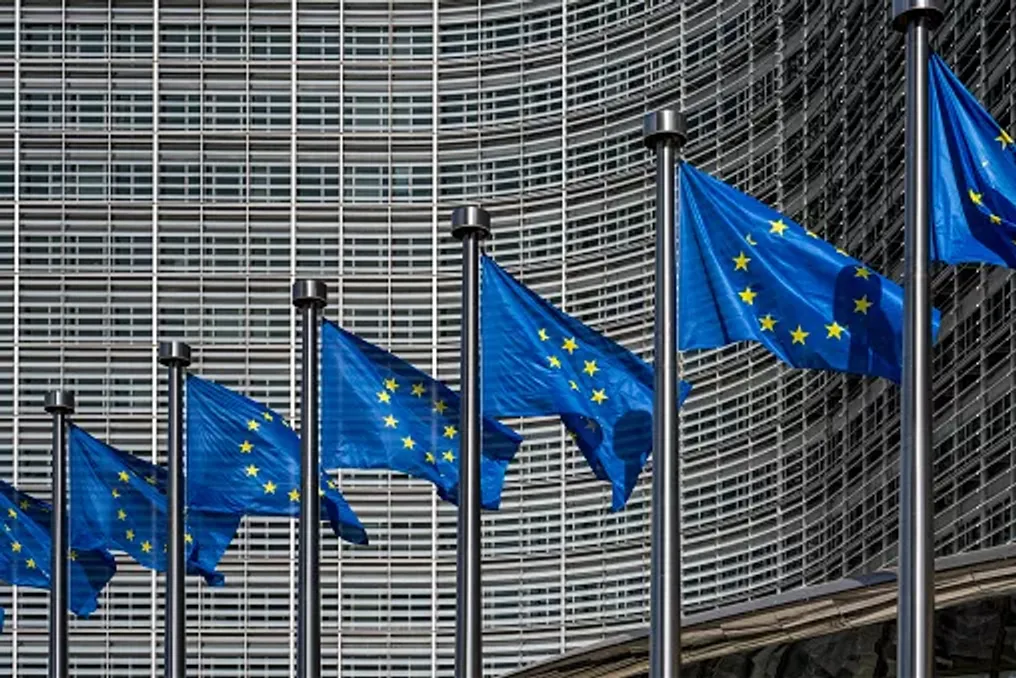
European Commission launches sustainable tourism strategy to transform travel across Europe
Read more
Getaway
getaway.co.za

European Commission launches sustainable tourism strategy to transform travel across Europe

The European Commission has presented its first Sustainable Tourism Strategy, which includes plans to enhance the competitiveness of Europe's tourism industry, manage overcrowding in destinations, and encourage travelers to explore areas outside the continent's most popular centers.

This initiative was announced in Brussels on November 9th and aims to address several serious challenges facing the travel industry, including climate change, shortage of skilled personnel, geopolitical uncertainty, and evolving tourist expectations.

Furthermore, the strategy places greater emphasis on protecting local communities, supporting tourism businesses, and ensuring that the economic benefits of travel reach a wider range of regions across Europe.

Tourism plays a significant role in the European economy. According to data provided by the European Commission, this sector supports approximately 20 million jobs and sustains five million tourism enterprises, 99% of which are small and medium-sized enterprises. It also contributes about 10% to the Gross Domestic Product of the European Union.

However, as visitor numbers continue to put pressure on established destinations, the Commission deems a more coordinated approach necessary to ensure the long-term sustainability of the industry. The strategy is designed to strengthen Europe's position as a leading international tourist destination, making tourism more beneficial for its residents and workers.

One of the key proposals is the creation of a High-Level EU Tourism Alliance. This initiative will bring together Member States, regional authorities, local governments, tourism companies, and industry stakeholders to align policies and promote more balanced tourism development.

The Commission also seeks to simplify access for small tourism businesses and destination management organizations to digital tools, industry data, and professional training. Proposed measures include a new EU Tourism Academy, which will focus on developing necessary skills in the industry. Plans also involve the creation of a Common European Tourism Data Space and an EU Tourism Observatory to identify new trends and support more informed decision-making.

These measures are intended to boost the competitiveness of the tourism sector while reducing unnecessary administrative barriers for businesses.

The main focus of the strategy is on addressing the uneven distribution of tourism across Europe. While destinations such as Paris, Barcelona, and Venice continue to attract millions of visitors, less visited cities, rural communities, and regional areas often receive a smaller share of tourism spending. The Commission wants to encourage travelers to look beyond these well-known hubs, distributing tourism more evenly across the continent.

Another priority is promoting year-round travel. By encouraging visitors to explore locations outside traditional peak holiday seasons, the strategy aims to reduce seasonal pressure and create more stable opportunities for local businesses and tourism workers. Proposed measures include the EU Tourism Management Model, a Balanced Tourism Toolkit, and a European Tourism Crisis Coordination Network.

The broader goal is to develop tourism in a way that supports local economies without compromising cultural identity, natural resources, or the quality of life in host communities.

The strategy has received positive feedback from several organizations representing the European travel and tourism sector. The European Travel Agents' and Tour Operators' Association (ECTAA) welcomed the initiative, calling it an important step towards more balanced, connected, and sustainable tourism across the continent. The organization emphasized the importance of supporting small tourism businesses, investing in professional skills, and improving transport links, particularly rail and air transport.

The International Road Transport Union (IRU) also endorsed the announcement. It highlighted the difficulties faced by bus operators when navigating various vehicle access restrictions in European cities, noting that better access to information and more consistent rules could improve transport connectivity.

Meanwhile, the European Tourism Commission (ETC) characterized the strategy as a positive step toward closer cooperation between European institutions and tourism industry stakeholders.

The new strategy reflects a broader shift in the approach to tourism growth. Instead of focusing solely on attracting more visitors, the emphasis is increasingly moving towards responsible tourism management, protecting local communities, and encouraging the exploration of places beyond established destinations.

For travelers, this may ultimately mean more opportunities to discover small towns, rural landscapes, and lesser-known cultural sites, while visiting popular regions during off-peak times.

Although the strategy is specifically focused on the European Union, its priorities reflect challenges faced by tourist destinations worldwide, including those in Africa. Balancing tourism growth with nature conservation remains a crucial consideration for destinations striving for long-term sustainability.

The European Commission's strategy lays the groundwork for solving these issues across Europe, and its ultimate success will depend on how effectively the proposed measures are implemented.

Similar stories

Uzbekistan and Turkey agree on cooperation plan in tourism
Read more
uzdaily.uz

Uzbekistan and Turkey agree on cooperation plan in tourism

A meeting was held in Istanbul between Abdulaziz Akkulov, Chairman of the Tourism Committee of Uzbekistan, and Mehmet Nuri Ersoy, Minister of Culture and Tourism of Turkey. The goal of the negotiations was to further strengthen tourism ties between the two countries, increase mutual tourist flow, develop new travel routes, and create joint tourism products.

The parties emphasized that the shared history, language, culture, and values of both nations serve as an important foundation for cooperation in the field of tourism. Special attention was paid to studying Turkey's experience in managing tourist destinations, hotel operations, preserving cultural heritage, and developing gastronomic tourism.

Participants also discussed opportunities to create joint tourism offerings in the areas of pilgrimage tourism, tourism related to the heritage of Islamic civilization, and MICE tourism. Furthermore, the sides exchanged views on organizing familiarization trips for media representatives and bloggers from both countries, which will allow for broader promotion of their tourism potential in international media, as well as facilitate the exchange of experience among industry specialists.

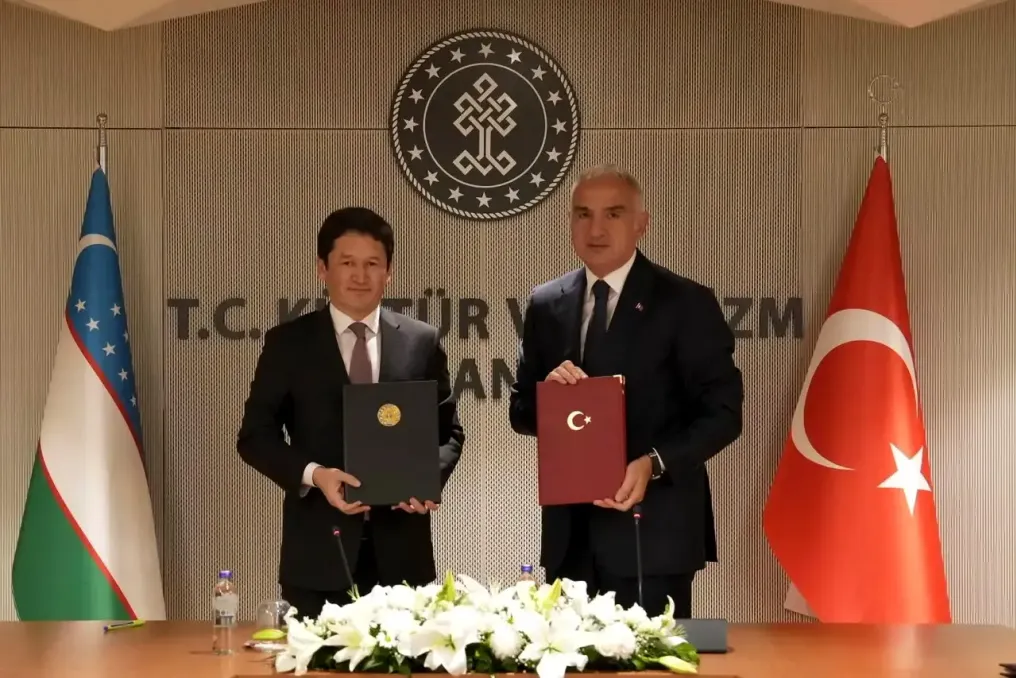
Following the meeting, the parties signed a Joint Action Plan for Cooperation in the Field of Tourism between the Republic of Uzbekistan and the Republic of Turkey for the period 2026–2028. This document defines specific areas of interaction aimed at expanding mutual tourism exchanges, developing pilgrimage tourism, forming joint routes, and participating jointly in international events, as well as improving the professional skills of industry workers and developing the tourism potential of Uzbekistan's regions.

These agreements lay an important foundation for implementing new practical initiatives in tourism relations between the two countries, contributing to an increase in the number of tourists from Turkey visiting Uzbekistan and fostering long-term mutually beneficial cooperation.

Uzbekistan and Turkey Discuss Joint Projects in Tourism and Attracting International Travelers
Read more
uzdaily.uz

Uzbekistan and Turkey Discuss Joint Projects in Tourism and Attracting International Travelers

Uzbekistan and Turkey held discussions aimed at expanding cooperation in the field of tourism, attracting foreign tourists, and implementing joint investment projects.

According to the Tourism Committee of Uzbekistan, Abdulaziz Akkulov, Chairman of the Tourism Committee of Uzbekistan, conducted a working trip to Istanbul, where negotiations took place with representatives of the World Halal Summit Council, Pegasus Airlines, and the Istanbul Chamber of Commerce.

Discussion on Promoting Uzbekistan as a Pilgrimage Destination

In a meeting with Yunus Ete, President of the World Halal Summit Council, the parties discussed opportunities to promote Uzbekistan as an international destination for pilgrimage and Muslim tourism. Furthermore, they considered the prospect of holding an international World Halal Summit and related forums in Uzbekistan in 2027, as well as publishing an international journal.

Participants also spoke about organizing major international events in Bukhara and other cities of Uzbekistan in partnership with the Project Office for the Development of Tourist Products under the Tourism Committee.

Joint Advertising Campaign and Route Expansion

During talks with Mehmet Tevfik Nane, Chairman of the Board of Directors of Pegasus Airlines, the parties examined the potential of tourism in Uzbekistan's cities covered by the airline's route network. A preliminary agreement was reached to prepare a contract providing for a joint advertising campaign to attract tourists to Pegasus Airlines flights in five Uzbek cities.

The promotion of Uzbekistan in regions where Uzbek airlines do not have direct flights was also discussed. The Pegasus Airlines route network via Sabiha Gökçen Airport in Istanbul covers over 100 destinations in 58 countries.

It was proposed to establish cooperation with Uzbek tour operators, conduct joint marketing promotions, airline presentations, and B2B meetings during the Tashkent International Tourism Fair (TITF) in 2026, as well as organize familiarization trips.

Attracting Hotel Brands from Turkey

In negotiations with Şekib Avdagich, President of the Istanbul Chamber of Commerce, participants focused on strengthening business ties and attracting international hotel brands from Turkey to Uzbekistan. A preliminary agreement was also reached to consider the possibility of organizing joint events with the participation of the Convention Bureau operating under the Chamber.

Turkish delegates were invited to the 31st Tashkent International Tourism Fair 'Tourism on the Silk Road', scheduled for November 25-27, 2026. The first international forum on tourism investments will also take place at this fair.

Best Western Hotels & Resorts consolidates over 4000 hotels under the global WorldHotels brand
Read more
business-standard.com

Best Western Hotels & Resorts consolidates over 4000 hotels under the global WorldHotels brand

The hospitality holding Best Western Hotels & Resorts has announced plans to consolidate its global portfolio, which comprises over 4000 properties in 100 countries, under the new global master brand, WorldHotels. This initiative was announced by BWH Hotels, headquartered in the USA, on Wednesday.

The transition will allow 18 different brands, loyalty programs, and digital platforms to be unified under a single identity. However, individual hotels will be able to retain their existing names and brand affiliations. The main goal of this step is to enhance brand recognition, simplify access for guests, and expand reach.

The decision was made after conducting consumer research, which showed that travelers are only familiar with a fraction of the company's portfolio, which includes accommodation options ranging from economy to luxury and boutique hotels.

Larry Kukulik, President and CEO of WorldHotels, commented on the change, stating: 'We have a hotel for almost any type of trip, but many travelers only know part of our portfolio.'

Currently, the hospitality holding manages 34 hotels in one country, with another 26 properties under development. This global consolidation is expected to increase the visibility of the hotels among international tourists and strengthen access to the group's distribution network.

Expansion in India

Rajan Bhattacharya, Chairman of WorldHotels India and South Asia, stated that WorldHotels reflects confidence in India's potential and a commitment to implementing global standards, broader international presence, and unique local hospitality in the local market, while preserving the individuality and local flavor that make Indian hospitality special. The group also intends to increase its presence in India.

Furthermore, the launch of the WorldHotels Rewards program is planned for January 5th of next year, along with the presentation of an updated website and mobile application.

The group's independent properties, including both luxury and upscale ones, will be organized within the WorldHotels Collection. This collection includes six brands: WorldHotels Luxury, WorldHotels Elite, WorldHotels Distinctive, WorldHotels Crafted, WorldHotels Backdrop, and WorldHotels Residences.

Popular