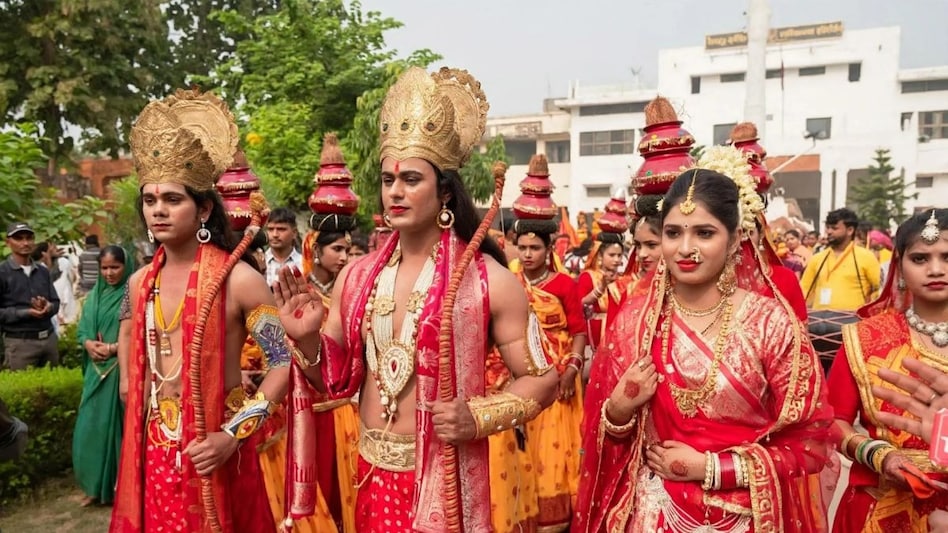
At the recent Pushkar Fair, visitors from Argentina, Pablo, and Costa demonstrated impressive speed by tying a traditional Rajasthani safa (turban) in just 15 seconds. Their skill earned them first place in a contest inviting international tourists to try a local tradition.
Additionally, 33 men participated in the fair, competing in the display of meticulously groomed mustaches. Some gave them intricate shapes, while others proudly showcased the length they had cultivated over years. Among the participants was Ram Singh, who spoke about the pride and care invested in maintaining his mustache.
These fun competitions are an integral part of what makes the famous Pushkar Fair in Rajasthan so special. Every year for several days, traditions passed down through generations become available for observation, celebration, and participation by all.
The celebration will resume this November. The cultural program of the Pushkar Fair is scheduled for November 17 to 24, 2026, and promises eight days of folk performances, camel decoration contests, traditional games, music, crafts, and festivities around the city's famous lake.
Where Even Mustaches Can Win You a Prize
In Pushkar, some of the most spectacular competitions are dedicated to aspects closely related to daily life in Rajasthan. For example, the mustache contest. For many men from Rajasthan, a well-groomed mustache has long been associated with dignity, personal style, and individuality. In Pushkar, this tradition gets its own stage.
Participants arrive in traditional attire, displaying mustaches that often require many years of growth and care. Judges evaluate their length, appearance, and style, while spectators gather to watch. The mustache contest is scheduled for November 21, 2026, alongside the turban-tying contest for foreign guests.
The entertainment continues beyond the stage. On November 22, women will take part in a pot race, which involves balancing an earthen pot while running to the finish line. A musical chair contest is also planned.
These events give visitors a chance to experience the playful side of Rajasthani cultural traditions. For local participants, it is a chance to share familiar customs with people who may be discovering them for the first time.
When Traditional Village Games Become the Main Attraction
Remember playing Gilli-Danda or Satoli as a child? At the Pushkar Fair, these traditional games find their place in the celebration. On November 18, locals and international guests will participate in games such as Langdi Taang (one-legged jumping), Satoli (a game with a pile of stones and a ball), and Gilli-Danda (a game with two wooden sticks).
The following day will bring matches in Kabaddi, tug-of-war, volleyball, and other rural sports competitions. A football match between local players and foreign guests is also planned for the opening, and a cricket match inspired by the film Lagaanis will take place on November 23.
The appeal of these games lies in how easily they bring people together. A visitor who knows little about Rajasthani traditions can join a familiar game, learn something new, and share the experience with local participants.
For children growing up in a world of mobile phones and online games, it is also an opportunity to see how traditional outdoor games are conducted and celebrated.
What Makes the Camel the Star of the Show?
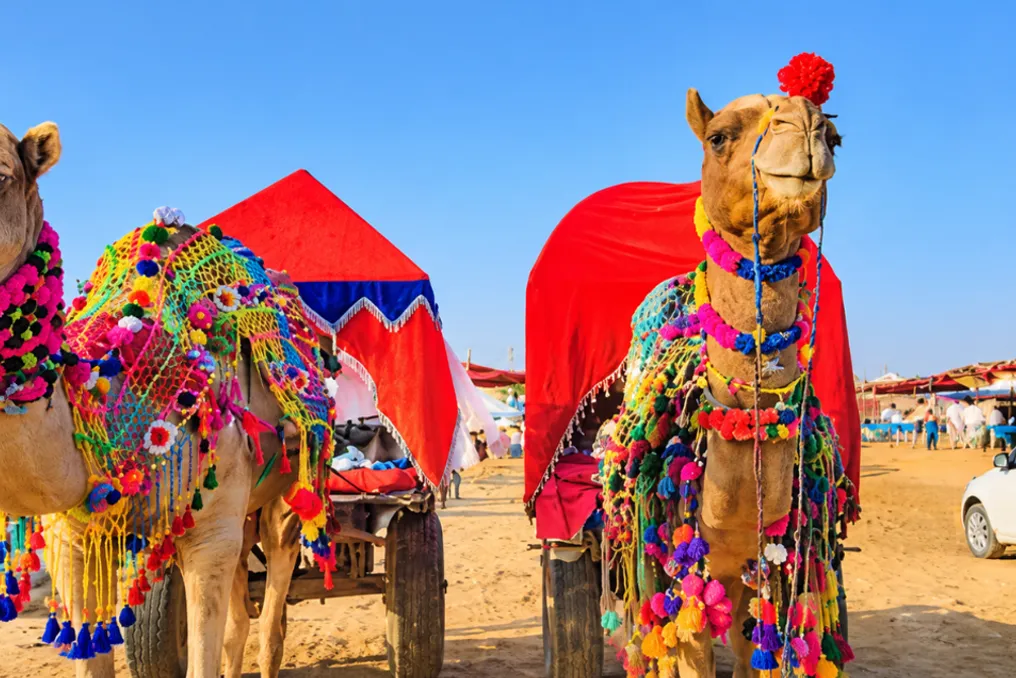
Of course, a visit to the Pushkar Fair would be incomplete without meeting the camels. For generations, these animals have been an important part of desert life in Rajasthan, helping people travel and transport goods across difficult terrain. Today, their place at the fair has expanded to one of the most recognizable cultural events.
On November 18, the fair will host camel decoration contests and camel dances. Camel owners traditionally prepare their animals with colorful fabrics, ornaments, bells, and decorative accessories. Some use carefully patterned trim to create designs on the camel's coat. The result is an exhibition combining animal care, local craftsmanship, and traditions associated with Rajasthan's desert communities.
Behind these decorated camels are people whose knowledge of breeding and caring for animals has been passed down through generations. Among them are the Raika, also known as Rabari, a pastoral community closely linked to camel herding in western Rajasthan. Their expertise includes understanding camel behavior, animal husbandry, and finding suitable pastures in changing seasons. This knowledge remains valuable despite growing challenges in the camel husbandry sector.
The fair provides visitors with an opportunity to witness this bond between humans and animals, and to appreciate the communities that have helped preserve it.
Meeting the Masters Who Keep Rajasthan's Traditions Alive
There is another side to Pushkar that deserves equal attention: musicians, dancers, and artisans who enliven the celebration. This year's program begins on November 17 with schoolgirls' group dances and a Mandana contest. Mandana is a traditional form of decorative art in Rajasthan, created using geometric and natural patterns, often on floors and walls.
Giving this art a place at the fair helps introduce visitors to a tradition they might otherwise only encounter at home and in villages. Evenings will feature performances by local artists, including the Voice of Pushkar program, as well as Rajasthani folk music and dance. These performances provide a platform for local talent beyond the region.
For visitors, it is an opportunity to experience Rajasthan's cultural heritage through the people who practice these art forms. And for the performers, every show is another chance to present their work to a new audience.
From Handmade Goods to Dung Paper Notebooks
Some of the most interesting stories at the Pushkar Fair can be found among the people who make and sell traditional items. On November 20, the Shilpgram will host a Food and Crafts Festival, adding another attraction to the celebration.
Such spaces allow visitors to explore local crafts, meet artisans, and discover products that reflect the skills and traditions of Rajasthan. An interesting example from past editions is Camel Charisma, a social enterprise associated with Lokhit Pashu-Palak Sansthan (LPPS), based in Sadri, Pali district. This organization collaborates with camel herder communities to create new sources of income using materials derived from animals.
Its products have included camel milk soap, woolen carpets, and even handmade paper made from camel dung. At an earlier Pushkar Fair, LPPS presented notebooks, diaries, and postcards made from this unusual paper. This initiative also involved rural women and artisans in preparing camel wool and making handicrafts.
The significance of these efforts lies in the link between traditional knowledge and modern livelihoods. When visitors value and purchase local products, they help create demand for the skills and materials behind them. For communities whose traditional occupations are changing, such opportunities can be vital.
A Festival Uniting an Entire City
Although the fairgrounds host contests and performances, the celebration extends to the city of Pushkar itself. In the evenings around Pushkar Lake, there are gatherings, lamp lighting, rangolis, and traditional ceremonies. The fair takes place during Kartik Purnima, an important event for pilgrims visiting the city and its sacred lake.
This year, Kartik Purnima falls on November 24, the last day of the main cultural program. For visitors, it is another way to experience Pushkar: through its bustling streets, markets, cultural gatherings, and communities that return every year. The fair brings together people for various reasons—from local performers and artisans to pilgrims and travelers exploring Rajasthan.
Perhaps this is its greatest appeal. A visitor might come hoping to photograph decorated camels, only to discover they are watching a traditional game, listening to a folk musician, or admiring a local artisan's creation. Behind every experience is a person who has studied, practiced, or passed down a tradition.
As the Pushkar Fair prepares to return in November, it is these people who make it unforgettable. And perhaps the most meaningful part of the visit is the opportunity to appreciate their work, learn from them, and help ensure that Rajasthan's living traditions continue to find a new audience.