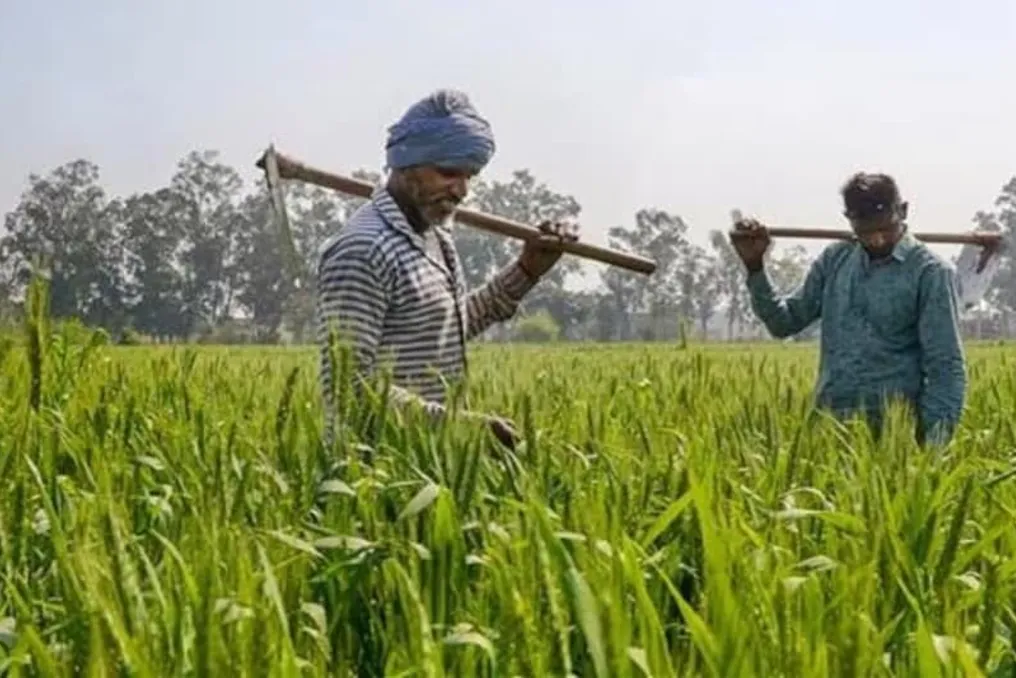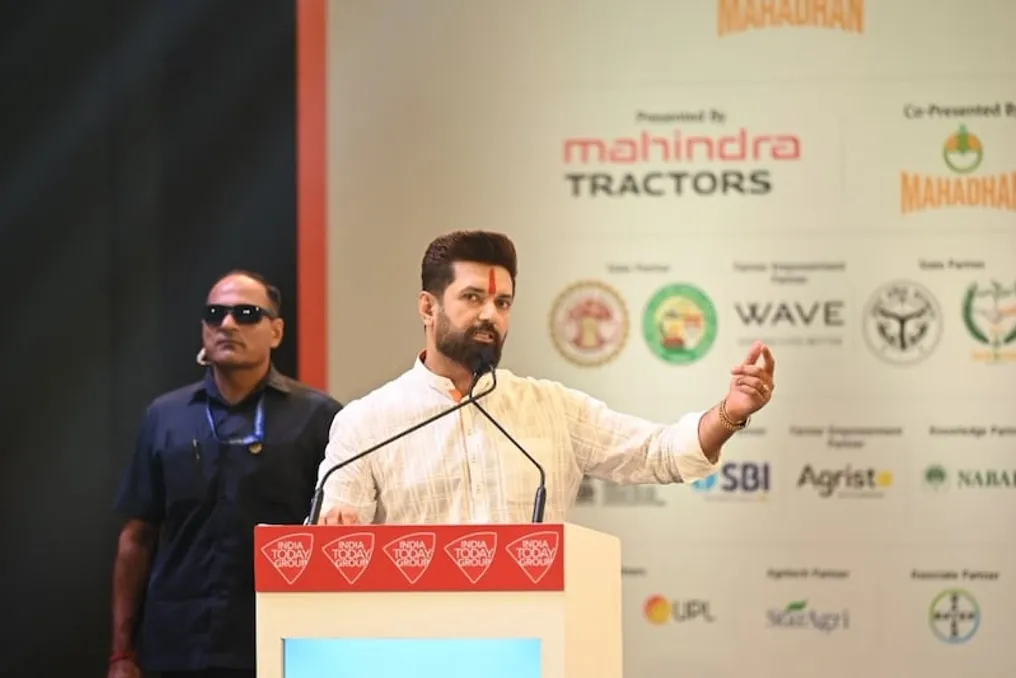
Chirag Paswan presents roadmap for India's agricultural development, stating the country will become a global food reserve
Read more
Aaj Tak
www.aajtak.in

Chirag Paswan presents roadmap for India's agricultural development, stating the country will become a global food reserve

A meeting was organized during the 'India Agriculture Conference 2026,' dedicated to the issues of farmers and the agricultural sector. This two-day international forum is taking place at the Indian Mandapam in New Delhi under the theme 'Smart Farmer, Developed India.' The Union Minister for Food Processing Industries, Chirag Paswan, inaugurated the event.

During the opening, he emphasized the need to advance Indian agriculture to a new level, increase farmers' incomes, and stimulate food processing. Paswan noted that such a platform is crucial for an agrarian country like India, where farmers, agricultural experts, and industry representatives can gather and discuss ways to develop the agro-sector.

He thanked the India Today group for organizing the event, stating that the two-day dialogue will bring long-term and positive results for the agricultural sector.

The Union Minister stated that farmers are the backbone of India, and despite the large population, the country has not faced a global food crisis, which, in his opinion, is the merit of the farmers. He recalled times when the country experienced grain shortages and noted that thanks to the hard work of farmers, this situation was overcome. Today, India is capable not only of meeting its own food needs but also of contributing to the food security of other countries.

Nevertheless, he acknowledged that much work remains to be done in agriculture. Although India has achieved significant success in increasing grain production and replenishing stocks, it is now time to move forward. The focus needs to shift from simply increasing production volume to enhancing its value.

Chirag Paswan pointed out that while attention has been paid to increasing agricultural production, work in the field of food processing has not been done sufficiently. He explained: 'We have increased production capacity, but we still have much to do in terms of how to turn this production into value and how to present the product to the world.'

Referring to Narendra Modi's vision of a self-reliant India, he noted that the government aims to achieve the country's self-sufficiency in all spheres. The Prime Minister has given great importance to agriculture and food processing alongside manufacturing. It is through food processing that Indian products and dishes can reach every corner of the world.

The Union Minister stated that the Prime Minister strives to transform India into a global food reserve for the entire world. To achieve this, strengthening the food processing system is critically important. He expressed hope that in the future, no table in the world will go without at least one Indian product.

According to him, Indian farmers possess potential, as well as the talent and mindset of the nation. What is required is to expand this system and involve as many people as possible in food processing.

One of the main problems for farmers, according to Chirag Paswan, is the lack of fair prices for their harvest and insufficient storage facilities. He reported that farmers often have to sell their crops at very low prices. In some cases, vegetables such as potatoes, tomatoes, and onions have to be discarded outdoors.

The reason for this is the absence of adequate systems for long-term product storage. Until the shelf life of agricultural products is increased and conditions are created for their long-term preservation in fresh form, farmers may incur losses.

The Minister emphasized that food processing allows for extending the shelf life of agricultural products. This gives farmers the opportunity to store their harvest until they receive a more favorable market and a fair price, instead of selling it immediately at a low price. To achieve this, the possibilities of food processing must be brought to the villages and fields of the country.

Paswan called on the industry to invest in and expand the food processing sector, noting that this is not only the government's duty but also the task of the private sector. The government is ready to develop policies and provide necessary conditions, but private companies and the industry should consider expanding their business and opening new production capacities. As long as food processing units are not located close to farmers' fields, logistics problems will persist, and farmers will not be able to reap the full benefits.

He concluded that mechanisms allowing farmers to process their own produce or improve its quality and shelf life through processing are necessary to increase farmers' incomes. This will enable farmers to receive a better price for their harvest.

Similar stories

Vijay Nakra discusses the concept of 'smart farming,' where AI and new technologies are transforming agriculture
Read more
www.aajtak.in

Vijay Nakra discusses the concept of 'smart farming,' where AI and new technologies are transforming agriculture

At the 'Kisan Tak Bharat Agriculture Conference 2026,' it was emphasized that simply increasing production volumes is insufficient for the development of Indian agriculture; strengthening the entire value chain in the agricultural sector is critically important. Modern technologies, artificial intelligence (AI), data, and agricultural machinery play a key role in this transformation.

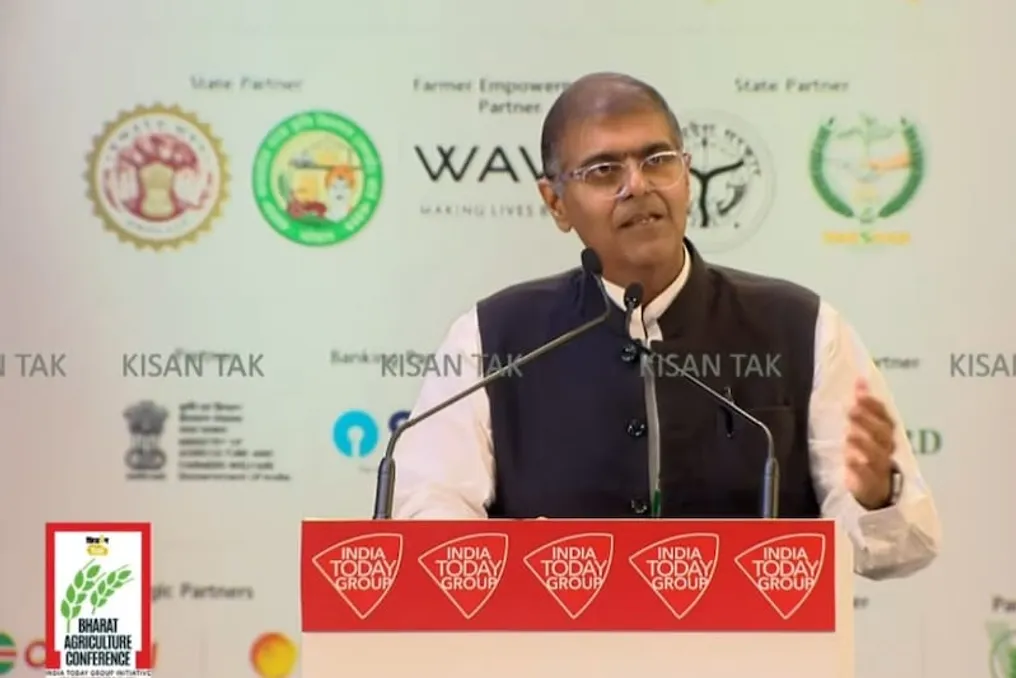
Vijay Nakra, President of the Agricultural Equipment Division of the Mahindra & Mahindra Group, stated on Wednesday that the Indian agricultural sector is undergoing significant changes, and the country has an opportune moment to leverage these opportunities. He also presented the concept of the 'smart farmer' for the future of agriculture.

Speaking on the first day of the conference, organized by India Today Group at Bharat Mandapam in Delhi, Nakra pointed out that food security is a prerequisite for the development, prosperity, and safety of any nation, and the primary responsibility for it lies with the farmers. He added that society as a whole must help farmers cope with issues such as changing weather, climate instability, rising costs, labor shortages, and pressure on natural resources.

Despite numerous difficulties, Indian farmers continue to innovate, adapt to conditions, and move forward. Nakra stressed that the contribution of farmers goes beyond meeting their families' needs, influencing rural communities, the economy, and the progress of the country. He also emphasized that the responsibility for supporting farmers rests not only with the government but also with the private sector, the state, and the media, who must jointly develop solutions to enhance farmer resilience amid uncertainty.

Highlighting that India is the third-largest global economy and a major agricultural producer, Nakra noted that despite this, the yield per hectare in the country remains lower than in several other agrarian economies. Therefore, the current task is not just to increase grain volume but also to create more value from every hectare of land, every drop of water, and every effort of the farmer.

He added that the success of the agricultural sector should be measured not only by field production but also by the additional value added throughout the entire value chain—through storage, logistics, food processing, and market access.

Nakra pointed to serious challenges facing farmers and policymakers, such as stubble burning, water availability, and soil health. Water demand will grow in the future, as the need for water will increase not only in agriculture but also in industries like manufacturing, power generation, and data centers. Therefore, states will have to balance development with agricultural stability.

He explained that a range of new technologies helps solve these problems. For example, Zero Tillage and multi-cropping methods allow sowing directly into the field without removing crop residues. Baller machines help collect stubble, reducing the need for burning, which contributes to improving soil health and rational resource use. Furthermore, sensors, software, AI, and drip irrigation systems can significantly contribute to water conservation and climate adaptation.

Nakra also emphasized the need for mechanization in the agricultural sector. He reported that the level of mechanization in India is less than 50%, whereas in developed countries, this figure approaches 90%. This indicates significant potential for growth in agricultural machinery and mechanization in India. He specified that the use of machinery should not only increase production but also make the work of farmers easier, safer, and more convenient. In this regard, companies are working on creating economical tractor cabins, autonomous vehicles, and smart devices for precision farming. Investment is also growing in alternative fuels, telematics, and the new generation of agricultural equipment.

In Vijay Nakra's view, the biggest change in the future of agriculture will come from the combined application of artificial intelligence, data, computing power, and semiconductor technology. These technologies will enable farmers to make decisions based on accurate data rather than assumptions. He predicts that AI-based recommendation systems, computer vision, autonomous tractors, and humanoid technologies will change farming practices.

This will allow farmers to receive real-time information about soil conditions and simplify the early detection of plant diseases and optimization of water use. However, Nakra warned that merely implementing new technologies is not enough; companies bear the responsibility of ensuring that these solutions are accessible, simple, and within reach of farmers. This requires funding.

Study shows: Economic benefit of cheap fertilizers for farmers decreases due to strain on the country
Read more
www.aajtak.in

Study shows: Economic benefit of cheap fertilizers for farmers decreases due to strain on the country

India's Green Revolution helped the country transition from food deficit to self-sufficiency in grain production through the use of improved seeds, irrigation, and chemical fertilizers. However, decades later, a new question has arisen for Indian agriculture: is the economic benefit derived by farmers from the excessive use of chemical fertilizers truly beneficial for the entire nation?

Various reports on topics such as agricultural health and energy were published during the COP 31 summit, which began in Turkey. A new study, 'The Economics of Cultivation' by the organization Climate Trending, asserts that the hidden costs of agriculture are rising due to the subsidization of chemical fertilizers, their unbalanced use, and dependence on imports. The report also proposes policy changes to support organic and natural farming.

According to the Climate Trends study, although farmers gain a tangible economic benefit from using chemical fertilizers, the real economic benefit for the country significantly diminishes when state subsidies, greenhouse gas emissions, and environmental damage are taken into account.

The study analyzed the agricultural sector of eight states, including Punjab, Haryana, Uttar Pradesh, Bihar, Madhya Pradesh, Chhattisgarh, Andhra Pradesh, and Karnataka.

1. Carbon Emissions from Nitrogen Fertilizers

The production of chemical nitrogen fertilizers relies on fossil fuels such as natural gas and coal. According to the report, the entire supply chain for nitrogen fertilizers generates globally 1.13 gigatons of CO2e. This accounts for about 2.1% of global greenhouse gas emissions. Of this, 38.8% of emissions come from fertilizer production, 58.6% from nitrous oxide emissions in the fields, and 2.6% from transportation. This demonstrates that the impact of chemical fertilizers on the environment is not limited to factories but also contributes to climate change through their use in the fields.

2. Farmer Profit vs. Real National Economic Benefit

The most important finding of the report highlights the difference between the farmer's private income and the socio-economic benefit to the country. In five studied cases of wheat production, it was found that the socio-economic benefit was 36% to 182% lower than the farmer's private profit, with an average difference of about 90%. For example, in Punjab (2019-20), the net private profit for the farmer was ₹31,901 per hectare, while estimated subsidy costs and emissions amounted to ₹11,554, and the net social benefit for the country was ₹20,347. Thus, while the farmer sees a profit of ₹31,901, the real benefit for the country after deducting public and environmental costs is ₹20,347.

3. High Burden of Subsidies on Punjab and Haryana

In India, during the 2021-22 period, the estimated financial burden on the government for chemical fertilizers was ₹3,630 per hectare. In Haryana, this amount reached ₹5,198, and in Punjab, it was ₹6,283 per hectare. However, in Punjab, this burden increased to ₹14,072 per hectare in 2022-23. This means that in 2022-23, the estimated financial burden in Punjab was approximately 3.88 times higher than the national average for 2021-22. This figure indicates growing financial pressure on the government due to an agrarian system heavily reliant on chemical fertilizers, and it also increases the sensitivity of the state budget to fluctuations in international fertilizer prices.

4. Subsidy Policy Stimulated Unbalanced Use of Nitrogen Fertilizers

According to the report, the Nutrient Based Subsidy (NBS) policy, introduced in 2010, caused an imbalance in the fertilizer market. Although phosphates and potash were included in NBS, the price of urea remained controlled. As a result, the share of nitrogen was 63.9% in 2007-08, then dropped to 58.8% in 2009-10, and rose to 69.9% in 2012-13. After 2010, the annual change in the nitrogen share increased by 4.42 percentage points. In Punjab and Haryana, the ratio of nitrogen to potassium was 21:1 and 20:1, respectively, while the national average was 5:1. The report suggests that the policy supporting a relatively low price for urea distanced farmers from balanced fertilizer use.

5. Dependence on Imports Persists Despite Fertilizer Production Growth

India is the second-largest fertilizer producer in the world, accounting for about 20% of global production volume. Nevertheless, India remains dependent on other countries for many essential fertilizers and raw materials used in their production. According to the report, urea production in India grew from 22.7 million tons in 2013-14 to 30.7 million tons in 2024-25. During the same period, the joint production of DAP and NPK increased from 11 million tons to 15.9 million tons. Despite this, the country imports large volumes of fertilizers. In 2022-23, India imported about 10.2 million tons of urea and 6.7 million tons of DAP, and covers about 90% of its phosphate rock needs through imports. Regarding potash, India is completely dependent on other countries.

Innovations in the Food Industry Foster Ties Between China and APEC Markets
Read more
cgtn.com

Innovations in the Food Industry Foster Ties Between China and APEC Markets

Ahead of the APEC leaders' summit in China, most member countries are also participating in this year's China Import Expo. In the food and agriculture exhibition section, CGTN correspondent Zhao Chufeng spoke with representatives from three APEC economies to examine how food innovations cross borders and what contribution China makes to this bilateral exchange.

Popular