In agricultural development, it has long been considered common knowledge that households are in a better position when they have multiple sources of income. The principle of diversification implies risk distribution, which increases resilience. However, a study conducted in northeastern Zimbabwe indicates that this assertion is only partially true: after reaching a certain point, adding new activities can lead to household impoverishment.
Therefore, policymakers should focus on supporting and enabling diversification up to the point where it brings tangible benefits, by investing in suitable assets that justify each new activity.
The idea for this study arose from a broader concern. Across Sub-Saharan Africa, rural households are increasingly abandoning rain-fed agriculture as their primary means of subsistence. Reasons for this include climate change, declining yields, rising production costs, and stagnant producer prices.
Governments responded to this situation with programs providing subsidies for resources such as fertilizers and hybrid seeds, aiming to stabilize rural incomes. Nevertheless, most evaluations of these programs focus solely on increasing yield, ignoring the impact on the overall household livelihood strategy.
The authors wanted to find out whether resource subsidies truly help rural households improve their lives, or if they merely help them cope with difficulties. This study was part of the author's doctoral work in agricultural economics at Fort-Her University under the supervision of Professor Abbissini Musunge. The broader project aimed to examine the wider implications of resource subsidies and propose a scientifically sound model for livelihood support in Zimbabwe.
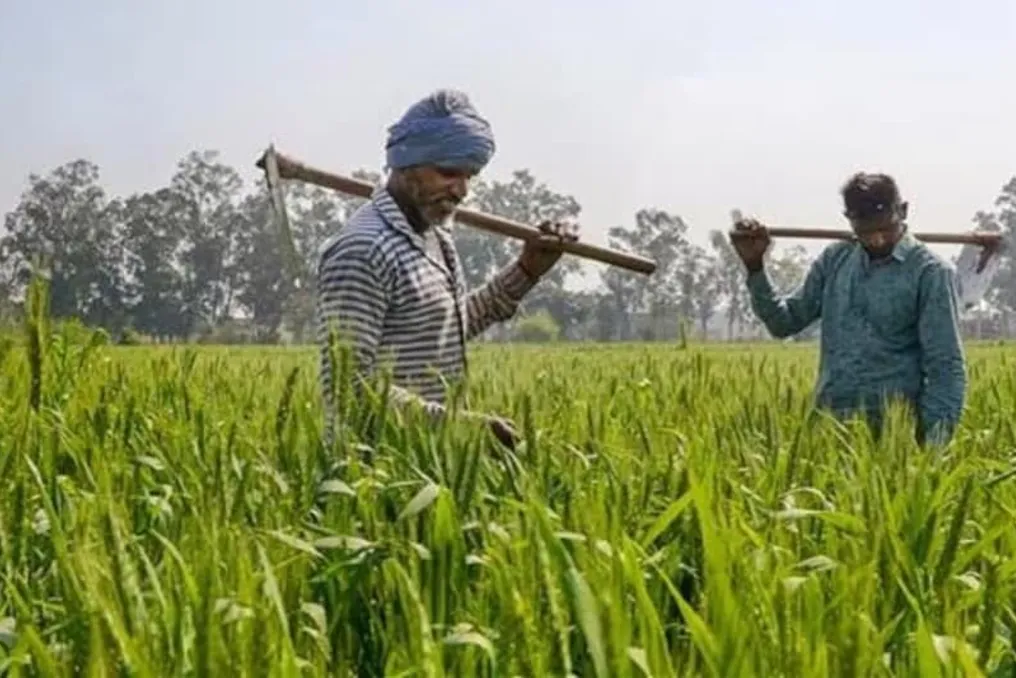
The study covered 408 households in the Mashonaland-East province between May and July 2024. Half of them were beneficiaries of the Pfumvudza resource subsidy program in Zimbabwe, and the other half were not. This program, launched in the 2020/21 season, provides farmers with free maize seeds, fertilizer, and lime provided they establish climate-smart conservation plots.
These plots must adhere to three principles of conservation agriculture: minimal soil disturbance, mulching with crop residues, and rotation with legumes. Pfumvudza is one of the government's key initiatives to stabilize incomes in a country with limited formal employment opportunities.
The researchers posed two questions: does receiving subsidized resources encourage households to diversify their lifestyles? And does this diversification lead to increased income? A statistical approach was used to measure diversification, which considers not only the number of activities a household engages in (e.g., crop cultivation, hiring labor, or running a small business) but also the evenness of income distribution among them.
Two significant findings were revealed. Firstly, resource subsidies do indeed promote diversification: beneficiaries had a more diverse livelihood portfolio compared to those who did not receive subsidies. Secondly, and this was more unexpected, additional diversification did not lead to increased income. Moreover, subsidy beneficiaries were in a worse position than non-beneficiary households.
Analysis of the causes revealed an inverted U-shaped relationship between diversification and household income. Income increases as households add income streams, but only up to a certain limit. Beyond this threshold, adding more activities is associated not with increased, but with decreased income.
By exceeding this threshold, households exhaust the assets, labor, capital, and management attention required for the quality execution of each activity. Resources become too dispersed. Instead of a portfolio of complementary enterprises, a set of fragile, scattered projects results.
Most households in the sample operated beyond this optimal point. More than half were classified as 'medium' diversifiers, and another 14.5% as 'highly' diversified. Only about 27% were 'low' diversifiers, and 2% specialized in a single activity. Simply put, most households in this part of Zimbabwe diversify beyond the point where it becomes profitable.
The additional activities they add are mostly low-income: petty trade, temporary agricultural labor, small informal businesses. These are not missed opportunities, but survival strategies in the face of need and adversity. Households diversify not because they see a profitable opportunity, but because rain-fed agriculture alone is no longer enough to sustain them.
It was also found that subsidy beneficiaries less frequently grew cash crops such as tobacco or cotton than non-beneficiaries. These crops require a large amount of labor, and the Pfumvudza program itself is labor-intensive. More commercially oriented farmers seem to completely opt out of the subsidy program. By absorbing labor, the program may displace cash crops that offer the most obvious path to higher income.
The key takeaway is that the profitability of diversification is determined not by the number of activities, but by the assets underpinning them. A specific group of assets was identified that predicted higher income: higher education, livestock ownership, access to irrigation, formal credit, contract farming, and regular contact with agricultural extension services.
Households possessing these assets tend to diversify into high-value activities such as tobacco, horticulture, and stable non-agricultural enterprises. Households lacking such assets engage in what is readily available, which usually yields low margins and is unstable.
These assets were concentrated among households that were initially in a better financial position. It is precisely those households that the subsidy program should help that are least able to turn subsidized resources into a source of high income.
This paradox is described in the article as 'more becomes less.' Subsidies expand livelihood portfolios but simultaneously push households further beyond the income-optimizing threshold, scattering scarce resources across activities that suppress rather than increase income. In this context, subsidies function as a coping mechanism, not a pathway out of poverty.
The findings point to several priority areas. Firstly, irrigation infrastructure needs expansion. According to the data, this is the most consistent factor ensuring high-return diversification. Reconstructing existing systems through public-private partnerships, coupled with water resource management training and crop selection, could help.
Secondly, contract farming in the tobacco and horticultural sectors should be strengthened. Pricing must be transparent, and small farmers must have legal protection against exploitative conditions.
Thirdly, investment is needed in livestock support, especially community-level veterinary services and dipping facilities. This protects one of the household's key assets.
None of this is a reason to abandon resource subsidies. It is a reason to stop viewing subsidies as an isolated livelihood strategy. Without additional investment in assets that enable high-income activities, subsidies risk creating a situation where households work harder, engage in more, but earn less.
Diversification itself is not a virtue. Whether it lifts a household up or traps it depends on the resources the household has to work with, and whether policy helps build those assets, or merely helps people cope in the absence of those assets.