Pakistani Minister Accuses India of Lahore Air Pollution During Diwali, But Data Contradicts This
Read more
Aaj Tak
www.aajtak.in

Pakistani Minister Accuses India of Lahore Air Pollution During Diwali, But Data Contradicts This

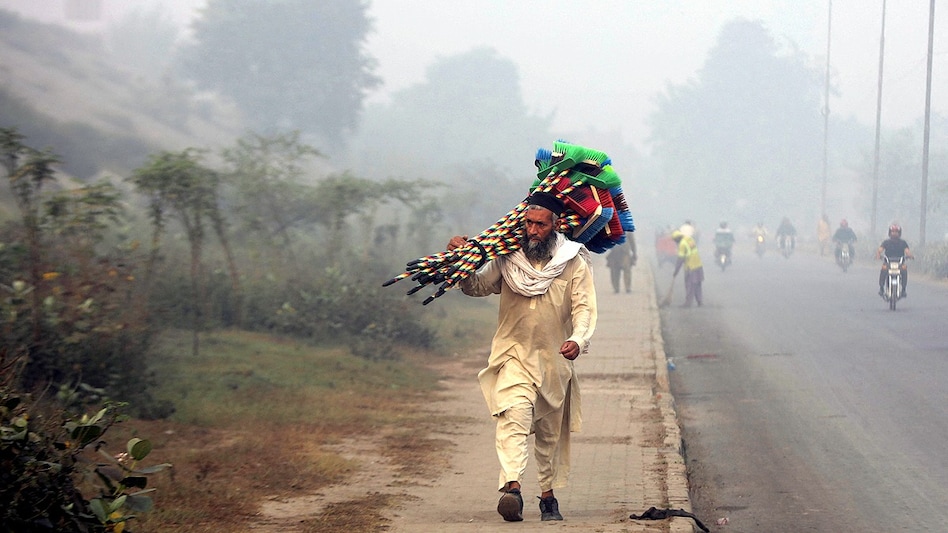
Serious air pollution has been observed in Lahore, the capital of Punjab province in Pakistan, over the past few weeks. The city's air quality index remained at a hazardous level for several days, causing breathing problems among the population, school closures, and an increase in health issues. Consequently, political statements have intensified.

The Central Minister for Information of Pakistan, Mariam Aurangzeb, attributed the deterioration of air quality in Lahore to fireworks used during the Diwali celebration in India. However, recent reports and satellite data cast doubt on this assertion.

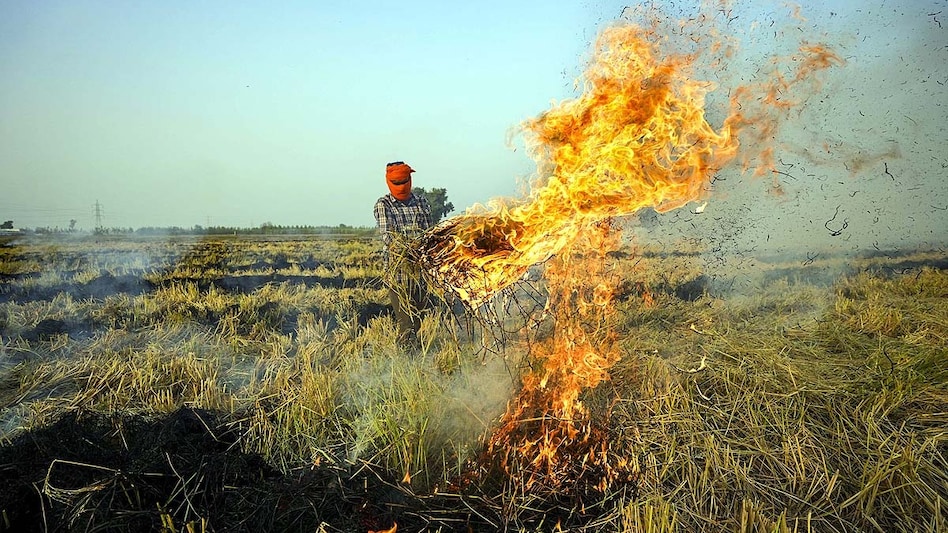
According to a report by the Pakistan Air Quality Initiative (PAQI), the primary cause of pollution in Lahore lies in stubble burning within Pakistan's Punjab province, rather than celebratory fireworks from neighboring India.

When air quality deteriorates, accusations against neighboring countries often arise without sufficient basis. Nevertheless, scientific data indicates that the problem has deeper domestic roots. The Pakistan Air Quality team analyzed satellite data from early October to the first week of November. According to their data, 16,312 potential instances of stubble burning were recorded in Pakistani Punjab between October 1 and November 8. This figure was comparable to the previous year and approximately three times higher than the number of fires recorded in Punjab, India.

The report, published in the Dawn newspaper, found a total of 18,825 fire hotspots between November 1 and November 9, 89% of which were linked to stubble burning. The highest concentration of fires was observed in the districts of Sheikhupura, Jhang, Okara, Hafizabad, and Gujranwala, which accounted for 54% of the total fires.

When the wind blew from these burning fields towards Lahore, the average PM 2.5 level in the city reached 175 micrograms per cubic meter. On other days, this figure hovered around 93 micrograms. This means that on days of fires, the pollution level increased by 87 percent. A similar pattern was noted in Multan and Bahawalpur: on days when fires occurred, the average PM 2.5 level in Multan reached 203, whereas on normal days it was 88.

These figures clearly demonstrate the direct impact of local crop burning on the atmosphere of the cities. Although the number of fires related to crops in Pakistani Punjab was 8 percent higher than the average for the 2020–2025 period, there was also a slight downward trend compared to the previous year.

During this period, the average PM 2.5 level in Lahore was 126 micrograms per cubic meter, which is eight times higher than the World Health Organization's recommendations and significantly above national environmental quality standards.

Several voices, including Mariam Aurangzeb, linked Lahore's pollution to fireworks launched in India during Diwali. PAQI investigated this claim by studying the air back trajectory. It was found that on Diwali night and the following day, many air masses reaching Lahore, Kasur, and Sialkot passed over Indian territory, primarily through the areas of Tarn Taran, Amritsar, and Jammu. However, the available evidence does not support a link between poor air in Lahore and cross-border fireworks.

After Diwali, the average PM 2.5 level in Lahore increased by only 10 percent compared to the preceding seven days. In cities away from the border, such as Faisalabad and Multan, the increase reached 40 percent. If the pollution were coming from India, a greater impact would be expected on border cities, but the observed pattern was the opposite. Air coming from Delhi did not reach Lahore; instead, it headed towards Bahawalpur and Rahim Yar Khan, remaining hundreds of kilometers away from Lahore.

Although analyzing elements such as potassium, strontium, and barium could provide answers, Pakistani monitoring centers do not currently conduct such measurements. Therefore, based on available meteorological and satellite data, local fires are considered the main cause at present. Despite Pakistan having previously warned about this issue multiple times, effective solutions remain distant, as farmers face economic pressure and alternative equipment is costly.

Similar stories

Air pollution in Delhi exceeds five-year record after Diwali
Read more
www.aajtak.in

Air pollution in Delhi exceeds five-year record after Diwali

After the Diwali festival, the air in Delhi became toxic in many areas, reaching an AQI level above 400. Simultaneously with the air pollution, political tension surrounding this issue has intensified.

Delhi Minister Kapil Mishra alleged that there is a conspiracy aimed at poisoning the air in Delhi. The Bharatiya Janata Party (BJP) government claims that the rise in pollution is caused by stubble burning in Punjab. In turn, the Aam Aadmi Party (AAP) from Punjab states that the smoke is transported by vehicles.

Meanwhile, health experts note that simply being in such polluted conditions is surprising.

Air quality worsens in Lahore and Delhi, reaching dangerous AQI levels
Read more
www.aajtak.in

Air quality worsens in Lahore and Delhi, reaching dangerous AQI levels

Air quality sharply deteriorated in northern regions of India and Pakistan on Tuesday. Fog preceding winter has turned Lahore into one of the world's most polluted cities. In Delhi, authorities have also introduced several restrictions to combat the toxic smog.

During this season, cold and heavy air traps pollutants generated by transport, construction sites, and crop residue burning close to the ground. This causes pollution levels to reach global highs, posing a serious threat to people's respiratory systems. Furthermore, Diwali fireworks on November 8th may exacerbate this problem.

According to the Swiss group IQAir, the Air Quality Index in Lahore was 447 on Tuesday morning. A level below 50 is considered good, with minimal health risks. The concentration of PM 2.5 in Lahore was 60 times higher than the World Health Organization's annual recommendations. PM 2.5 refers to fine particles that can enter the lungs, increasing the risk of fatal diseases and heart problems.

The drop in temperature and slowing wind contributed to the further deterioration of air quality in Lahore. IQAir recorded a level of 215 in Delhi, while the Central Pollution Control Board of India recorded 332, which falls under the very poor category. The difference between these readings is due to the use of different measurement methods.

The Pakistani government has intensified measures against brick kilns violating environmental standards and appealed to farmers not to burn crop residues. In Delhi, the Graded Response Action Plan has been in effect since Monday, which includes a ban on using coal and wood in vehicles, construction work, and eateries, as well as increasing public transport.

Given concerns about rising pollution due to Diwali, the Supreme Court has permitted fireworks only for three hours on Saturday and Sunday. This issue recurs annually. Cold air prevents pollutants from dispersing, covering cities in a toxic blanket. Children, the elderly, and people with respiratory illnesses are at the highest risk.

Experts emphasize the need for long-term solutions, such as clean energy and improved public transport, alongside stricter control over crop burning, vehicle emissions, and industrial discharges. The problem in this region can only be solved through coordinated efforts by both countries. Currently, people are advised to wear masks, limit time spent outdoors, and follow official recommendations.

Fires in Punjab, Pakistan's fields could worsen Delhi's air quality due to smoke drift
Read more
www.aajtak.in

Fires in Punjab, Pakistan's fields could worsen Delhi's air quality due to smoke drift

Amid the already serious issue of air pollution in Delhi-NCR, a new concern has arisen. There is a sharp increase in stubble burning incidents observed in the Punjab province of Pakistan. According to satellite monitoring data, in the first 29 days of October, the number of fire spots related to stubble burning in Punjab, Pakistan, was 4.2 times higher than in Punjab, India.

There is a fear that smoke rising from Punjab, Pakistan, may reach certain areas of India under the influence of northwest winds, thereby exacerbating the already poor atmosphere in Delhi-NCR. Factors contributing to the rise in pollution in Delhi as winter approaches include stubble burning, vehicle exhaust fumes, dust from construction work, industrial emissions, and adverse weather conditions. The increase in fires in Punjab, Pakistan, also raises concerns about regional air quality. However, it is important to understand that not all smoke detected by satellites directly reaches Delhi; its actual impact depends on the direction, speed, altitude, and meteorological conditions of the wind.

According to the environmental monitoring website HamariHawa, the NASA satellite recorded a total of 13,241 fire spots in Punjab, Pakistan, between October 1 and 29, 2026. During the same period, 3,158 hotspots were registered in Punjab, India. Thus, the number of recorded spots in Punjab, Pakistan, was approximately 4.2 times higher than in Punjab, India.

Another important point concerned the last week of October. Out of the total 13,241 spots in Punjab, Pakistan, 6,655 locations were recorded only in the last seven days. This means that about half of all monthly cases occurred in just one week. The most active day was October 29, when 1,327 spots were registered.

This indicates a significant increase in the activity of burning crop residues in Punjab, Pakistan. Nevertheless, there might be a discrepancy between the fire spots detected by satellites and the actual instances of stubble burning, as not every fire is caused by stubble burning.

HamariHawa's analysis revealed significant changes. In 2019, Punjab, India, recorded approximately five times more fire spots compared to Punjab, Pakistan. At that time, 14,002 spots were found in Punjab, India, while 2,908 were found in Punjab, Pakistan.

However, the situation has changed in recent years. According to the report, Punjab, India, reduced the number of satellite-detected crop burning incidents by 95% between 2021 and 2025. Conversely, Punjab, Pakistan, saw a 33% increase in the number of hotspots during the same period (2019 to 2025). In 2025, 12,364 spots were recorded in Punjab, Pakistan, compared to 3,714 in Punjab, India. This suggests that both regions are moving in different directions regarding stubble management. Despite the decline in India, the problem of stubble burning has not disappeared entirely.

Stubble burning incidents in Punjab, Pakistan, are concentrated mainly in rice-producing areas. According to HamariHawa's analysis, Okara recorded the highest number—2,144 spots—between October 1 and 29. Following these were Gujranwala with 1,011 and Nankana Sahib with 1,003 spots.

In these areas, fires are set to quickly clear fields of agricultural residue after the rice harvest. This leads to the emission of large amounts of smoke, carbon particles, and micropollutants into the atmosphere. The smog problem is already serious in Lahore and its surroundings. Now, there is an increased probability that this pollution will reach other areas due to northwest winds.

Wind direction plays a critical role in the pollution of Delhi-NCR. Northwest winds blow from Punjab, Pakistan, and Punjab-Haryana towards Delhi. If stubble burning incidents intensify in these regions, there is a possibility that smoke and fine particles like PM2.5 will reach Delhi. According to reports published on November 3, October 31, and November 1, northwest winds were carrying polluted air from the agricultural areas of Punjab and Haryana towards Delhi. Signs of such transport were also identified through the analysis of meteorological data and previous wind direction. This means that smoke from stubble burning in Pakistan cannot be limited only to border areas. Pollutants can travel long distances depending on wind height and speed. The actual amount of smoke reaching Delhi will be determined by...

_

Popular