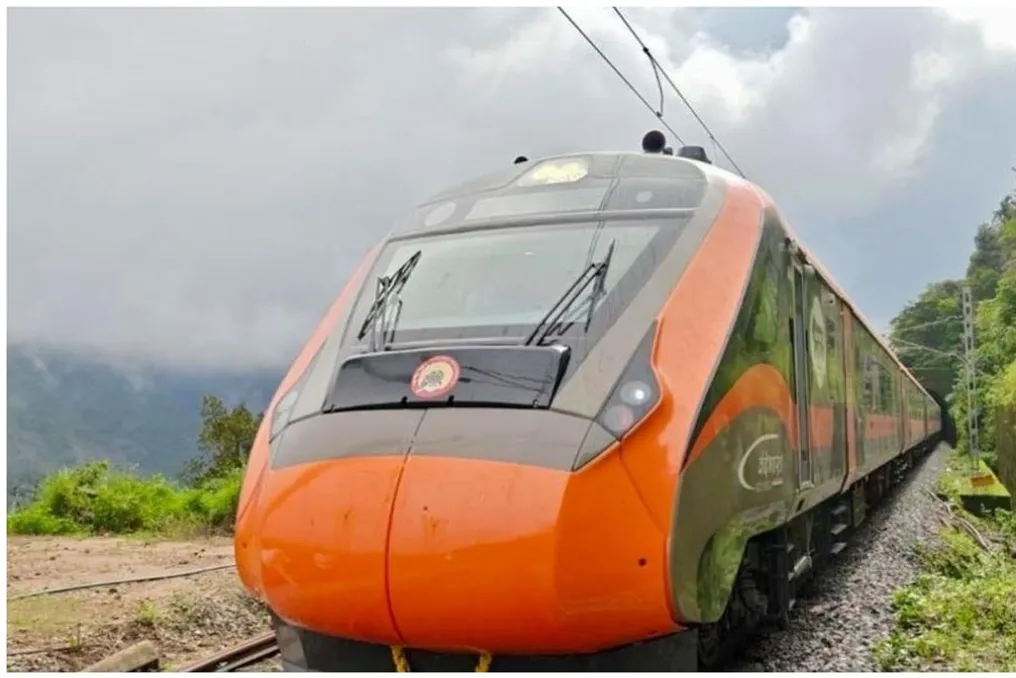
India is preparing to expand its railway network to the Ladakh region. To this end, the Bilaspur-Manali-Leh railway line project has been developed. This line, approximately 489 kilometers long, includes plans for a railway station at an altitude of 17,244 feet (5,256 meters) above sea level.
If this plan is implemented, India could set a world record for the highest railway station. Currently, this record belongs to China. The total estimated cost of this ambitious project is approximately 1.31 lakh crore rupees. However, the project is currently in the planning stage, and final construction approval has not yet been granted.
The proposed railway station, located near the Tanglang La pass in Ladakh, will be at an altitude of 5,256 meters. This will be about 188 meters higher than the Chinese Tanggula station. The Tanggula station is situated on the Qinghai-Tibet Railway and is currently considered the highest in the world, at an altitude of about 5,068 meters. The realization of the Indian plan would allow India to take a place in the global ranking of the highest railway stations, which would be a significant achievement for Indian Railways.
The proposed railway branch will pass through the state of Himachal Pradesh to connect Bilaspur with Leh via Manali. Stations are planned at key locations along this route, such as Sundarnagar, Mandi, Manali, Kelang, Sarchu, Pang, Rumtse, and Upshi. The construction of this line will provide a new mode of transport between Himachal Pradesh and Ladakh. Currently, people traveling to Leh must rely heavily on mountain roads and high passes.
Laying railway tracks in the high-altitude and remote areas of the Himalayas presents a serious challenge. Approximately 270 kilometers of the total 489-kilometer route will pass through tunnels, meaning more than half of the project will be underground. Construction work in this region is complicated by the threat of earthquakes, avalanches, glaciers, and sub-zero temperatures. The geographical location and extreme altitude create numerous engineering problems, making this project one of the most complex and expensive for Indian Railways.
The significance of this railway line is not limited to passenger transport. Ladakh is a strategically important region for India. Railway connectivity in this area would facilitate the transportation of soldiers, fuel, equipment, and necessary supplies for the army. Permanent rail contact would help reduce dependence on road routes in all seasons and decrease the time and cost of freight delivery. Furthermore, local residents and tourists would gain a new travel option between Himachal Pradesh and Ladakh, which is expected to boost tourism and local business. Nevertheless, minimizing environmental damage in such a sensitive and fragile region during construction remains a major concern.
The Detailed Project Report (DPR) for the Bilaspur-Manali-Leh railway line is ready, with an estimated cost of about 1.31 lakh crore rupees. However, having a DPR does not mean the project has received construction approval. Before construction can begin, necessary permits must be obtained following major investment, technical, and engineering assessments. No exact timelines for the completion or commencement of operation of the entire railway line have been announced yet. Construction work will only start after receiving final project approval at the government level.