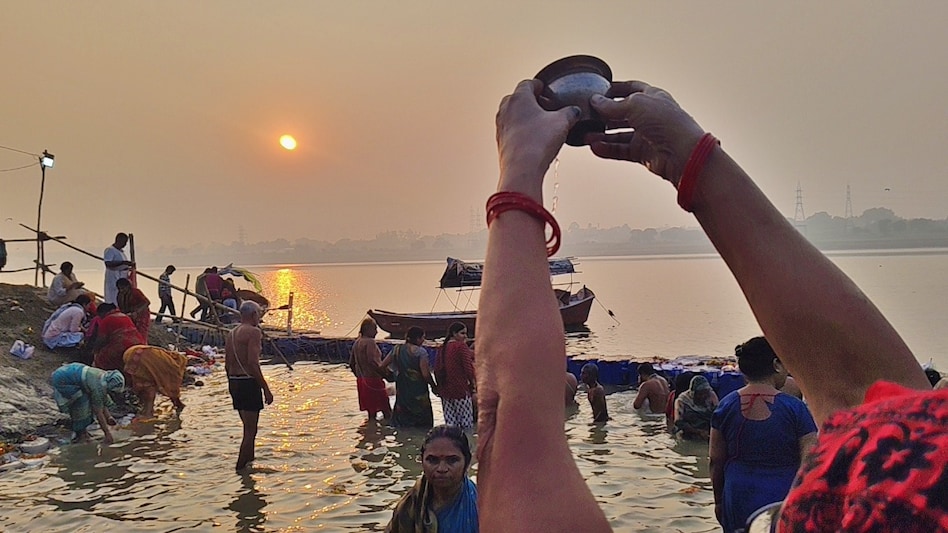
Massive influx of pilgrims observing sacred bathing in the Yamuna River during Bhai Dooj festival in Prayagraj
Read more
Aaj Tak
www.aajtak.in

Massive influx of pilgrims observing sacred bathing in the Yamuna River during Bhai Dooj festival in Prayagraj

On the day of Kartik Shukla Dwitiya, known as Bhai Dooj, a huge gathering of devotees is observed on the banks of the Yamuna River in Tirathaj, Prayagraj. Brothers and sisters hold hands and perform a sacred dip in the Yamuna River.

According to ancient beliefs, bathing and worshipping Yamuna on this day brings the blessings of Yamaraj, which eliminates the fear of premature death and promotes longevity. Pilgrims gather at the embankments from early morning to worship Yamuna Mai and Yamaraj.

According to myths, Yamaraj and Yamuna were brother and sister born from the Sun god. On the day of Kartik Shukla Dwitiya, Yamaraj arrived at his sister Yamuna's home. Yamuna welcomed him and applied a tilak. The joyful Yamaraj bestowed a blessing: any brother who applies a tilak to his sister and bathes in the Yamuna on this day will be protected from the fear of Yama's death.

From early morning, pilgrims gather on the banks of Sangam and Yamuna in Prayagraj. After bathing together, brothers and sisters wish each other well-being, prosperity, and health. Many pilgrims also perform acts of charity and memorial rituals in memory of their ancestors.

This festival, Yam Dwitiya, is a beautiful symbol of Indian culture, family, and eternal faith.

Considering the million people gathered on the embankments, the police and administration are on full alert. Sturdy barriers have been installed on the main embankments to ensure safety. To guarantee the safety of the pilgrims, the water police, constant monitoring of boats, and qualified divers have been deployed so that this sacred festival proceeds safely and in an organized manner.
Similar stories

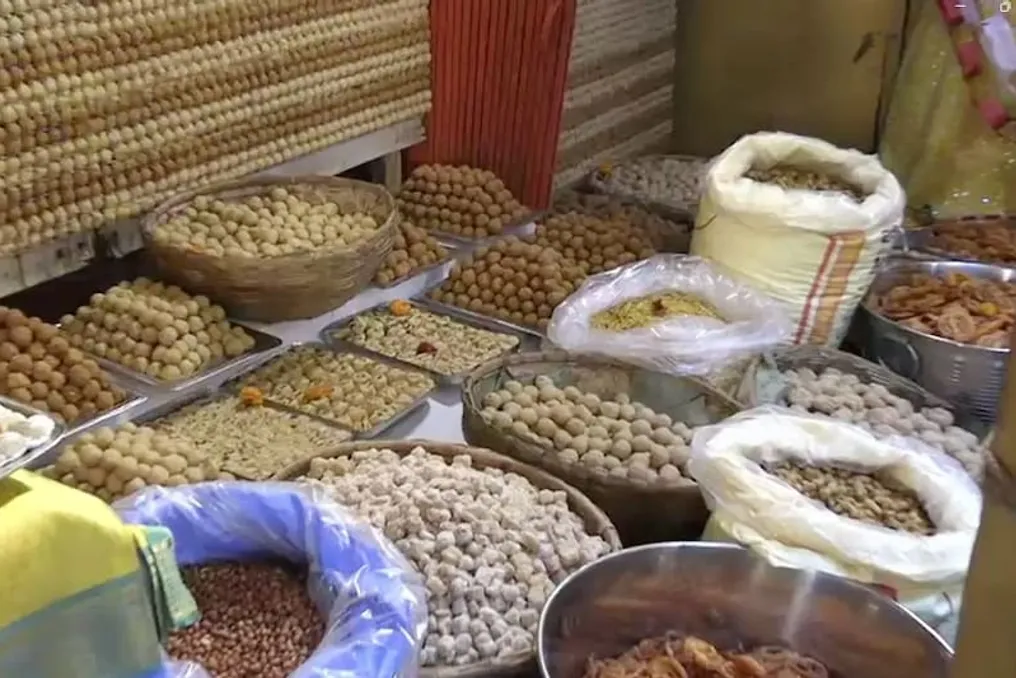
Annakut Festival Celebrated in Kashi: 501 Quintals of Offerings Presented to Deities for Annapurna and 21 Quintals for Baba Vishwanath
Read more
www.aajtak.in

Annakut Festival Celebrated in Kashi: 501 Quintals of Offerings Presented to Deities for Annapurna and 21 Quintals for Baba Vishwanath

The Annakut festival was celebrated with great fanfare in the religious city of Kashi, Uttar Pradesh. On Kartik Shukla Pratipada, 501 quintals of mahabhog, prepared from 108 types of dishes, were offered to the deity in the ancient temple of Mother Annapurna. Simultaneously, 21 quintals of sweets were presented to the deity Shiva at the Shri Kashi Vishwanath temple.

A large number of pilgrims gathered during this special event. Visitors were able to see the golden idol of Mother Annapurna and the five-faced idol of Baba Vishwanath. The temple premises were decorated with flowers, lamps, and incense, creating an atmosphere of deep devotion and ecstasy.

As part of the Annakut, 501 quintals of offerings were presented to Mother Annapurna. These offerings included various types of laddu, sweets, snacks, dal, and rice, with rice holding special significance in this offering.

There is a belief that thanks to the blessings of Mother Annapurna in Kashi, no one goes to sleep hungry. According to religious beliefs, Lord Shiva requested alms from Mother Annapurna in Kashi, after which she bestowed a blessing so that no god or person living in Kashi would go hungry.

At the Shri Kashi Vishwanath temple, the deity Vishveshwara was adorned with 21 quintals of sweets. These included bundi laddus, nut laddus, and other traditional sweets.

On this day, a procession took place featuring the five-faced silver mobile statue of Lord Vishwanath, Mother Gauri, and Ganesha. This procession started from the residence of the Mahant family in Tedhinim. To the sound of shanaai and dmarru, the statue was placed in the sanctum sanctorum. Following this, the midday bhoga aarti ceremony was conducted according to established rituals.

After the bhoga aarti, prasad was distributed to the pilgrims. By accepting the prasad, devotees wished for happiness, prosperity, health, and peace.

In the ancient temple of Mother Annapurna in Kashi, a five-day event is held, starting with Dhanteras and continuing until Diwali and Annakut. During this time, special pilgrimage visits are made to the golden idol of Mother Annapurna. Pilgrims have the opportunity to see this rare idol of the Mother only during these five days in a year.

During this period, Richhari prasad, which symbolizes grain, and Lava, symbolizing wealth, are distributed. It is believed that keeping this prasad at home prevents shortages of grain and money. According to organizers, about 10 million rupees worth of Richhari was distributed among pilgrims over the five days.

The Annakut festival is also associated with the worship of Govardhan Hill performed by Lord Krishna. This festival is considered a symbol of grain abundance, its preservation, and gratitude to nature.

The events held in the temples of Mother Annapurna and Baba Vishwanath in Kashi lend a majestic appearance to this religious tradition. Pilgrims participated in the worship and distribution of prasad. The Annakut festival also conveys a message of faith, giving, cooperation, and social harmony.

Popular