How to grow amla in a pot at home to get fresh fruit for years
Read more
Aaj Tak
www.aajtak.in

How to grow amla in a pot at home to get fresh fruit for years

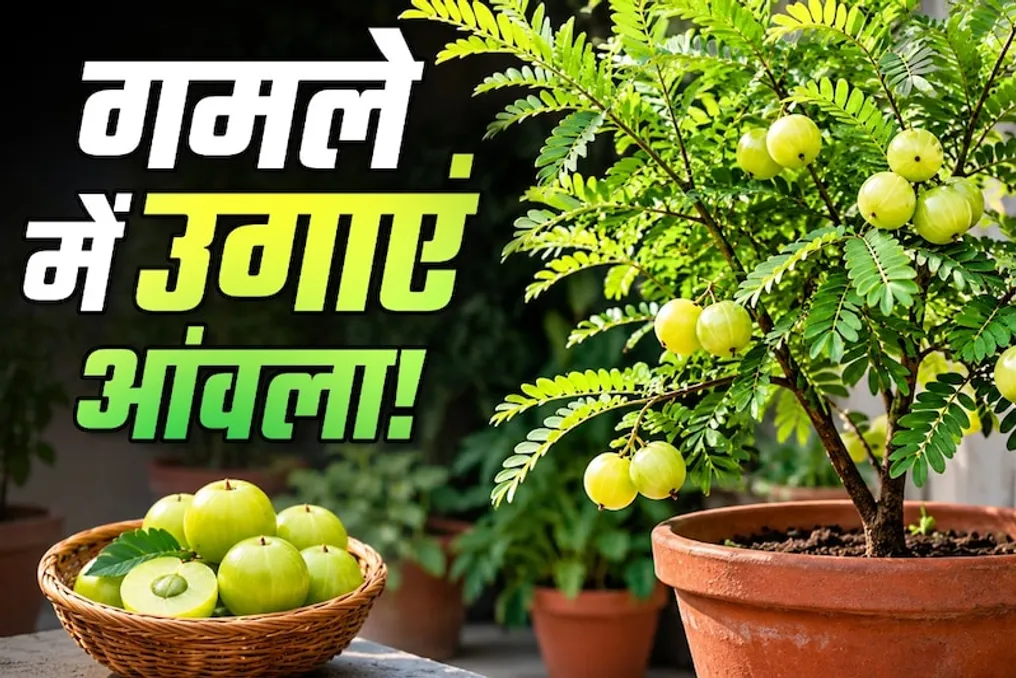
It is not necessary to buy expensive amla at the market; it can be grown in pots right at home, yielding fresh fruit for many years.

How to grow amla

No one can ignore the health benefits of amla. Amla harvested in winter contains numerous nutrients, including Vitamin C. This is why people incorporate it into their diet in various ways: some drink juice, while others prefer murabba, pickles, or candies made from it. Due to high demand, amla becomes expensive in markets. However, one might wonder: instead of buying amla at the market, could it be grown at home?

Yes, if you have a small balcony, roof, or a little free space, you can plant amla in a pot. This does not require a large garden or field. It is enough to choose the seedling correctly, provide good soil, and pay a little attention to care. Next, we will tell you how to plant amla in a pot at home and how to take care of it.

1. Choosing a quality plant: If you want your amla plant to grow well, the primary task is to choose a suitable seedling. For this, purchase a healthy and high-quality amla seedling from a good nursery. When buying, carefully inspect the leaves and stem, ensuring there are no signs of insects or diseases.

2. Preparing the correct soil in a pot: Preparing the soil for planting amla is also extremely important. Choose a pot where the plant's roots can develop freely, and ensure that water drains properly from it. Then, fill the pot with black earth, sand, and manure. Do not compact the soil too much so that the roots have enough room to grow.

3. Planting the amla plant: Now make a hole in the center of the prepared pot, corresponding to the shape of the plant's roots. Carefully place the plant in this hole, cover it with soil, and gently press it down with your hands. After that, water it. It is important that the plant's roots are not damaged during planting.

4. Placing the pot in a sunny spot: The amla plant should be placed where it will receive plenty of sunlight. It can be placed on a roof or a balcony at home. Sunlight is necessary for good plant growth. Nevertheless, during intense heat and drought, the plant should be protected.

5. Not neglecting watering: Proper watering is essential for plant growth. Soil moisture must be maintained. In hot weather, the soil dries quickly, so regularly check its condition. Make sure that water does not accumulate in the pot, as this can damage the roots.

6. Pest protection method: Sometimes insects can damage the leaves of plants, leading to stunted growth. To protect the amla plant from pests, neem oil spray can be used. This can help protect the plant from insects.

7. Monthly fertilization: Regular fertilization is also necessary for the good development of the amla plant. Monthly, add a handful of well-rotted manure to the plant. After applying fertilizer, you can lightly loosen the soil so that the fertilizer mixes evenly with the soil.

The following points should also be considered.

Similar stories

Recipe for Mumbai's Famous Sev Mithai that You Can Make at Home for Bhai Dooj Festival
Read more
www.aajtak.in

Recipe for Mumbai's Famous Sev Mithai that You Can Make at Home for Bhai Dooj Festival

Although Mumbai street food often attracts attention, you can now enjoy this famous local sweet right in your own home. This special Sev mithai, which you can prepare yourself, is guaranteed to make you a fan. In celebration of the Bhai Dooj festival, this traditional Sindhi mithai, also known as 'Singhar Ji Mithai' or 'Sev Barfi', can be given to a brother, made with your own hands.

This sweet is made from crispy, unsalted chickpea seeds (Sev), a large amount of mascarpone (Khoa), and an aromatic sugar syrup. Below is a simple guide on how to make this sweet at home.

Recipe for Mumbai's Famous Sev Mithai:

1. Preparing the Sugar Syrup

First, combine water and sugar in a thick-bottomed pot. On medium heat, stir constantly until the sugar is completely dissolved. Cook the syrup until it becomes slightly thick and reaches the consistency of a single thread.

2. Mixing Mascarpone and Milk

Reduce the heat and add the crushed Khoa to the syrup, stirring constantly until it is completely melted. Then pour in the full-fat milk and cook the mixture until it thickens and achieves a creamy texture. Add cardamom powder, rose extract, and saffron milk, mixing all ingredients thoroughly.

3. Adding Sev and Cooking

Now add the unsalted Sev to the mixture. Gently mix, taking care not to damage the Sev strands. Cover the pot and cook over very low heat for several minutes, allowing the Sev to absorb all the liquid from the milk and Khoa mixture. Then, add two tablespoons of ghee around the edges. Turn off the heat, cover the mithai, and let it rest for about 15 minutes.

4. Shaping and Decorating the Barfi

Grease a plate or baking tray with ghee and line it with parchment paper. Pour the prepared mixture onto it and spread it evenly with a spoon or spatula. Sprinkle chopped almonds and pistachios on top, pressing them lightly. Optionally, you can add gold foil (Chandi ka Vark). Let it cool completely at room temperature. Once hardened, cut it into desired square or diamond shapes and serve.

Five beautiful flowering plants you can plant in November for a small price to decorate your balcony in winter
Read more
www.aajtak.in

Five beautiful flowering plants you can plant in November for a small price to decorate your balcony in winter

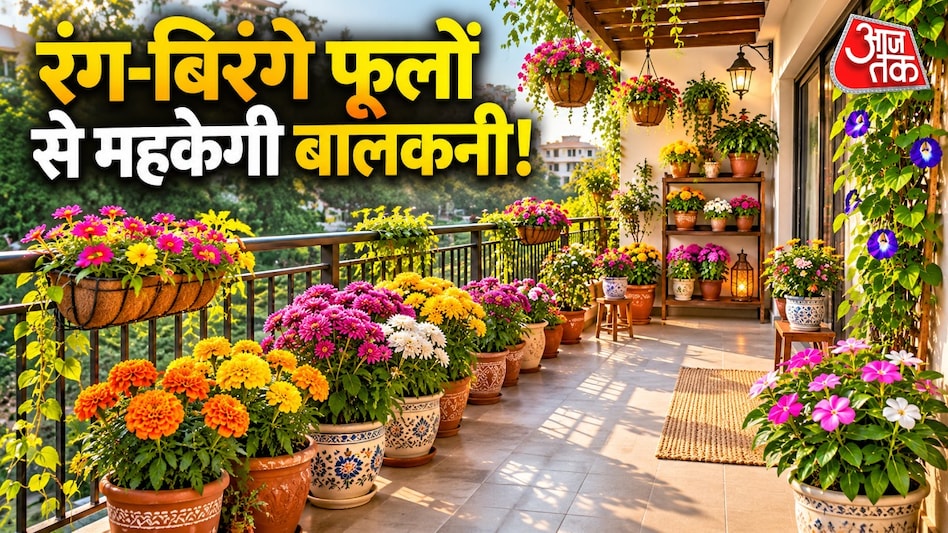
When winter arrives, having flowers on the balcony gives the house a special atmosphere. As November approaches, temperatures begin to drop, and this time is ideal not only for taking out winter clothes but also for decorating the balcony and roof with bright flowers. In November, you can plant various colorful flowers that will delight the eye and fill the air with fragrance throughout the winter.

If you want your pots to be full of flowers soon, it is worth starting gardening preparations in advance. It is worth noting that you do not need to spend large sums of money on expensive decorative plants from stores for this. In nurseries, you can find flowering plants that can be purchased for about 10 rupees and planted at home. Below is a list of five plants that can be planted in November to decorate your balcony with flowers.

Which plant might be best suited for decorating a home in winter? Marigold flowers with their yellow and orange shades add beauty to both balconies and roofs. Marigold plants can be found in a nursery for about 10 rupees. They should be planted in a pot in November and placed in a well-lit area. Soil moisture must be maintained, but excessive watering should be avoided. With proper care, the plant can bloom continuously.

When choosing flowers to plant in November, it is important to consider aster. This is a beautiful flower that blooms in winter and is available in many colors, including white, yellow, pink, and red. The plant can be purchased from a nursery at a low price. Furthermore, a new specimen can be grown from its cutting. Place the aster where it receives good light. When it blooms in winter, even a simple pot will look very beautiful.

If you want to fill the balcony with bright flowers without much effort, you can plant an evergreen. Its local plant can be bought from a nursery for about 10 rupees. It blooms with pink and white flowers. Plant it in a pot and place it where there is good light and sun. However, since its growth may suffer with the increase in cold, the plant needs to be protected from severe cold and frost.

Portulaca, also known as moss rose, is famous for its small and colorful flowers. A new specimen can be prepared from its shoot. Portulaca cuttings can be purchased from a nursery at a low price. Nevertheless, this plant develops best in warm and sunny climates. If you plan to plant it in November, keep in mind that severe cold and frost can harm it. Place it in a well-lit area.

If you want to make not only the pots but also the lattice or grid of the house green, you can plant the climbing flower aprazita. A small packet of its seeds can be bought for about 10 rupees. Its blue and white flowers look very beautiful. Plant it in a pot and provide support for the vine to grow upwards. It should be remembered that aprazita grows best in a warm climate. Germination and growth after sowing in November will depend on the temperature. In cold regions, it is crucial to provide protection against frost and give it plenty of sun.

When gardening in the winter period, it is important to consider some small details. First of all, choose a pot and location according to the plant's needs. The pot must have drainage holes. In cold weather, the rate of soil drying slows down, so you cannot water daily without checking. Provide the plants with plenty of sunlight, and if there is a risk of frost at night, place them in a safe place.

How to Grow Plants in Glass Bottles According to Vastu Principles: Plants for Attracting Prosperity
Read more
www.aajtak.in

How to Grow Plants in Glass Bottles According to Vastu Principles: Plants for Attracting Prosperity

The popularity of using plants to decorate living spaces is rapidly growing. Notably, some types of plants do not require soil and large pots to grow; they can be easily cultivated in glass jars or bottles. These plants allow a home to become green and beautiful even in small spaces. Furthermore, in Vastu teachings, some plants are associated with luck, prosperity, and positivity. According to beliefs, placing such plants in the house in the correct direction helps create a pleasant atmosphere.

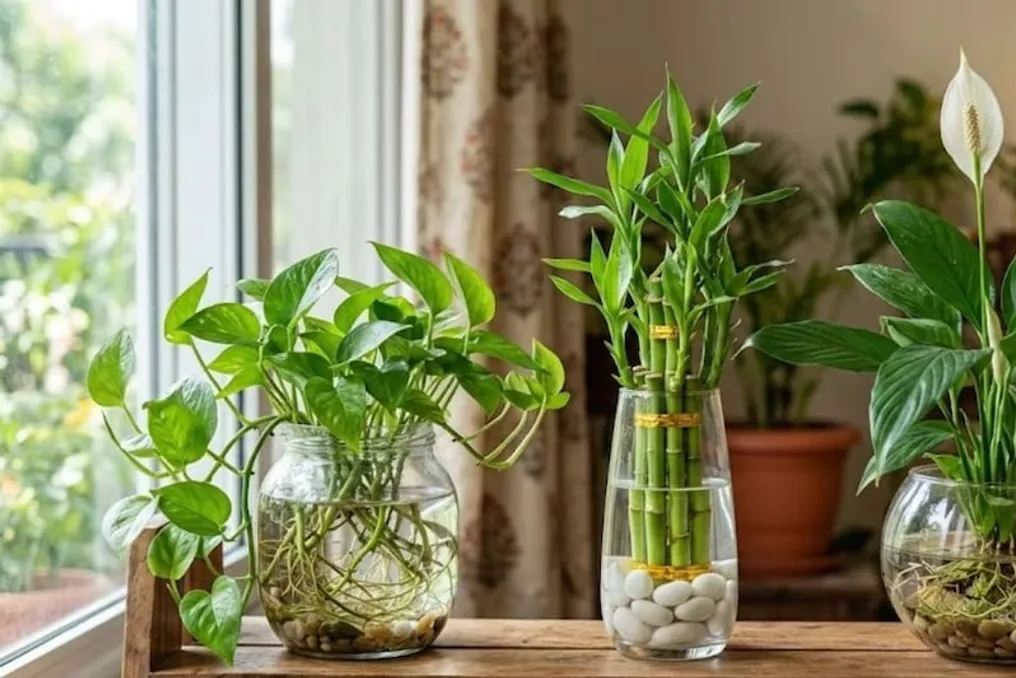
Let's look at three types of plants that can be grown in water and used to decorate your home.

The Money Plant is a popular choice for homes. Its fast-growing leaves and stems enhance the appearance of the dwelling. In Vastu and Feng Shui, it is considered a symbol of wealth, prosperity, and success. It is believed that having a green money plant in the house supports positive energy and brings happiness.

Growing this plant in water is quite simple: place a healthy cutting of the money plant in a jar of clean water. It is important that the node of the plant is in the water, which allows the roots to develop. According to Vastu, the southeast direction is considered favorable for the money plant. To maintain the plant's health, regularly change the water and remove yellow or dry leaves. The financial benefits mentioned in Vastu are based on religious beliefs.

Lucky Bamboo is very popular for decorating homes and offices due to its attractive stalks and green leaves. In Feng Shui, it is associated with luck, success, and abundance. It is believed that its presence creates a positive environment and motivates development in life.

Lucky Bamboo can also be grown in water instead of soil. To do this, pour clean water into a tall glass container and place the plant's roots in it. Small decorative stones can be added to the container to support the plant. According to Vastu and Feng Shui beliefs, it is best placed in the east or northeast. When caring for it, you should monitor the water quality and change it regularly, as well as clean the container. The plant should be in a place with sufficient light, but without direct intense sun.

The Peony Lily is known for its bright green leaves and white flowers. This plant can add beauty to the living room, study area, or a well-lit spot. In Vastu, it is associated with peace, purity, and harmony.

Peony Lilies can also be grown in water, but first, the roots must be carefully cleaned of soil. Then, the roots are placed in water. Care must be taken to ensure that the leaves are not submerged in the water and that the plant receives enough diffused light. According to Vastu, it is favorable to place the peony lily in the north or east. However, one cannot rely solely on direction; the plant's needs for light, temperature, and watering must also be considered. Additionally, the peony lily should be kept away from pets and small children, as it can be harmful if ingested.

The method of growing plants in water can be useful for residents of small apartments and studios. However, constant care is required to keep the plants in a green state.

  • Use clean containers: Using a glass jar or bottle makes it easier to observe the condition of the roots.
  • Change water regularly: Change the water immediately if it becomes dirty or starts to smell unpleasant.
  • Monitor lighting: Provide the plants with enough light according to their needs. Direct intense sunlight can damage the leaves of many houseplants.
  • Check roots: If the roots start to turn black or rot, remove the damaged parts and clean the container.
  • Understand plant needs: Not all plants grow equally well in water. Choosing the right plant is crucial.

Do Water Plants Really Bring Wealth and Happiness?

In Vastu and Feng Shui, plants such as the Money Plant, Lucky Bamboo, and Peony Lily are associated with positivity and prosperity. Their real benefit lies in improving the aesthetics of the home, the feeling of connection with nature, and maintaining greenery around.

Popular