Artificial Intelligence and APEC: Stimulating Regional Development in the Asia-Pacific Region
Read more
CGTN
cgtn.com

Artificial Intelligence and APEC: Stimulating Regional Development in the Asia-Pacific Region

Artificial intelligence (AI) is opening up new opportunities for economic growth and cooperation among countries in the Asia-Pacific region. Ahead of the 2026 APEC Economic Leaders' Meeting, which will take place in Guangdong province in southern China, ensuring the accessibility, inclusivity, and benefit of AI for all residents of the region has become a priority.

Under the slogan 'Building a Prosperous Asia-Pacific Community,' the 2026 APEC meeting identified three key areas: openness, innovation, and cooperation. In this context, important topics for regional interaction in the field of AI include inclusive development, bridging the digital divide, and promoting open-source technologies.

China, as a major power in AI, actively participates in global AI governance and international cooperation. In 2023, China put forward the Initiative for Global AI Governance, which calls for developing AI for the common good, adhering to international laws, and aligning AI development with universal human values such as peace, development, justice, equality, democracy, and freedom, while simultaneously establishing open, fair, and effective governance mechanisms.

Subsequent initiatives include the AI Capacity Building Action Plan for Good and for All, as well as the AI+ International Cooperation Initiative, reflecting China's aspiration to form a broader international consensus and make AI a technology beneficial to the entire world.

In July 2026, a declaration known as the Chengdu Declaration was adopted at the APEC Ministerial Meeting on Digital Technology and AI. The goal of this document is to jointly promote digital and AI technologies to support the Asia-Pacific community, and it establishes a framework for deepening regional cooperation in the coming years.

Expanding Access through Open-Source AI

Practical cooperation is gaining momentum through open-source AI models, which provide developing economies with more accessible tools to build their own AI capabilities. In recent years, Chinese open-source models have gained increasing international recognition.

Malaysia has integrated the DeepSeek model into its national sovereign AI infrastructure, while Singapore's AI Singapore program used Alibaba's Qwen as a foundation for creating its latest regional model for Southeast Asian languages. According to a Hugging Face report on the state of open source in Spring 2026, Chinese open-source models account for 41% of global downloads.

Supporting Public Services

Such models are increasingly being applied in public service sectors. According to Pakistan Today, China's AI-based early warning system, MAZU, has been implemented in eight countries, including Pakistan, Ethiopia, Sri Lanka, and Mongolia, and its cloud services have been tested in over 40 countries.

Since 2024, meteorological services in over 40 countries have had access to MAZU via the cloud. Sohail Babar Chima, an expert from the Pakistan Meteorological Department, noted that this cloud system allows information to be obtained in any city or region of the country at any time.

Warda Aslam, an AI expert and professor at the Faculty of Computer Science and AI at the Air University in Islamabad, believes that such interaction serves as a clear example of how AI can function as a global public good. According to Aslam, by helping developing countries share early warning technologies, China contributes to overcoming the technological gap and enables states to improve disaster preparedness, emergency response, and long-term climate change adaptation.

In Thailand, AI-based learning systems are being introduced in schools to support Chinese language teaching. By utilizing large language models, these systems provide pronunciation correction and personalized exercises, helping to address the shortage of teachers and the difficulty of individual guidance in large classes.

Agriculture is another area where AI is transforming technology into practical benefits. China's Landy AI model is being used in Southeast Asian markets, such as Laos and Cambodia. By combining data on soil conditions, agricultural land location, and weather, the system can determine which crops are suitable for a specific plot and generate reports to assist farmers in planting decisions.

As the host of APEC 2026, China places AI and the digital economy among the main topics for regional discussions. The meeting will take place on November 18 and 19, gathering leaders to discuss the future development of the region.

Similar stories

China's Opportunities within APEC: Transition to Green Energy and AI-Based Network Creation
Read more
cgtn.com

China's Opportunities within APEC: Transition to Green Energy and AI-Based Network Creation

At the upcoming APEC economic leaders meeting in Shenzhen this month, strategic expert Liang Linniu from China Southern Power Grid and Director of Computing-Power-Grid Engineering Company of CSG Digital Research Institute shares industry views on transitioning to an artificial intelligence-based energy grid. He discusses how to align computational loads with power supply and proposes practical cooperation options within APEC for integrating AI and green energy.

Amid global climate challenges and growing energy demand driven by the AI boom, accelerating the transition to green energy has become an urgent priority. The goal is to create an energy system that is safe, reliable, sufficiently supplied, sustainable, inclusive, environmentally friendly, and accessible.

A key factor in achieving this goal is the development of new network infrastructure that coordinates six main networks: water supply, electricity, computing, communication, underground urban utilities, and logistics. More meticulous planning allows for the matching of energy consumption with clean energy supply across different regions.

Joint construction of facilities and resource sharing help avoid redundant investments, reduce energy consumption, and lower costs. Through unified coordination, energy-intensive processes, such as computational loads, can be flexibly planned and executed where there is a surplus of green energy and at the right times. This forms a solid foundation for green energy, improves the stability, resilience, and accessibility of energy systems, and promotes more efficient global AI development.

A critical path to realizing this vision is an AI-oriented paradigm that combines precision, operational responsiveness, and reliability in the energy sector to integrate general-purpose and specialized domain models. Deep integration of artificial intelligence into the production workflows and organizational models of the energy sector provides the necessary support for energy infrastructure to develop industrial AI. Furthermore, by meeting stringent requirements for intelligent perception, reliable decision-making, and safe operation in energy systems, this paradigm identifies common methodologies for the intelligent transformation of complex industrial systems and offers technological guidance for broader industrial AI upgrades.

The Significance of the AI-Based Paradigm

Against the backdrop of general pressures related to climate change and the AI revolution, energy is a key battleground, and energy systems are the primary driving force. Investigating the AI-based paradigm and implementing bidirectional reinforcement between energy infrastructure and energy-sector-specific AI represents a vital path toward modernizing energy systems, achieving the green transition, coordinating infrastructure development, and transforming industrial AI.

Energy systems possess unique advantages, such as a mandate for public services, strategic importance, and systemic complexity. Achieving technical breakthroughs in AI-based energy architecture in industrial scenarios can yield a dual benefit: robust support for energy infrastructure and innovative leadership, which in turn accelerates overall progress in industrial AI and digital intelligent upgrading in the real economy.

Firstly, since fundamental infrastructure connects energy production, industrial operations, urban management, and social needs, advancements in the AI-based paradigm modernize energy systems and provide more stable, reliable, and accessible power sources to support the large-scale deployment of industrial AI applications. Moreover, energy systems serve as a representative testbed for studying industry-specific AI.

Energy consumption requires balancing supply and demand in real-time; generation, transmission, and consumption are closely interconnected, and all operations must adhere to strict safety regulations. As the volume of renewable energy generated from wind and solar fed into the grid increases, closer coordination between energy generation assets, end consumption, and energy storage is required, increasing operational and coordination complexity. AI must interpret the physical laws governing energy system behavior, detect evolving conditions, and make reliable decisions under complex constraints to ensure operational safety. These challenges are widely present in other industrial sectors. Therefore, the technical achievements and practical experience gained within the AI-based paradigm can serve as a valuable foundation for other industries and stimulate broader industrial AI development.

China's Practice

Faced with global climate change and high strain on power grids caused by the expansion of artificial intelligence, China is promoting the development of a new network to enhance the coordination of six key infrastructure networks, facilitate the transition to green energy, and establish a stable, clean, sufficient, and accessible energy base for AI growth. The AI-based paradigm provides the core technical support for this task.

To meet the requirements for coordinated development of national critical infrastructure, including 'unified dispatching, multi-level management, and on-site decision-making,' China has proposed and implemented an integrated technical structure built on four pillars: AI-based interaction, AI-based architecture, AI-based processes, and AI-based tool integration.

AI-based interaction allows operators to submit requests and perform tasks using natural language, thereby lowering technical barriers for cross-network workflows. AI-based architecture reorganizes industry digital foundations around AI, ensuring compatibility between various agents, algorithms, and models and promoting connectivity among the intelligent systems of the six key infrastructure networks. AI-based processes enable intelligent agents serving the six key infrastructure networks to autonomously generate solutions and collaborate on tasks, supporting integrated planning and sequential construction of cross-network infrastructure. AI-based tool integration unifies access to various professional tools, maps equipment, workflows, and interconnections within the six key infrastructure networks, and allows AI to call relevant tools on demand for collaborative task execution.

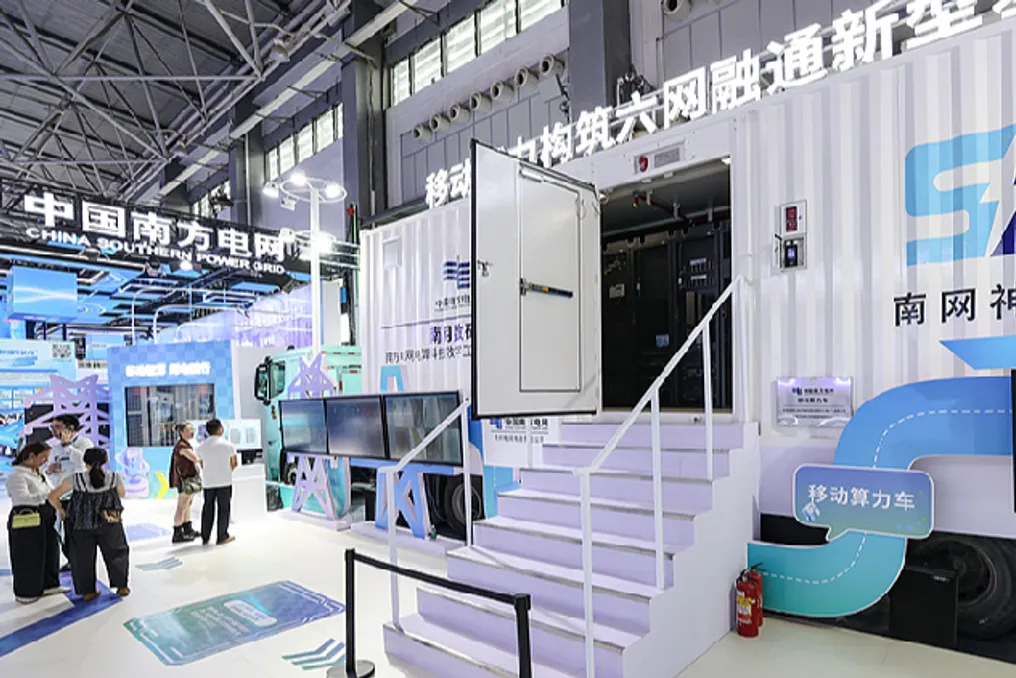
This technical structure is applied in China Southern Power Grid, enabling the coordination of planning, construction, dispatching, and operation of connected infrastructure. Through its innovative E-Hong AI platform, China Southern Power Grid connects network equipment, operating systems, and artificial intelligence capabilities, unifying previously isolated data and toolsets for seamless workflows—an example of AI-based architecture. For network construction planning, operators can submit work requirements in conversational natural language in Da-Wate, eliminating cumbersome manual operations, demonstrating AI-based interaction. Its accompanying module, Da-Wate Yun-Rui, then analyzes where and to what extent network capacity should be built and automatically generates plans and reports. Tasks that previously took several days are now completed in 10 minutes thanks to AI managing end-to-end workflows—a demonstration of AI-based processes.

In power dispatching, Tian-Quan performs high-speed complex calculations based on generation and load conditions, as well as network safety constraints. It supports energy market participants in determining the volume and prices of traded energy by providing appropriate specialized computing resources for AI-driven professional tasks, representing AI-based tool integration. During equipment inspection, AI models process inspection images to identify hazards on lines and equipment defects, guiding maintenance prioritization. This shifts equipment maintenance from rigid calendar checks to condition-based maintenance, another real example of AI-based processes. These internal studies open up new opportunities for the economies of the Asia-Pacific region to develop clean energy and build smarter infrastructure.

Integrating Green Energy in the Asia-Pacific Region

China's experience in technical innovation within the AI-based paradigm and the coordinated deployment of six key infrastructure networks offers fresh approaches to cooperation for the transition to green energy and the integration of AI into energy in the Asia-Pacific region. Moving forward, APEC economies can deepen multi-level cross-border cooperation in several areas:

Joint Research and Development: Jointly developing AI-enhanced approaches to increase the utilization of variable renewable energy sources, such as wind and solar power. Studying ways to align computational loads with power supply to promote more stable, reliable, and green network operation.

Cross-Border Demonstration Projects: Launching joint pilot projects on AI solutions in the energy and clean energy sectors, tailored to local energy resources and the practical needs of individual economies. Testing coordinated planning, construction, and operation of auxiliary facilities to accelerate the translation of research findings into real-world application.

Standard Harmonization and Knowledge Exchange: Encouraging participation in the development of international standards. Exchanging technical specifications, data exchange protocols, and usage rules to improve equipment and system compatibility across borders and ensure coordinated dispatching of emergency response resources.

Infrastructure and Industrial Cooperation: Promoting the sharing of resources and coordinated operation of water supply, electricity, computing, communication, underground urban utilities, and logistics infrastructure. Examples include planning computational loads in response to power generation profiles and integrated laying of pipelines and cables during urban reconstruction programs. Expanding inter-regional and inter-corporate cooperation to reduce redundant construction and resource losses, increase the utilization of variable renewable energy sources, and decrease energy consumption and carbon emissions during construction and operation.

In the long term, through joint technological innovations, co-creation of use cases, standard harmonization, and the development of a mutually beneficial ecosystem, APEC economies can accelerate the achievement of a green, intelligent, reliable, and inclusive modern energy and infrastructure system. This will give a new impetus to sustainable development across the Asia-Pacific region.

MIT Study Assesses Readiness of Uzbekistan and Central Asia for Artificial Intelligence Development
Read more
uzdaily.uz

MIT Study Assesses Readiness of Uzbekistan and Central Asia for Artificial Intelligence Development

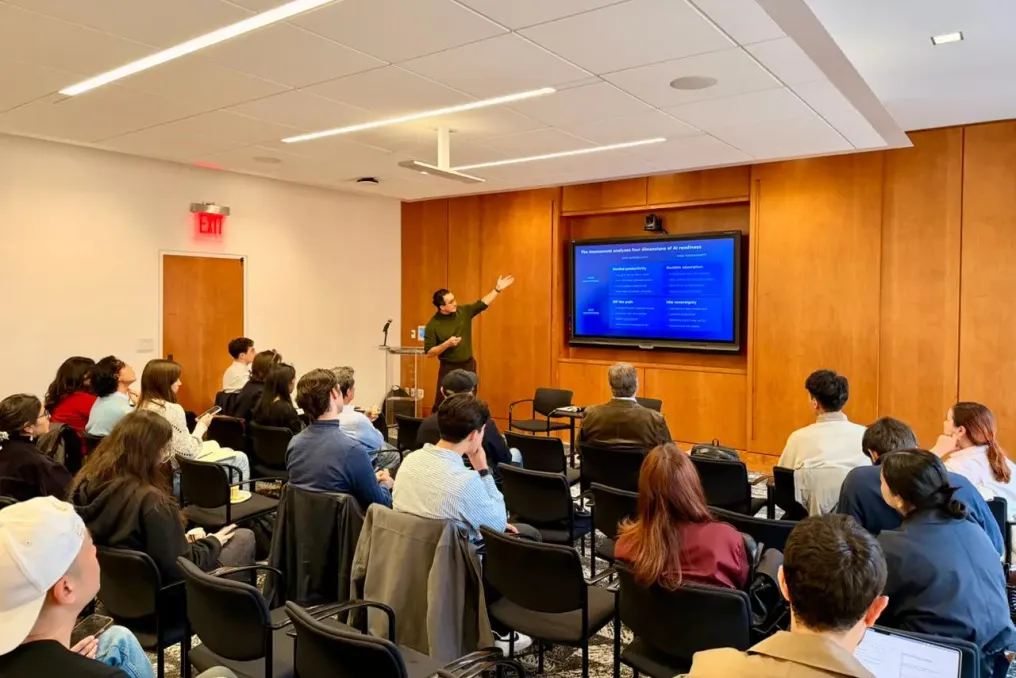
The Kuo Sharper Center at the Massachusetts Institute of Technology (MIT) conducted a study assessing the level of readiness of Uzbekistan and four other countries in Central Asia and the Caucasus for artificial intelligence (AI) development. The assessment identified significant achievements in research and technology, alongside persistent limitations in infrastructure.

The study's findings were presented at Columbia University in New York during a discussion titled 'The Next Frontier of AI: Central Asia and the Caucasus in the Global Technological Shift.' The report covers Uzbekistan, Kazakhstan, Kyrgyzstan, Tajikistan, and Azerbaijan, representing the first comprehensive regional assessment based on a unified methodology.

Shamil Ibragimov, Director of the research center, presented the conclusions. Work on the study began in April 2026, with initial results unveiled on September 22 at ICT Week Uzbekistan 2026 in Tashkent.

Government Policy and Infrastructure

The authors noted that over the past three years, the region's countries have made substantial progress in AI development. Nevertheless, their technological ambitions continue to outpace infrastructural capabilities. The main obstacles are insufficient computing power and the need for reliable energy sources.

According to the study, all five countries have established legislative frameworks for regulating artificial intelligence, and responsibility for this sector is assigned to institutions at least at the ministerial level in each country. In Uzbekistan, provisions related to AI have been integrated into existing legislation.

However, the region remains dependent on foreign cloud platforms, as data centers are located in Frankfurt, Delhi, and Dubai. Although the region lacked GPU computing power three years ago, three supercomputers are now operational there, included in the global TOP500 ranking.

Ibragimov emphasized that decisions made over the next one to two years regarding access to advanced chips and securing energy infrastructure could determine the region's technological development for the next decade.

Growth of AI Research and Specialist Training

Between 2021 and 2025, the five countries published 4,278 scientific papers on artificial intelligence. The annual number of publications during this period increased by more than fivefold. The quality of research also improved: about 42% of articles were published in Q1 journals, and the region's weighted citation index stands at 1.5 compared to the global average of 1.0.

However, large-scale AI training is largely limited to short online courses. The study's authors believe that the next priority should be more advanced specialized education aimed at preparing professionals who can not only use existing AI tools but also develop new models.

Startups Outpace Large Companies in AI Adoption

The study surveyed 650 startups and 103 companies employing over 100 people. Approximately 80% of surveyed startups identify themselves as AI companies, and among enterprises founded in 2023 or later, this figure reaches 81%. Nevertheless, 84% of startups report a shortage of GPU resources, and 71% rely on foreign cloud platforms.

Among larger companies, 68% are still exploring potential AI applications or implementing pilot projects. Only 3% have made artificial intelligence the core of their operations, while nearly half lack a clear implementation strategy. Ibragimov identified the gap between startup activity and demand from larger enterprises as one of the region's main development opportunities.

He also called for strengthening regional integration, noting that individual national markets are relatively small, whereas a unified regional market could attract more investment. The study points to renewable energy potential, geographical location in the center of Eurasia, and relative stability as key advantages of Central Asia and the Caucasus.

Uzbekistan Leads in Regional AI Research

A dedicated section of the report focuses on Uzbekistan's results. The number of scientific publications related to AI in the country grew from 26 in 2021 to 861 in 2025, an increase of more than 27 times. Uzbekistan surpassed Kazakhstan, which recorded 579 publications in 2025. Together, these two countries account for 82% of the region's peer-reviewed scientific articles indexed in Scopus.

In July 2026, the National Supercomputer of the Digital Government began operating in Tashkent under the Ministry of Digital Technologies. It was included in the TOP500 ranking. In its first month of operation, the system was utilized approximately 90%, and its computing power is planned to triple by 2027.

Uzbekistan also holds a significant share in the region's online education. Of the 4.7 million learners on Coursera across the five countries covered by the study, 3.4 million are in Uzbekistan. The authors specifically highlighted the 'One Million Uzbek Coders' program as one of the country's key initiatives for developing digital skills.

In the private sector, 79% of surveyed Uzbek startups identify themselves as AI sector companies. Uzbekistan also demonstrates high performance in electrical infrastructure: transmission and distribution losses are 5% of electricity, the lowest rate among the studied countries. The country has also announced plans for data center projects involving DataVolt and LinkWise.

IT Park Attracts Tech Companies and Investors

The study identifies the Uzbekistan IT Park as one of the region's key instruments for attracting technology companies, alongside Kazakhstan's Astana Hub and Kyrgyzstan's High-Tech Park. Residents of these tech hubs receive tax benefits. Uzbekistan is also developing a special legal zone, Enterprise Uzbekistan, aimed at foreign investors and technology companies.

According to the IT Park, in the first half of 2026, 607 new export-oriented residents joined its ecosystem, a 177% increase compared to the same period last year. The number of new residents with foreign capital reached 297, a 154% increase. There are currently over 1,200 companies with foreign capital in the ecosystem. Companies operating in this ecosystem represent 75 countries, with the USA having the highest number of new foreign residents.

Overall, 1,200 IT Park residents export services and digital products to 102 countries. For comparison, only eight companies engaged in such exports in 2017. Among current exporters, 315 operate in Uzbekistan's regions. North America remains the largest export market, accounting for 54% of total exports. The presentation of the study in New York was part of the Uzbekistan IT Park's efforts to promote the country's technological potential among American investors and partners.

The MIT Kuo Sharper Center for Prosperity and Entrepreneurship is a center of the Massachusetts Institute of Technology, established in 2007 to promote innovative entrepreneurship. According to the organization, it has supported over 600 innovators, including more than 400 participants from 67 countries. Companies founded by its participants serve over 17 million clients.

AI Dividend Exchange in the Asia-Pacific Region: Expert Perspectives
Read more
cgtn.com

AI Dividend Exchange in the Asia-Pacific Region: Expert Perspectives

Many APEC economies face common challenges such as frequent extreme weather events, uneven capacity of public services, and growing energy demand driven by increased computational needs.

Experts in quantum and computing technologies, Professor Lin Jing from the University of Hong Kong and Professor Wen Yungang, Associate Vice President of Nanyang Technological University and member of the Singapore Academy of Engineering, discussed ways to utilize advanced technologies in the region.

AI-based early warning systems process real-time weather data to issue warnings for typhoons and floods, while also supporting local community preparedness for natural disasters. Furthermore, open AI tools are being shared across the region for public health, assisting local medical teams in providing routine care.

Embodied intelligence prototypes presented at humanoid robot competitions are viewed as promising means for elder care and on-site emergency rescue, thereby filling service gaps where labor shortages exist.

Professor Lin Jing, academic curator of the 'Future of Computing · Future Computational Power' forum at the World AI Conference 2026, noted that hybrid quantum and AI architectures offer unique research advantages for high-precision climate modeling and molecular-level drug discovery. However, this technology remains predominantly in the realm of laboratory research.

Lin emphasized that quantum computing is still in the fundamental research stage and is not ready for widespread adoption as standard digital infrastructure. Although it possesses theoretical advantages for modeling complex natural systems, it requires continuous funding from governments, universities, and research institutions to advance.

She proposed that Hong Kong could become a regional hub for quantum cooperation in the Asia-Pacific, connecting talent and capital from around the world. Partners could first jointly develop prototypes before determining suitable pathways for local implementation and broader regional scaling.

Lin pointed to a viable model of collaboration represented by open quantum computing cloud platforms and joint Asia-Pacific research laboratories. These initiatives focus not on one-off technology transfers, but on sharing computational resources, joint experiments, and cross-border academic exchange.

In her view, inclusive access to technology cannot be achieved overnight and requires voluntary long-term cooperation between economies at different stages of digital development.

Sustainable computing is another common regional concern. The increasing load on AI leads to higher energy consumption in data centers, placing a particular strain on economies with limited land resources in Southeast Asia.

Wen's research focuses on designing space-based data centers. He argues that computations located in space can leverage greater solar irradiation and natural radiative cooling in space, while orbital resources can help alleviate terrestrial land constraints.

Wen noted that many Southeast Asian economies have rapidly expanded their data center infrastructure. Some are studying Singapore's regulatory framework: aligning data center growth with renewable energy sources, implementing regular energy efficiency audits, and setting limitations to promote more ecological digital infrastructure.

He believes that innovators in the Asia-Pacific can forge unique technical paths for next-generation computing, similar to the diverging development trajectories observed in the global electric vehicle sector.

Both experts observed that the digital divide among APEC economies means that a uniform, top-down technology rollout does not suit regional conditions. For regional advanced technology cooperation for societal benefit, voluntary knowledge exchange, joint laboratory research, and capacity building are more practical approaches.

They stated that regional stakeholders aim to translate advancements in AI, quantum modeling, and sustainable computing into tangible outcomes: enhanced climate resilience, more accessible healthcare, and improved social services.

Popular