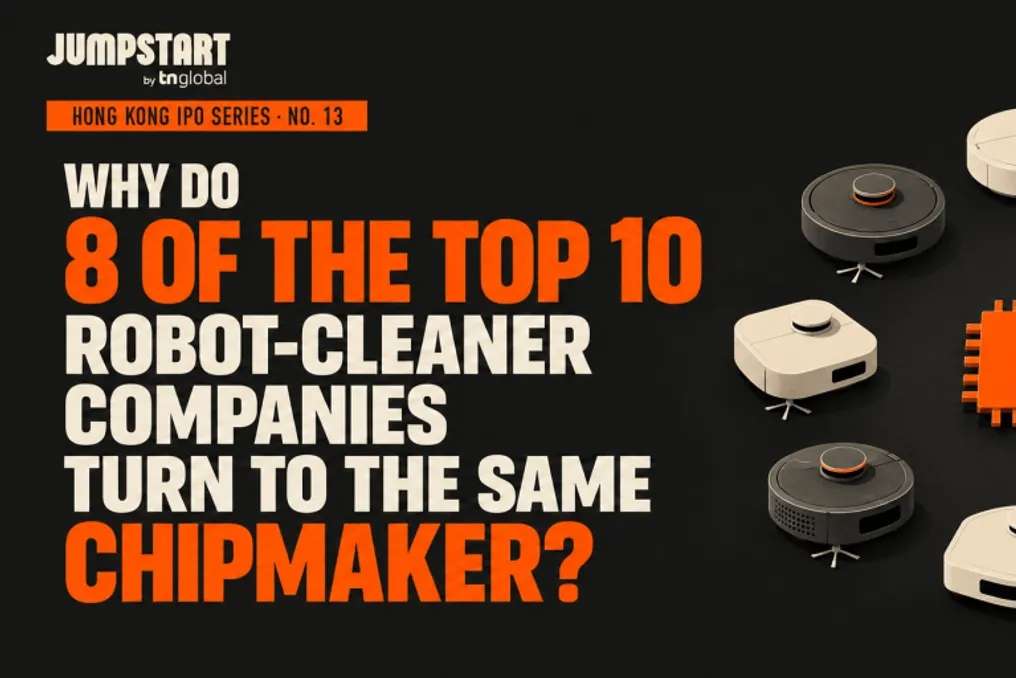
Companies that manufacture floor cleaning devices share a common, yet less visible characteristic. According to Amicro, this company's solutions were used in eight out of ten leading global companies involved in creating intelligent cleaning robots.
The Zhuhai-based company names Xiaomi, iRobot, Ecovacs, Philips, SEB, and Anker among its well-known clients. Consumers recognize these names on finished devices, whereas Amicro's work happens internally: it involves chips, algorithms, and auxiliary components that allow robots to determine their location, understand their surroundings, and move within them.
This is a significant position for a company that started with a narrower task—improving robot vacuum cleaner navigation. Over the last decade, its activities have expanded alongside the serviced machines, covering motion control, mapping, visual perception, and sensor combinations.
Amicro is currently offering shares on the Hong Kong market, with trading expected to begin on November 12th. The Initial Public Offering (IPO) is linked to the company's ambition to occupy a broader niche in robotics, applying experience gained on domestic floors to machines operating in more diverse environments.
Amicro was founded in Hengqin, Zhuhai, in 2014 under the name Amicro Semiconductor. Jian Xinciao, one of the co-founders who now leads the company, entered the business with experience in the semiconductor industry.
In a 2020 interview, Jian recalled considering where a young chip company could establish itself. Consumer electronics was highly competitive, while industrial chips required long development and implementation cycles. Robot vacuums offered a different option: a consumer product with high volume potential, yet a technically complex environment.
A home environment is not an easy place for a machine to navigate. Furniture obstructs routes, and rooms connect via narrow passages. An efficient cleaning device must systematically cover the area and find its way back, rather than constantly wandering over the same patch of floor.
Amicro addressed this problem using system-on-chip design, integrating functions that would otherwise require more components and integration work. Its early developments focused on motion control and simultaneous localization and mapping, or SLAM—the process by which a robot builds a map while determining its position within it.
The company completed the release of its AM380S chip in December 2016, and mass application in cleaning robots began in June 2017. This was followed by the AM680 in 2018, expanding the product line to include visual navigation.
These steps allowed Amicro to participate in the growth of the robot vacuum cleaner market without creating a competing home appliance brand. Its clients could develop and sell finished devices, relying on a specialized supplier for part of the underlying technology.
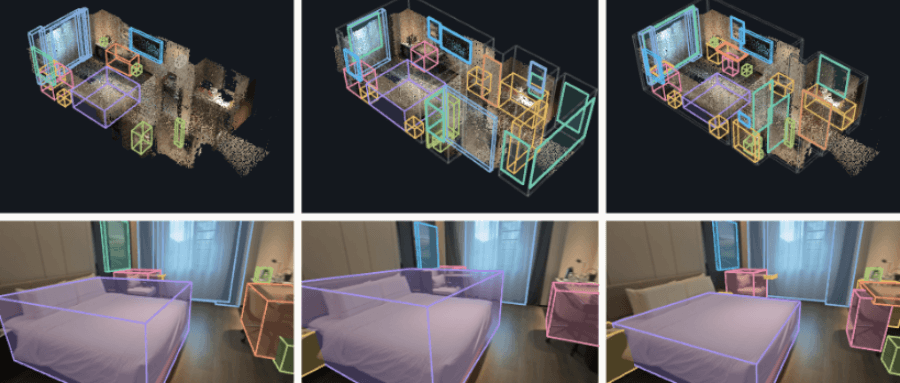
As robotic cleaners became more functional, the demands on their navigation systems increased. Motion tracking helps the machine estimate the path traveled. Cameras and laser sensors provide additional information about the surrounding space. Combining this data helps the robot form a more complete picture of the environment and decide how to move within it.
For a supplier like Amicro, each such addition requires work in both hardware and software. A sensor must generate information that the processor can handle. Algorithms must interpret it within the machine's computational and energy constraints. The resulting instructions must be translated into reliable movement.
This explains the current nature of Amicro's business. In addition to processors and algorithms, the company provides components related to sensors, motion control modules, software development kits, and tools that clients can combine for various products.
The commercial value lies in making these parts work together. A manufacturer developing a new cleaning device must transition from a desired function—such as better navigation or collision avoidance—to a design that can be tested, manufactured, and maintained. Amicro participates in this development process.
Consequently, its catalog reflects years of work on practical robot behavior: room mapping, coverage planning, fall detection, return to charging, and obstacle avoidance. To the user, these are minor actions. However, repeated across different homes and machines, they become a serious engineering challenge.
This accumulated experience has allowed Amicro to enter a wide range of supply chains. The company disclosed sales data showing over 3.5 million intelligent mobile robotics solutions sold in 2025. Its products reached markets in Asia, Europe, and America through the enterprises that use them.
Relationships with these enterprises can take various forms. Amicro supplies technology that may end up in a finished robot via a distributor or system integrator, as well as through direct collaboration. Thus, its role can be much less visible than the brand on the device itself.
Serving various manufacturers also requires flexibility. A component suitable for a budget cleaning device might only be part of what a more complex machine requires. Clients have their own design solutions, cost targets, and software requirements. Amicro's approach allows them to select combinations of its technologies rather than adopting an identical ready-made robot.
This is what gives the 'eight out of ten' figure its significance. It places Amicro in an industry whose consumer brands compete intensely, while some of their fundamental development needs overlap.
The business has grown, although profitability remains an unfinished task. In 2025, Amicro reported revenue of approximately 407 million yuan, with a net loss of 155 million yuan. Research continued to consume significant resources as the company developed more advanced products.
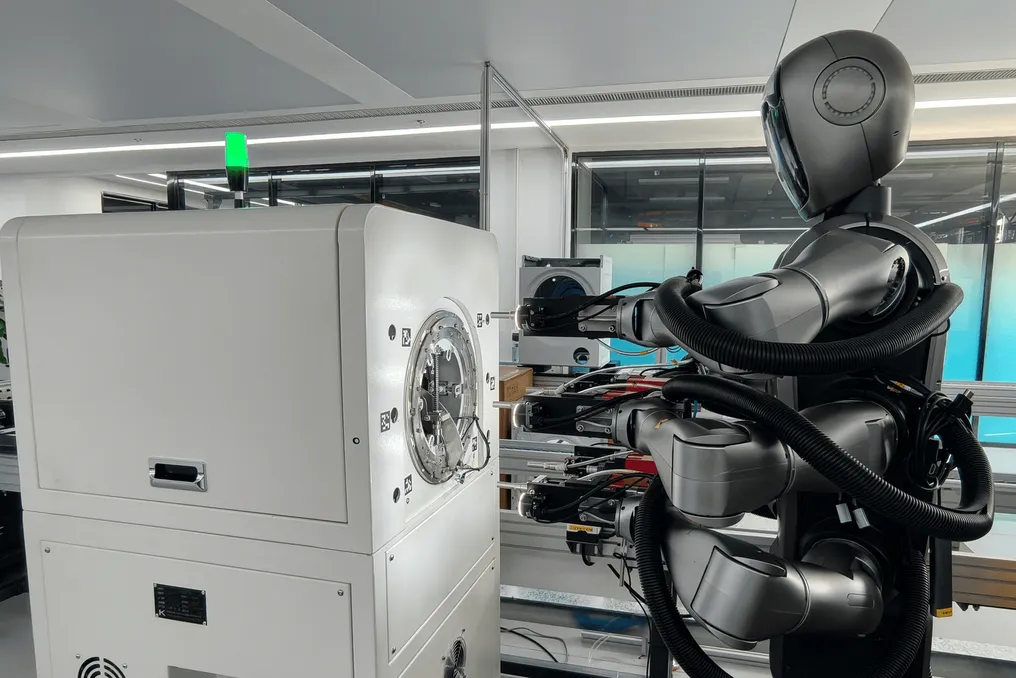
These expenses now support an ambition that extends beyond the category that originally created the company. In August 2025, Amicro unveiled the AM970 multimedia platform for video surveillance at an event that also marked its rebranding from Amicro Semiconductor to Amicro Technology. This product is a concrete expression of this broader identity. It supports inputs from up to six image sensors and integrates visual processing with computational resources for AI workloads. The company demonstrated use cases ranging from cleaning robots and lawnmowers to drones, industrial surveillance, and humanoid robots.
The connection to its previous business is evident. A machine moving through a home, garden, or commercial building must sense its environment and translate that information into action. Amicro spent years developing parts of this process.
Each new environment also creates additional requirements. Outdoor lighting changes, terrain becomes less predictable, and objects encountered by the machine differ from those found on a living room floor. There is potential to reuse accumulated technology, extending it to meet these requirements.
Amicro's work with Macau University represents another branch of this development. The profile from the Macau International Technological Industry Center describes joint research concerning robotics and domestic applications. Its ambitions have evolved through product engineering and research partnerships alongside its established commercial business.
The Hong Kong IPO will finance the next stage. Amicro plans to allocate about 70% of net proceeds to strengthening its hardware, software, and specialized chips for robots. Thus, the offering links its current position in mobile robotics with the opportunities it aims to create in the future.
Amicro has grown by helping other companies create robots capable of navigating a home. Today, its technology reaches consumers through brands far more recognizable than the company itself. Its next chapter will depend on how far this experience can extend beyond cleaning—and how many more tasks clients entrust to it in assisting their machines.